Subbuteo

A HISTORY OF BRADFORD CITY AFC IN OBJECTS

Published in the match day programme: Bradford City v Accrington, 01-Jan-2019

Happy new year and welcome back to Valley Parade. A special welcome to our visitors from Accrington and congratulations from everyone in Bradford for what your club has achieved in the past twelve months – an inspiration to our friends at Horsfall and their ambitions for Bradford Park Avenue AFC.

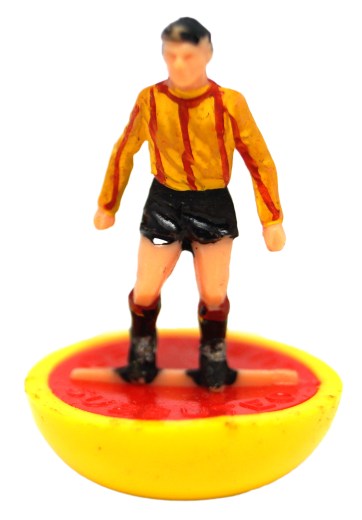
I wonder how many households had Subbuteo games left under the Christmas tree last week? If you go back to my own childhood forty years ago it was pretty much guaranteed that Subbuteo was on the Xmas wish list of schoolboys. I recall the entertainment that the game provided, not to mention the worn knees of my jeans. Those were the days in which Bradford City regularly competed in the World Cup and on occasions were victorious in a home in Heaton.

DSC02550

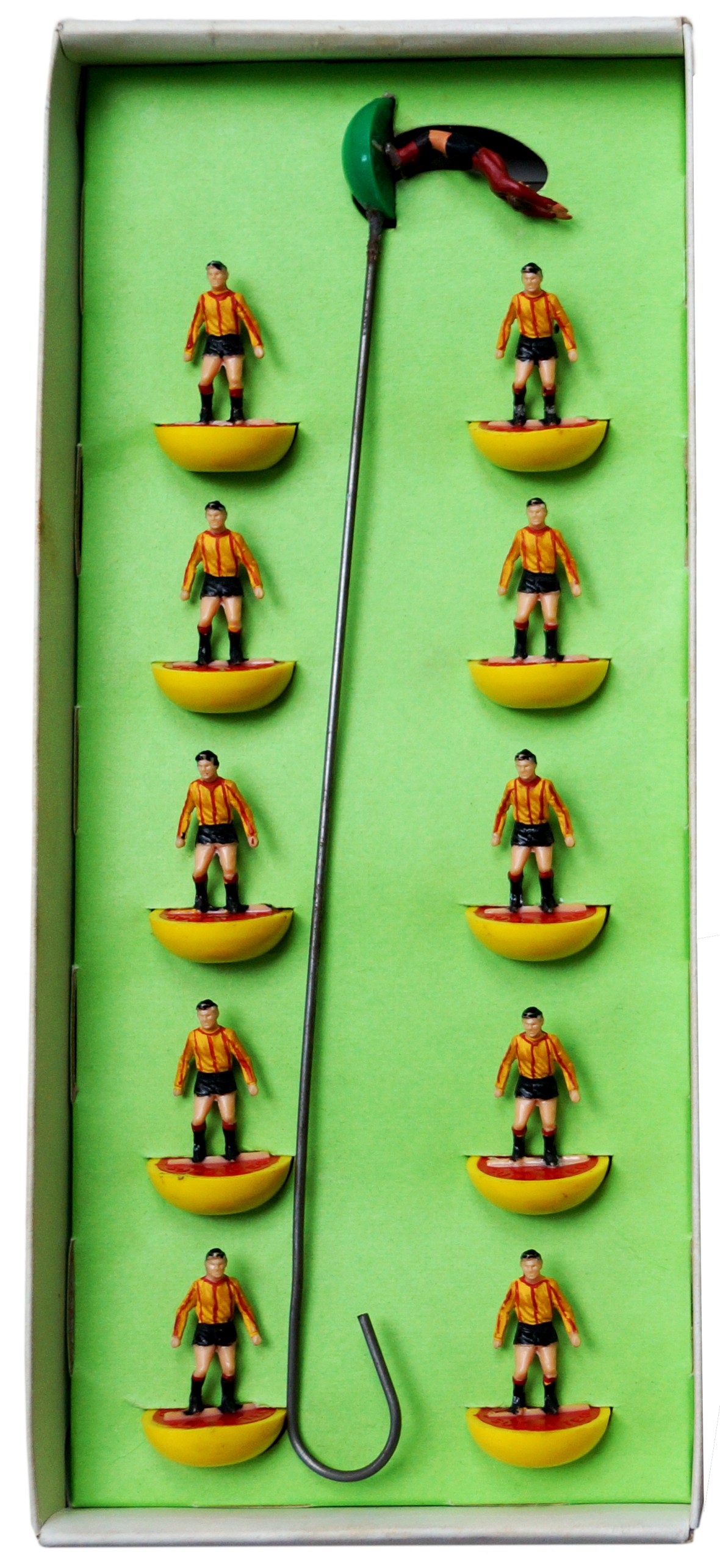
What I didn’t appreciate at the time was that the original BCAFC Subbuteo team (reference #23 in the catalogue) was popular nationally on account of the unique colours. Claret and amber thus provided an alternative to the ubiquitous red/white and blue/white combinations.

subbuteo1

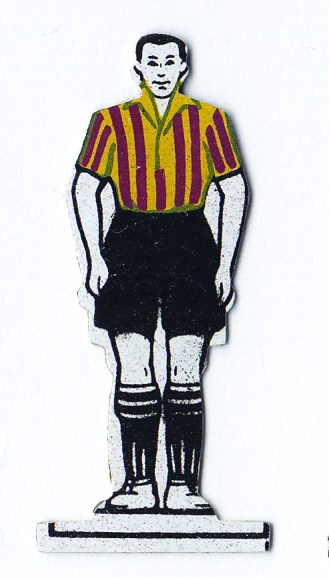
By the 1980s, production economies forced Subbuteo players to be moulded as flimsy plastic figures that made those of the 1960s and 1970s seem heavyweight by comparison. That said, even those were rarely able to withstand the crunch of being knelt on. However, in the 1950s the figures were even flimsier, printed on celluloid and affixed to plastic bases.

subbuteo celluloid city

My thanks to Sean O’Grady for sharing these items

John Dewhirst

John’s book A HISTORY OF BCAFC IN OBJECTS (vol 1 in the BANTAMSPAST HISTORY REVISITED series) provides background about City memorabilia. It is available from Waterstones, Wool Exchange or Salts Mill bookshops or follow the link below for BANTAMSPAST HISTORY REVISITED. In future issues of The Parader he will feature objects that tell the history of the club. If you have a City artefact in your possession that you would like him to feature in the programme contact him at johnpdewhirst at gmail dot com or tweets @jpdewhirst
John has written widely about the history of sport in Bradford: Links to his features on the history of Bradford sport

My most recent article on VINCIT tells the long forgotten story of Shipley FC.

History for the making this season?

Elsewhere on this blog you can find his programme articles from earlier games this season and last. The drop down menu above provides links to archive images, book reviews and features on the history of Bradford sport that I have written.

Updates to this site are tweeted: @jpdewhirst

===============================================================

Details here about the bantamspast History Revisited book series: BANTAMSPAST HISTORY REVISITED BOOKS

==============================================================

Discover more about Bradford football history at www.bradfordsporthistory.com

History for the making

Putting an annus horribilis into historic context

This last year can rightly be described as an annus horribilis for Bradford City AFC but one that will soon be forgotten. Thankfully there is little prospect that our bad run will continue and after another encouraging performance today we can look forward to the new year.

Up to and including Saturday, 29th December we have had only eleven wins in the Football League in the last twelve months. The statistics for the calendar year are lamentable. From the 21 games played in the latter part of the 2017/18 season there was a points tally of 18, derived from four wins, six draws and eleven defeats. And of the 25 games in the current season we’ve managed 24 points from seven victories and three draws. In aggregate, 42 points from 46 League games played in this calendar year amounts to relegation form. For that matter, if the second half of this season yielded the same as the first we’d only have 42 points and twelve wins on a pro-rata basis over 2018/19.

Compare these statistics to previous 46 game campaigns and there have only been two seasons when we’ve done worse – the 36 points in 2003/04 (2nd tier) when we managed ten victories and six draws and the 41 points in 1989/90 (2nd tier) when there were only nine League wins – and not surprisingly both were relegation seasons. On a calendar year basis however, 2018 witnessed the lowest points record for a corresponding number of games (ie 46) from 1st January to 29th December inclusive – it really has been that bad. It speaks volumes that there was such a breakdown in the second half of last season and that it could not be put right in the summer.

Second half season collapses

The most startling statistic about last season is the extent to which form collapsed in the second half of 2017/18: 42 points in the first 23 games but only 21 in the last 23. In other words, two thirds of the total points (67%) were generated in the first half of 2017/18.

There was a similar phenomenon in two recent relegation seasons. In 1971/72 (3rd tier) and then 2006/07 (3rd tier) there was a collapse in the second half of the season. Taking three points for a win to provide a like-for-like comparison, in each case 65% of the total points came in the first half of the season. Yet in 1932/33 (2nd tier) the collapse was even worse, with 73% of the total points coming from the first 21 fixtures in what was a 42 game season (40 points out of 55).

In 1909/10 there was a similar collapse with 66% of the points having been secured in the first half of the season. In fact at the half-way stage, at the end of December, 1909 Bradford City sat at the top of Division One having managed 12 wins, three draws and only four defeats out of the first 19 games (39 points based on three for a win). The second half of the season brought 5 wins, 5 draws and 9 defeats (20 points). Yet City finished 7th, still a credible achievement. What prevented relegation in 1910, 1933 or 2018 was that the club had accumulated sufficient points by the half-way point and what each season had in common was that the club had aspirations of promotion at that stage. In 1909/10 there was probably an attack of vertigo at the possibility of sustaining a title challenge, all the more remarkable for the fact that the club had only secured its place in the top tier in the last game of the previous season.

However, in terms of actual points accumulated (on a three for a win basis), the second half of the 2017/18 season was by no means the worst. Compared to other 46 game campaigns, the points tally in the second half of 1971/72 (3rd tier) was only 15; in 2006/07 (3rd tier), 17 points; in 1962/63 (4th tier) and 1989/90 (2nd tier), 18 points; 2003/04 (2nd tier) 19 points; and in 1977/78 (3rd tier) also 21 points. It goes without saying that we were relegated in each of those seasons and in 1962/63 had to apply for re-election to the Football League having finished second from bottom.

First half season comparisons

The first half of the 2018/19 season – with 21 points in the bag – also compares unfavourably with other 46 game campaigns but it hasn’t been the worst experience. In the first half of 2003/04 (2nd tier) we managed only 17 points and in 1964/65 (4th tier) only 14 points (again with victories credited on a three point basis for comparison).

After 15 games played we had three wins this season but again it is by no means the worst start to a season: at the same stage in 2000/01 (1st tier) we had managed only a solitary victory as was the case in 1926/27 (2nd tier); 1948/49 (3rd tier); and 1983/84 (3rd tier). Similarly, in 1908/09 (1st tier); 1964/65 (4th tier); and 1965/66 (4th tier) we had managed only two wins at that stage.

With 25 games played we have now managed seven League victories. Contrast that to 1926/27 (2nd tier) or 2000/01 (1st tier) when we had won only three at this stage or 2003/04 (2nd tier), when the record stood at four. (The 1926/27 and 2000/01 relegation seasons remain the worst in the club’s history with only seven wins from 42 games and five from 38 respectively.)

Another Great Escape?

Recent performances have been sufficient to instil the belief that the second half of this season will prove much more fruitful. Today’s emphatic defeat of Rochdale demonstrates that ours is not a team nervously fighting a relegation battle. I am not alone in the belief that we have the makings of a ‘Great Escape’ to emulate what has been achieved historically. Certainly the players now have the self-confidence and belief that is a vital pre-requisite.
What then are the precedents? Four seasons in particular stand out for a recovery in the second half through which relegation was avoided. In 1935/36 the club managed a remarkable second half turnaround to avoid relegation to the third tier and 38 out of 58 points (66%) were secured after the halfway point of the season (NB 42 game campaign, points restated on the basis of three for a win).

Another celebrated escape was the club’s first ever season in the first division in 1908/09 when safety was assured with victory in the last match against Manchester United a few days after that club had defeated Bristol City in the FA Cup Final. (In a previous feature I have described how the bantam identity was adopted by Bradford City AFC at the end of November, 1908 to inspire a turnaround.) In that season, 28 out of 46 points (61%) were secured in the second half (NB 38 game campaign, points restated on the basis of three for a win).

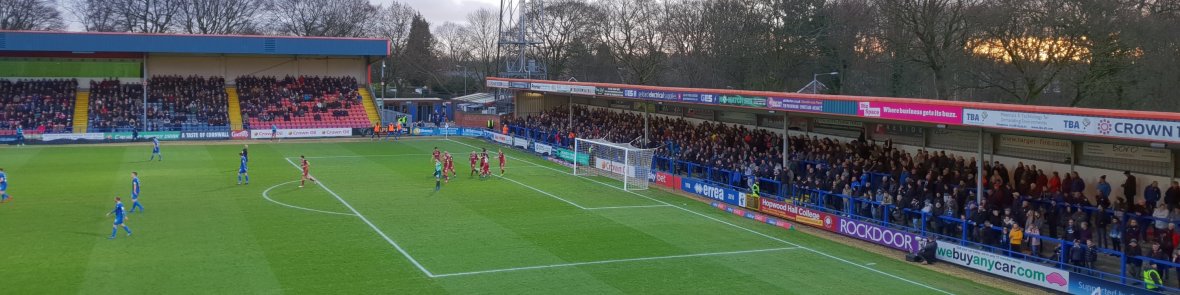
More recent examples were in 1964/65, 30 out of 44 points (68%), a recovery that allowed the club to avoid applying for re-election and then in 1986/87, 36 out of 55 (65%) that ensured the club avoided relegation from the second division – in the latter case a transformation that was kick-started with the return to Valley Parade from Odsal. (The photo below was taken by myself in December, 1986 when an England XI played against Bradford City to celebrate the homecoming.)


On the other hand, there were notable improvements in the second half of the 1926/27 season (18 points compared to 12 points in the first half of the season; equivalent to 60% of the total achieved in the second half) and in 1948/49 (24 compared to 15; 62% of the total) but these were insufficient to avoid the ignominy of finishing bottom of the division in each case.

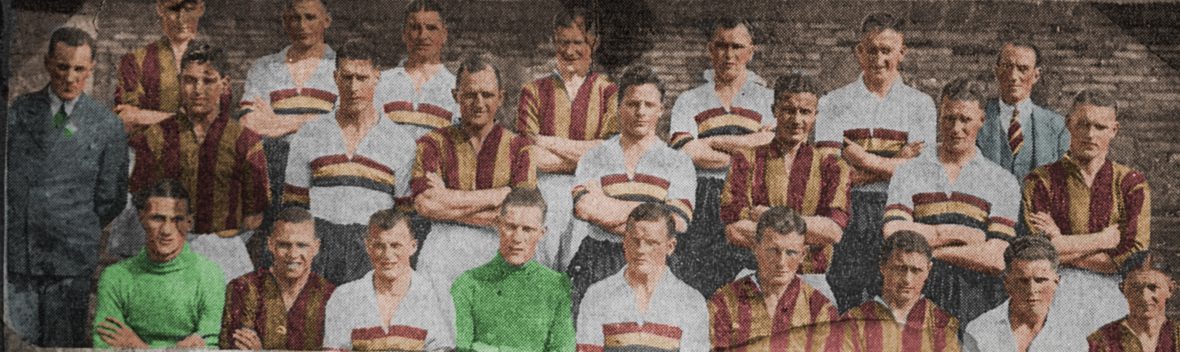
Three other seasons are remembered for the avoidance of relegation when it seemed almost certain earlier in the season. What happened in 1983/84 following the return of Bobby Campbell (photo below) from Derby County is perhaps the best remembered. After fifteen games the club had managed a single win and five draws but then followed ten successive victories and an unbeaten run of 16 matches that yielded 40 points alone. By the end of January the club was already well clear of the relegation zone – for the record 39 (55%) out of the total 71 points came in the second half of the season.


In 1996/97 the club managed to avoid relegation on the last day of the season even if statistically what happened in the second half of the season – 26 out of a total of 48 points, equivalent to just 54% – was less impressive.

Likewise in 1999/00 when Premier League status was safeguarded on the final day of the season, the points yield in the second half of the campaign was not that much greater than in the first and amounted to 53% of the total 36 (19 points in the second half compared to 17 from the first 19 games).

Equally significant as the second half recoveries that occurred in 1908/09, 1983/84 and 1986/87 was what happened next. The boost to confidence and self-belief from escaping relegation translated into much improved form over the course of the following season. The exception to this however was in 1937 when City were relegated and in 1966 when the club could not escape being forced to seek re-election to the Football League despite the achievements of the previous campaigns.

To manage a total of 55+ points this season should be sufficient to avoid any prospect of relegation and in so doing, 2018/19 would be remembered as one of the most impressive second half recoveries in the club’s history. How feasible then to secure 31 points from the remaining 21 games and get wins in every other game (the equivalent of promotion form)? In 1986/87 the final 21 games yielded 36 points and in 1983/84, it was 33 points from the last 21 fixtures.
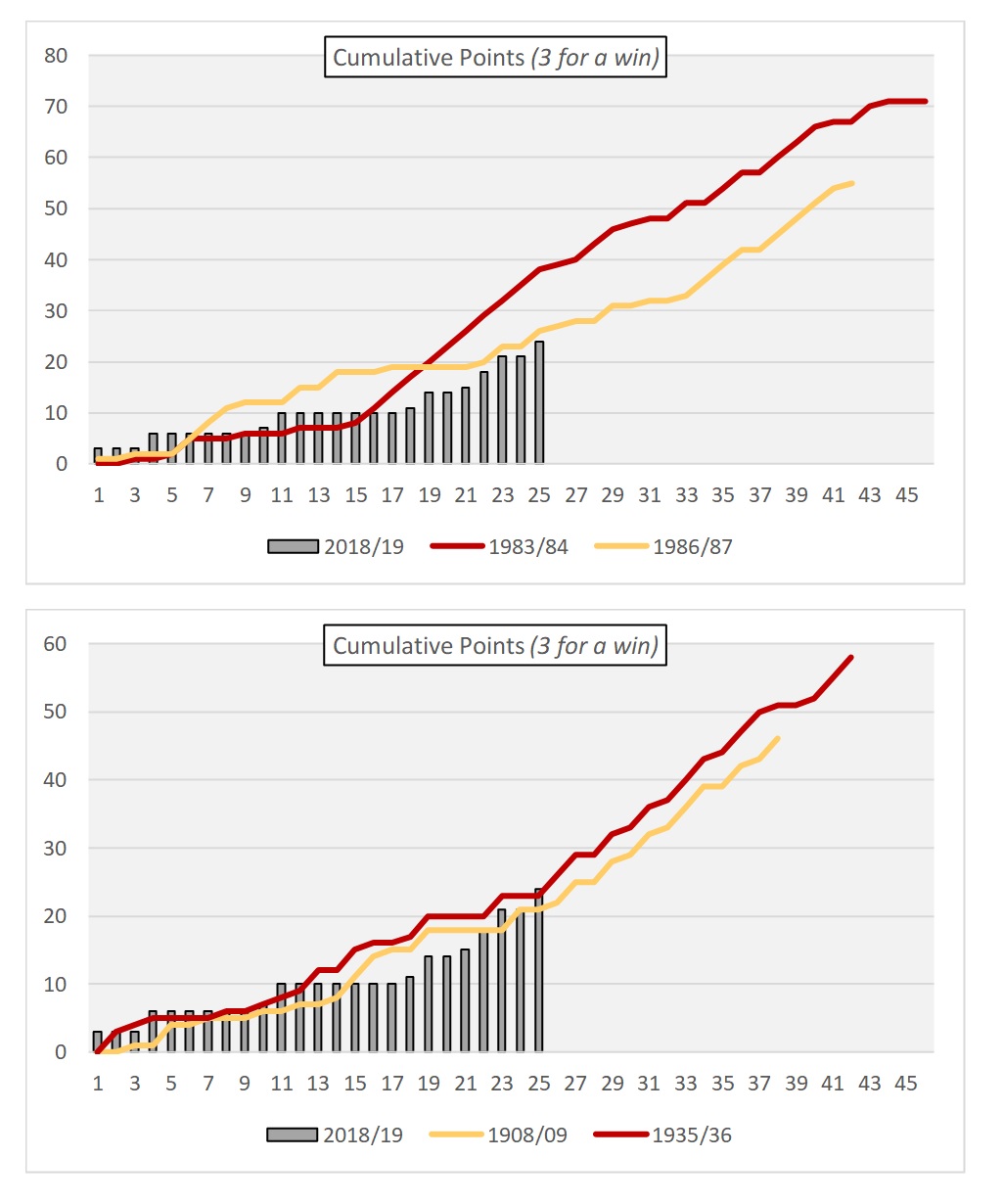
Great Escape graphsWhat happened in 1983/84 (at this divisional level) and then in 1986/87 (at a higher level) – during the original era of so-called Bantam Progressivism between 1981-88 – provides inspiration that a Great Escape is possible. It also allows the current playing squad its opportunity to make history. If ever there was a time to be reminded of the origins and relevance of our bantams identity, this is it.
All told it will be an intriguing end to the 2018/19 season, a campaign that many of us had virtually written off just eight weeks ago. Fast forward to 2019!

John Dewhirst

Thanks for visiting my blog. You will find links below to other features I have recently published online about the history of football in Bradford and Bradford City in particular. I contribute to the BCAFC match day programme and you can find links to my features from the menu above.

===========================================================

The following are other features on this blog published during 2018:

Photos of Valley Parade in the 1970s

Campaigning against Edin Rahic

Photos of Valley Parade redevelopment, 1986

Die Deutsche Frage, visit to Germany Nov-18

Book Review – One Year, Two Seasons by Richard Wardell

Book Review – The Beautiful Badge by Martin Routledge

Book Review – Kick Off by David Pendleton

Book Review – How football began by Tony Collins

The saga of Bradford’s cross-city rail links
===========================================================

If you are interested in the history of Bradford sport then visit VINCIT www.bradfordsporthistory.com where you will find features about the history of different sports and clubs in the district.

My most recent articles published on VINCIT include:

The story of Shipley FC and Bradford’s other c19th junior rugby clubs

The origins of women’s football in Bradford

The significance of sport in shaping a Bradford identity

History of the Bradford Charity Cup

Compendium of Bradford sports club names

The late development of soccer in Bradford

John Nunn, Bradford physical aesthete

The story of the Belle Vue Hotel, a nineteenth century pub adopted as a sports headquarters in Bradford

The history of Bradford rugby and the case to reassess the split in English rugby in 1895 My findings from investigation of the origins and development of Bradford football provide sufficient evidence to challenge the orthodox view that the split in English rugby was driven by social class as opposed to the economics of sport.

The myth that the City – Avenue rivalry was based on class politics

The political origins of Bradford Cricket Club in 1836: Blaming the Tories

Cricket: the DNA of Bradford sport
===========================================================

Details of my books published in the BANTAMSPAST HISTORY REVISITED SERIES

Tweets: @jpdewhirst
Valley Parade Testimonials

Published in the match day programme: Bradford City v Scunthorpe United, 22-Dec-18 

Valley Parade Testimonials

Historically the offer of a benefit game was a key factor to secure the services of a target signing. Accordingly players would be awarded with the gate receipts of a nominated (league) game. The post-war practice has been to grant a special testimonial match to a long-serving player, typically based on ten years’ service featuring former players and/or unique opposition. The principle originated from the fact that few players were able to live on their club wages, much less save for retirement. Many of the players granted testimonials at Valley Parade were locals who had presumably chosen to remain in the area rather than seek transfers. In recent years testimonials have been less commonplace, surely a reflection of the fact that there has been such a high turnover of playing staff. The granting of a testimonial to Stephen Darby is a welcome exception.

IMG_0076.jpg

 By far the best attended testimonial at Valley Parade (with a crowd in excess of twenty-one thousand) was that of Stuart McCall (April, 2002). On that occasion Bradford City played a Rangers XI comprising players who had represented that club during the course of winning ten successive Scottish League titles. It was a truly memorable occasion that allowed supporters of both clubs the opportunity to pay respect to a great guy who will always be welcome at Valley Parade. Stuart played one half of that game for City and the other for Rangers and he donated part of his proceeds to the Bradford Burns Unit.

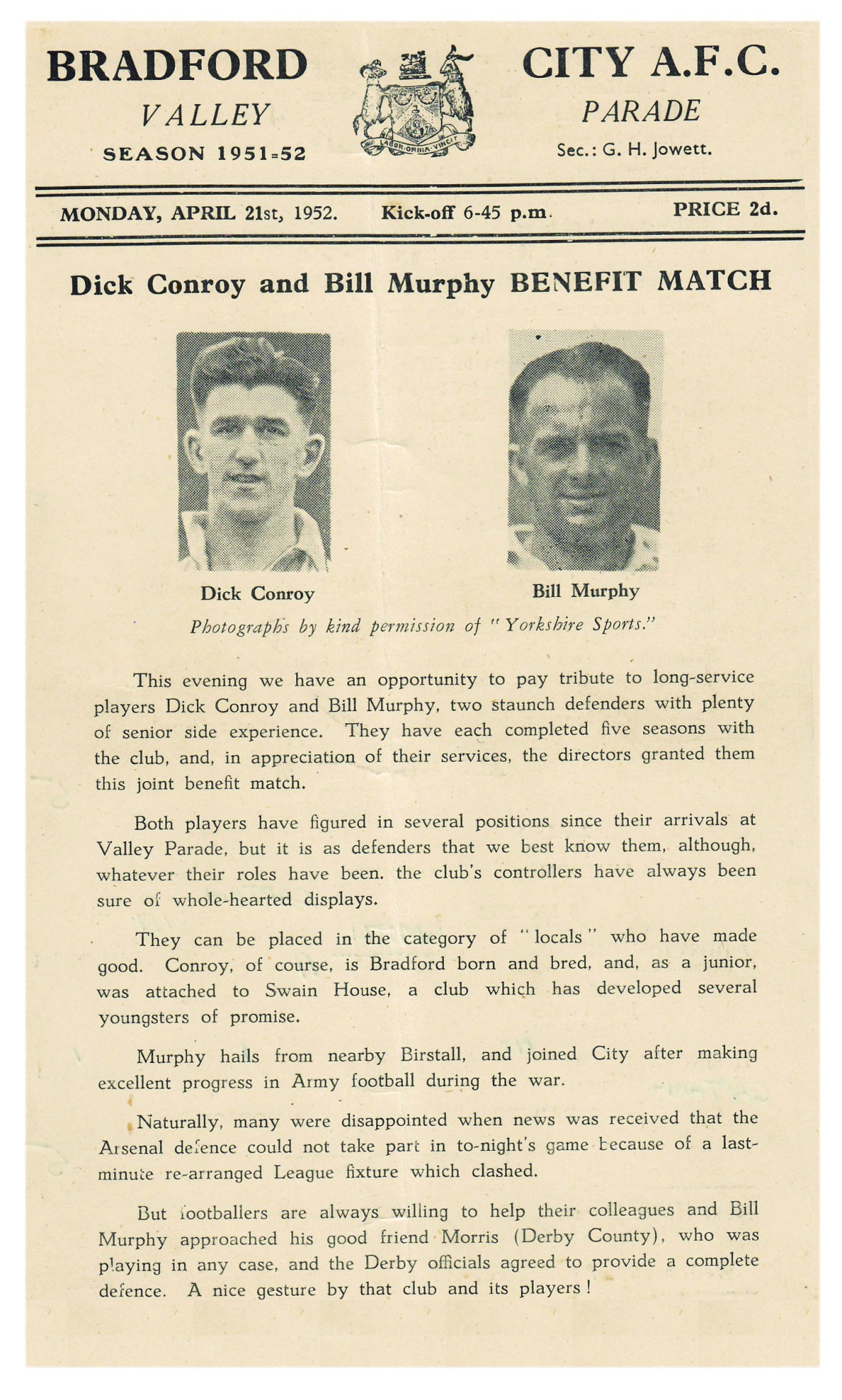
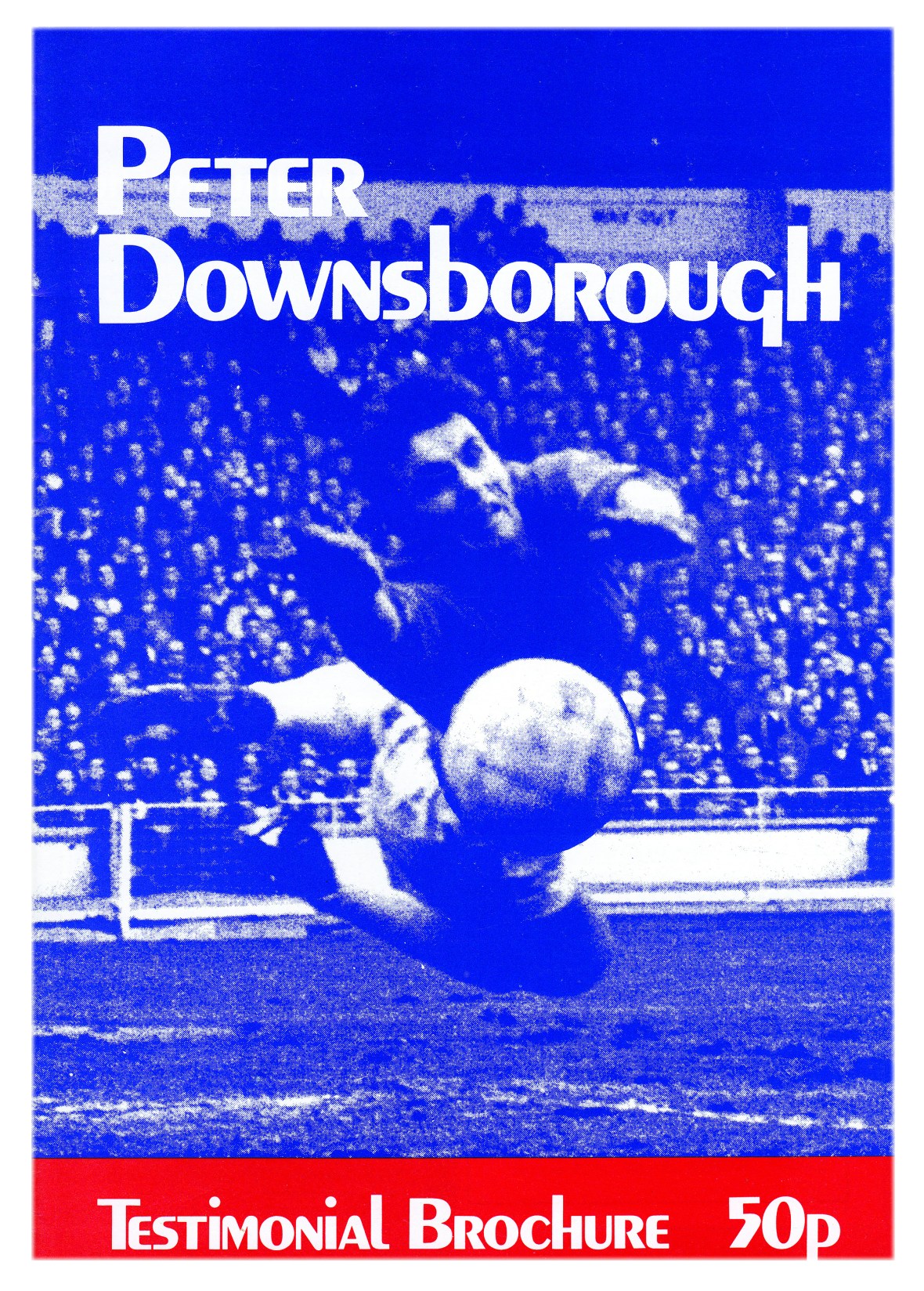
 Other testimonial games of note have included Wayne Jacobs (July, 2004); Allan Gilliver (July, 1998); Gavin Oliver (August, 1994); Maurice Lindley (July, 1991); Mark Ellis (May, 1990); Ces Podd (March, 1981); Peter Downsborough (May, 1980); Ian Cooper (May, 1977); Bruce Stowell (November, 1969); Willie Robb and Jeff Suddards (May, 1959); George Williamson (April, 1957) (vs Airdrie scanned); Jock Whyte (October, 1955); David Gray (April, 1954); and Dick Conroy / Bill Murphy (April, 1952).

conroy murphy test ss 21-apr-52

 On these occasions the match programmes have provided a break from the regular design of that season’s issues. The Podd and Downsborough testimonial programmes for example were of much higher standard than the contemporary league programmes and were relatively groundbreaking for their photographic content.

downsboro test.jpg

Ces Podd was the first black player in the Football League to earn a testimonial and the game against an All Star Black team at Valley Parade raised a then club record sum of £5,147 for a testimonial. On the other hand John Hall’s testimonial in May,1974 was commemorated with a single Banda-copied teamsheet – hardly something to share with his grandchildren!

John Dewhirst

John’s book A HISTORY OF BCAFC IN OBJECTS (vol 1 in the BANTAMSPAST HISTORY REVISITED series) provides background about City memorabilia. It is available from Waterstones, Wool Exchange or Salts Mill bookshops or follow the link below for BANTAMSPAST HISTORY REVISITED. In future issues of The Parader he will feature objects that tell the history of the club. If you have a City artefact in your possession that you would like him to feature in the programme contact him at johnpdewhirst at gmail dot com or tweets @jpdewhirst

John has written widely about the history of sport in Bradford: Links to his features on the history of Bradford sport

My most recent article on VINCIT tells the long forgotten story of Shipley FC.

Elsewhere on this blog you can find his programme articles from earlier games this season and last. Scroll down to find a summary of other features uploaded to the blog in 2018.

A new feature on archive images

Updates to this site are tweeted: @jpdewhirst

*** For any Scunthorpe United supporters reading this blog, the author was the person who designed your Unity Fist badge in 1981 as detailed in The Beautiful Badge. ***

===============================================================

Details here about the new bantamspast History Revisited book by Jason McKeown and other volumes in the same series: BANTAMSPAST HISTORY REVISITED BOOKS

==============================================================

Discover more about Bradford football history at www.bradfordsporthistory.com

Recent posts

Scroll down on this page and you will find articles uploaded to this blog in chronological order (most recent at the top). The majority are articles also published in the BCAFC programme and you will find links to these from the menu above.

20181215_1356157789815872076883622.jpg

The following are other features on this blog published during 2018:

Photos of Valley Parade in the 1970s

Campaigning against Edin Rahic

Photos of Valley Parade redevelopment, 1986

Die Deutsche Frage, visit to Germany Nov-18

Book Review – One Year, Two Seasons by Richard Wardell

Book Review – The Beautiful Badge by Martin Routledge

Book Review – Kick Off by David Pendleton

Book Review – How football began by Tony Collins

The saga of Bradford’s cross-city rail links

Refer to the menu above to navigate.

Thanks for visiting my blog!


My most recent article on VINCIT tells the long forgotten story of Shipley FC.

Tweets: @jpdewhirst

Christmas Greetings

A HISTORY OF BRADFORD CITY AFC IN OBJECTS

Published in the match day programme: Bradford City v Walsall, 15-Dec-18 

It is a modern phenomenon to buy a Christmas card at Valley Parade as opposed to your local newsagent or supermarket. The idea of a Bradford City themed greetings card would have been unheard of in the olden days although before World War One it was not unusual for people to send team postcards in the mail.

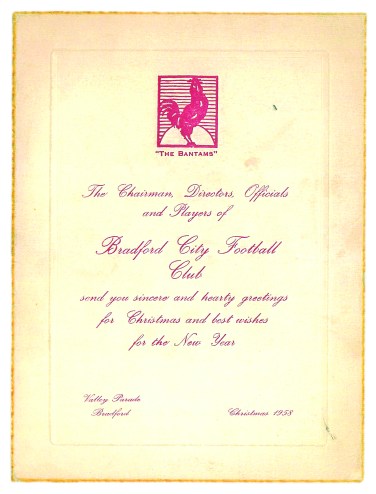
xmas 1958.jpg

The current practice, which is consistent with elsewhere in the commercial world, has been for football clubs to adopt bespoke card designs based around that club. Token images, typically a fir tree, holly or a Santa Claus as opposed to Christian symbolism, have then been incorporated. In essence the modern equivalent is a football card issued at Christmas as opposed to what was previously a Christmas card given by a football club.

The adoption of Christmas cards as tools of marketing and promotion to commercial bodies means that the circulation of football Christmas cards is much greater now than was the case historically. Furthermore, Bradford City Christmas cards (in addition to wrapping paper and birthday cards) have also been a regular stock item in the club shop for much of the last thirty years.

Traditionally football clubs used to send regular cards. Other than a printed insert (for example as in 1958) there was little to distinguish them from what could be bought in the shops.

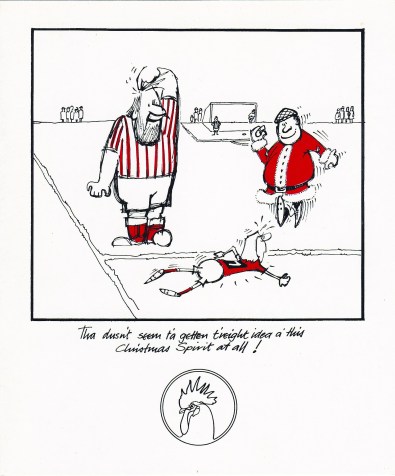
xmas 1981

Featured are cards from 1958 and 1981 both of which display the club crest of the time. That of 1981 shows the crest introduced that year with the revival of the Bantam identity.


John Dewhirst

John’s book A HISTORY OF BCAFC IN OBJECTS (vol 1 in the BANTAMSPAST HISTORY REVISITED series) provides background about City memorabilia. It is available from Waterstones, Wool Exchange or Salts Mill bookshops or follow the link below for BANTAMSPAST HISTORY REVISITED. In future issues of The Parader he will feature objects that tell the history of the club. If you have a City artefact in your possession that you would like him to feature in the programme contact him at johnpdewhirst at gmail dot com or tweets @jpdewhirst

John has written widely about the history of sport in Bradford: Links to his features on the history of Bradford sport

Elsewhere on this blog you can find his programme articles from earlier games this season and last. The drop down menu above provides links to archive images, book reviews and features on the history of Bradford sport that I have written – scroll down for a summary of sundry uploads this year.

Updates to this site are tweeted: @jpdewhirst

===============================================================

Details here about the new bantamspast History Revisited book by Jason McKeown and other volumes in the same series: BANTAMSPAST HISTORY REVISITED BOOKS

==============================================================

Discover more about Bradford football history at www.bradfordsporthistory.com

Recent posts

Scroll down on this page and you will find articles uploaded to this blog in chronological order (most recent at the top). The majority are articles also published in the BCAFC programme and you will find links to these from the menu above.

20181215_1356157789815872076883622.jpg

The following are other features on this blog published during in the last six months:

History in the making this season?

Photos of Valley Parade in the 1970s

Campaigning against Edin Rahic

Photos of Valley Parade redevelopment, 1986

Die Deutsche Frage, visit to Germany Nov-18

Book Review – One Year, Two Seasons by Richard Wardell

Book Review – The Beautiful Badge by Martin Routledge

Book Review – Kick Off by David Pendleton

Book Review – How football began by Tony Collins

Refer to the menu above to navigate.

Thanks for visiting my blog!


My most recent article on VINCIT tells the long forgotten story of Shipley FC.

Tweets: @jpdewhirst

Valley Parade photos: 1970s

Welcome to my blog where you will find features about the history of football in Bradford – in particular about Bradford City AFC – a number of which have been published in the BCAFC matchday programme.

The drop down menu above provides links to articles as well as sundry book reviews. I am also uploading an irregular series of online albums recording various themes, typically archive photographs or Bradford City and Bradford Park Avenue memorabilia from my own collection.

These photographs feature Valley Parade in the early 1970s when I first attended games. Of note is the photo from 1970 with the chimney of the old Valley Road power station. The basic design of the old Main Stand can also be seen which was dilapidated even by then, dating back to 1907.

John Dewhirst

Another batch of images will be uploaded later this month. Refer previous album by following ‘Archive Images‘ as above.

Scroll down and you will find articles uploaded to this blog in chronological order (most recent at the top). The majority are articles also published in the BCAFC programme and you will find links to these from the menu above.

Other archive images of Valley Parade from these links:

The development of Valley Parade, 1886-1908 – includes a history of the early development of the ground.

Valley Parade in the 1960s

Valley Parade photos from the 1980s

Photos of the rebuilding of Valley Parade in 1986 – Part 1

Valley Parade photos from the 1990s

Construction of the Midland Road stand in 1996

Valley Parade of today (photos taken by myself at the Stephen Darby Testimonial July, 2019)

More photos of today’s Valley Parade (photos taken by myself at the Salford City fixture in December, 2019)

Other galleries to follow with links updated from here.

Refer to the menu above to navigate.

Thanks for visiting my blog!

Tweets: @jpdewhirst


The Glorious Revolution

In the history of Bradford City AFC there has never been anything like the revolt against Edin Rahic but the way in which the revolution took place has also been quite distinct from what might have happened in an earlier age. My personal observations thereon…

When the announcement came yesterday about Edin Rahic’s departure it felt like a massive relief. Only six months earlier it seemed that Bradford City might be heading in the same direction as Blackpool or Coventry, its affairs dominated by bitterness towards the club’s owners and division among supporters. Yet now the bogey man has gone.

Nevertheless, whilst we continue to celebrate his exit we also need to be realistic about the immediate outlook. Notwithstanding that he has gone, the affairs of the club will not magically be transformed overnight and it is important to manage expectations. The hard work of rebuilding the club now begins, not just on the field but also in many other areas behind the scenes and it is going to be a long slog. During the course of the next few months we will continue to have reversals and inevitably frustrations will arise.

The biggest danger is that new scapegoats emerge and blame becomes directed at members of the club’s leadership team. What is needed now is unity and for everyone to get behind the efforts of David Hopkin, Julian Rhodes and Stefan Rupp in driving a turnaround. We are vulnerable to the negativity of the cynics and conspiracy theorists in our ranks, those who have enjoyed the opportunity to be negative during the last twelve months and who will struggle to quit the snide and contrarian comments.

The experience of the last year has demonstrated both the strength and weakness of social media in the sort of situation that has existed at Valley Parade. As supporters we have much to thank THE WIDTH OF A POST for. Its role in helping to articulate the grievances of supporters has been pivotal and it has also set the tone for how those concerns should be expressed. Not surprisingly it has been hugely influential in presenting compelling arguments about the need for change at Bradford City and encouraging feedback and contribution on its site from readers. For anyone wanting to follow events at Valley Parade from afar, the WOAP pages have provided a succinct and real time summary of views. It has thus been an invaluable supporter resource.

If WOAP has represented a strength of social media, Twitter and certain supporter forums have also revealed the dark side. Whilst Twitter and the forums have provided an important means to exchange information and opinion, they have also facilitated the expression of what can only be described as emotive and inchoate noise as well as abuse. Twitter has been a prime example of this with a number of contributors thriving in being deliberately contrarian to get attention, focused more on witty and distracting soundbites than constructive comments. (For the record, IMHO the Bantams Talk forum is leagues apart from the apt named bovine slurry forum and is generally sensible in its content. Judge The Cow’s Arse forum for yourself – it’s pretty obvious why they are not taken seriously with occasional nuggets of wisdom obscured by the slurry of expletives.)

In a similar situation in the days before the internet we might have been forced to rely upon protests at games to make the point. Based on what I recall in the 1980s and 1990s, the directors would then have resorted to challenge the legitimacy or validity of protests and the focus would have shifted away from the issues at hand to the personalities of the opposition and the circumstances of the protests. In other words, one of the reasons why supporter protests have tended to be ineffective is that they create distraction from the core grievances and potentially undermine arguments for change.

More often than not, protests fail to communicate exactly what people are upset about. Another massive risk is that they give rise to extreme emotions which again undermines the credibility of the arguments. Last but not least, many people who have grievances have little interest in joining a picket line or protest march or funding a flypast and this can result in protests being entirely unrepresentative.

Edin Rahic was / is a manipulative individual and there is little doubt that had there been a programme of supporter protests he would have claimed that these were the cause of the club’s problems rather than himself. The planned flypast would have been entirely counter-productive to the very objective it sought to achieve and would have more likely emboldened him.

Given that just over twelve months ago Rahic had himself been feted by travelling supporters in Germany, he was able to dismiss supporter disenchantment as fickle emotion. Besides he also deflected legitimate complaints as xenophobic reactions. A campaign of protests was therefore never going to be effective to depose him and despite a certain individual demanding that we ‘show some bloody fight’ it was never quite explained how to do so. Far easier for him to dismiss others as ‘apologists’ than explain how a successful protest could have ever taken place.

For these reasons, this is why the WOAP coverage and the strategy of getting media attention about the circumstances at Valley Parade was going to be more effective at convincing the principal decision-maker of the need for change. Ultimately WOAP proved influential because it helped give expression to a groundswell of genuine and heartfelt comments and this was always going to be more persuasive than chants or tweets of ‘Edin Out’. It was notable that Stefan Rupp followed WOAP and that in the final event he would listen to reason. However, ‘cash tells its own story’ – the decline in form and the deteriorating finances at the club spoke volumes and it was only a matter of time before change had to happen.

Just as the supporter protests proved unnecessary, so too the Supporters’ Trust has proved completely ineffectual which raises fundamental questions about its relevance and reason to exist. One of the priorities for the new regime will be to redefine its communications and PR strategy, not least how it engages with supporters. This in itself demonstrates how things have changed at Valley Parade and the fragmented nature of the support base makes it questionable whether a central supporters’ body is needed. The experience of the last few months has shown quite the opposite, that the voice of supporters has been given expression in an altogether different way that has completely bypassed the BCST. Like the resort to protests, the BCST belongs to an earlier era.

The true test of this revolution will be the next six months and I genuinely believe that the club will eventually emerge stronger. Long live Bantam Progressivism!

John Dewhirst

Recent posts

Scroll down on this page and you will find articles uploaded to this blog in chronological order (most recent at the top). The majority are articles also published in the BCAFC programme and you will find links to these from the menu above.

20181215_1356157789815872076883622.jpg

The following are other features on this blog published during 2018:

Photos of Valley Parade in the 1970s

Campaigning against Edin Rahic

Photos of Valley Parade redevelopment, 1986

Die Deutsche Frage, visit to Germany Nov-18

Book Review – One Year, Two Seasons by Richard Wardell

Book Review – The Beautiful Badge by Martin Routledge

Book Review – Kick Off by David Pendleton

Book Review – How football began by Tony Collins

The saga of Bradford’s cross-city rail links

Refer to the menu above to navigate.

Thanks for visiting my blog!

Tweets: @jpdewhirst

Valley Parade photos: rebuilding work 1986

Welcome to my blog where you will find features about the history of football in Bradford – in particular about Bradford City AFC – a number of which have been published in the BCAFC matchday programme.

The drop down menu above provides links to articles as well as sundry book reviews. I am also uploading an irregular series of online albums recording various themes, typically archive photographs (the majority of which taken by myself) or Bradford City and Bradford Park Avenue memorabilia from my own collection.

These photographs feature the rebuilding of Valley Parade after the fire tragedy in 1985. The first image is an aerial photo of the ground in the aftermath of the fire and then the service of remembrance on 21 July, 1985 before rebuilding took place.


The demolition of the ground proceeded apace during 1986 after new funding was confirmed. Two particular photos are of note. The first which shows the remains of the ferro-concrete foundations of the original Midland Road stand, 1908-1950 and evidence of the old Bradford rivalry in the graffiti on the back of the then Midland Road shed.

The other photo to highlight focuses on the site off South Parade where the old Main Stand had stood. This shows the slope afforded by the topography that provided an excellent vantage for spectators. It was this that made the ground a cost-effective, economical option for the former Manningham FC that played rugby at Valley Parade between 1886-1903 (full details of the origins and history of the ground is narrated in my book, ROOM AT THE TOP). The slope provided a ready made terrace (and Bowling FC similarly exploited a railway embankment to create a crude terrace at its Usher Street ground in the nineteenth century).


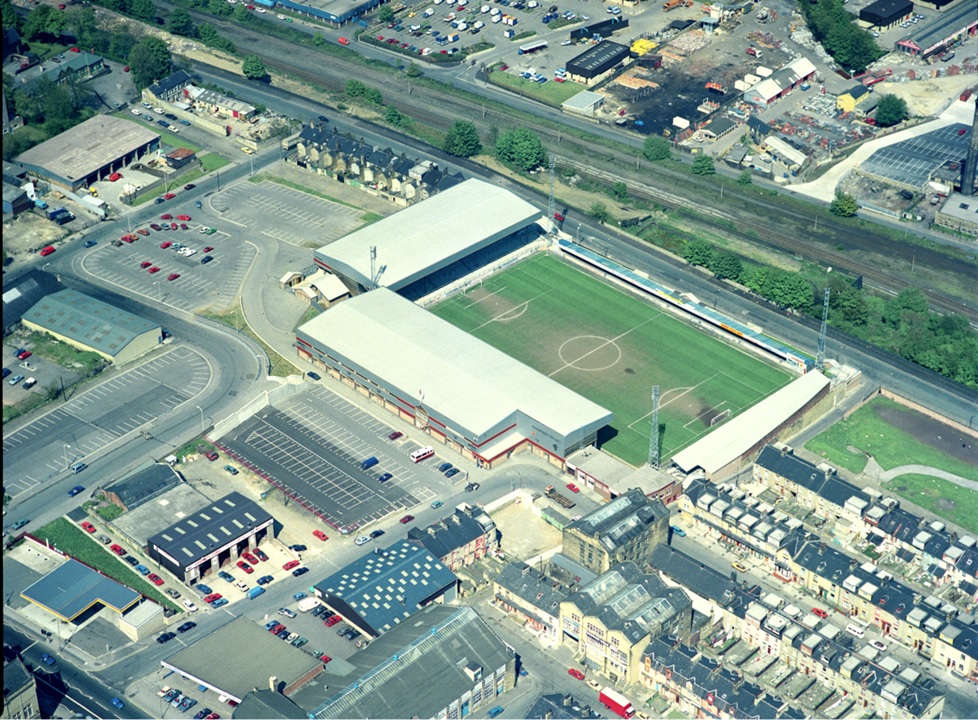
The new Valley Parade was reopened in December, 1986 with a fixture between Bradford City and an England XI. The aerial photo from that time confirms that the only surviving structure at the ground is the dressing rooms/office complex in the south west corner that dates from 1960.


Valley Parade 1986

Further albums will be uploaded in due course and the drop down menu *Archive Images* will provide links. News of updates will be tweeted: @jpdewhirst

John Dewhirst

I have written widely about the history of sport in Bradford – Links here to my online articles – and I am involved with the VINCIT online journal that covers the history of Bradford sport with articles written by a number of enthusiasts:  www.bradfordsporthistory.com