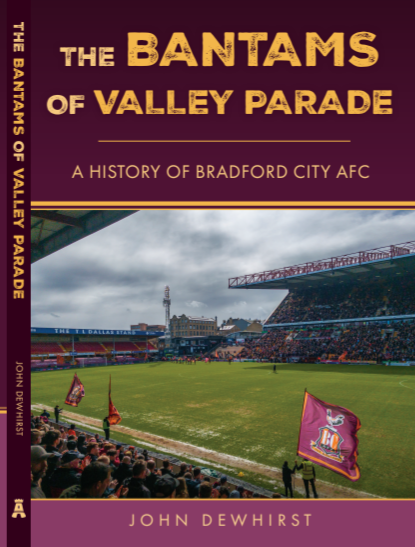
Published by Amberley – released in September, 2026 price £16.99
New book announcement
I am pleased to announce that my next book on the history of Bradford City is released in September, 2026.
The Bantams of Valley Parade, A History of Bradford City AFC is published by Amberley and covers the history of the club from its rugby origins in 1880 through to the modern day.
Twenty-five years after relegation from the Premier League and the subsequent financial implosion, the book covers the modern era in detail and includes a fresh assessment of the Richmond era. It also incorporates my research from the last ten years with a lot of fresh content about the early history of the club and key personalities to provide a new perspective.
Further information about the release will be provided on this blog and through Twitter (@jpdewhirst). You can join the mailing list by contacting me by DM on Twitter or by email – books at bantamspast dot net.
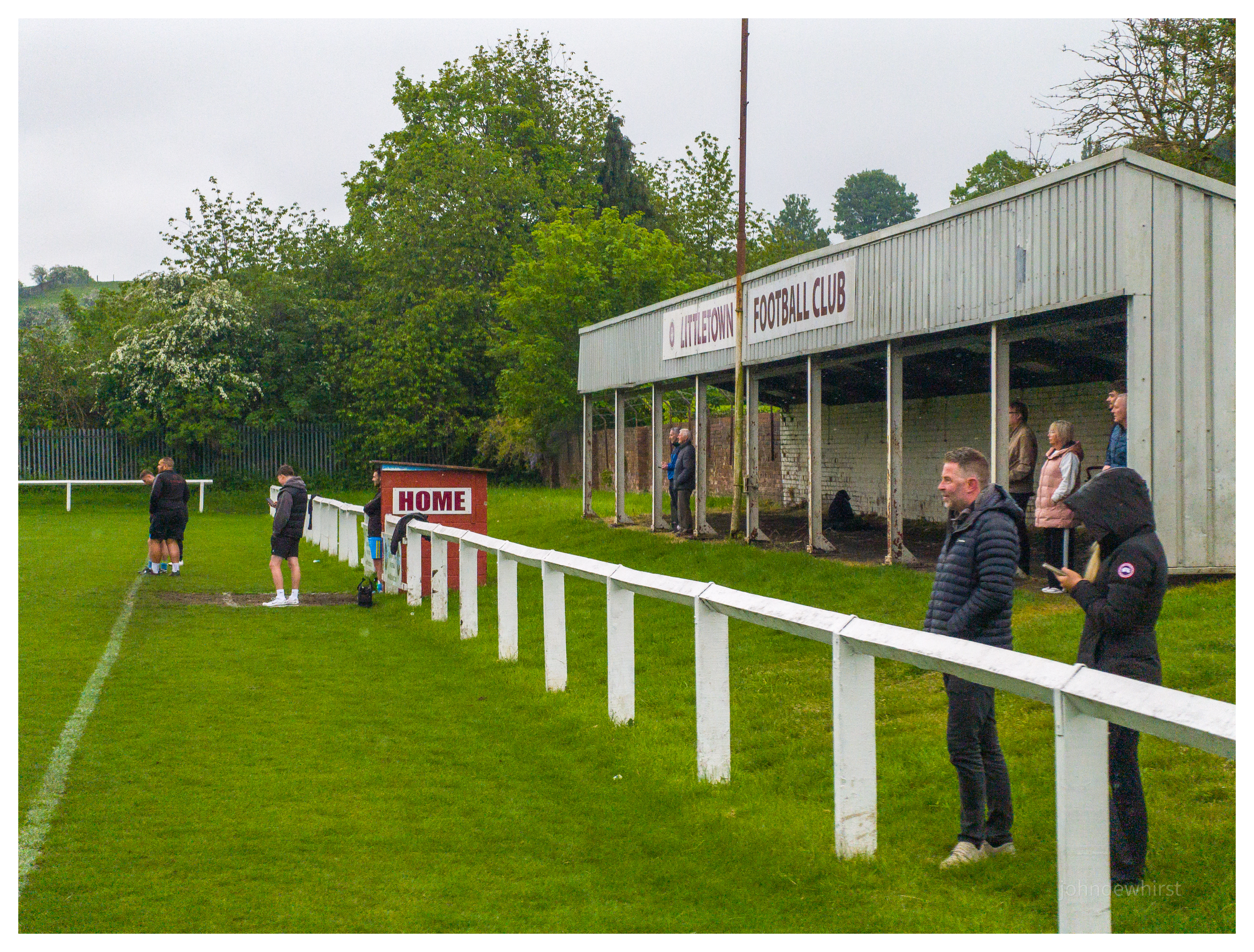
A groundhop in Heckmondwike
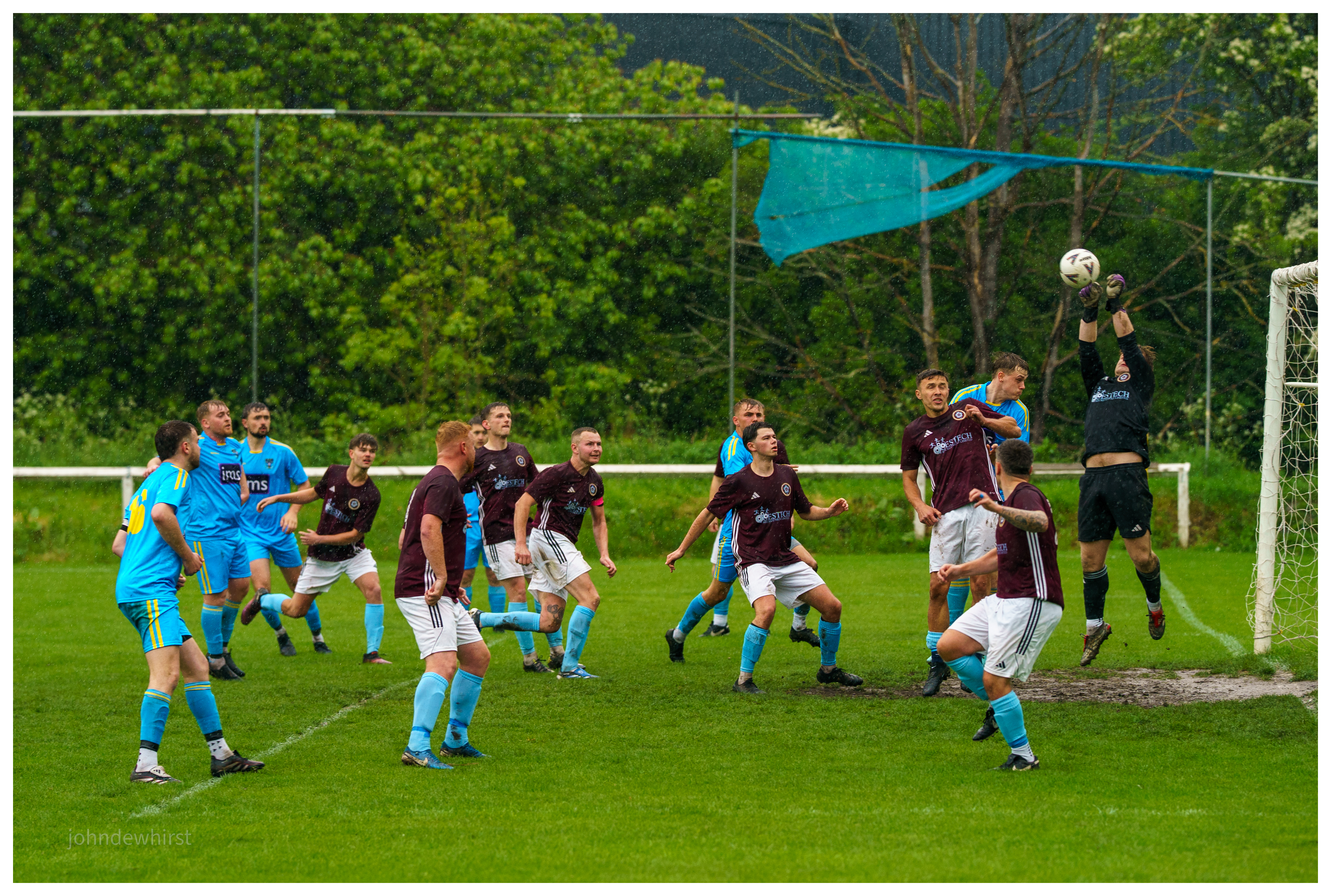
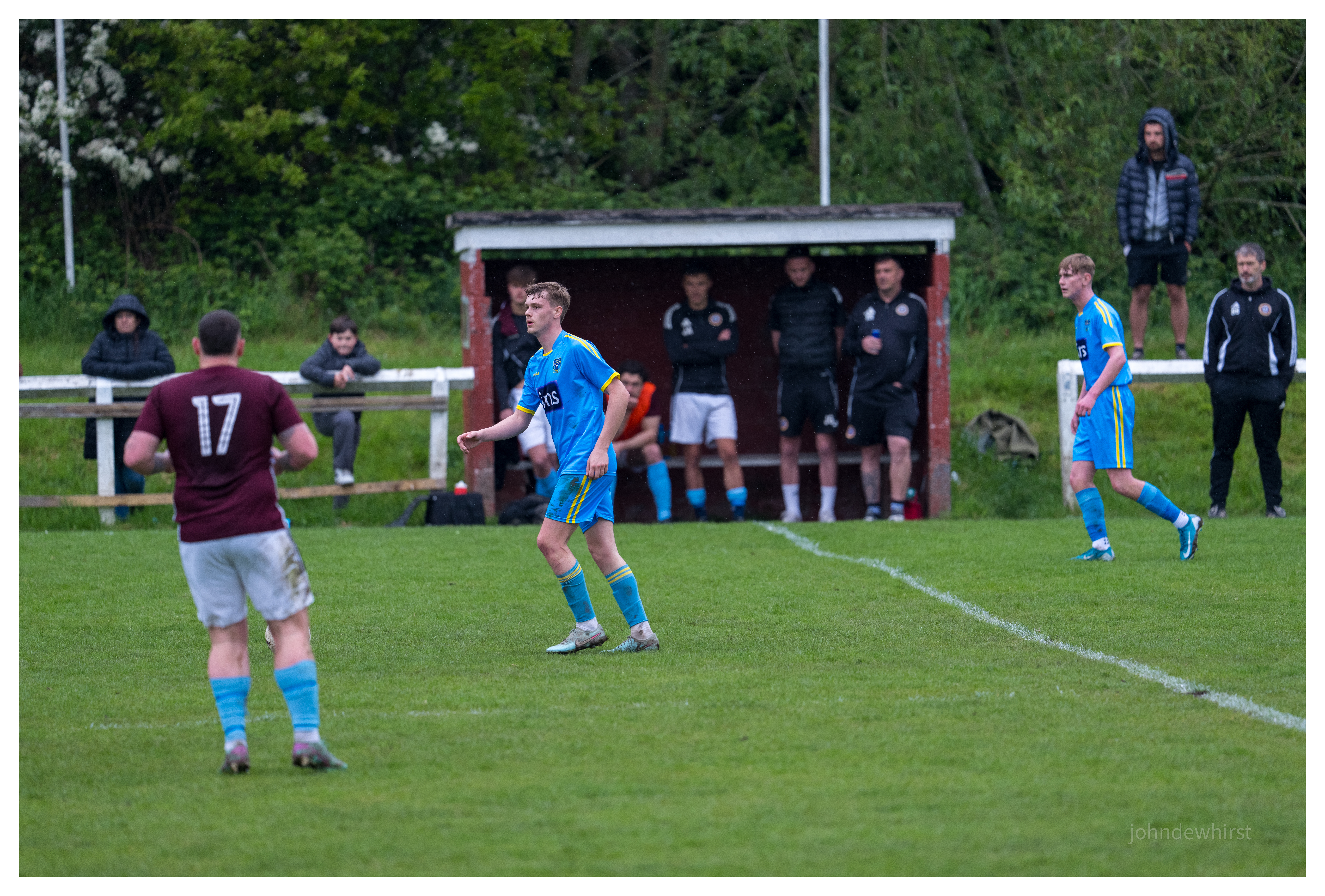
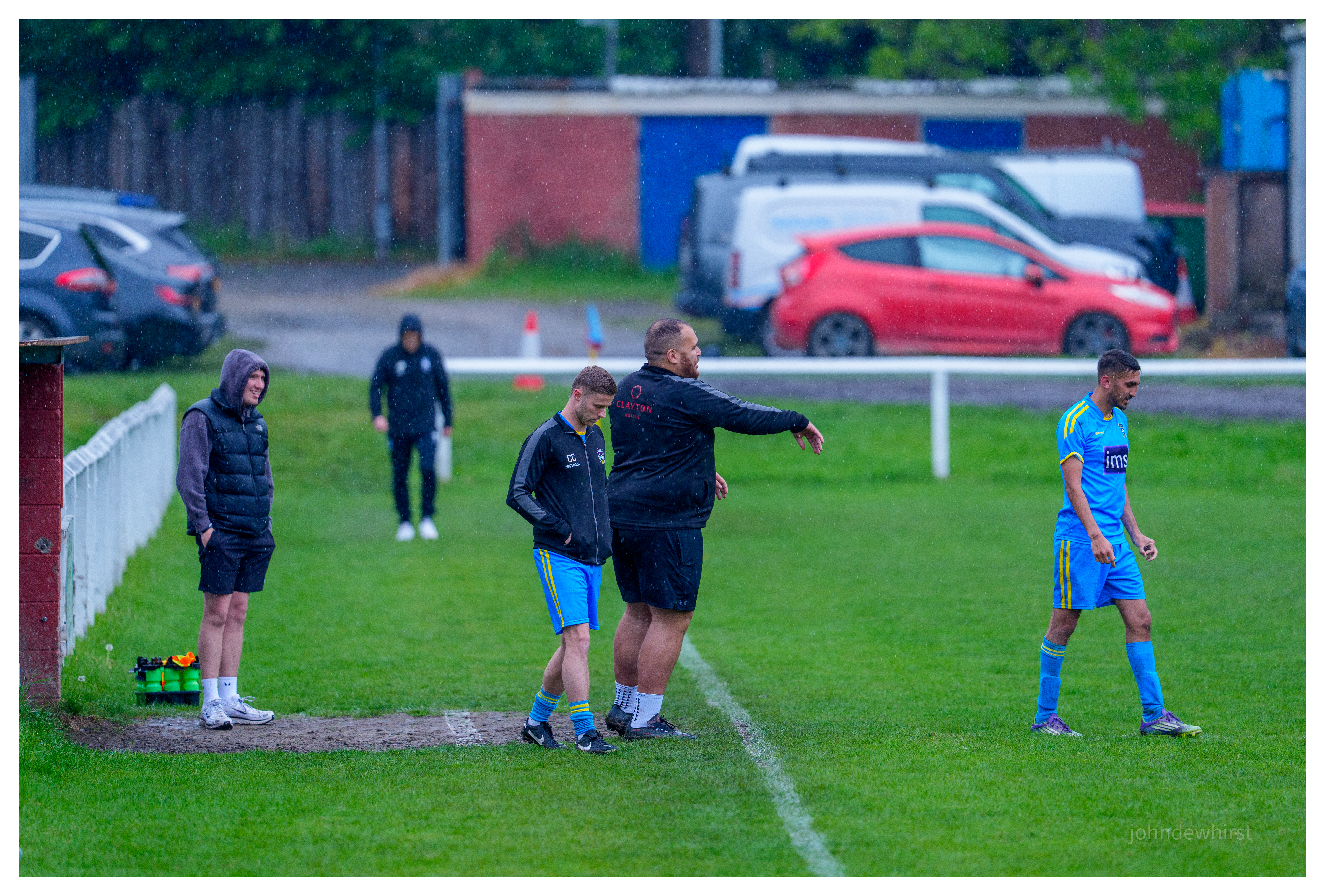
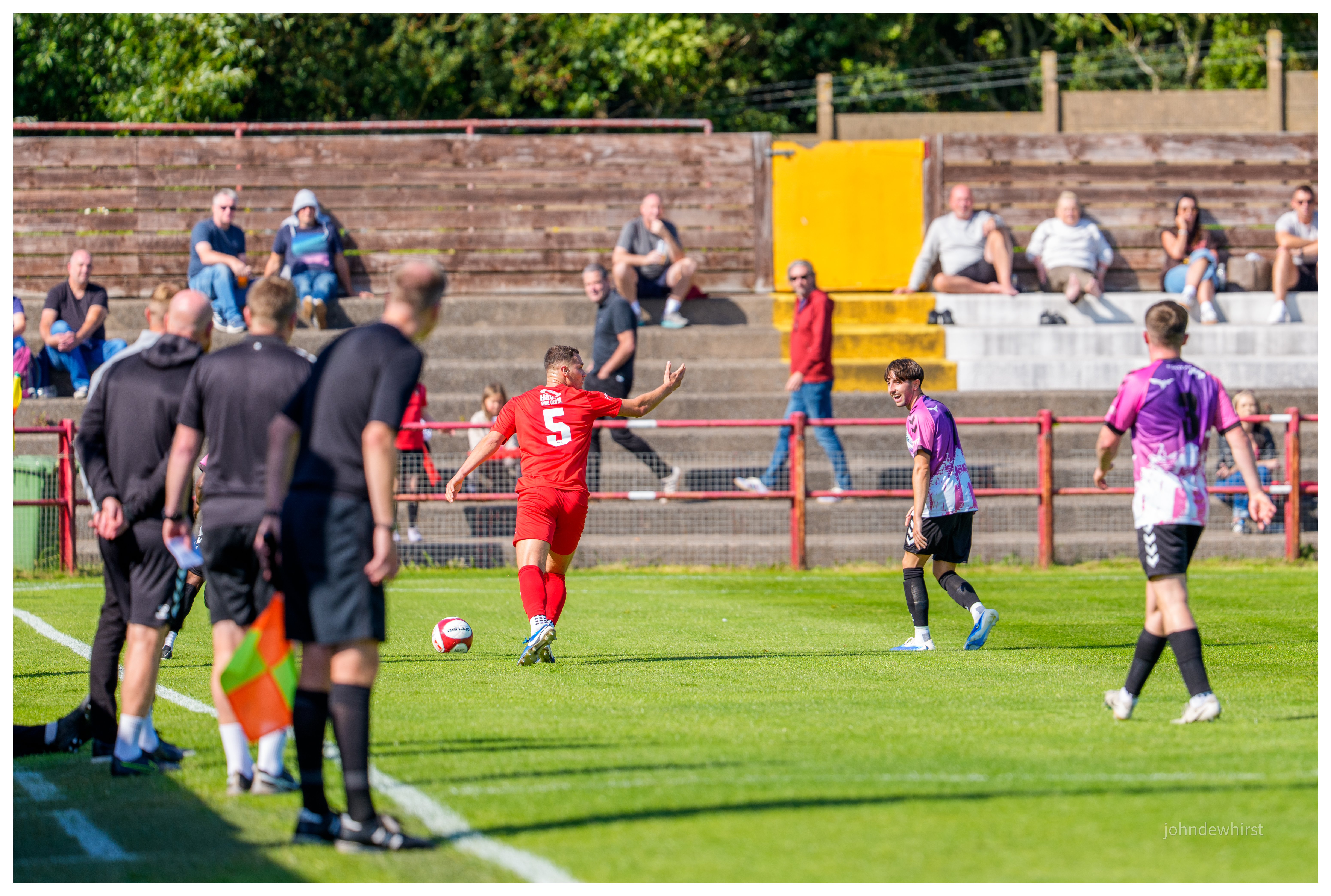
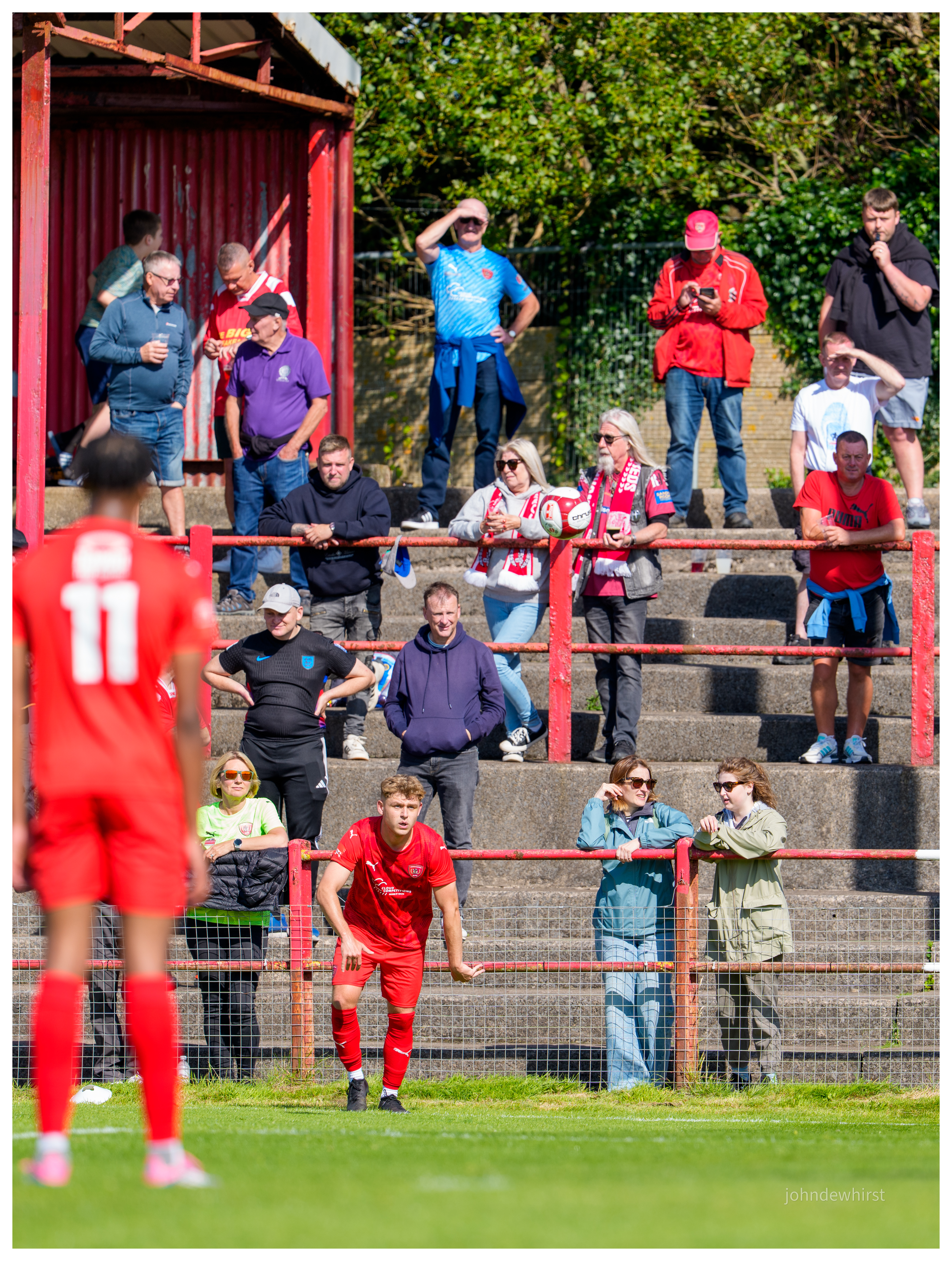
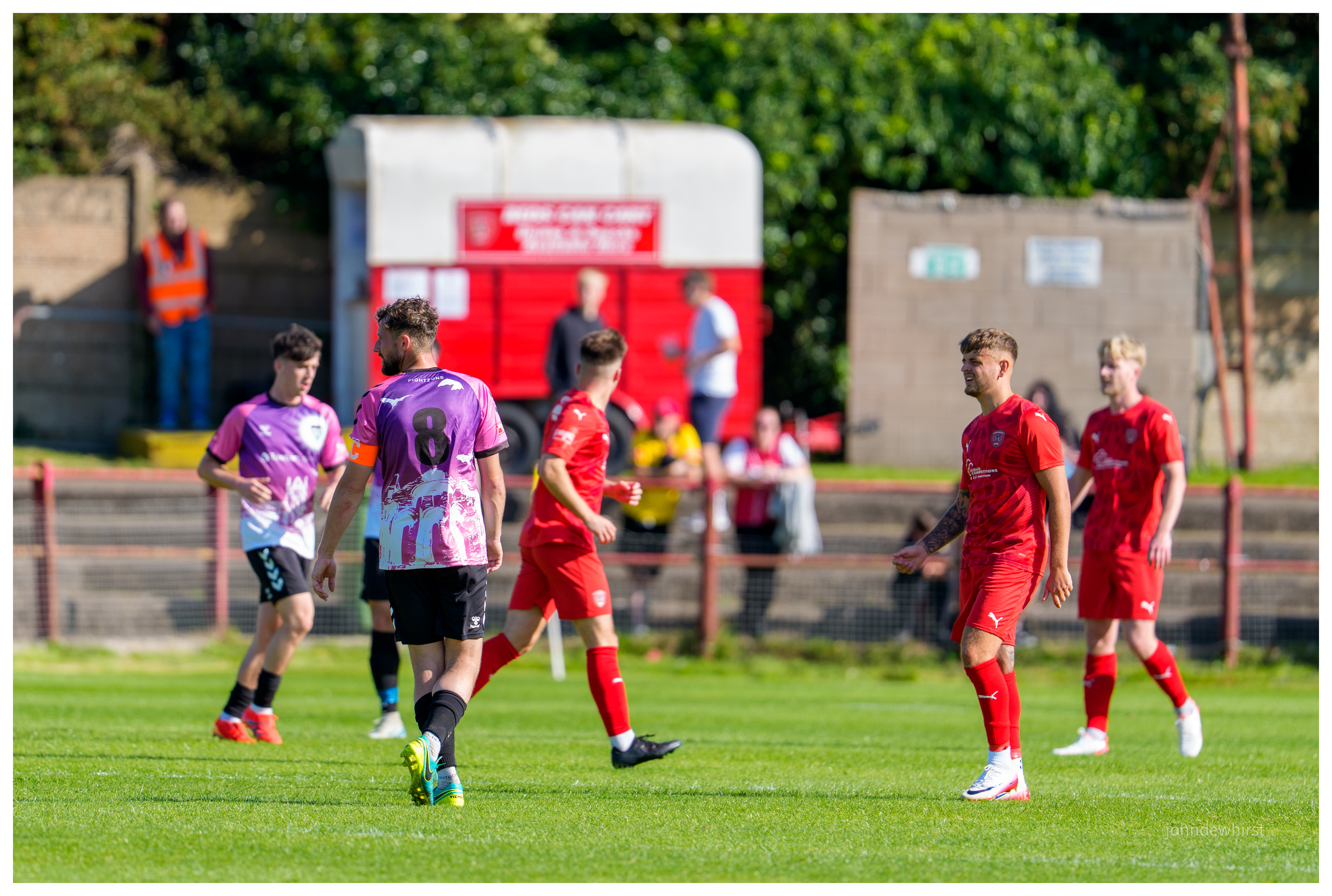
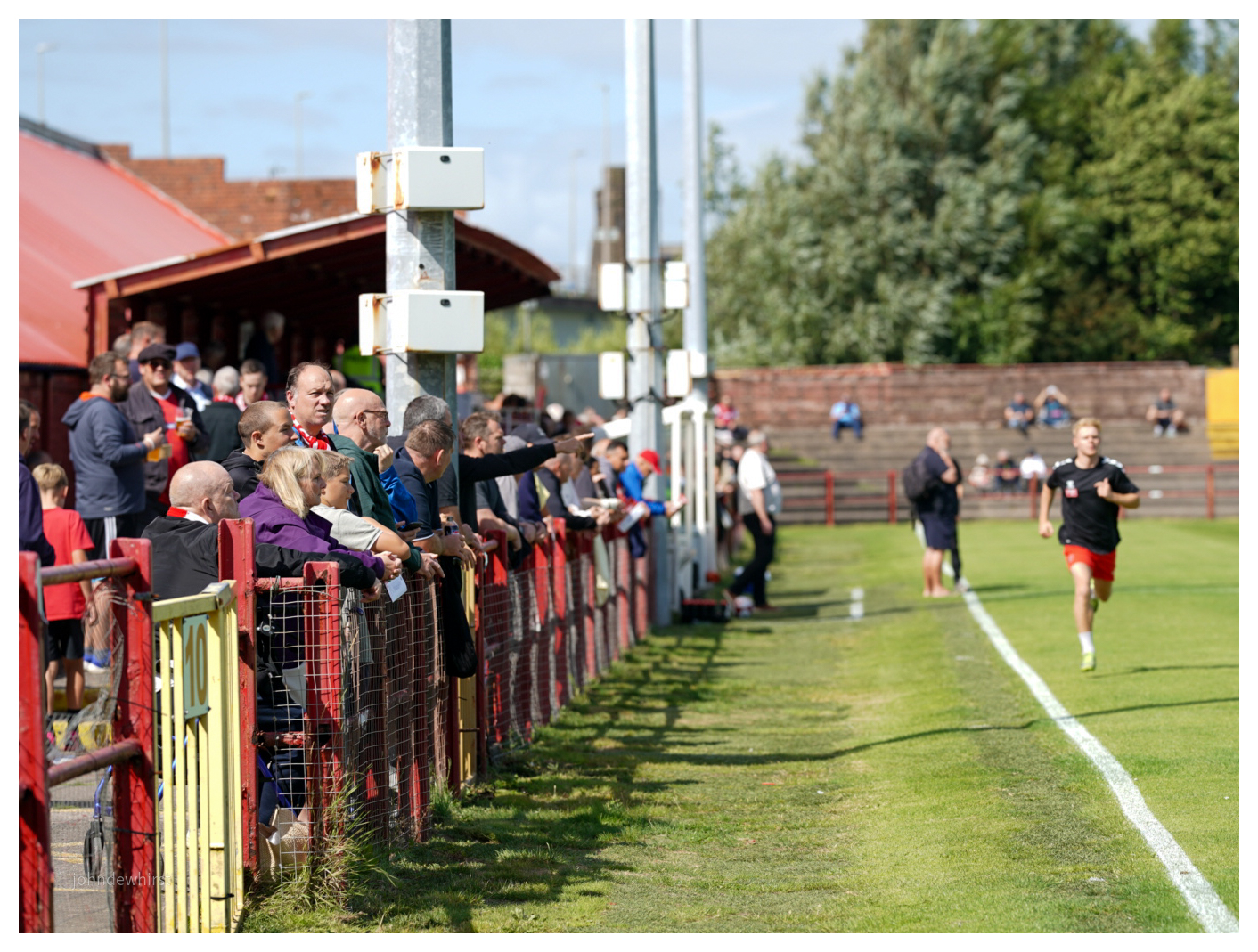
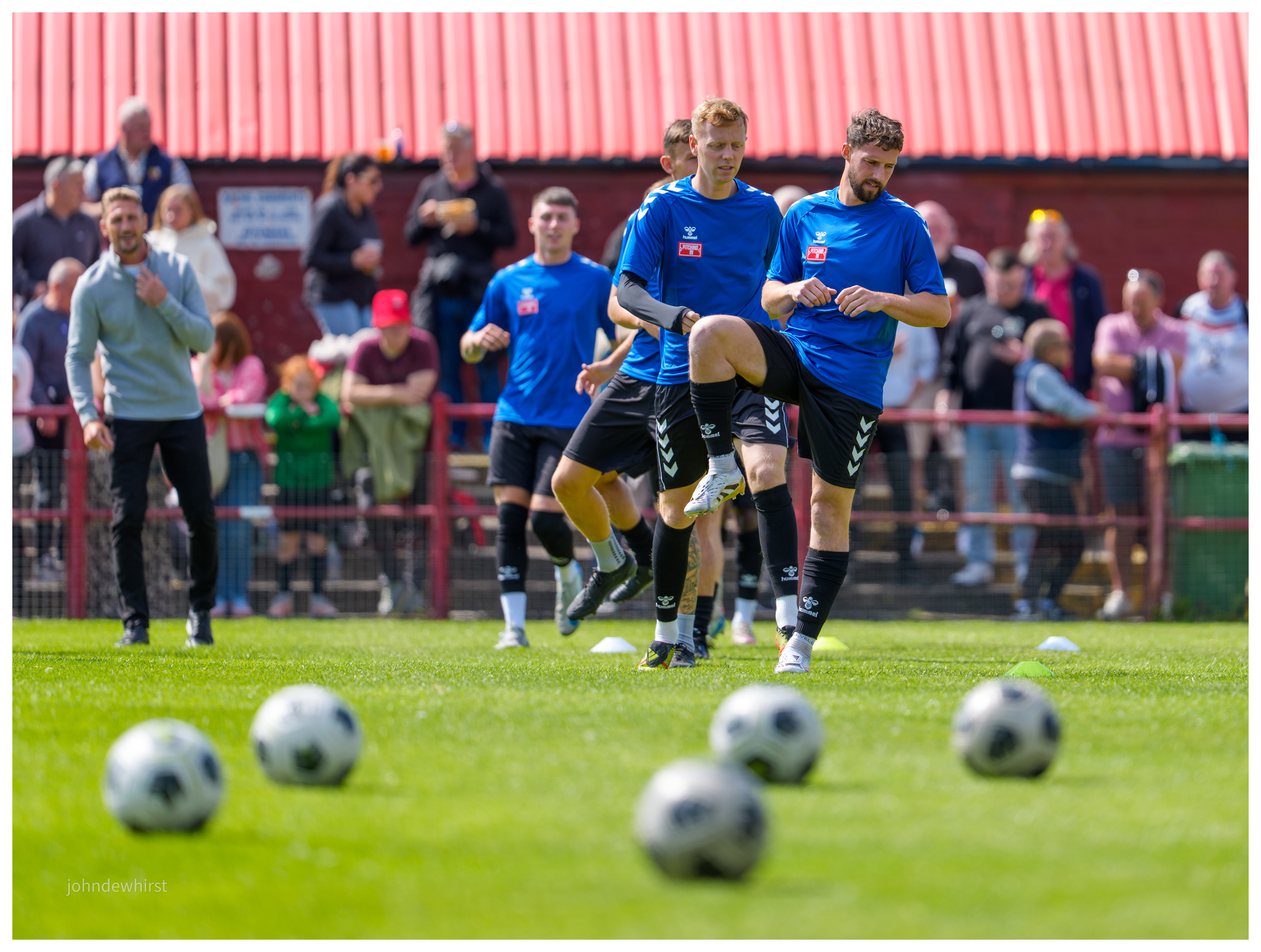
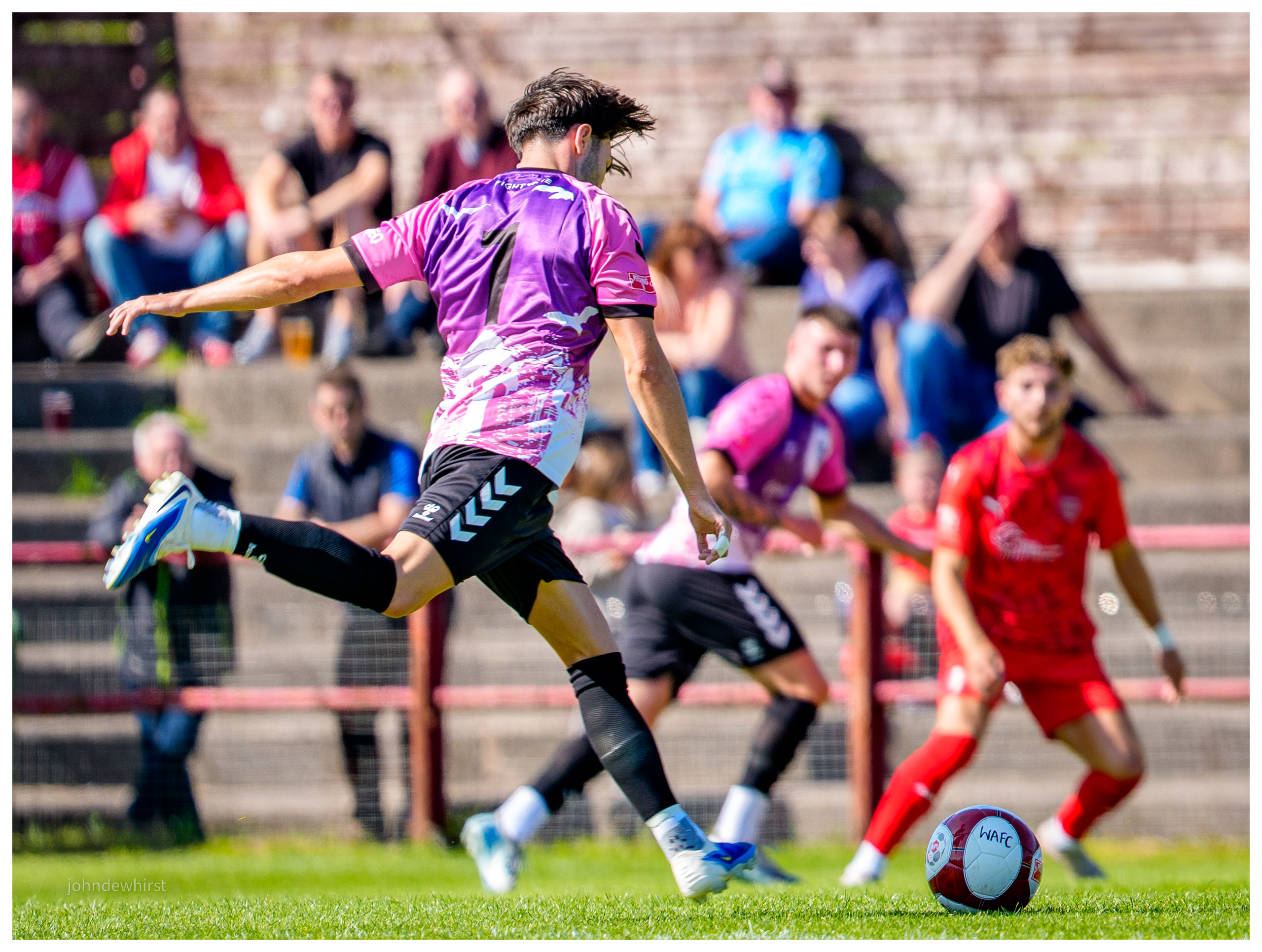
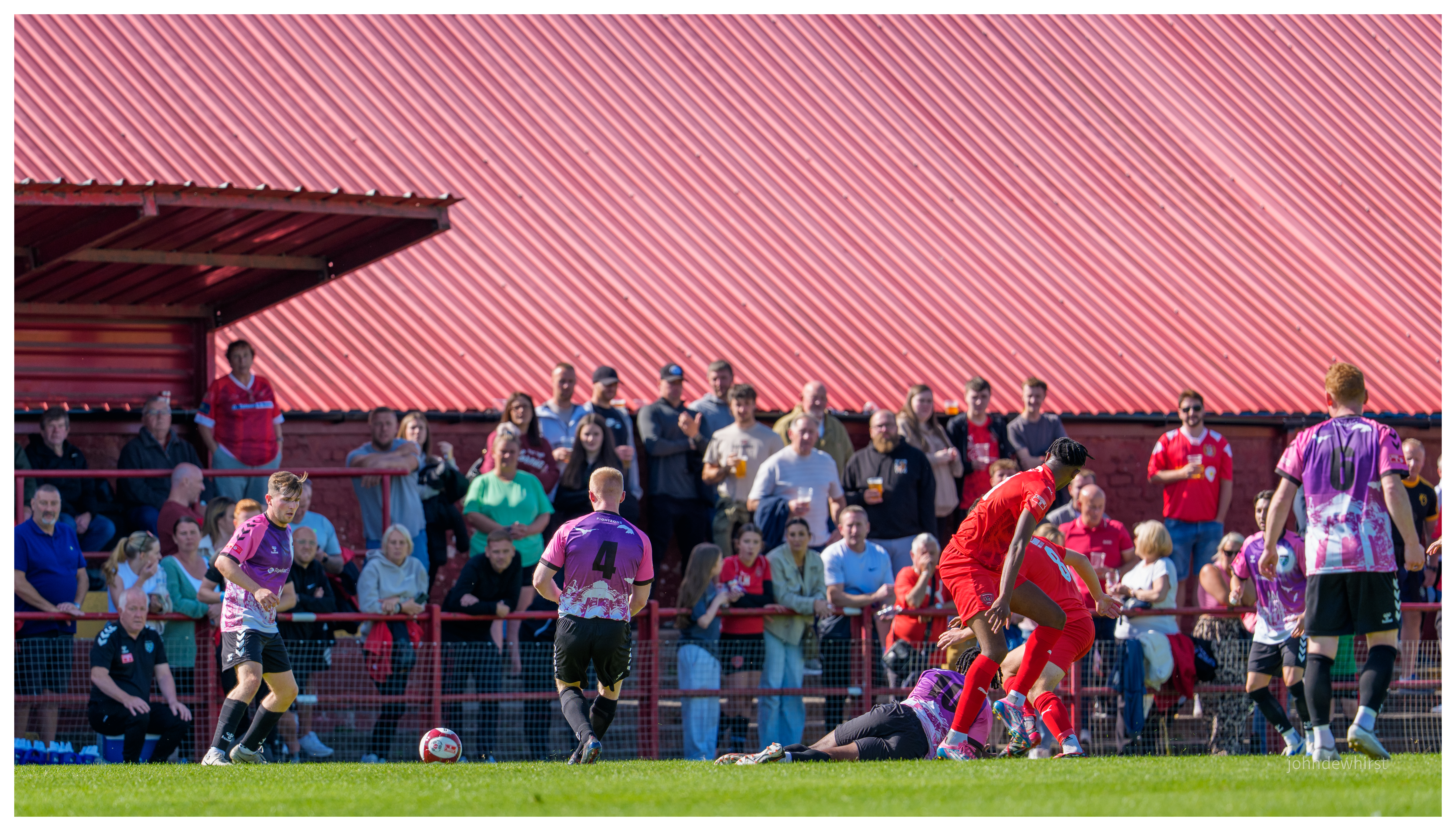
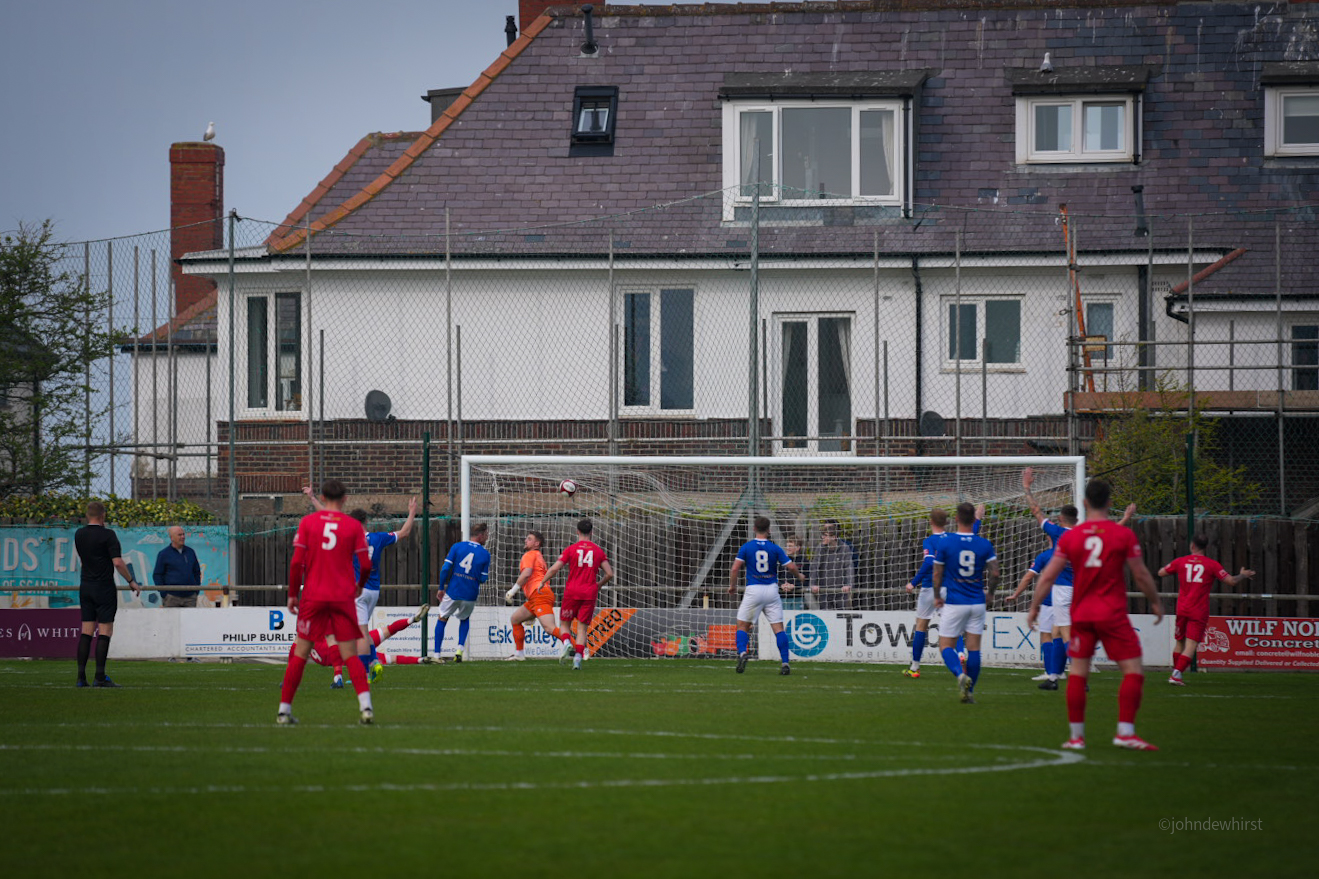
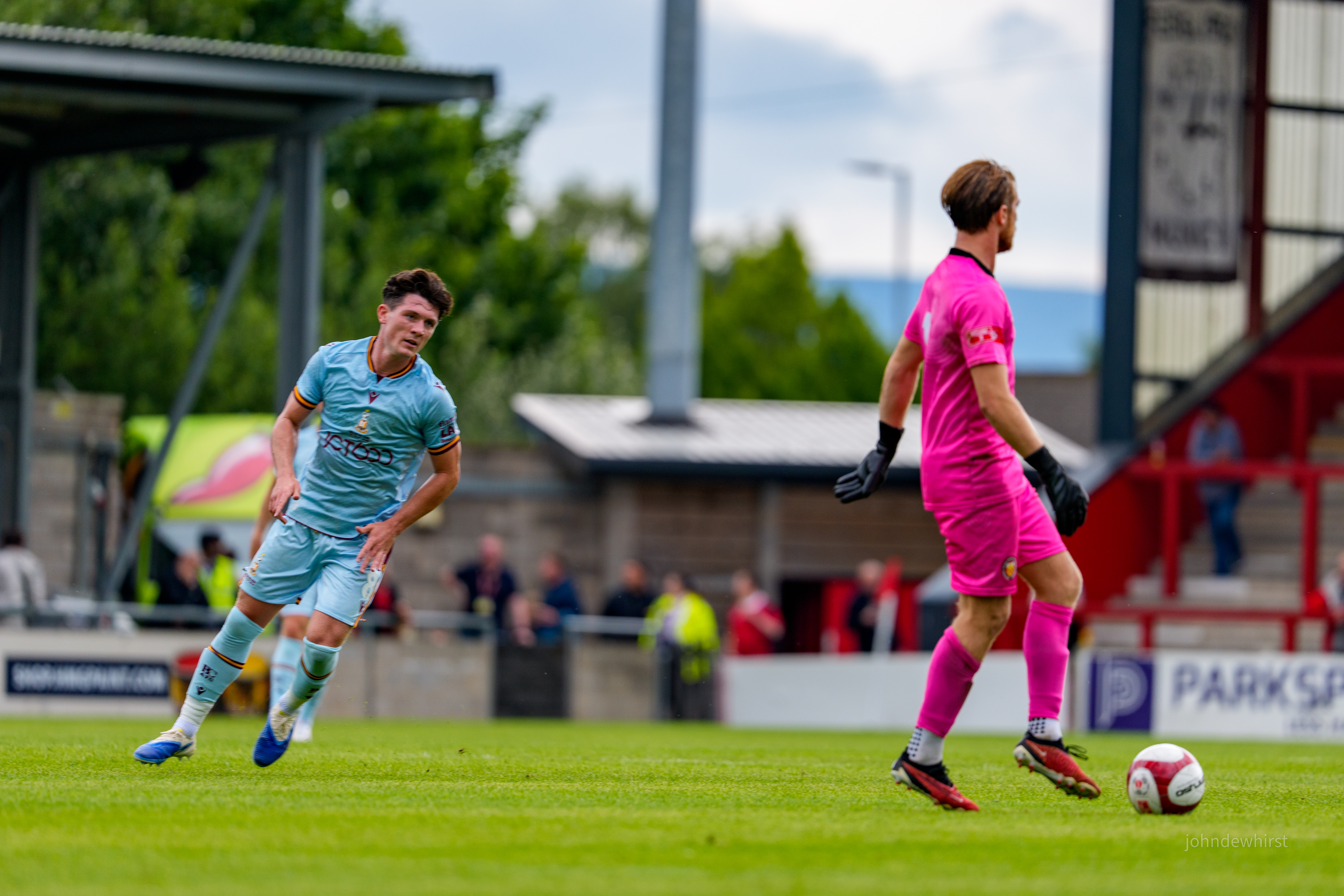
Photos from the visit of Salts FC to Littletown FC for a Yorkshire Amateur League Championship fixture on 9th May 2026.
The game finished 1-1 and Salts FC finished the season as champions.
Beck Lane was formerly home to Heckmondwike FC that was one of the earliest Rugby Union clubs in West Yorkshire. The club’s origins appear to have been church related (CoE) in the early 1870s with rugby fixtures contested from around 1875. In November 1878 the Beck Lane ground staged a floodlit game with Bradford Albion (one of a series of exhibition floodlit events in the north that year, including a game involving Bradford Zingari in Frizinghall, Bradford).
Proximity to the former Heckmondwike railway station was a major advantage and I suspect that the adjacent railway embankment was used as a vantage by spectators much in the same way as at Bowling FC’s Usher Street ground. My guess is that there would have been an open ‘grandstand’ on the side where there is now a roofed cover, the other side bordered by Spen Beck. Conceivably the ground could have provided capacity for two to three thousand.
Heckmondwike FC had a respectable record, defeated in the 1880 Yorkshire Challenge Cup Final by Wakefield Trinity and both Manningham FC and Bradford FC played games at the ground.
Heckmondwike players made a total of 15 appearance for England before 1895 including the celebrity player Dicky Lockwood who joined from Dewsbury in 1889 and John Sutcliffe. The latter was a former member of the Bradford FC team in 1886 and was one of the first to make a name for himself as a soccer professional. After a brief spell at Park Avenue, he moved to Bowling and later Heckmondwike. In 1889 – when Heckmondwike FC was suspended following allegations of professionalism – he joined Bolton Wanderers where he played as goalkeeper. With Heckmondwike and then Bolton, Sutcliffe represented England once at rugby and then five times at association football.
Sutcliffe returned to Bradford with Bolton Wanderers for friendlies involving a West Yorkshire League XI at Park Avenue in September, 1896 and then against the Bradford & District FA select XI at Valley Parade in September 1901. He also played for the English League against the Irish League at Valley Parade in October 1903 and in October 1907 returned to Park Avenue with Plymouth Argyle for a Southern League fixture. After the First World War he was appointed coach by Bradford City.
Heckmondwike FC struggled financially and in 1894 there was an aborted merger with Liversedge. In 1896 it joined the Northern Union but converted to association football in 1903 – predating the formal decision by Manningham FC to abandon rugby by four weeks.
In April 1905 Bradford City Reserves defeated Mirfield United in the West Yorkshire Cup final at Beck Lane.
Latterly the ground was acquired by Huddersfield Town for reserve and junior games and since 1960 has been the home of Littletown FC.


Historic information from my books ROOM AT THE TOP and LIFE AT THE TOP (Bantamspast History Revisited)
Remembrance Day reflections
We remember
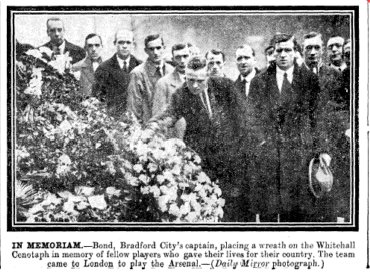
The Great War of 1914-18 was a conflict that has a particular poignancy for Bradford City supporters with four serving and seven former players of the club having lost their lives. The fatalities included Jimmy Speirs, team captain and scorer of the winning goal in the 1911 FA Cup Final replay as well as Bob Torrance, acclaimed as man of the match in the replay.
Whilst it is important to remember the sacrifice of the club’s players we should also recognise that the so-called Great War of 1914-18 impacted greatly on the football club. Indeed, what tends to be overlooked is that numerous supporters of the club were also among the war dead and injured. In turn the war touched upon the families of Bradfordians. In the aftermath of the war nothing was quite the same for either the city of Bradford or Bradford City. Aside from the personal tragedies, the city had lost its German community and the finances of Bradford City AFC were depleted to the extent that the club lost its first division status in 1922.
Historic links between sport and the military in Bradford
The war also redefined the links between the football club and the local military. When I undertook my research on the origins of football in Bradford, it became apparent that the historic ties between sport and the military in the district had long since been forgotten. This is ironic given the constant reminder provided by the traditional club colours of City and Avenue / Northern having been derived from military connections. My belief is that after the carnage of the Great War the military heritage tended to be overlooked, not necessarily for ideological reasons but because it was probably seen as outdated, if not irrelevant as people looked to the future.
The early history of Manningham FC – established in 1880 and the predecessor of Bradford City AFC in 1903 – had strong links with the citizen soldiers of Bradford. The generation of men involved with establishing ‘football’ clubs in Bradford during the second half of the 1870’s was typically connected with the Volunteer – or territorial – army units in the town and ‘athleticism’ in the widest sense was considered to be a form of military training by virtue of its health benefits.
The Volunteers had been established in 1859 to provide a home defence force to protect the UK from invasion and in Bradford the principal units were the 3rd Yorkshire (West Riding) Rifle Volunteer Corps and the 2nd Yorkshire (West Riding) Artillery Volunteers Corps.
One reason for the popularity of the Volunteers was that they provided recreational opportunities and in particular access to new sporting activities such as gymnastics and ‘football’ (which in Bradford meant rugby). There was even a dedicated side, Bradford Rifles FC established in 1875 which comprised of a high proportion of Bradford Caledonian FC players (one of the oldest clubs, established in 1873 and also the biggest), a number of whom subsequently became associated with Manningham FC in leadership roles.
This connection encouraged a natural sympathy towards the military but so too did the proximity of Valley Parade to Belle Vue barracks where the 3rd YWRRVC was based. Closer still were the artillery barracks adjacent to Cottingley Terrace just off Valley Parade. Both were used on various occasions for meetings as well as changing and training facilities by Manningham FC and the infant Bradford City club. (The story of the Bradford Rifles is told here on VINCIT)
The dominant political culture at Valley Parade and Park Avenue prior to World War One was unquestionably Conservatism and it was second nature for the two clubs and their membership to espouse patriotism. A good example of this was the decision to adopt claret and amber in 1884. This came at a time of patriotic fervour associated with the Sudan crisis and the excitement that Bradford men might actually go to war. Arguably it was the same enthusiasm thirty years later with spectators at Valley Parade being actively encouraged to enlist to fight on the western front.
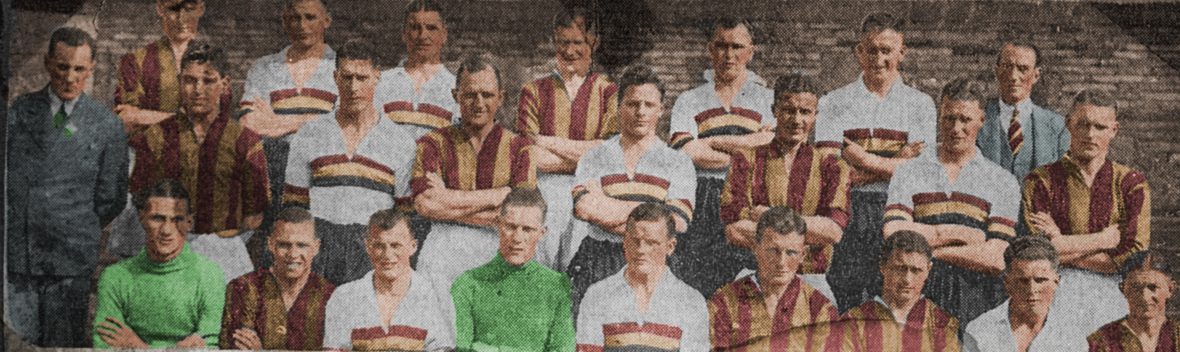
The traditional sporting colours of Bradford were red, amber and black whose origin can be traced to the original Bradford Volunteers of the Napoleonic era. The colours of the local West Yorkshire regiment with whom the 3rd YWRRVC was affiliated were claret and amber.
The Valley Parade War Memorial

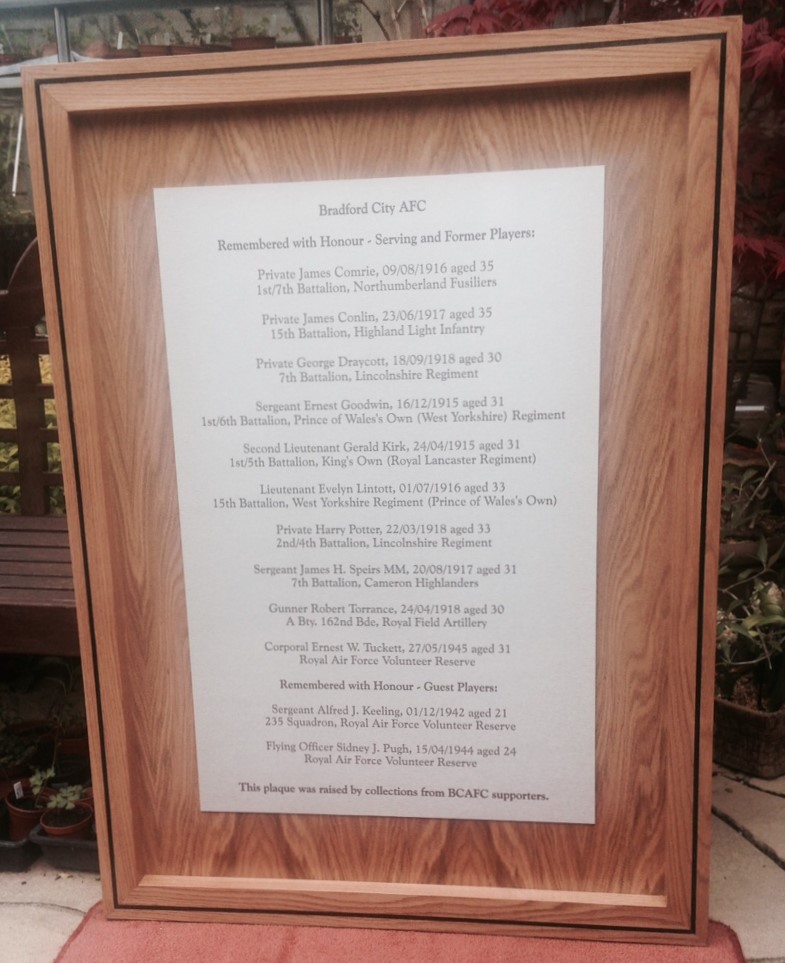
In addition to the 1911 FA Cup heroes Jimmy Speirs and Bob Torrance, the war dead included the two former England internationals Evelyn Lintott and Jimmy Conlin as well as James Comrie, George Draycott, Ernest Goodwin, Thomas Jenkinson, Ernest Kenworthy, Gerald Kirk and Harry Potter.
George Draycott, Ernest Goodwin, Harry Potter and Bob Torrance were serving players of BCAFC at the time of being killed in action. The club recorded twelve serving players as members of the armed services during the conflict demonstrating the extent of involvement in the war. Those players were as follows: Sgt Dicky Bond (prisoner); Sgt Irvine Boocock; Major Frank Buckley (wounded); Sgt Alexander Doolan; Pvte Jock Ewart (shell shock); Pvte Oscar Fox; Pvte Jack Hargreaves; William Grimshaw; Air Mechanic Peter Logan; Pvte McCriedie; Air Mechanic Frank O’Rourke; and Lieut Harold A Walden.
Subsequent to erecting the memorial in the Valley Parade reception in 2015 two other war fatalities of serving and former players have been identified whose names are not listed. They are Ernest Kenworthy who played two games for the club in 1906/07 and Thomas Jenkinson, a local player who was selected for the club on one occasion in 1915 (it is unclear whether he remained a registered player but it is assumed otherwise). It is quite possible that other former players who were killed in the war that we are not aware of will subsequently be identified and that there were more than the eleven listed above. (Most likely it will be junior or squad players that have not so far been identified.)
In August, 1917 Bradford City AFC announced the death amongst others killed in action of Wally Smith who made 120 appearances for the club between 1905-09, scoring on 59 occasions. This appears to have been confused with another player of the same name who was KIA in May, 1917 and the fact that he died at his residence in Worksop likely discounts him being added to the list of war dead with a BCAFC connection.
Subsequent to the war, Jimmy Speirs and others with a Valley Parade connection were remembered first and foremost as fallen soldiers among comrades in arms. So many men had been killed that there was a reluctance to differentiate former professional football players as deserving of unique attention and the players would have concurred with this treatment. Nowadays the fallen players are afforded particular prominence whereas prior generations tended to remember them among countless others who never returned. The distinct commemoration of footballers killed in action has thus been a more modern phenomenon.

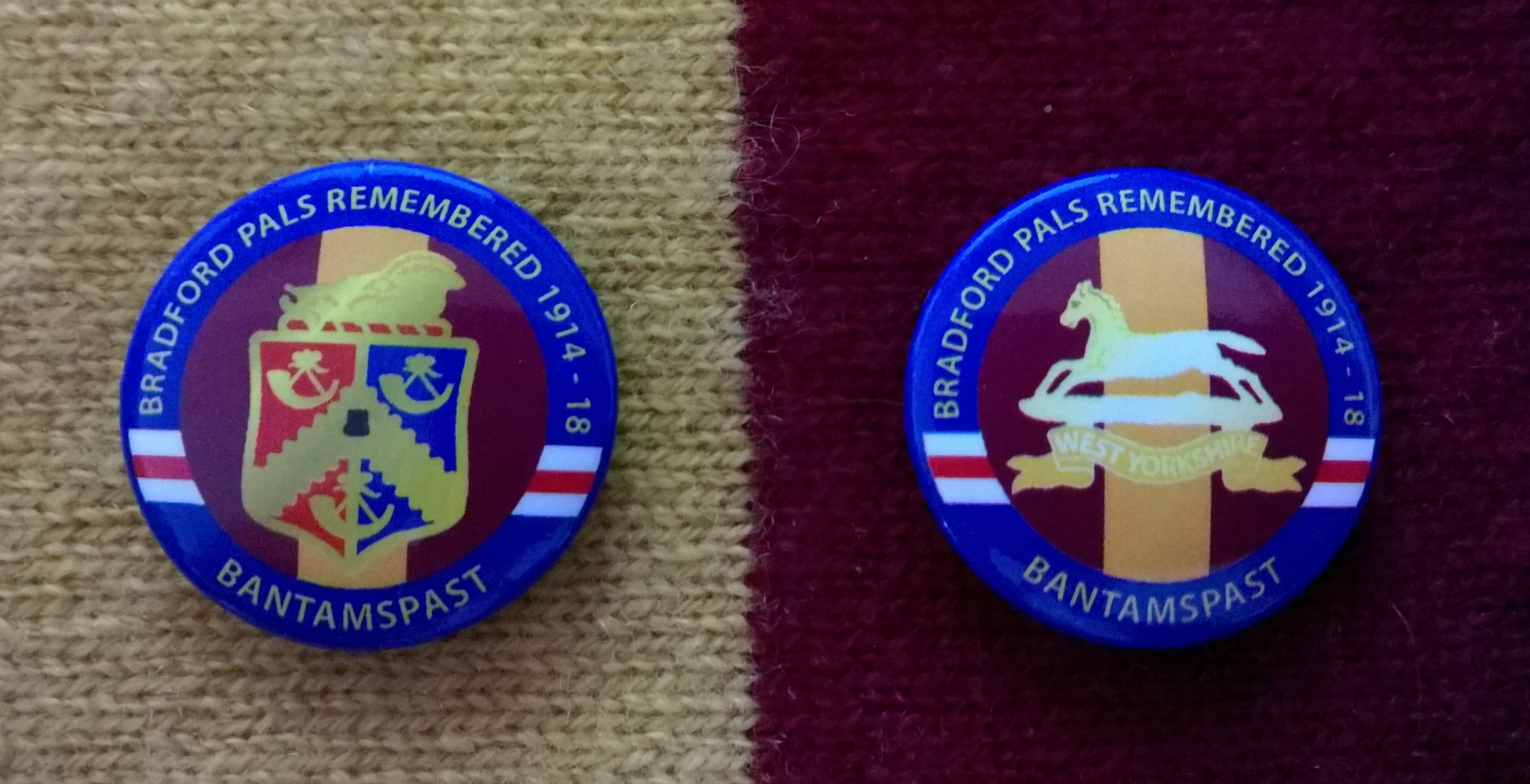
A memorial to the war dead of Bradford City was not erected at Valley Parade until 2015 and this hangs in the Valley Parade reception. (The person who made this possible was supporter John Barker of Farsley who arranged its production.) The memorial was funded by a badge sale that I helped organise through Bantamspast and the proceeds also helped fund a stone memorial to the Bradford Pals at Serre near the Somme battlefield in France.

Further detail of Bradford’s military history is told my book ROOM AT THE TOP, available from Waterstones and Salts Mill or direct from BANTAMSPAST HISTORY REVISITED BOOKS.
John Dewhirst
I have written widely about the history of sport in Bradford: Links to my features on the history of Bradford sport
Read about Jimmy Speirs and Bob Torrance (published in BCAFC programme 2017/18).
Read about Bradford City’s tour of Germany in 1914
—————————————————————————————————–
The drop down menu above provides links to features published in the BCAFC programme, book reviews and sundry articles about the history of Bradford and its sport.
If you are interested in local sporting history, visit the dedicated online journal VINCIT where you will find further background about the military heritage at Valley Parade.
Speedway!
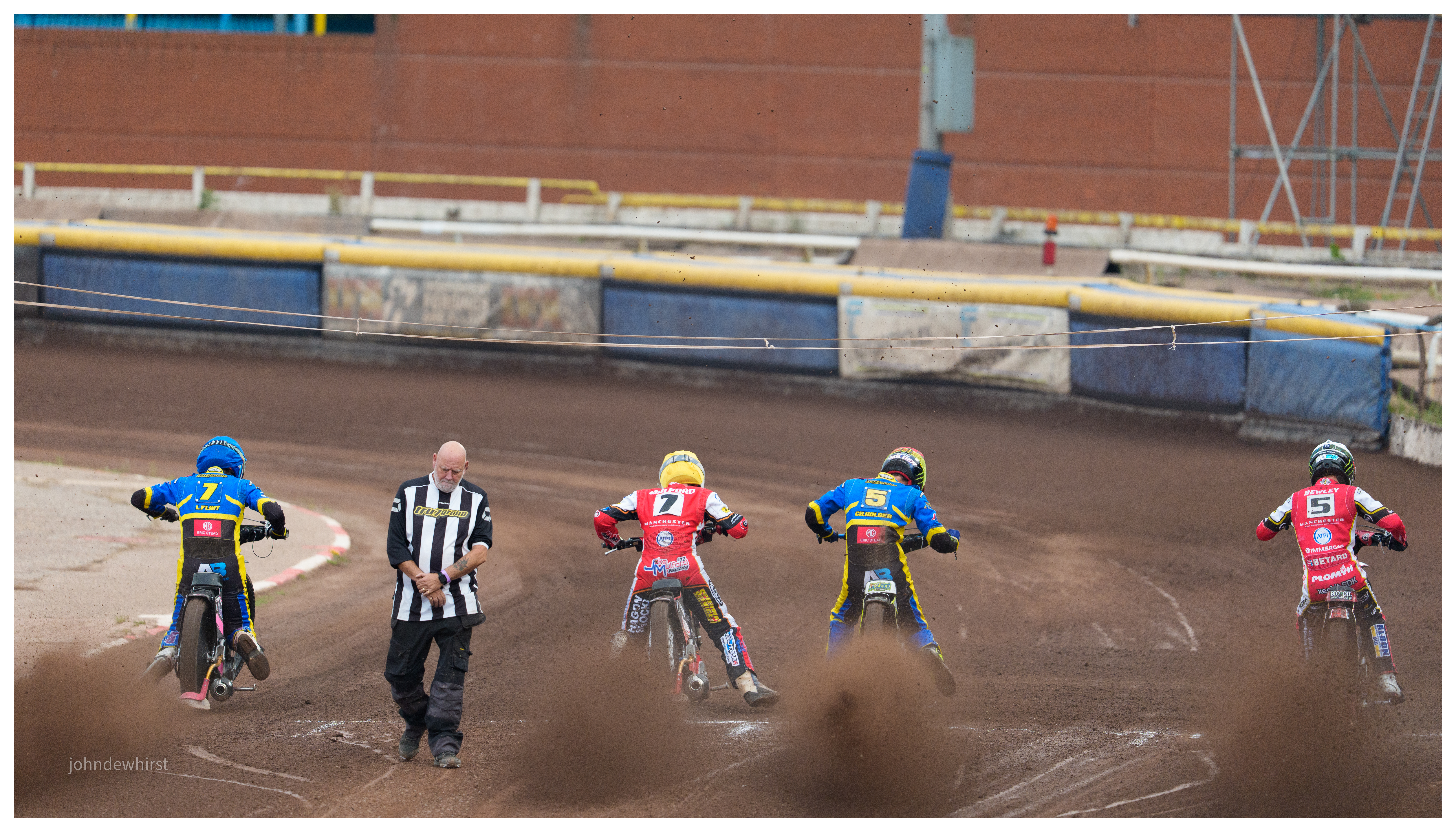
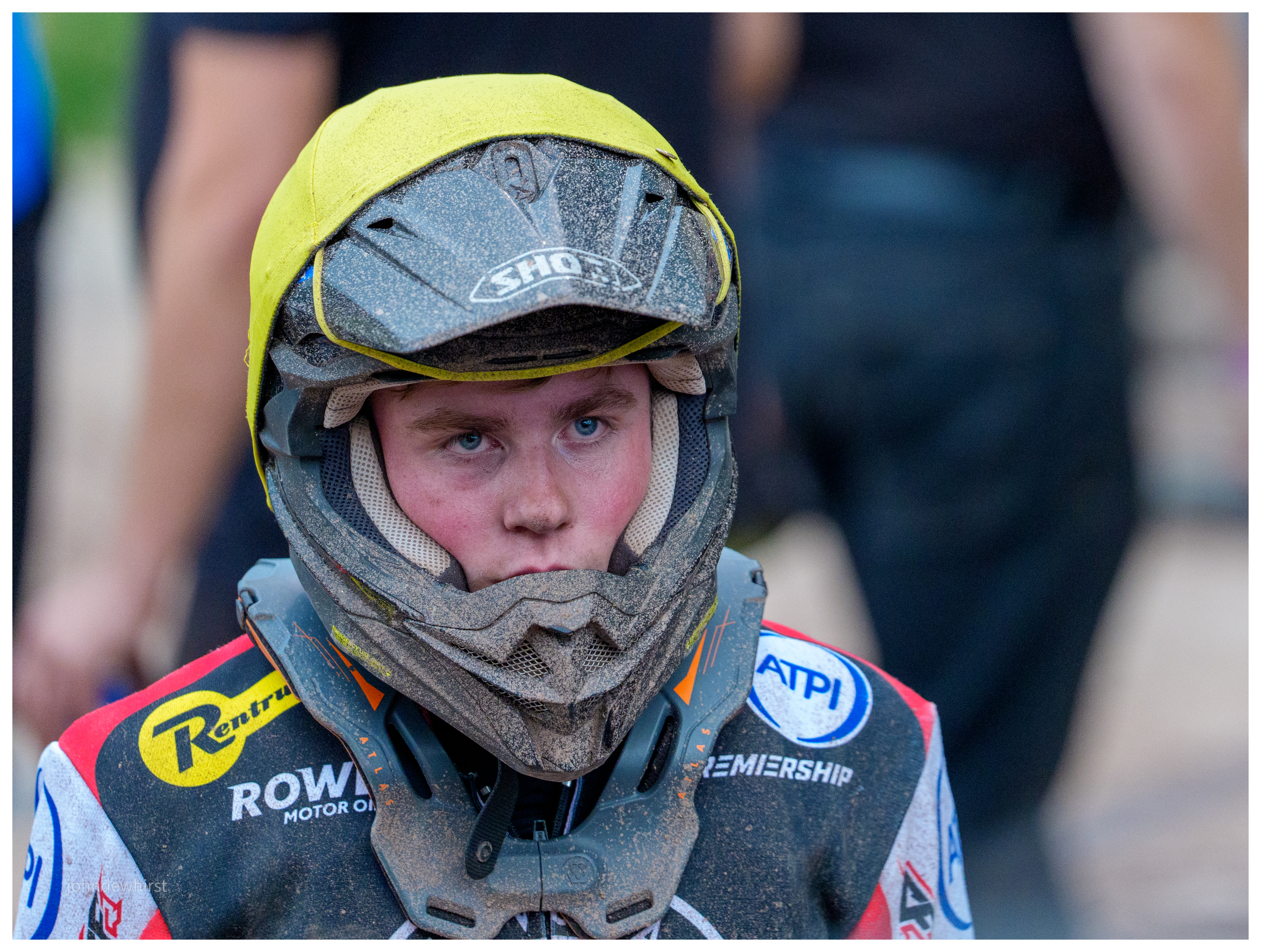
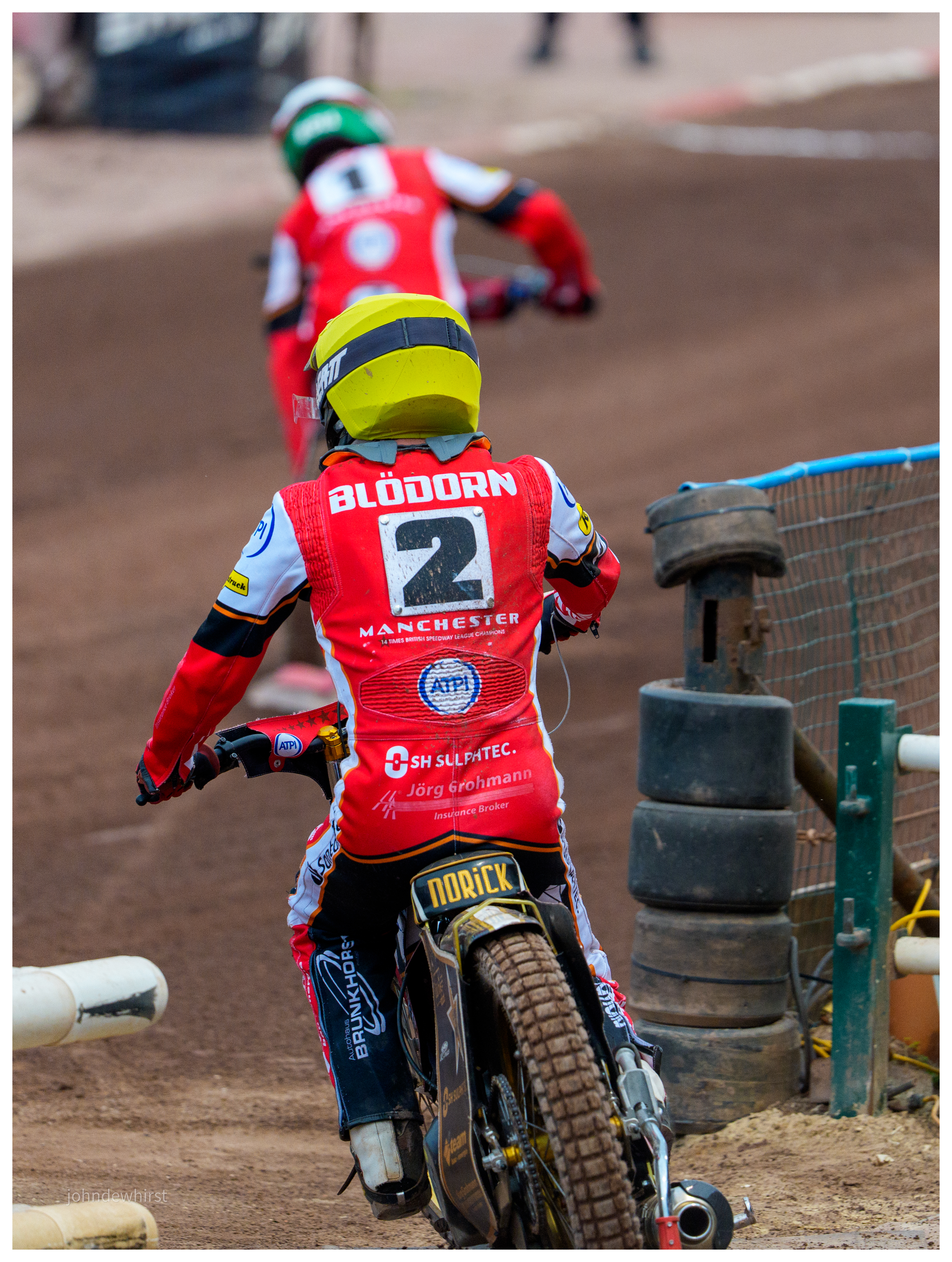
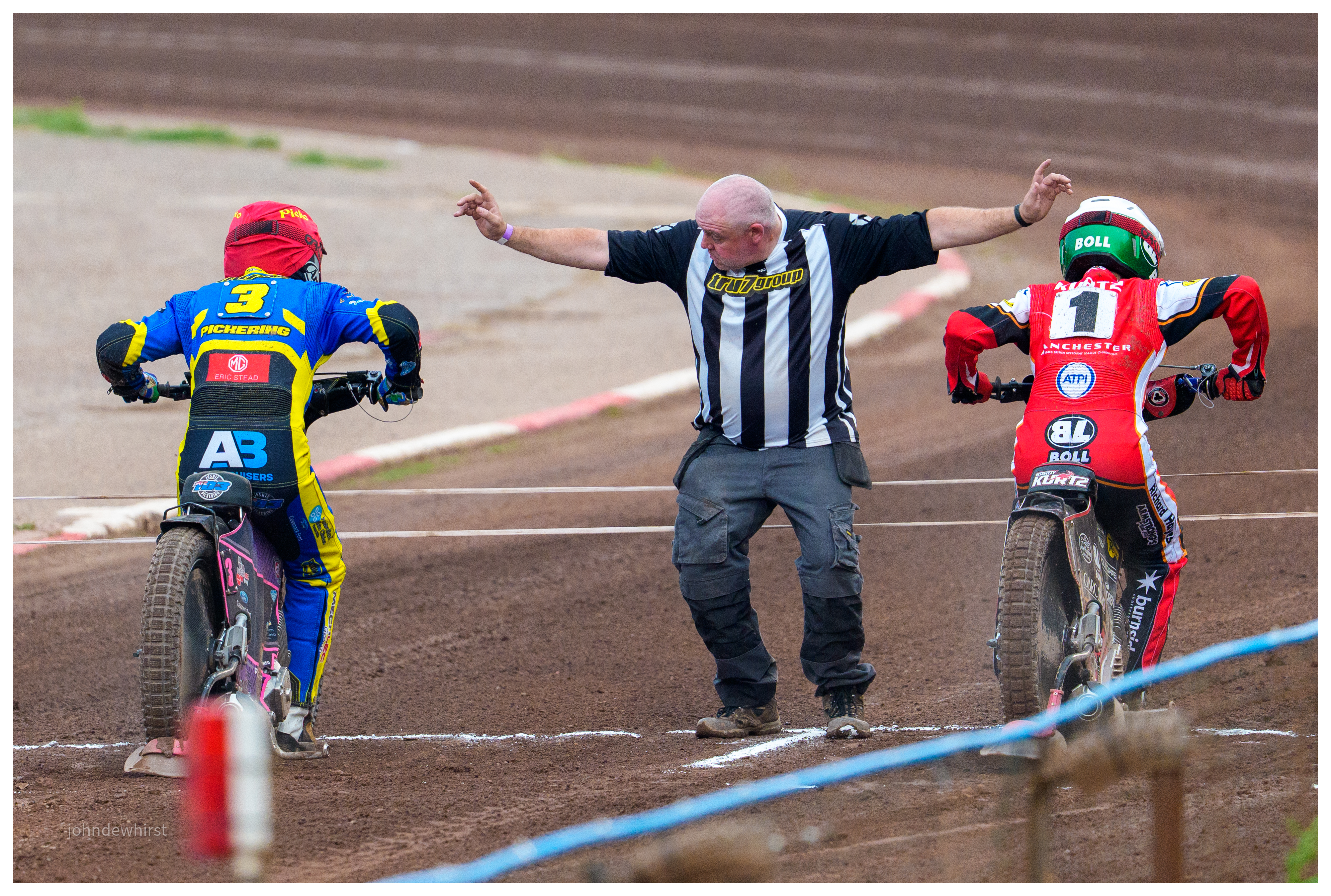
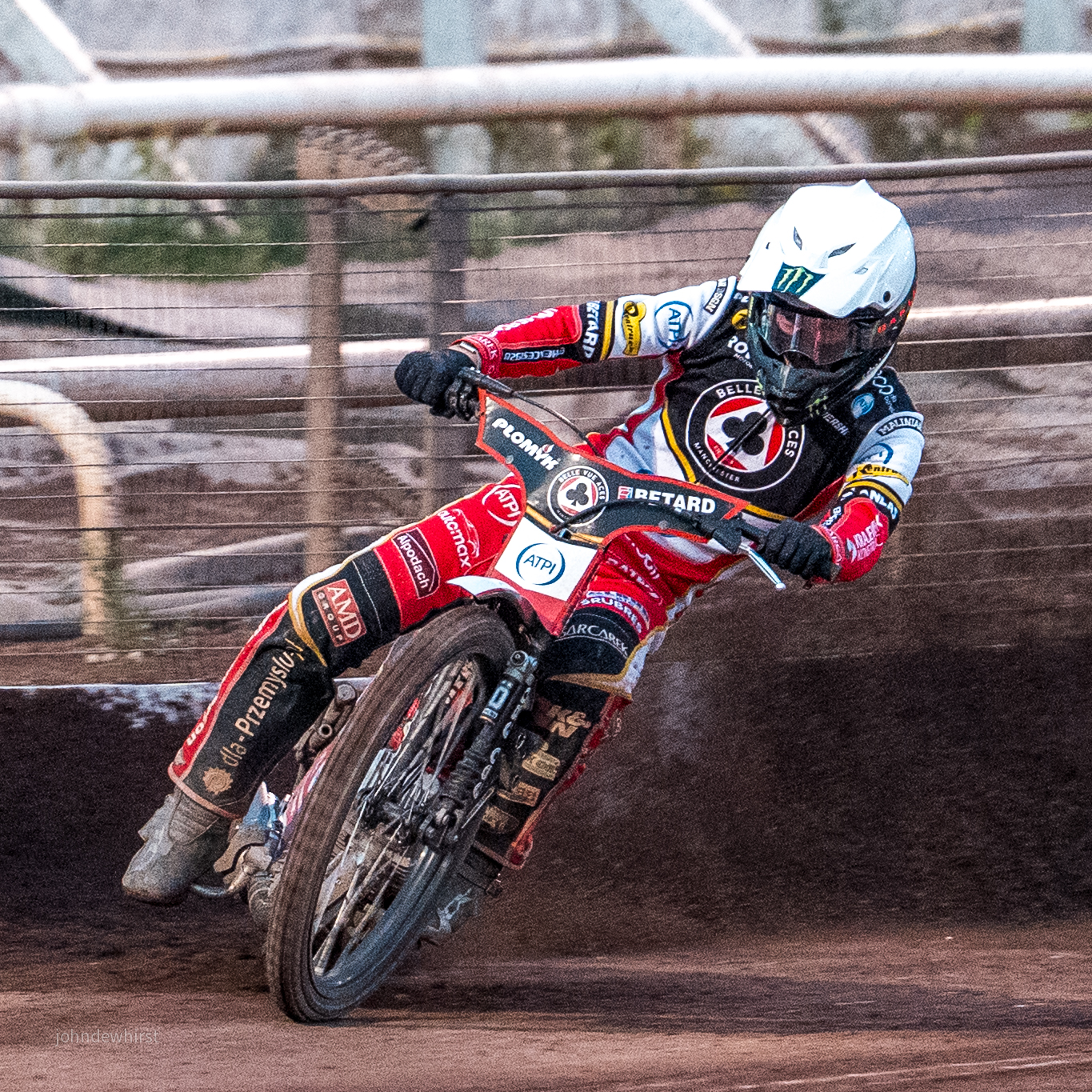
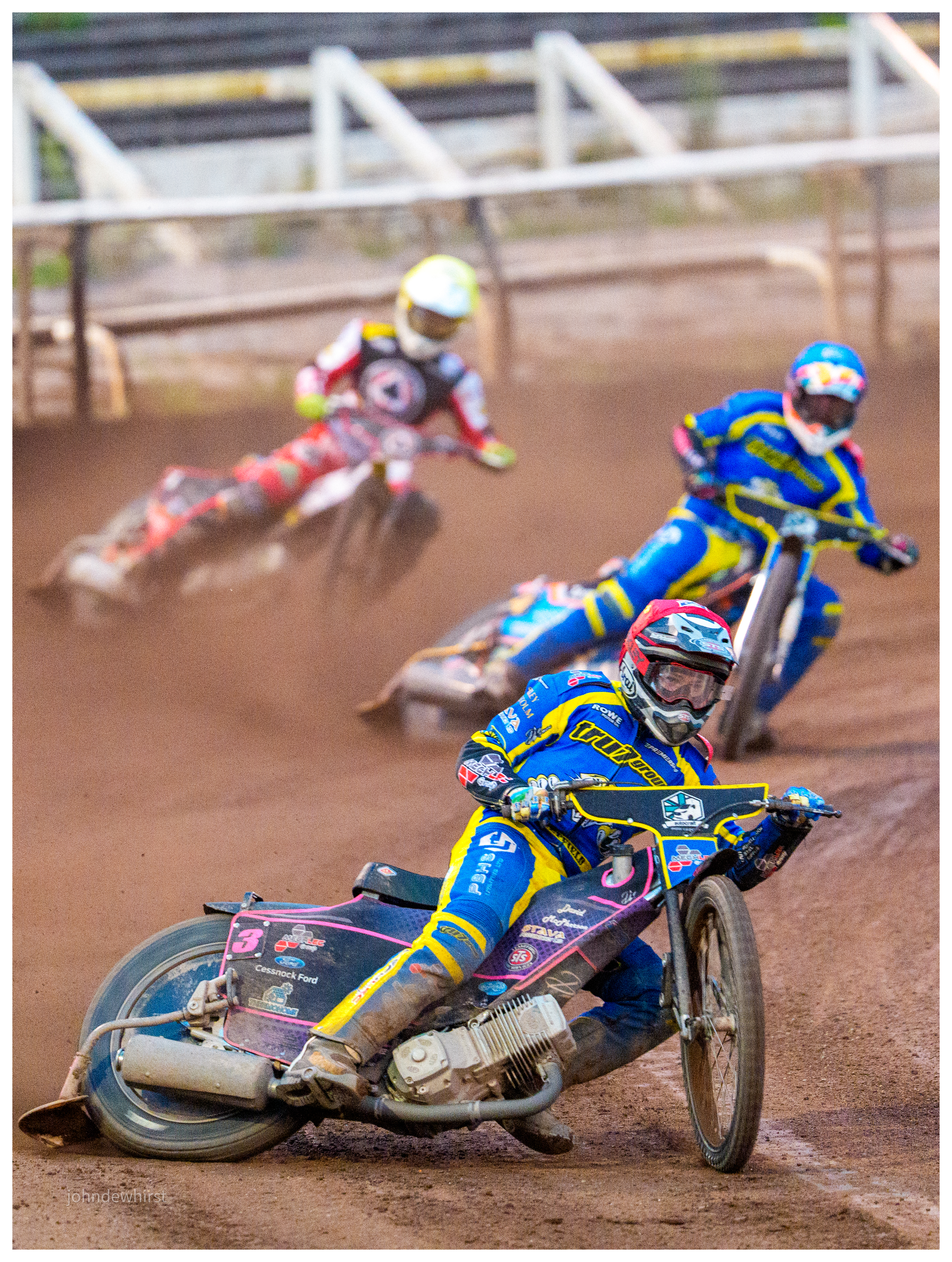
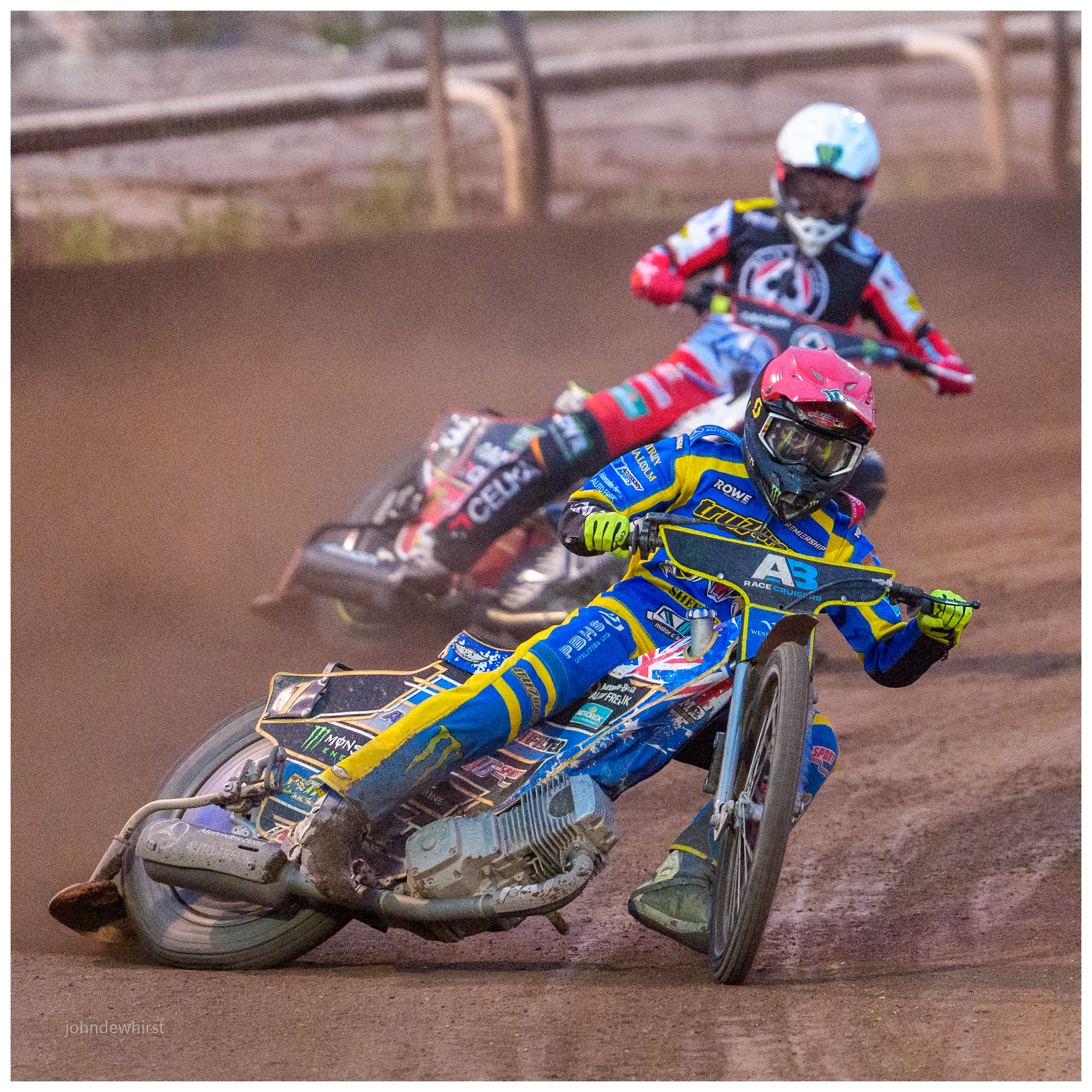
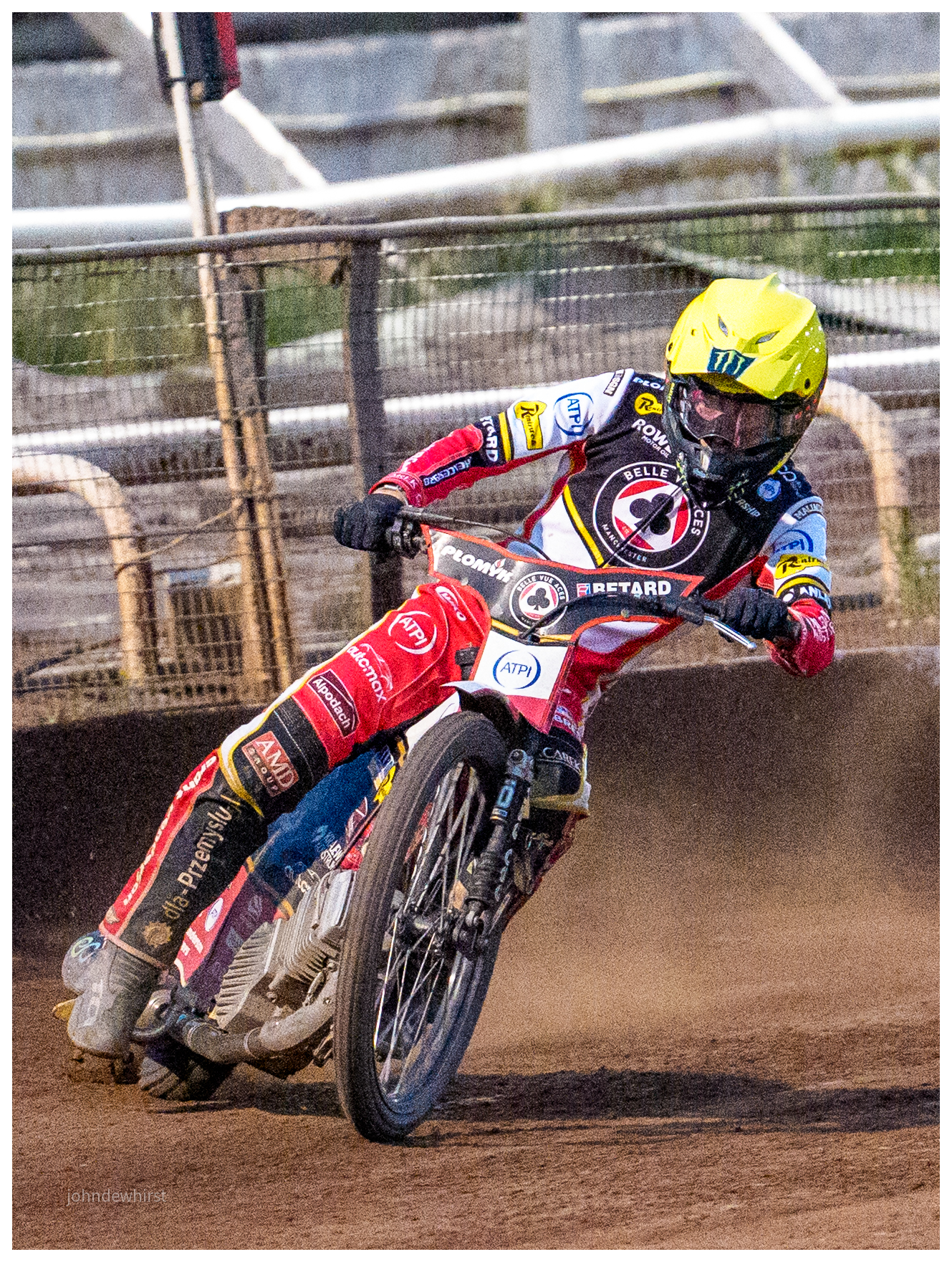
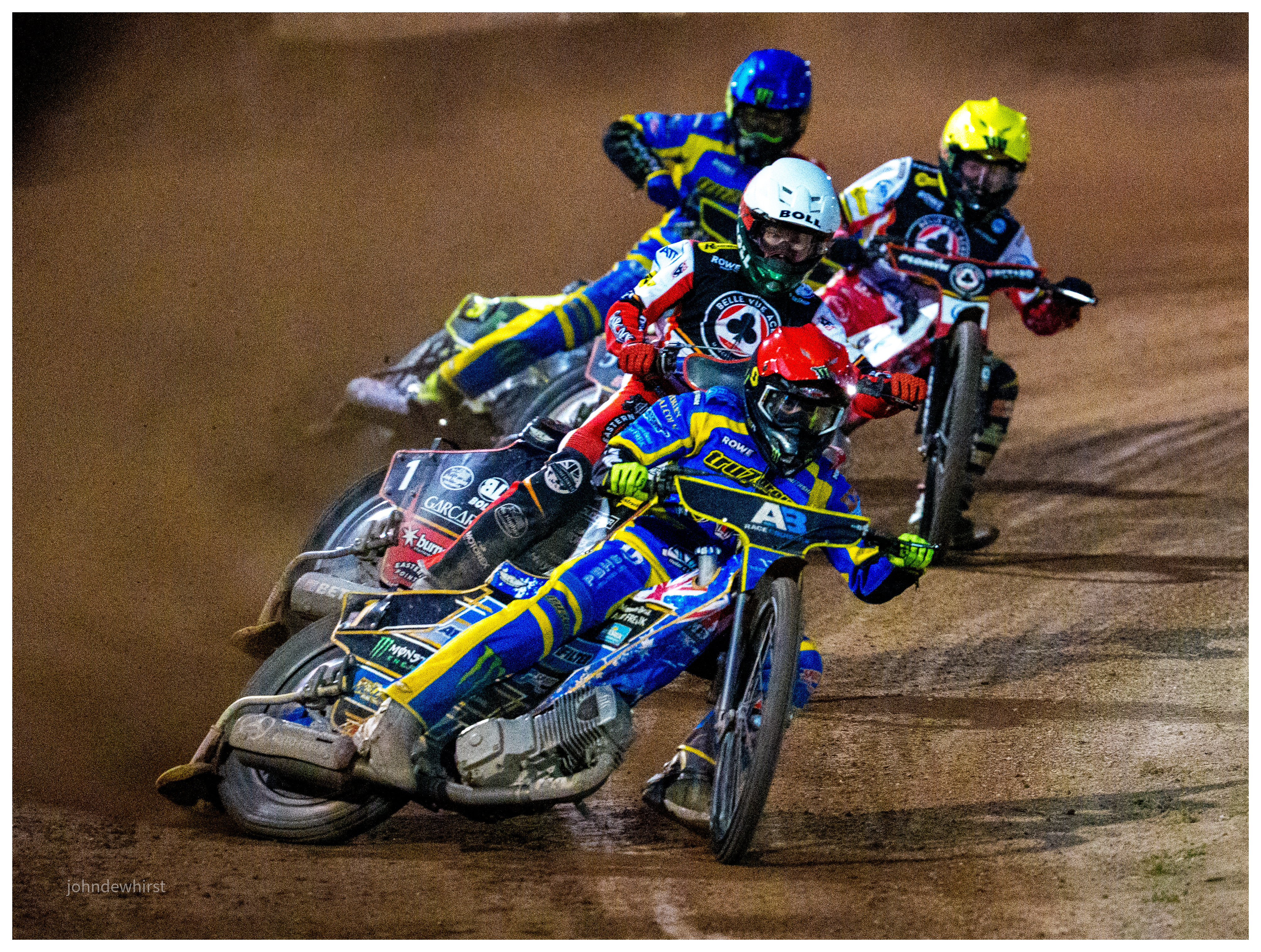
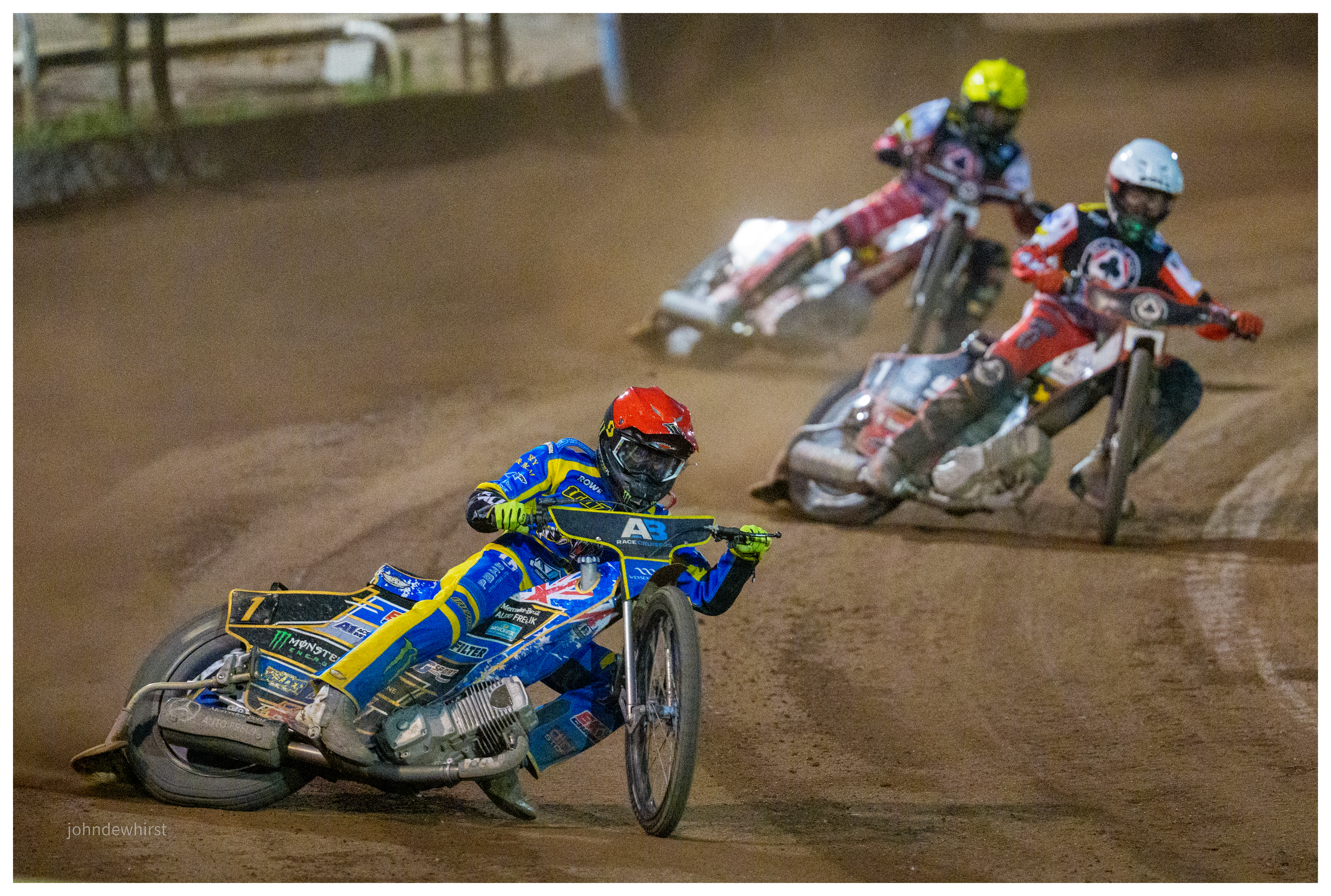
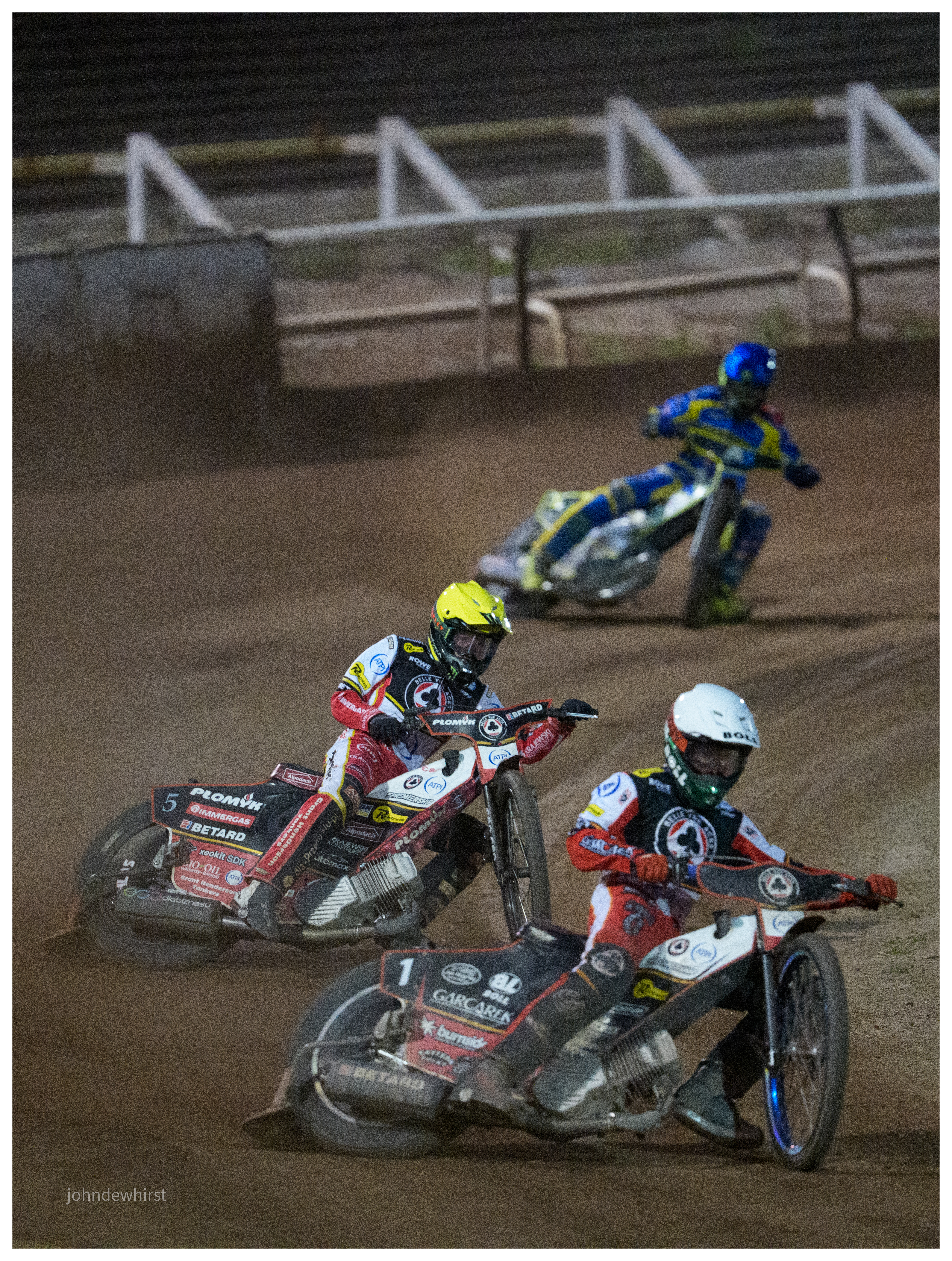
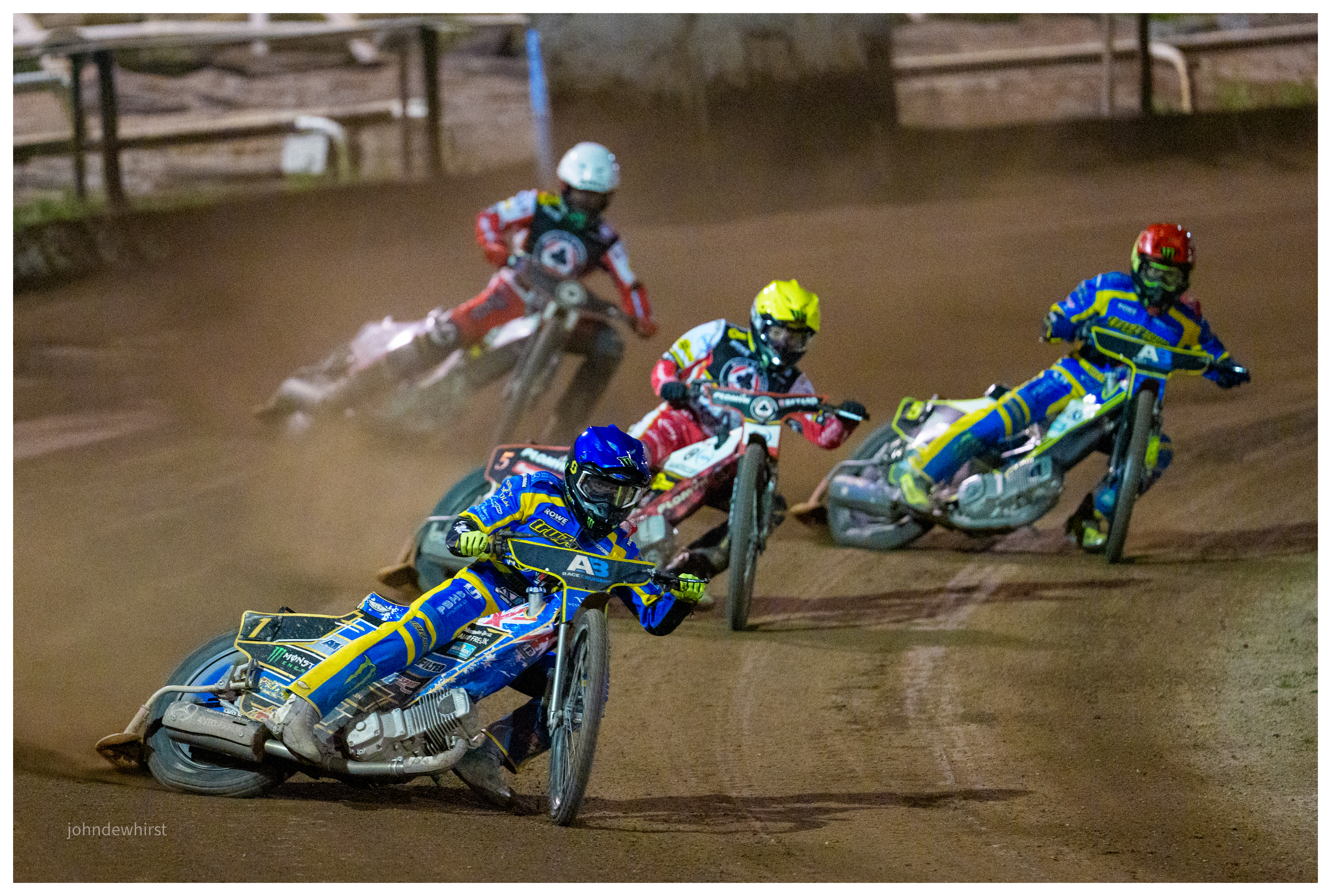
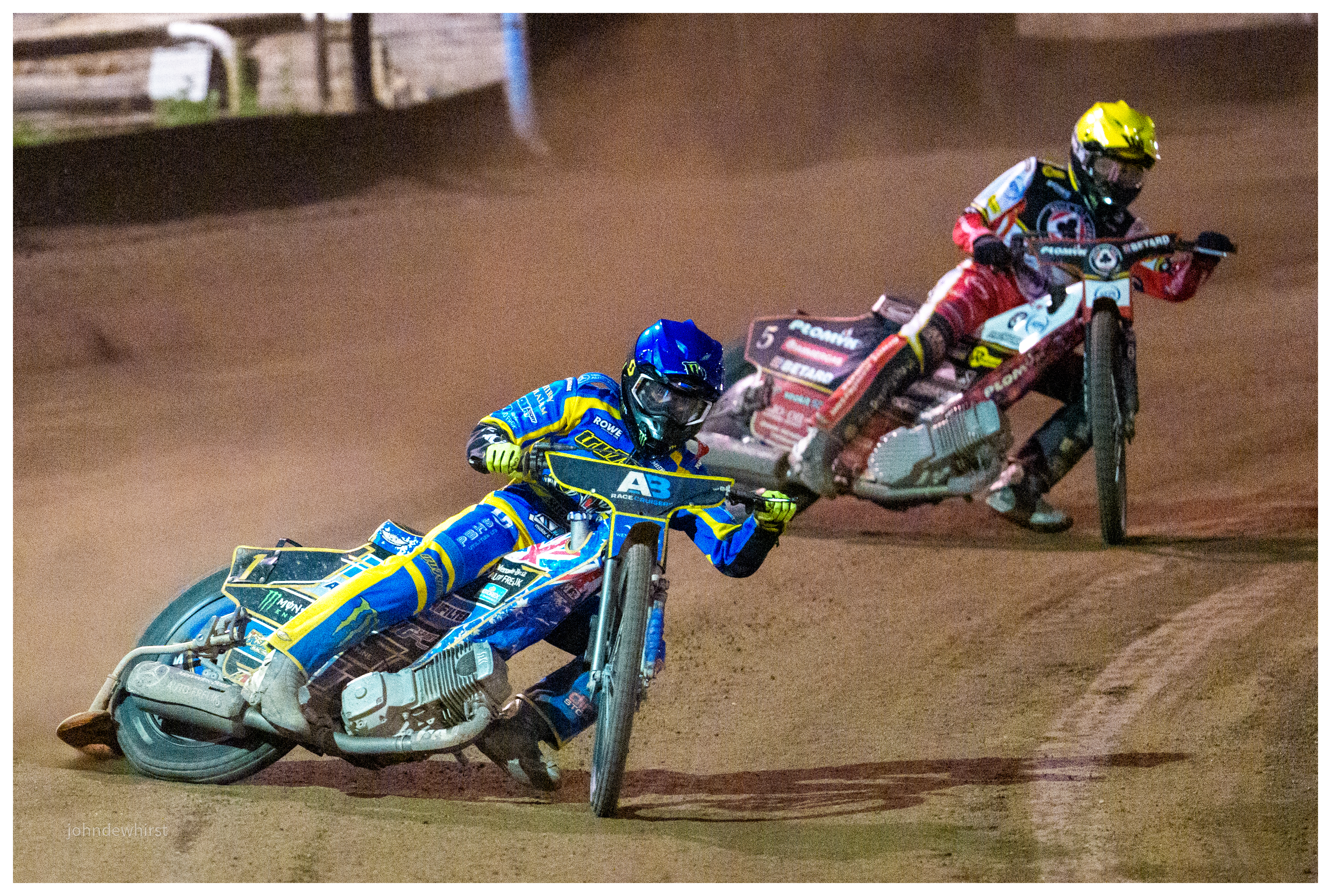
Sheffield Tigers vs Belle Vue Aces, 11th August 2025
I used to go to the speedway at The Shay, Halifax and later Odsal Stadium in Bradford. In the late 70s I saw The Dukes in derby races at the Boulevard, Hull; Owlerton in Sheffield; and at Belle Vue in Manchester and in that era the sport attracted decent crowds with some big name riders.
I occasionally still go to race meetings and I am an infrequent visitor to Sheffield. The Belle Vue fixture is always a crunch event and no less so when I visited this month. A few years back I had a go at riding speedway at the Glasgow Tigers track and it was some experience – the speed, the physical challenge of handling the bike and the lack of brakes – and literally the fastest way to learn counter-steering a motorbike.
Photos of the racing…


Link to coverage of the race on You Tube.
John Dewhirst
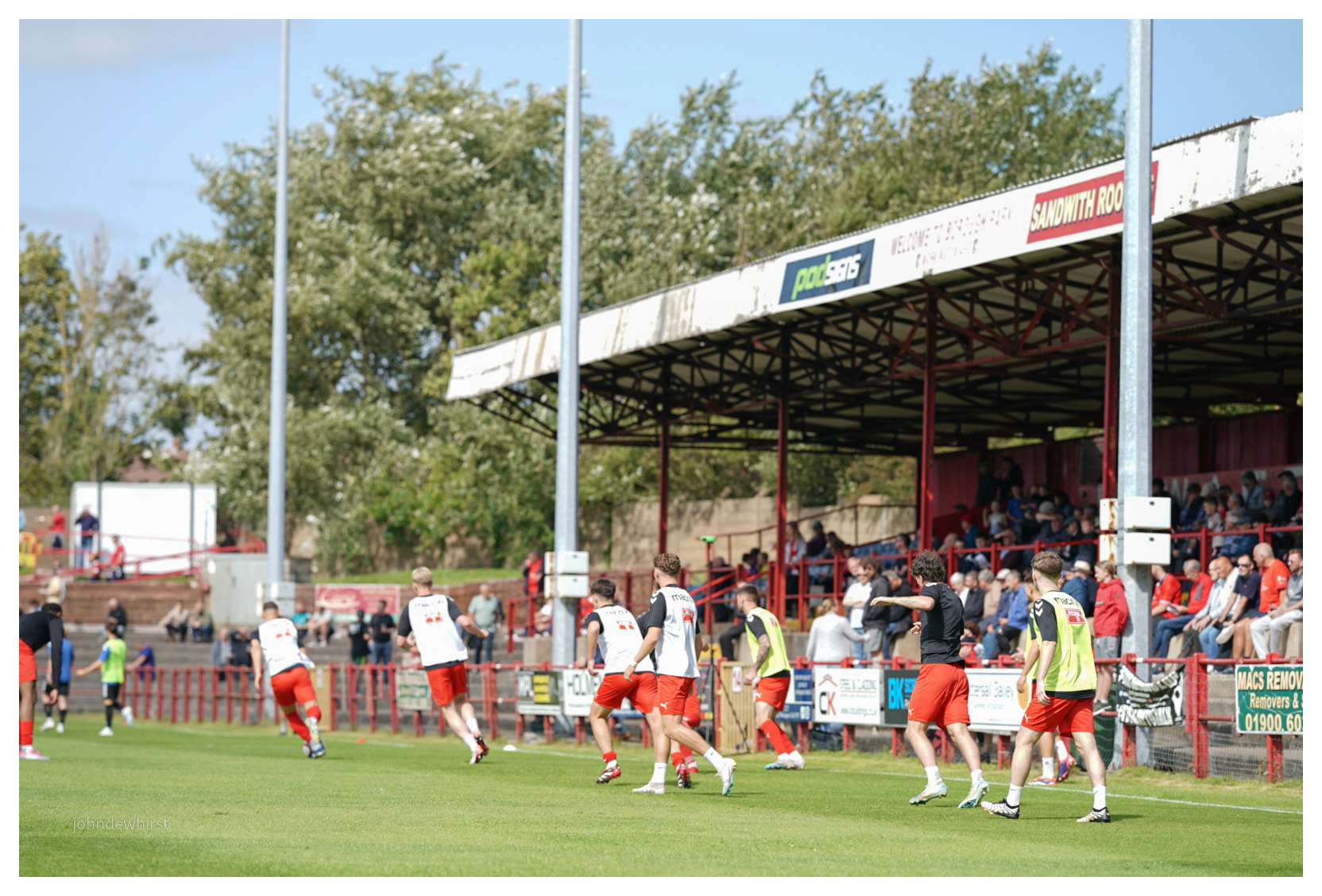
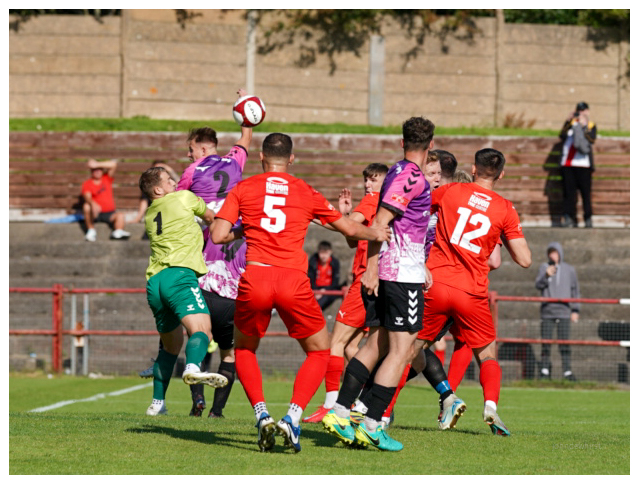
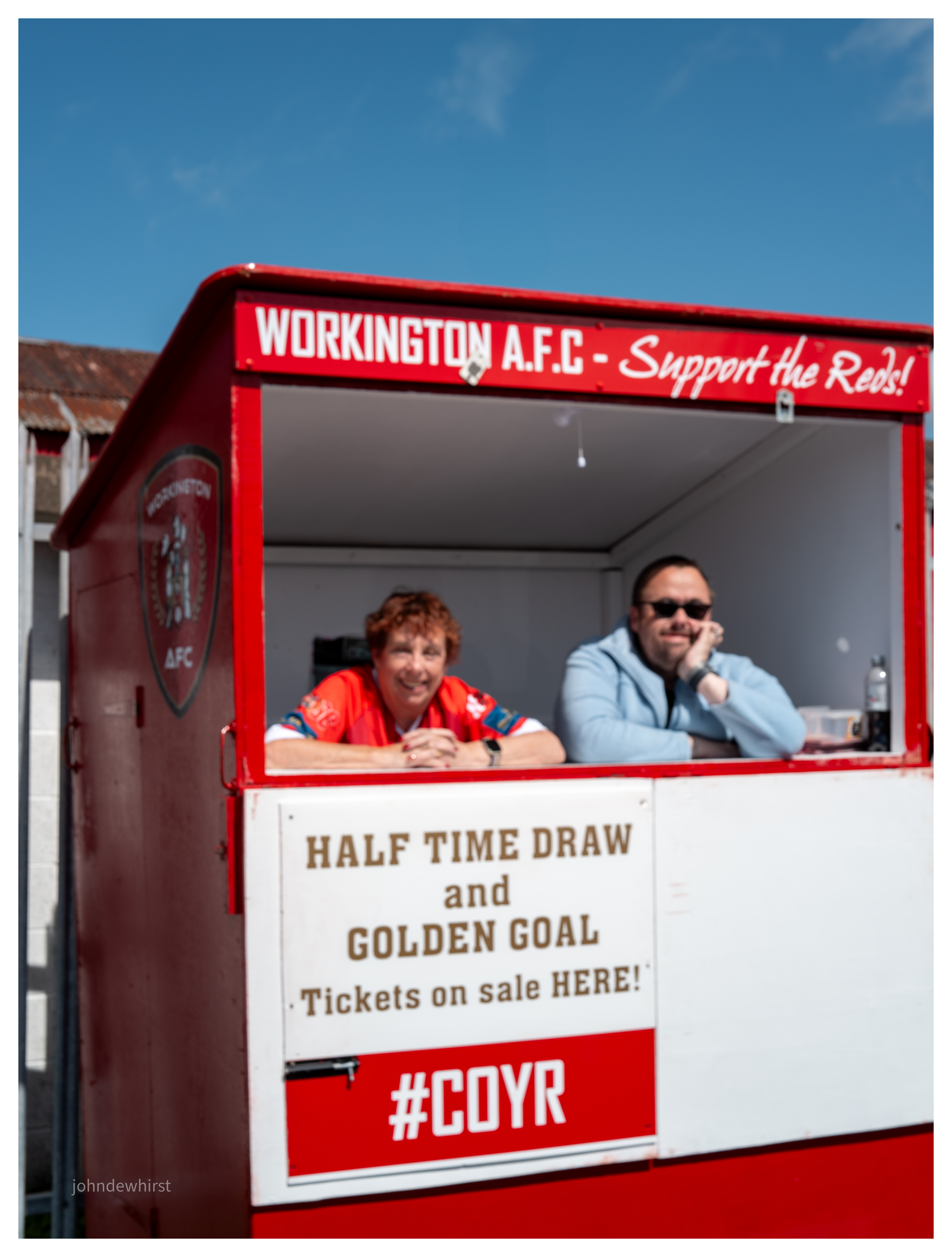
Workington AFC vs Whitby Town, 09-Aug-25
Photos from the above game at Borough Park, Workington which the visitors won through a last minute goal.


More photos of Borough Park, Workington from this link.
John Dewhirst
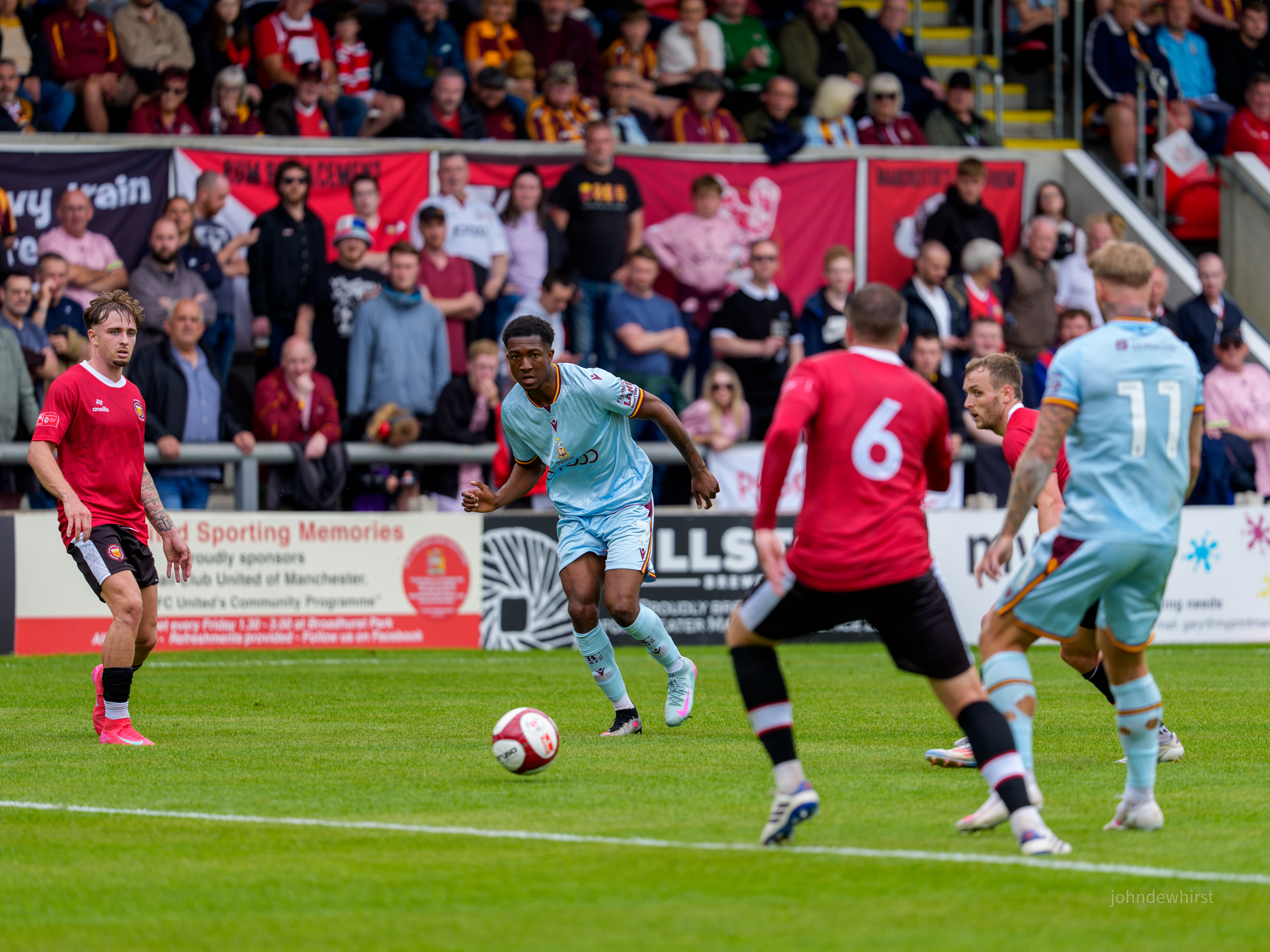
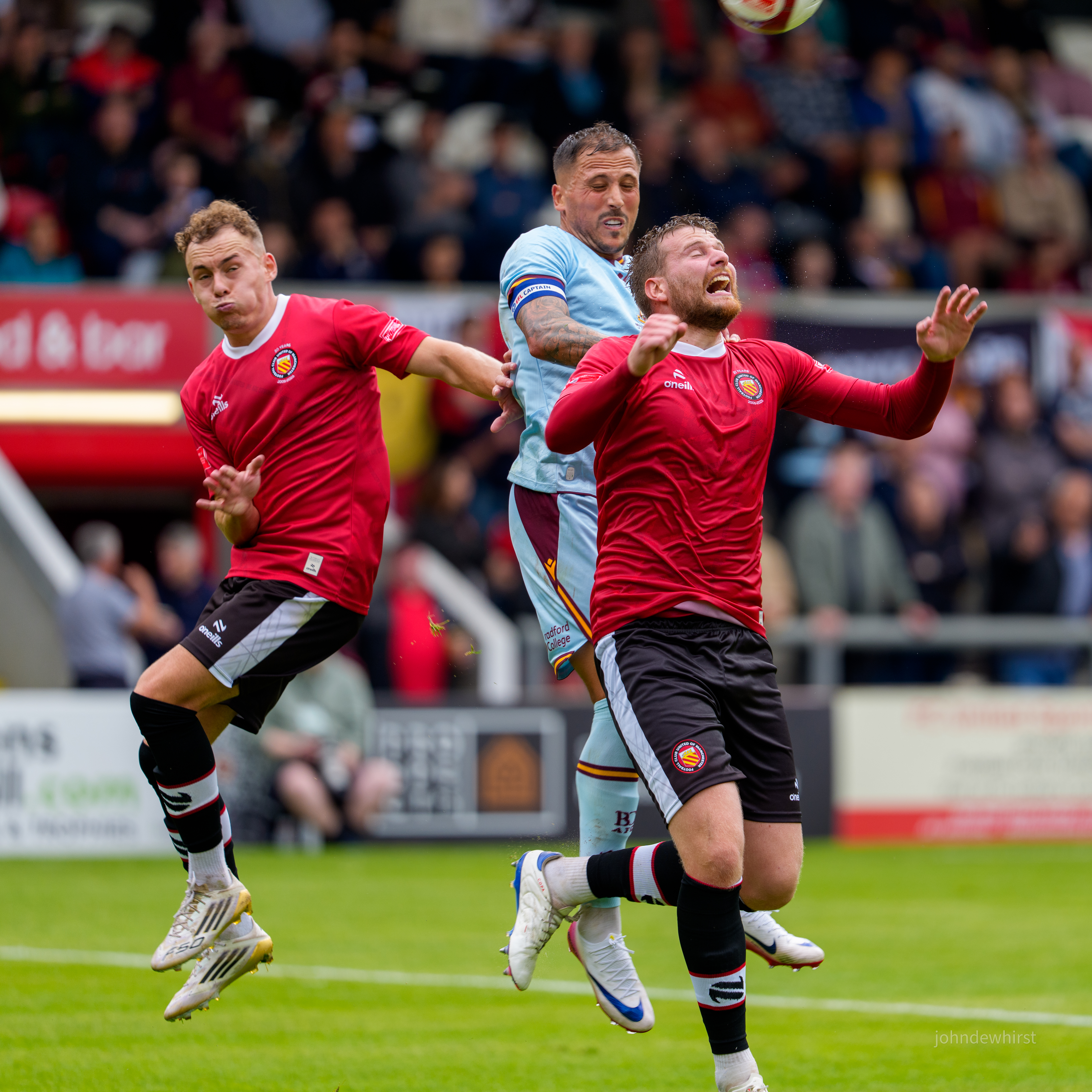
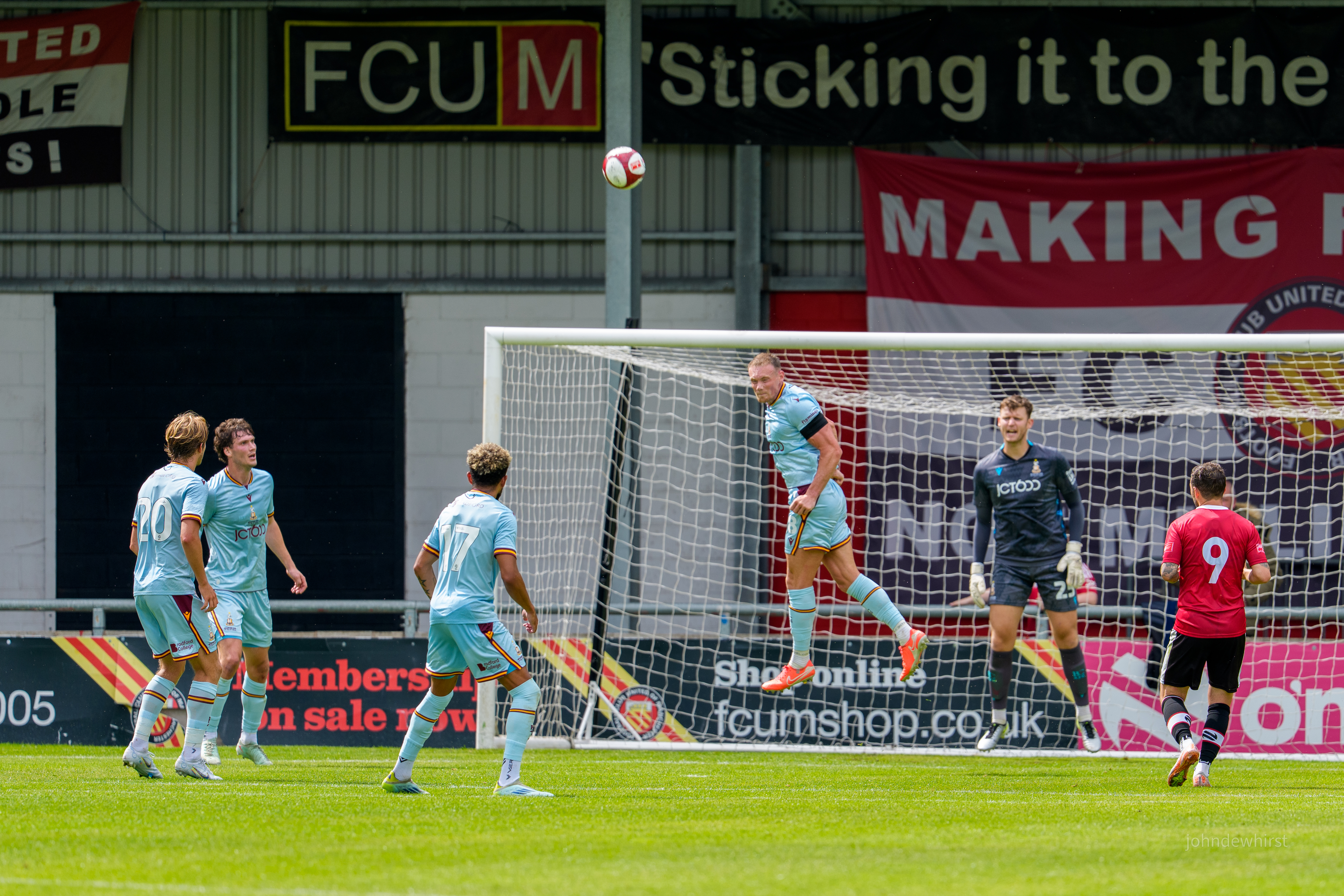
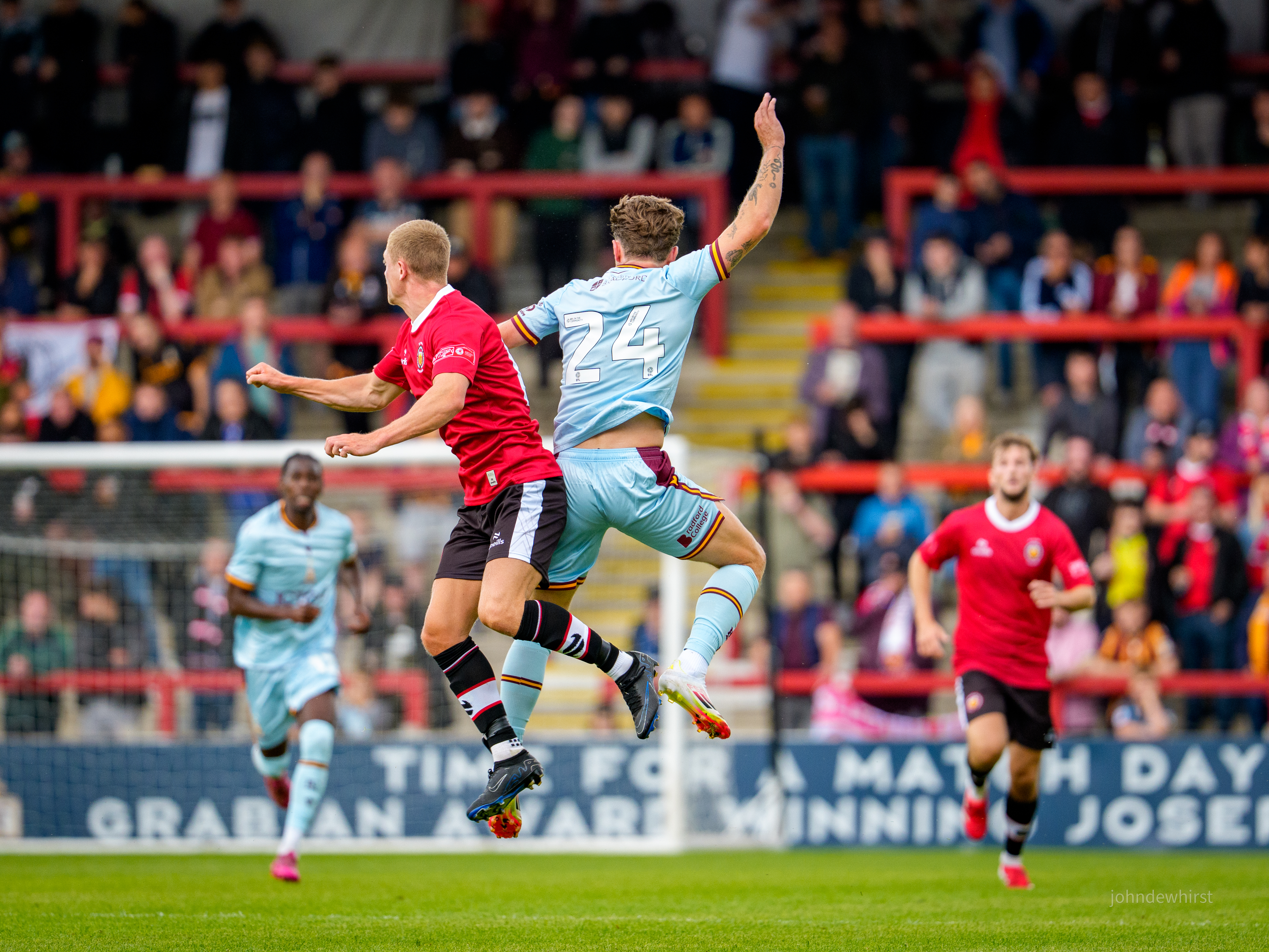
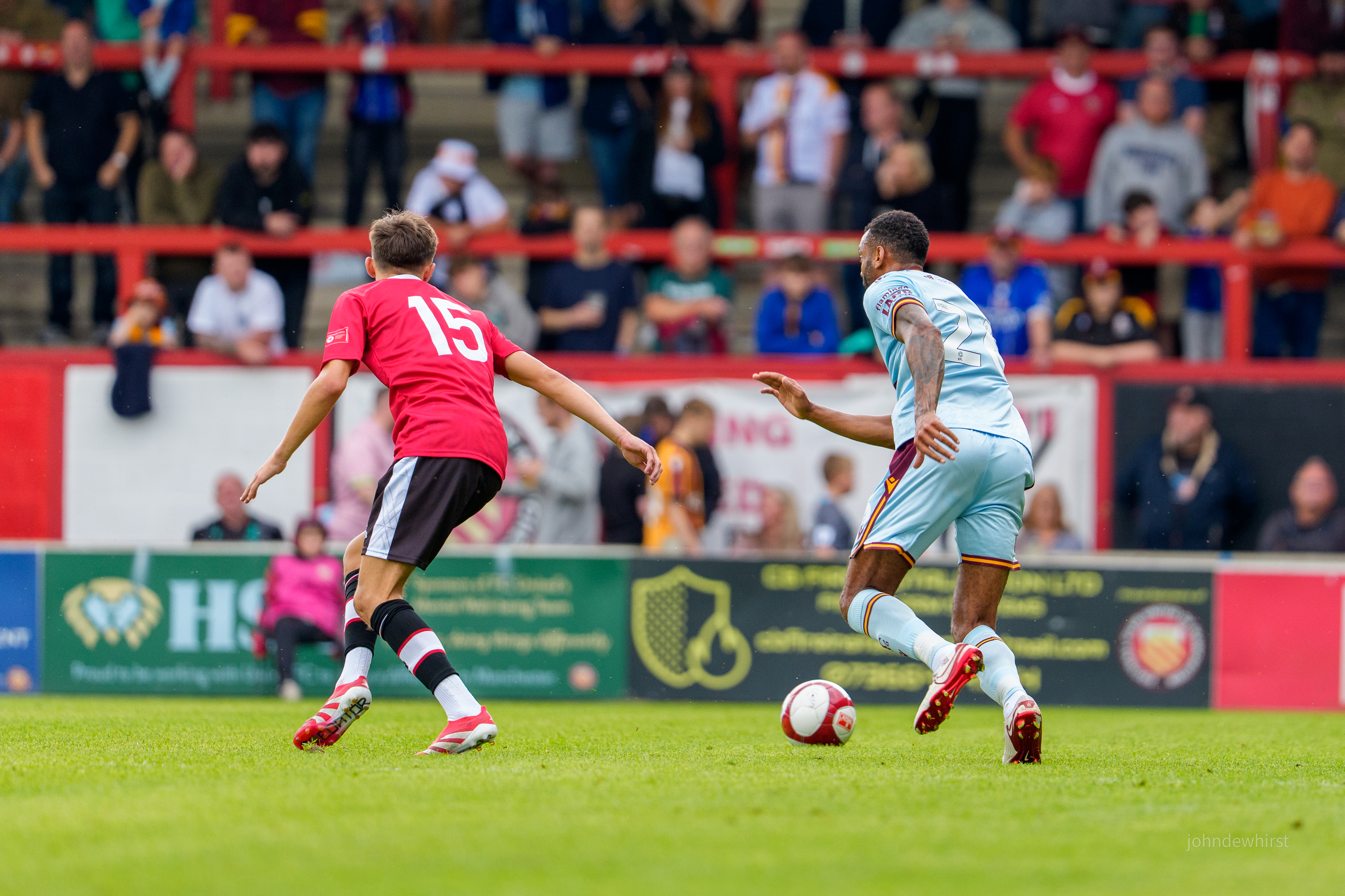
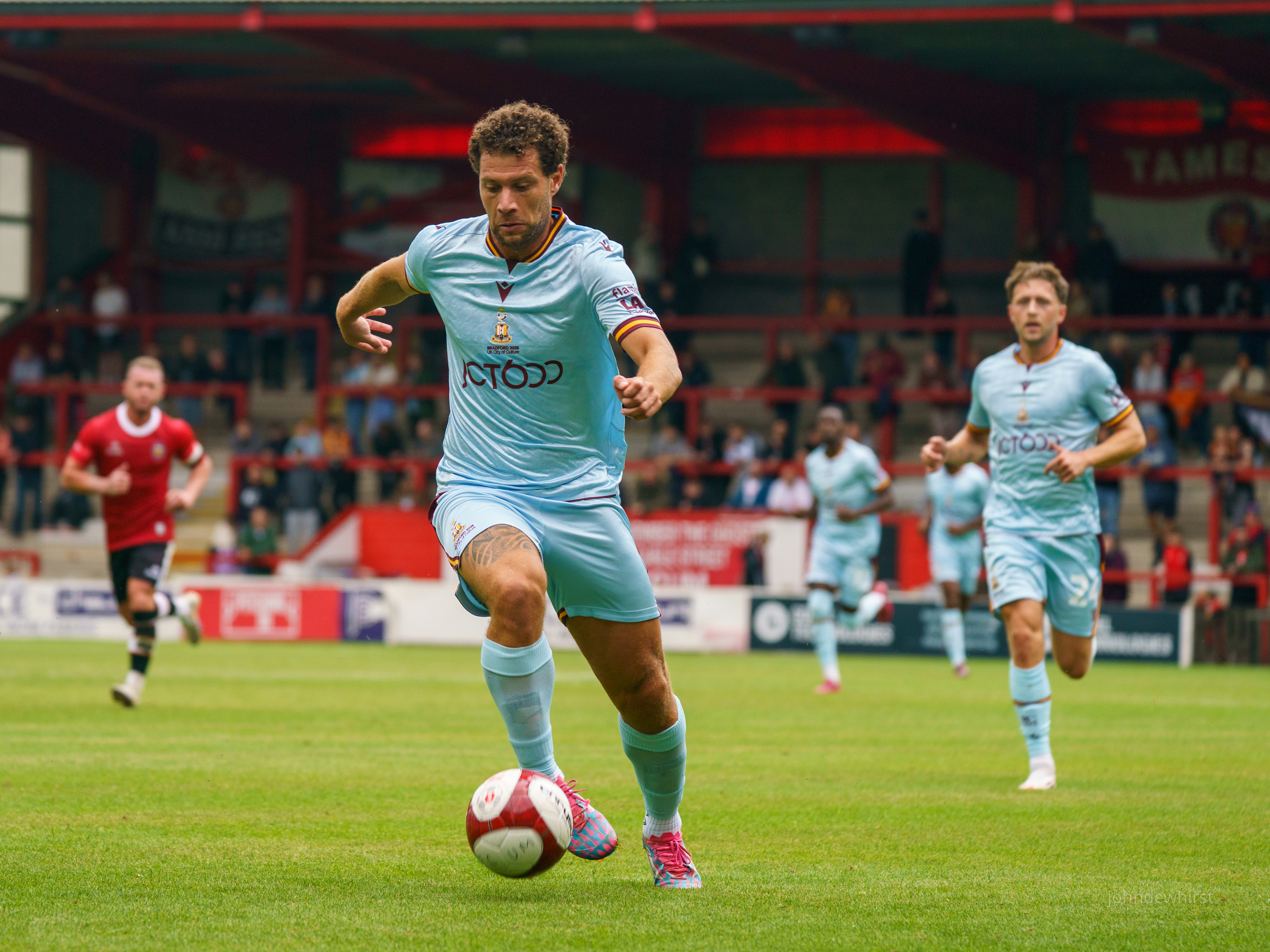
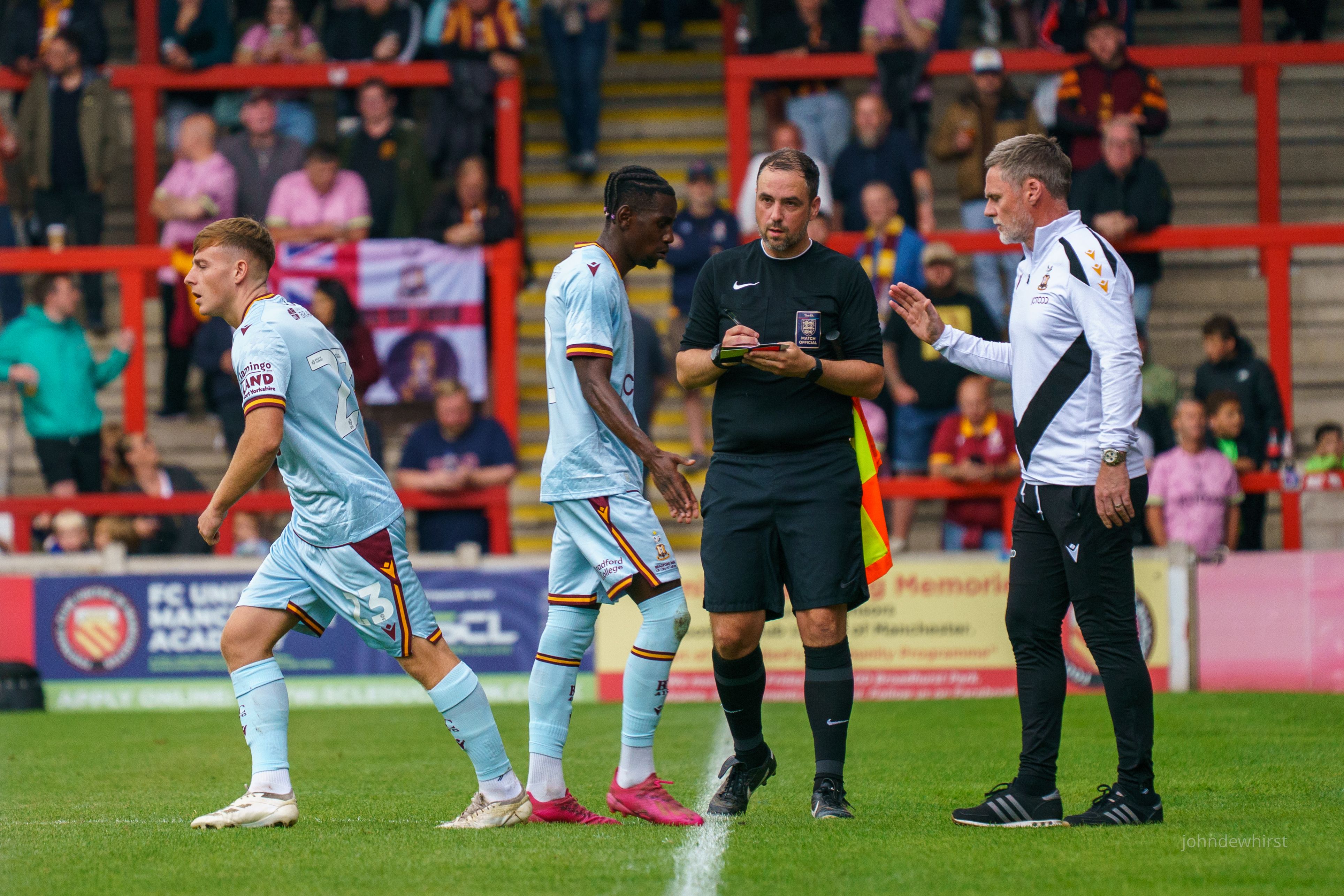
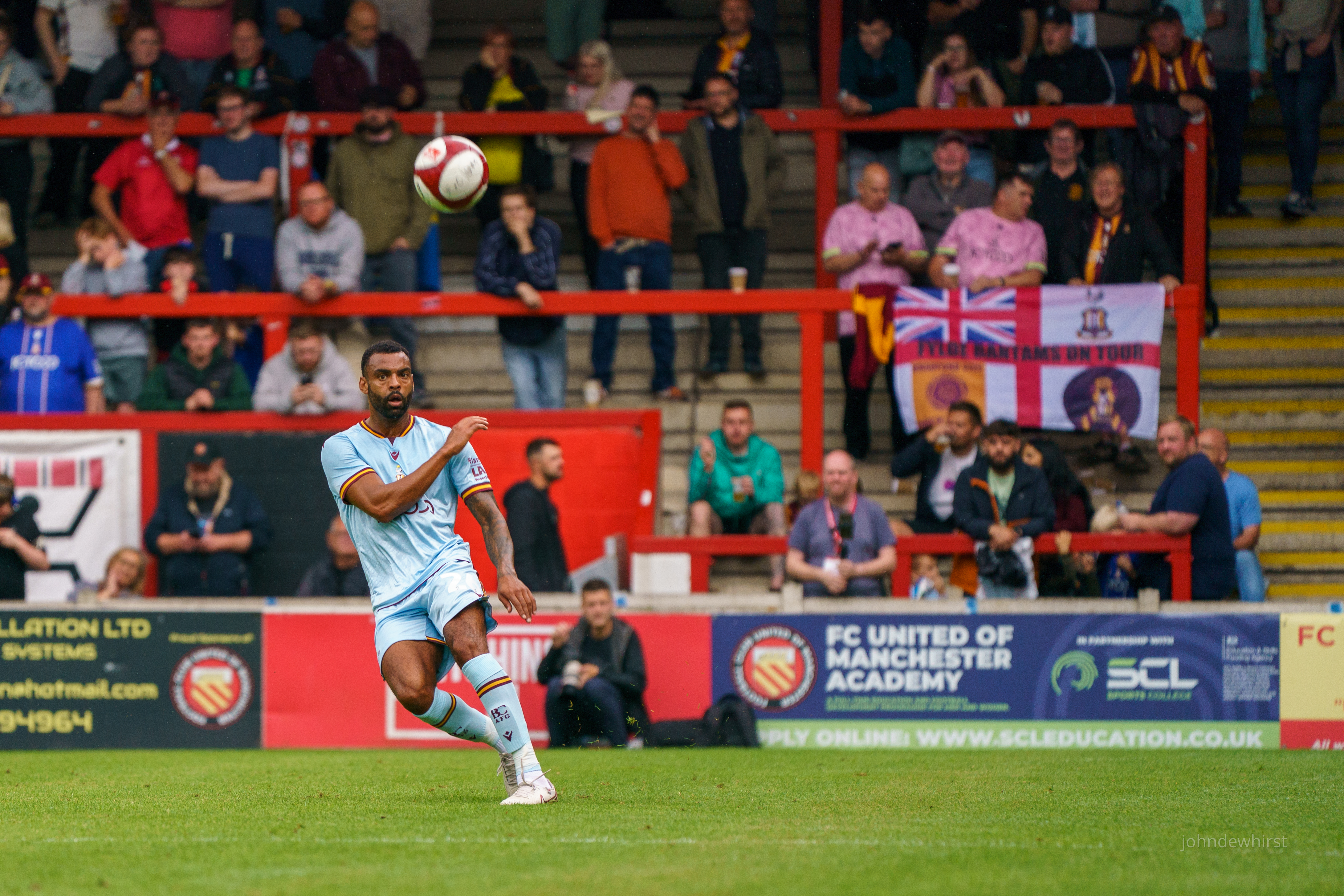
FC United vs BCAFC, 5th July 2025
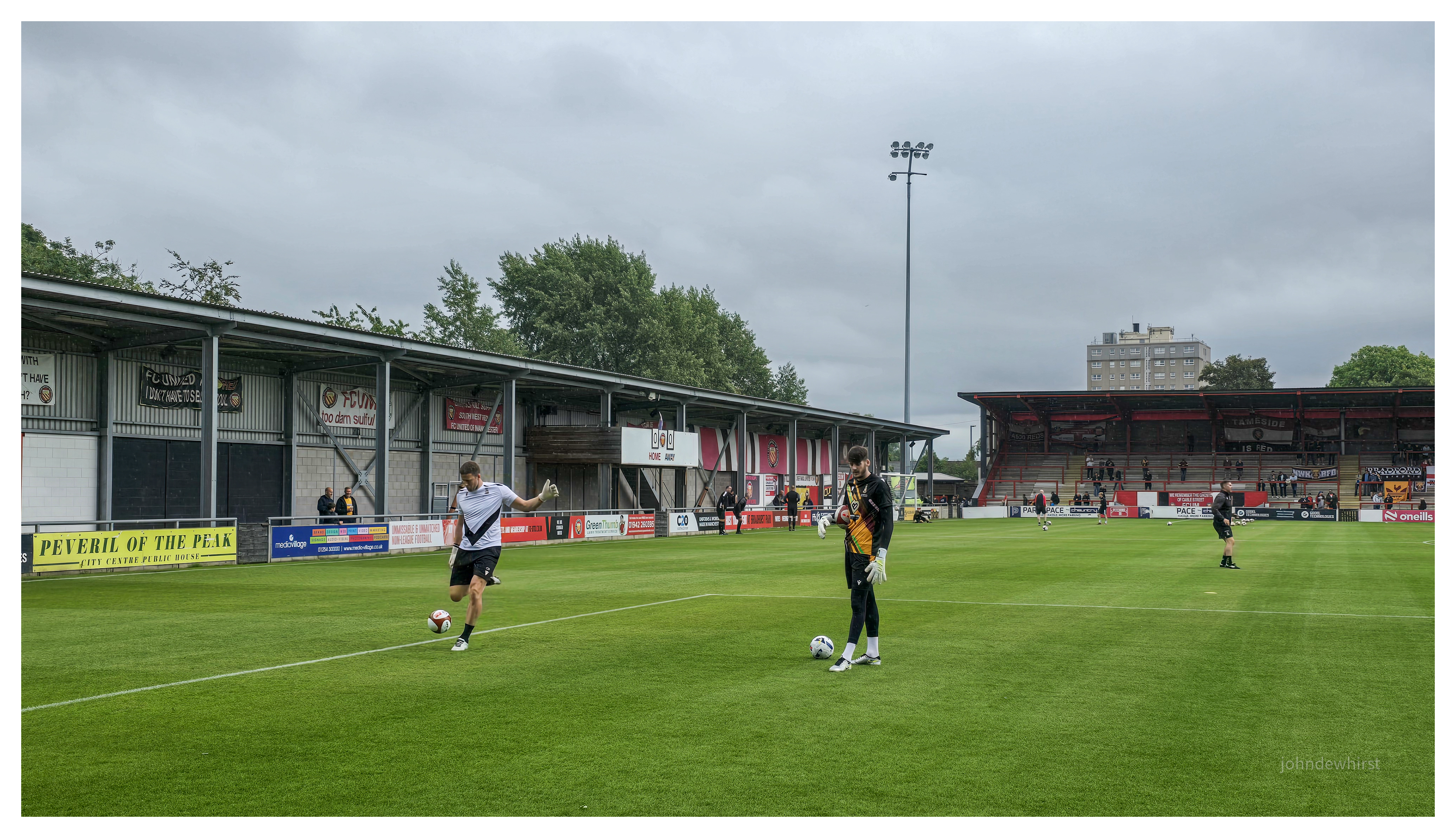
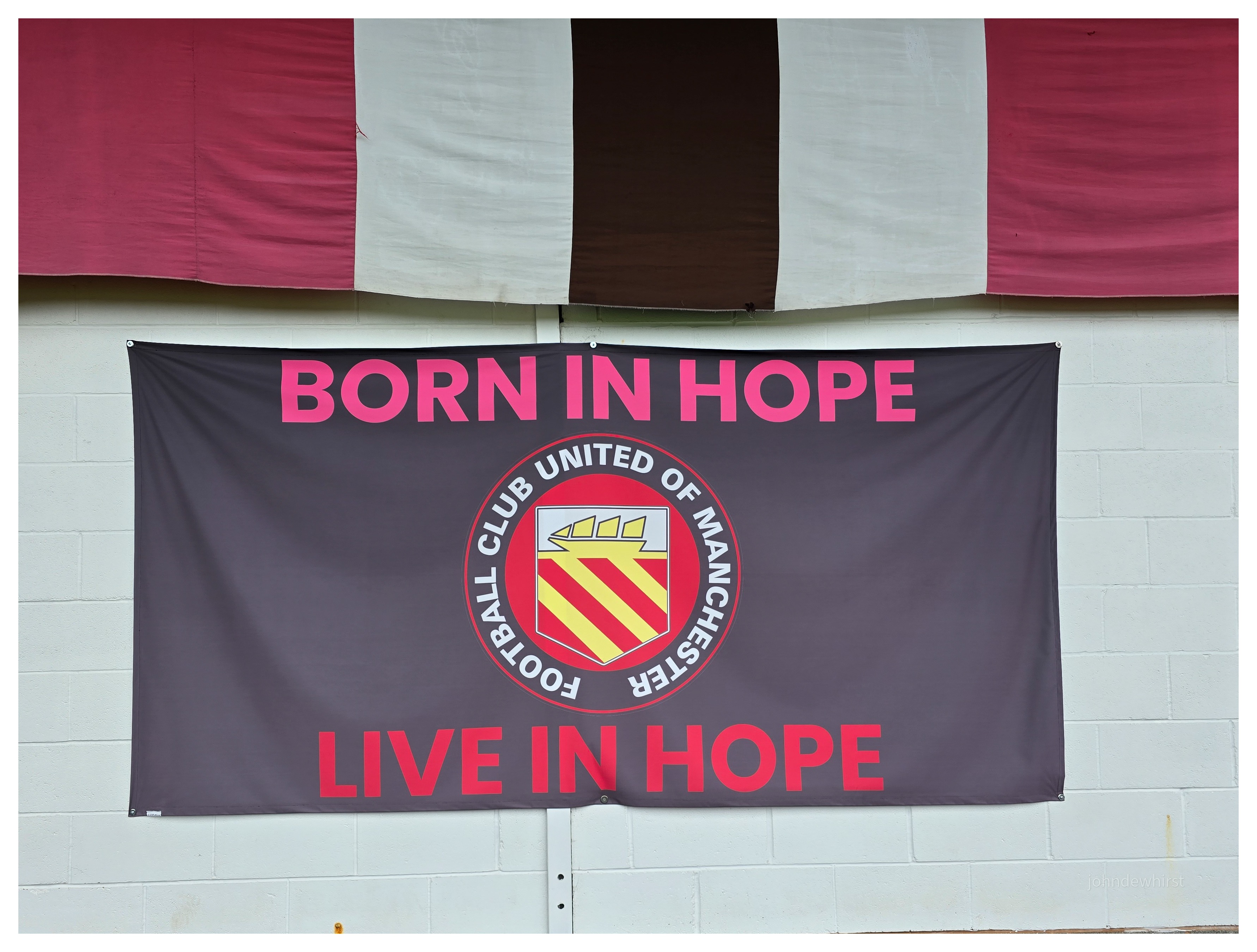
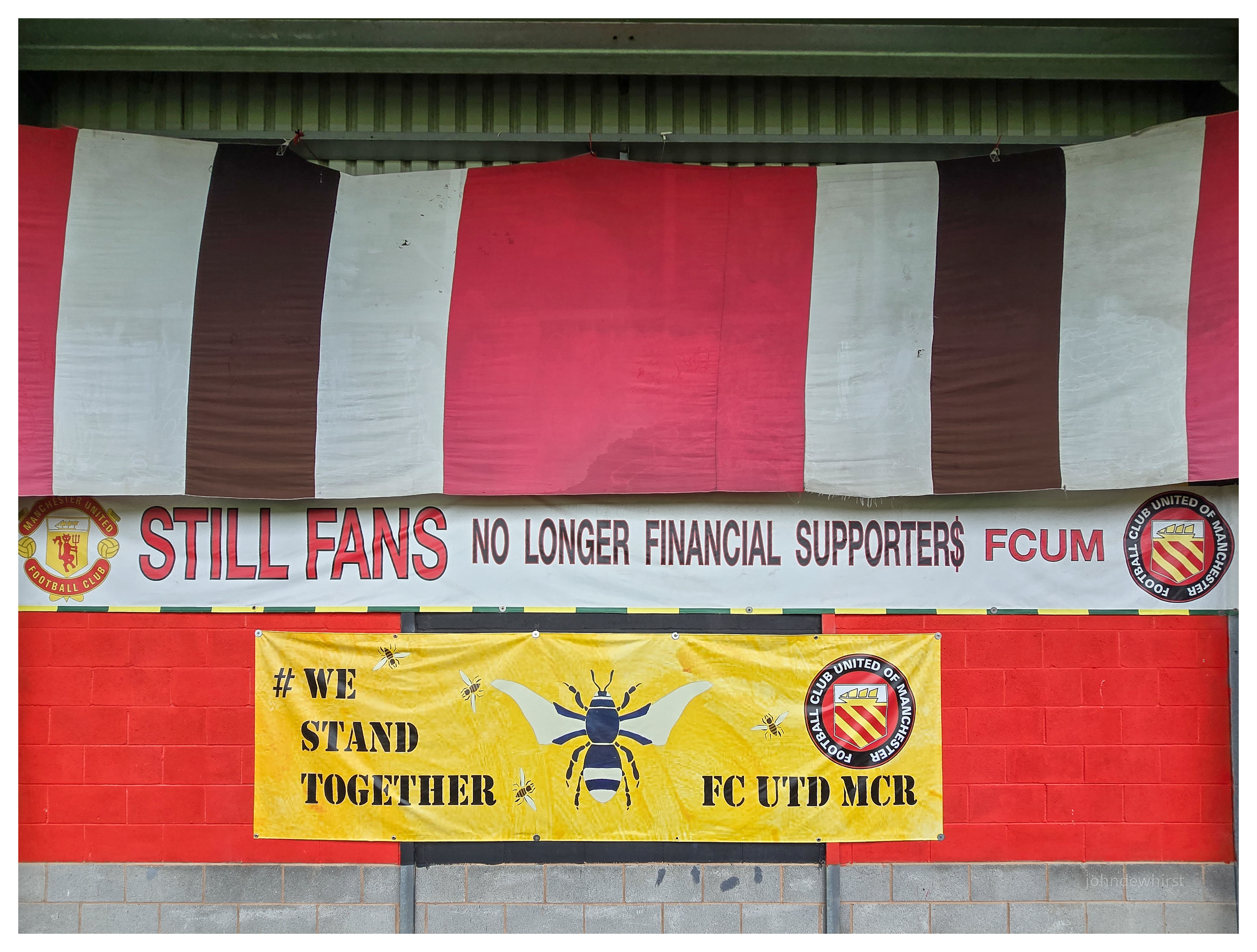
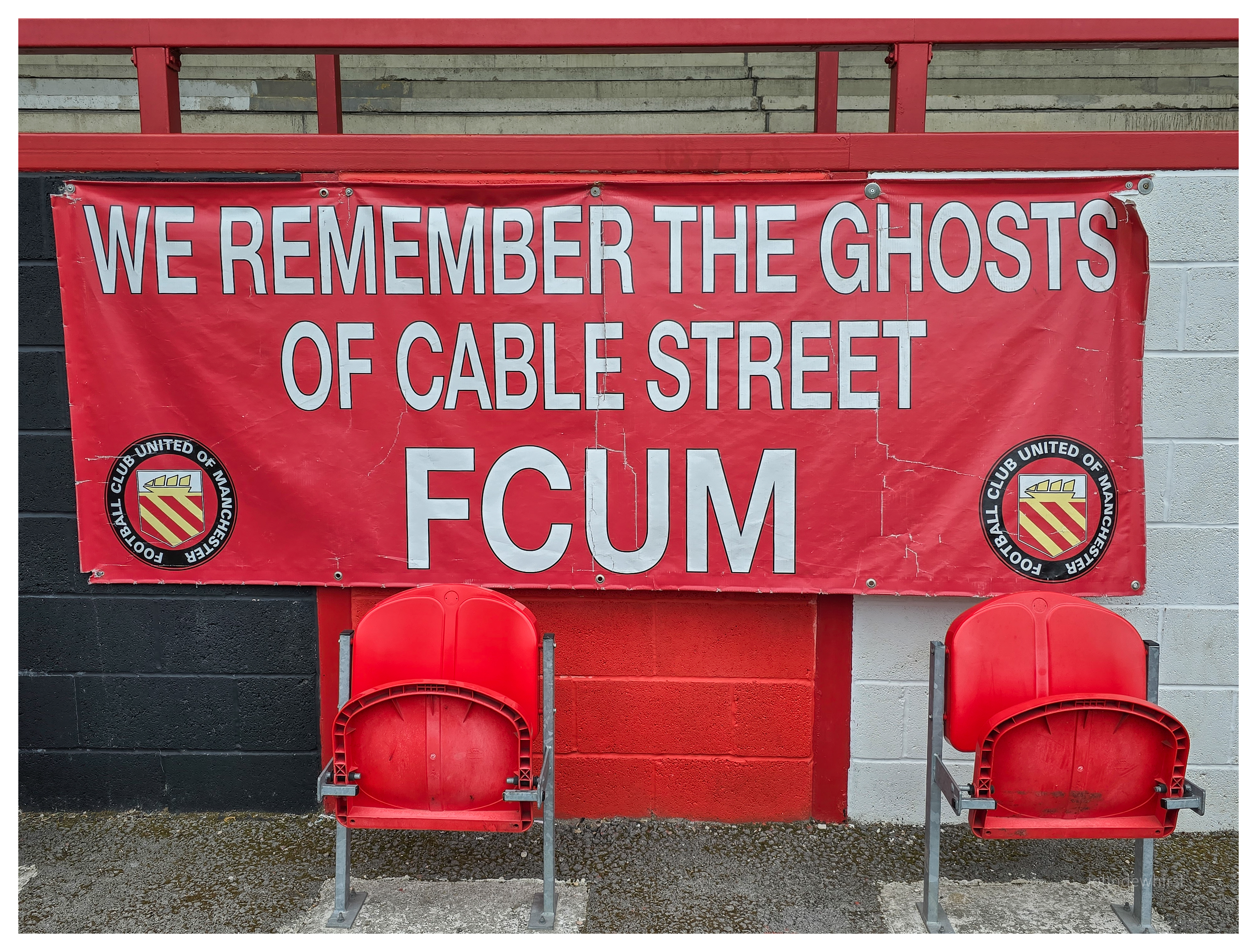
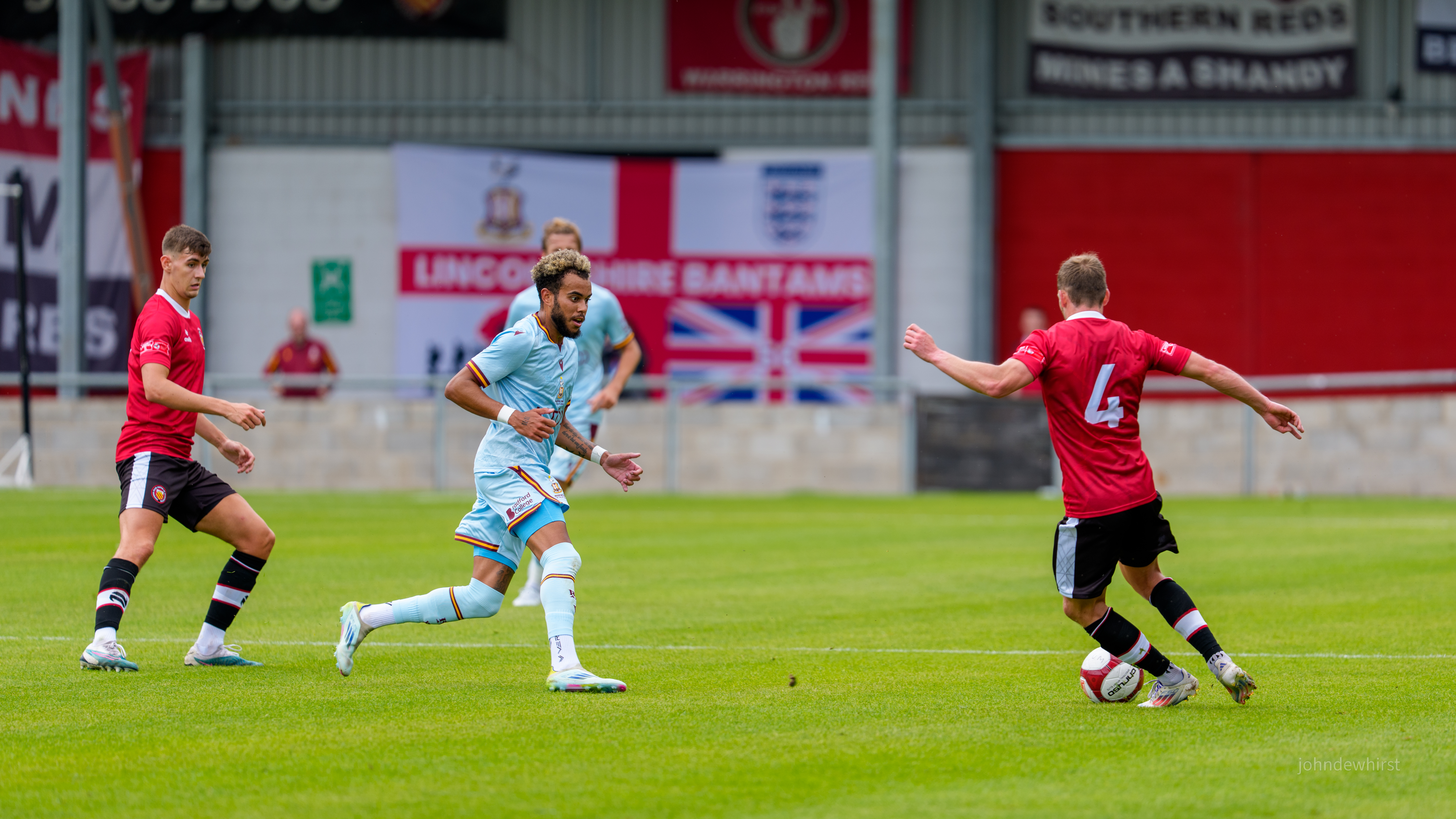
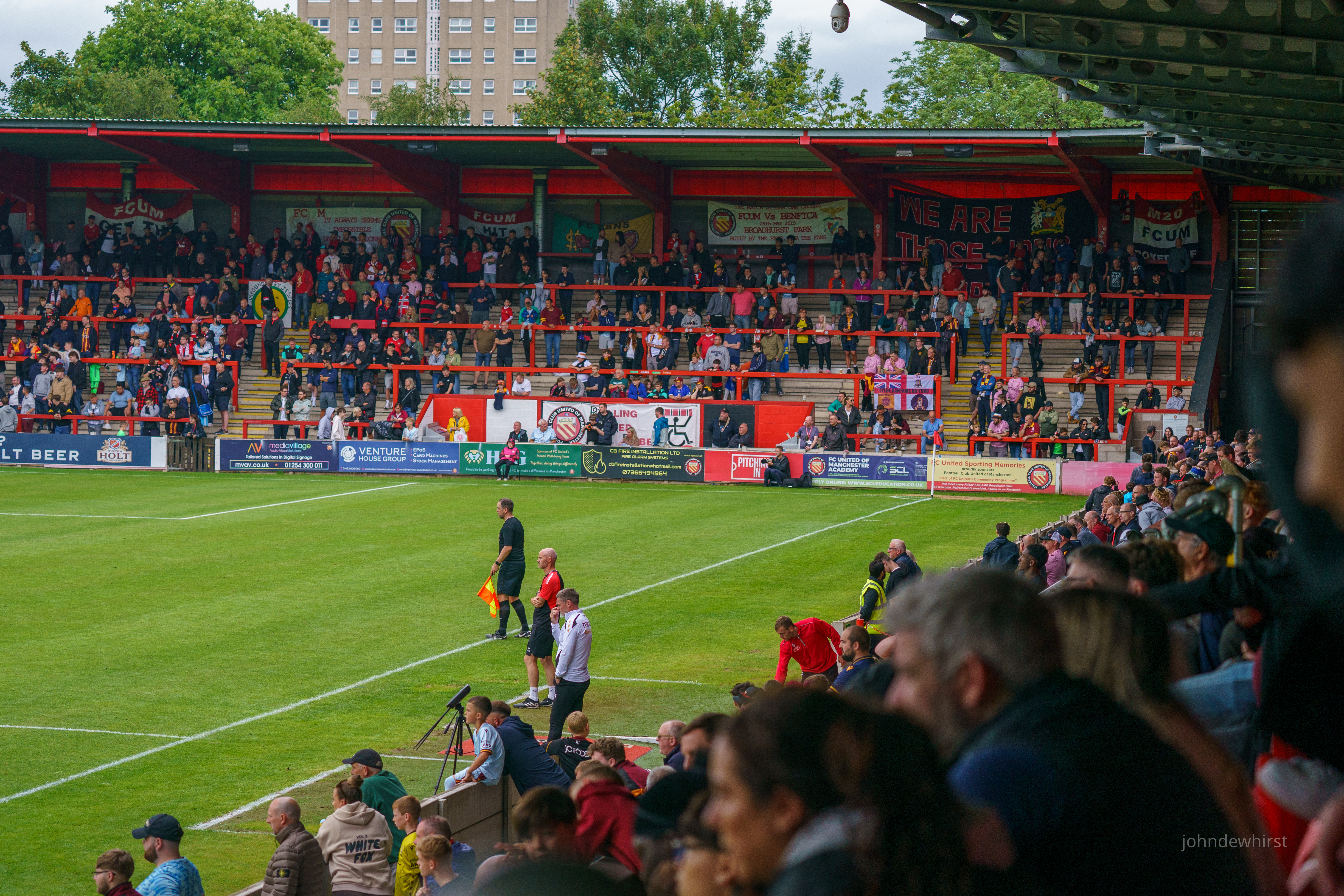
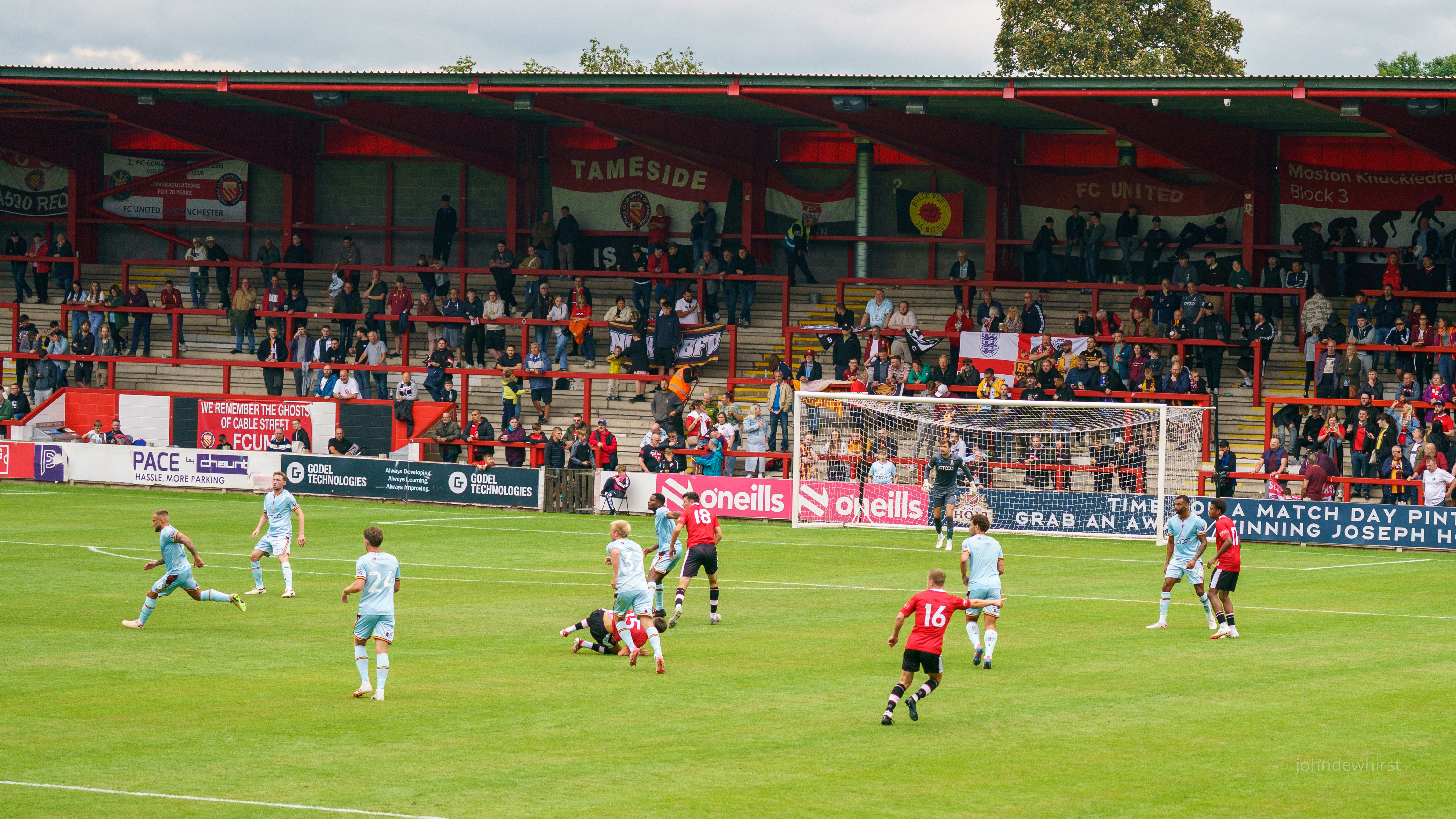
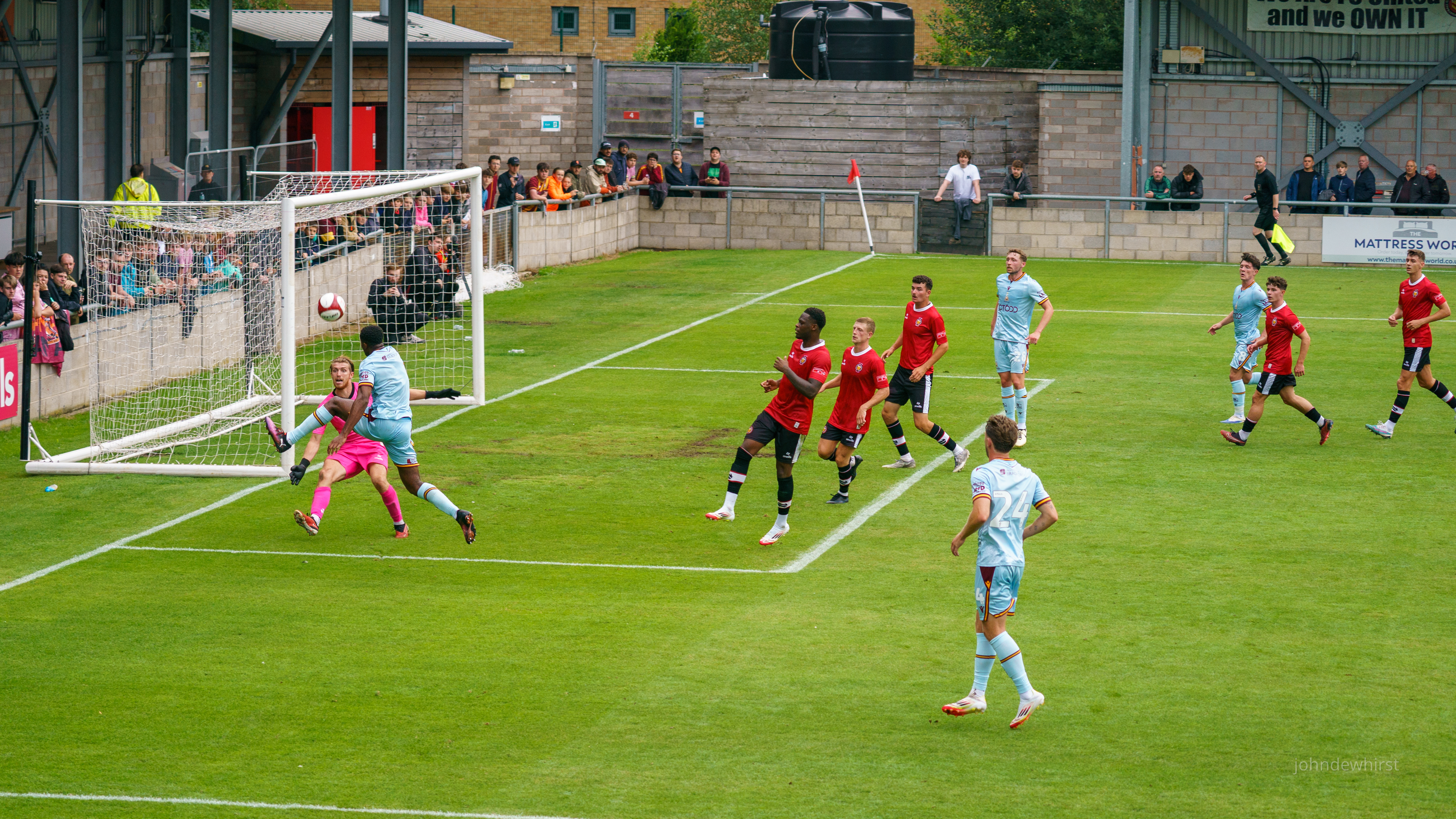
The pre-season friendly with FC United of Manchester at Broadhurst Park in Moston, Manchester was an excellent opportunity to visit a new ground and one that had been on my bucket list.
Next month marks the tenth anniversary of the club’s first league game at the stadium when Stockport County were the visitors for a National League North (sixth tier) fixture. Whereas County now compete in the third tier, FC United are in the seventh tier and the club has been a member of the Northern Premier League, Premier Division since 2019/20.


FC United was formed in 2005 by supporters of Manchester United in response to the Glazer takeover of their club and originally played at Gigg Lane, Bury before the opening of Broadhurst Park. The club established a strong momentum with three successive promotions in its first three seasons and it seemed that FC United might emulate the rise of AFC Wimbledon, another supporter owned club formed in 2002. However it would take another seven years to reach the National League North in 2015 where the club remained for only four seasons before relegation back to the National Premier League, Premier Division.
Average attendances at Broadhurst Park have halved since the opening in 2015/16 when it was 3,395 to 1,667 last season and the gate for the friendly with Bradford City on 5th July – 1,688 – was therefore pretty representative of current league crowds. However if the atmosphere for our game was anything to go by, you’d be forgiven thinking that there were more in attendance and it compared very favourably with our recent visits to the likes of Salford and Bromley. (NB The record crowd for an FC United game is 6,731 at Bury in the FA Cup during 2010/11.) The ground is all-covered and has a capacity of 4,200 with room for expansion although it is questionable whether that is likely in the near-term.


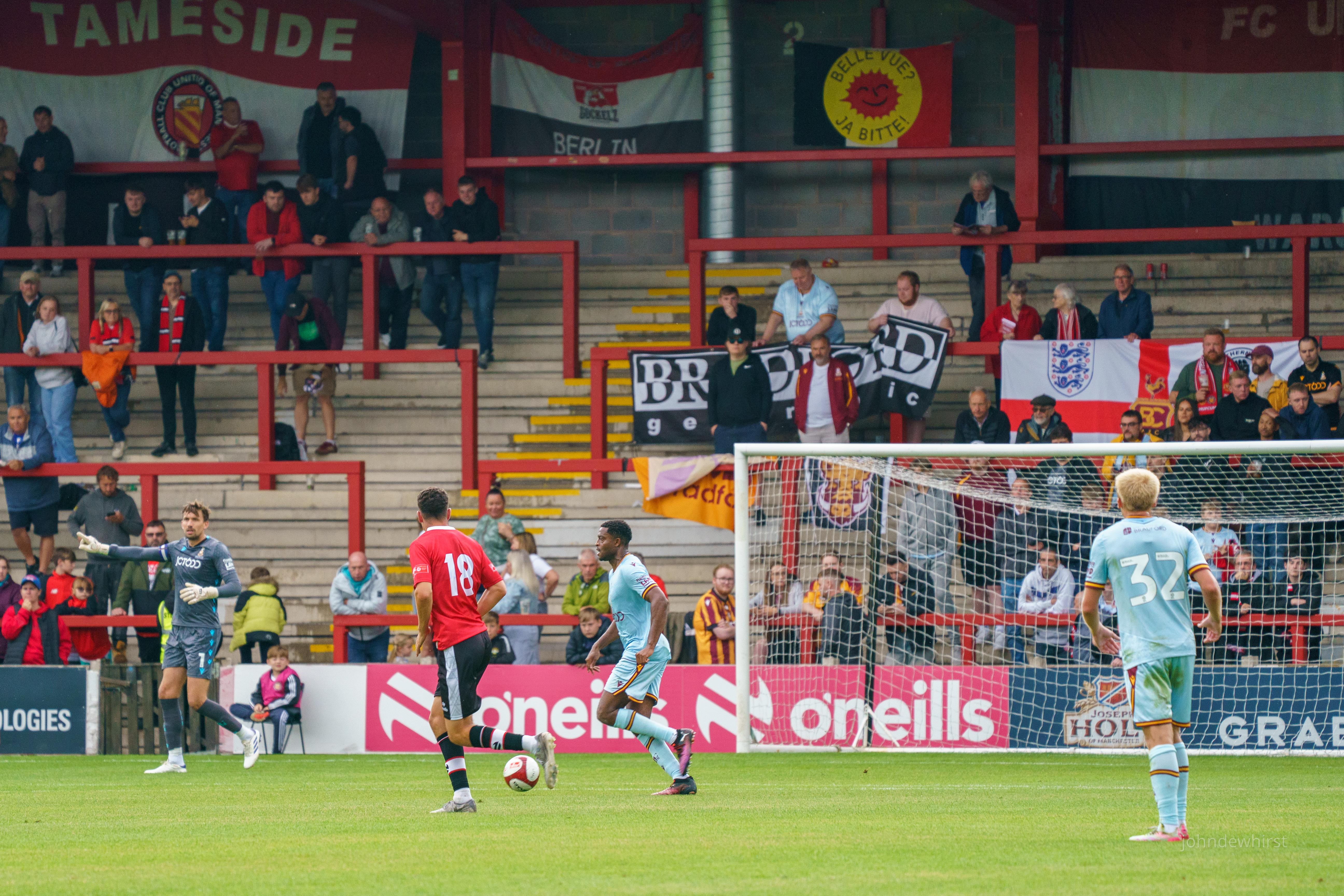
Optimising the match day experience is a key objective for the club from a number of perspectives, for example through accessible pricing and decent refreshments and the encouragement of singing which benefits from a covered goal-end standing terrace (St. Mary’s Road End) the capacity of which is probably half that of the entire ground. There are numerous banners hung around the stands which makes the ground seem fuller although it also gives the feel of a teenager’s bedroom.
Mention needs to be made about the pre-match music which I thought was excellent, featuring in particular Manchester bands (Magazine, Joy Division, Buzzcocks, Stone Roses and The Smiths albeit Oasis notable by their absence in the playlist I heard) and new wave generally. Above all the fans are extremely friendly and welcoming of visitors.
The club is resolutely committed to supporter democracy as a mutual organisation and promotes itself as the largest fan-owned club in the UK. A similar (mutual) organisational structure existed at Valley Parade prior to incorporation in 1908. The historic record is that it handicapped decision-making, and that this became heavily politicised between different factions of the membership. It also impaired financial management and fundraising. How the modern incarnation at FC United works would be fascinating to know.
There is much to commend FC United and similarly its community initiatives are understood to have been impactful. Yet the obvious question is what of the future? The club has a principled rejection of corporate football although policies such as an aversion to shirt advertising have probably hindered its progress and financial budgeting. Not least the investment of £6.5m in the development of Broadhurst Park represents a commitment with financial obligations that still have to be paid. The dilemma facing the club in its third decade is whether to embrace commercialism or face stagnation. Limited progress in the last ten years highlights that despite all the attempts to escape football capitalism, the club remains trapped by the basic imperative of paying its way and the perennial struggle to compete with its rivals. Despite being one of the better supported non-league clubs – and the best supported in its division – this has not translated into sustained success.


The Premier League exacerbated football inequalities but those existed before 1992 and indeed Manchester United FC and its supporters had long been a beneficiary of football capitalism. The gulf in resources between Bradford City and Manchester United was there to be seen when the clubs played each other in 1982 and 1960 or well before that. The renaming of the original Newton Heath club to Manchester United in 1902 and relocation to Old Trafford in 1910 was nothing less than commercial opportunism such that Manchester United had been the product of football capitalism in the first place.
Malcolm Glazer’s takeover of Manchester United twenty years ago has proved to be disastrous for the club so you can hardly fault the founders of FC United for their opposition but at the time I couldn’t help a degree of cynicism about their venture. Why had it taken them so long to recognise the stench of football capitalism or see that there were losers out there? And why didn’t they give their support to any number of struggling sides in the north-west who had long suffered from football supporters opting for the bright lights of Old Trafford in preference to their local club?
For all the protests and virtue signalling of FC United, football capitalism has advanced unchecked in Manchester and in particular three miles down the road from Moston at the Etihad Stadium. The downward trend in gates at Broadhurst Park in the last ten years highlights that whilst the club has the support of a hardcore of followers it has ultimately failed to maintain its momentum and capture the affection of new generations of fans. For sure FC United offer a great match-day experience but in the final event you need more than a good juke box to get people coming back each year.
The case study of FC United points to the difficulty of launching a new club and winning new loyalties. The example of Bradford Park Avenue, reformed in 1988 and currently in the eighth tier comes to mind. The latter was launched on the back of a wave of nostalgia that followed the publication of Tim Clapham’s book about the history of the club the year before. However, coming 14 years after the liquidation of the original club it was effectively starting from scratch and it has reached no higher than the sixth tier. The disadvantage for Bradford Park Avenue has remained the ageing of its support base and the failure to persuade younger fans to follow a different Bradford club. By contrast the comparative success of AFC Wimbledon probably had more to do with that club becoming established so soon after the insolvency / relocation of the original as well as the media attention that it enjoyed. I also sense greater pragmatism on the part of the AFC Wimbledon leadership as to its commercial operation and suspect that the club had the benefit of suitably qualified and experienced individuals committing to its cause.
Comparisons can also be made with other former Football League clubs that suffered financial collapse. For example the respective phoenix sides of the likes of Bury FC (who lost FL membership in 2019), Chester City (2009) and Darlington FC (2010) currently operate in the eighth, sixth and sixth tiers of English football, far removed from the prospect of a rapid return to the Football League. Had there been a new club to succeed Bradford City AFC when liquidation was a real prospect in 2004, how long would it have taken to rejoin the ’92’?
The visit to Broadhurst Park was very enjoyable (with BCAFC winning 1-0) and I genuinely wish FC United all the best in the forthcoming season in their division alongside the likes of Guiseley, Whitby Town and Workington AFC. It will certainly be interesting to see how the club progresses in the next ten years.


John Dewhirst
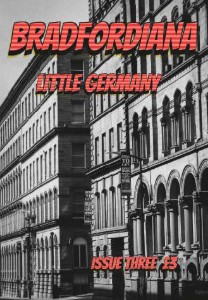
** If you are interested in football photography then have a look for issue #2 of BRADFORDIANA which features Valley Parade. BRADFORDIANA is a photozine with 12 issues being published during 2025 in celebration of Bradford.
A visit to the Turnbull Ground, Whitby
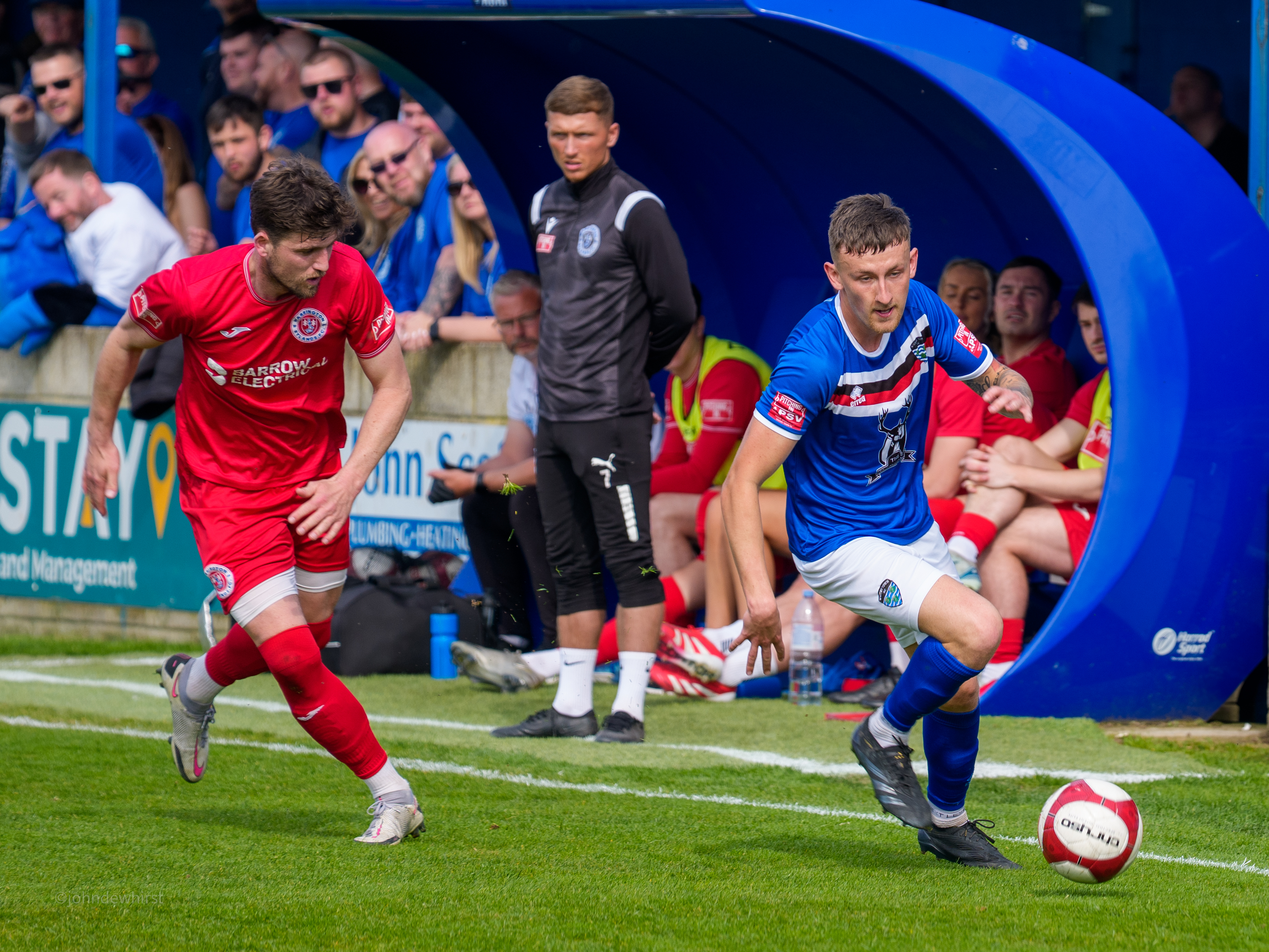
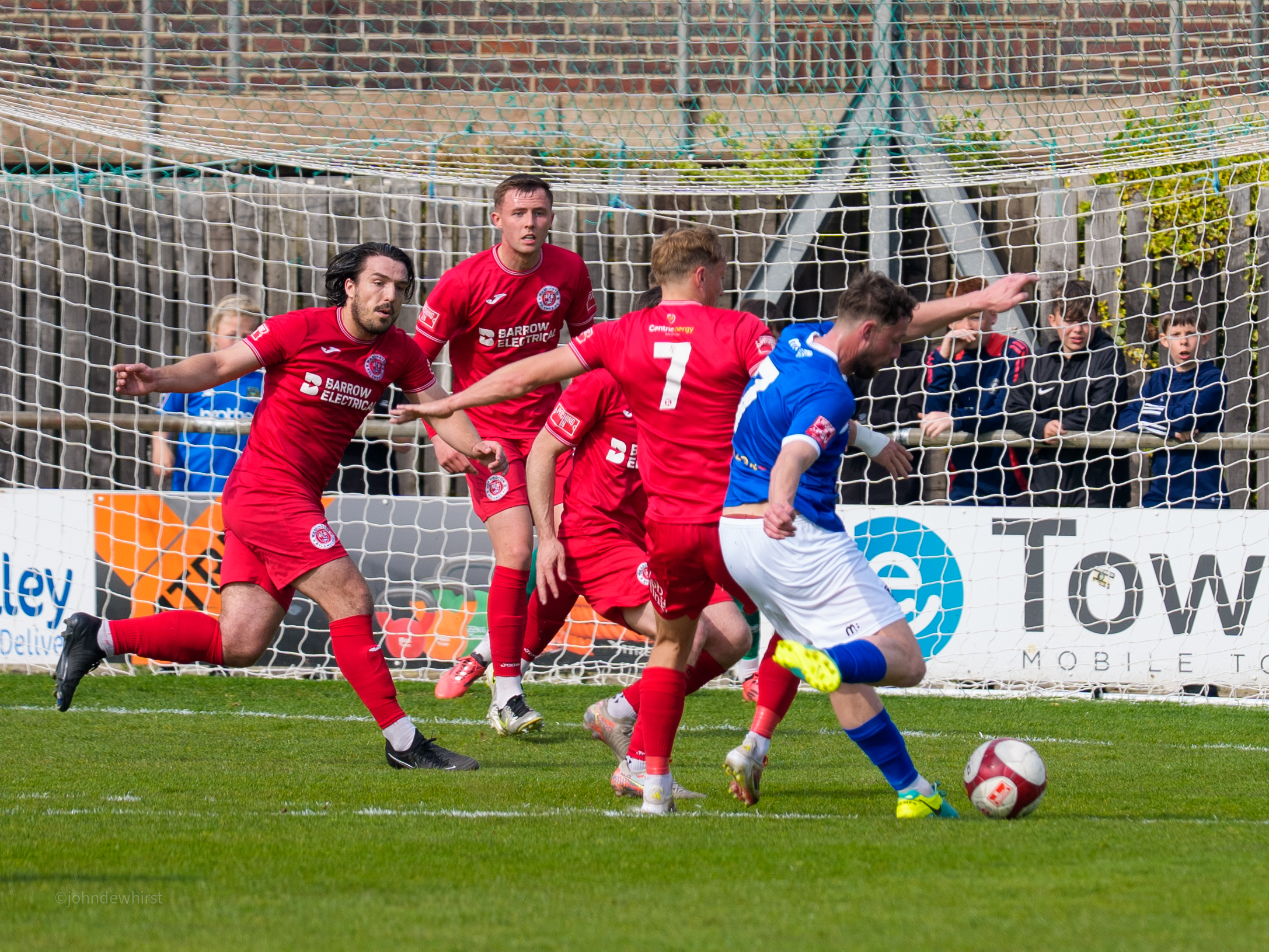
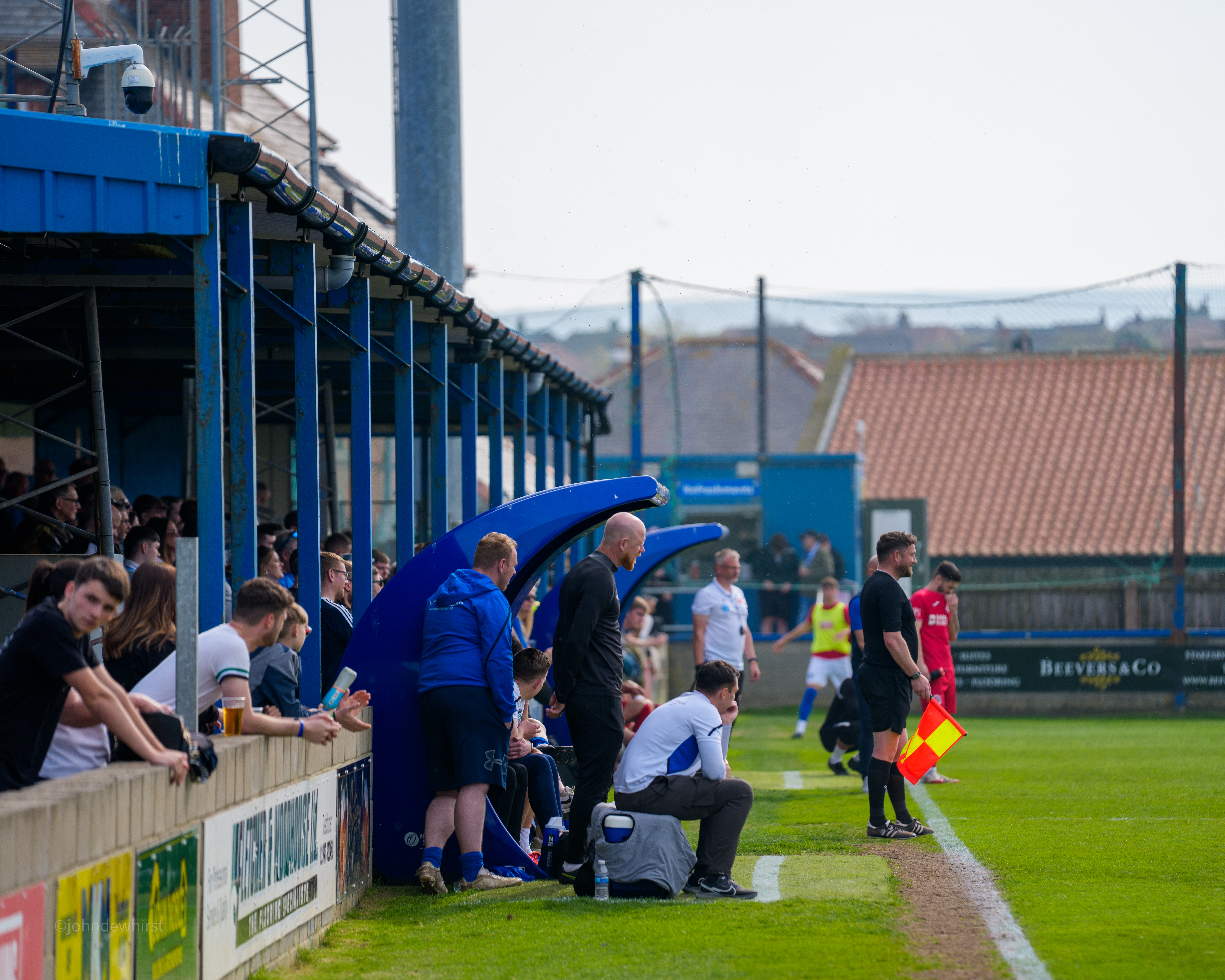
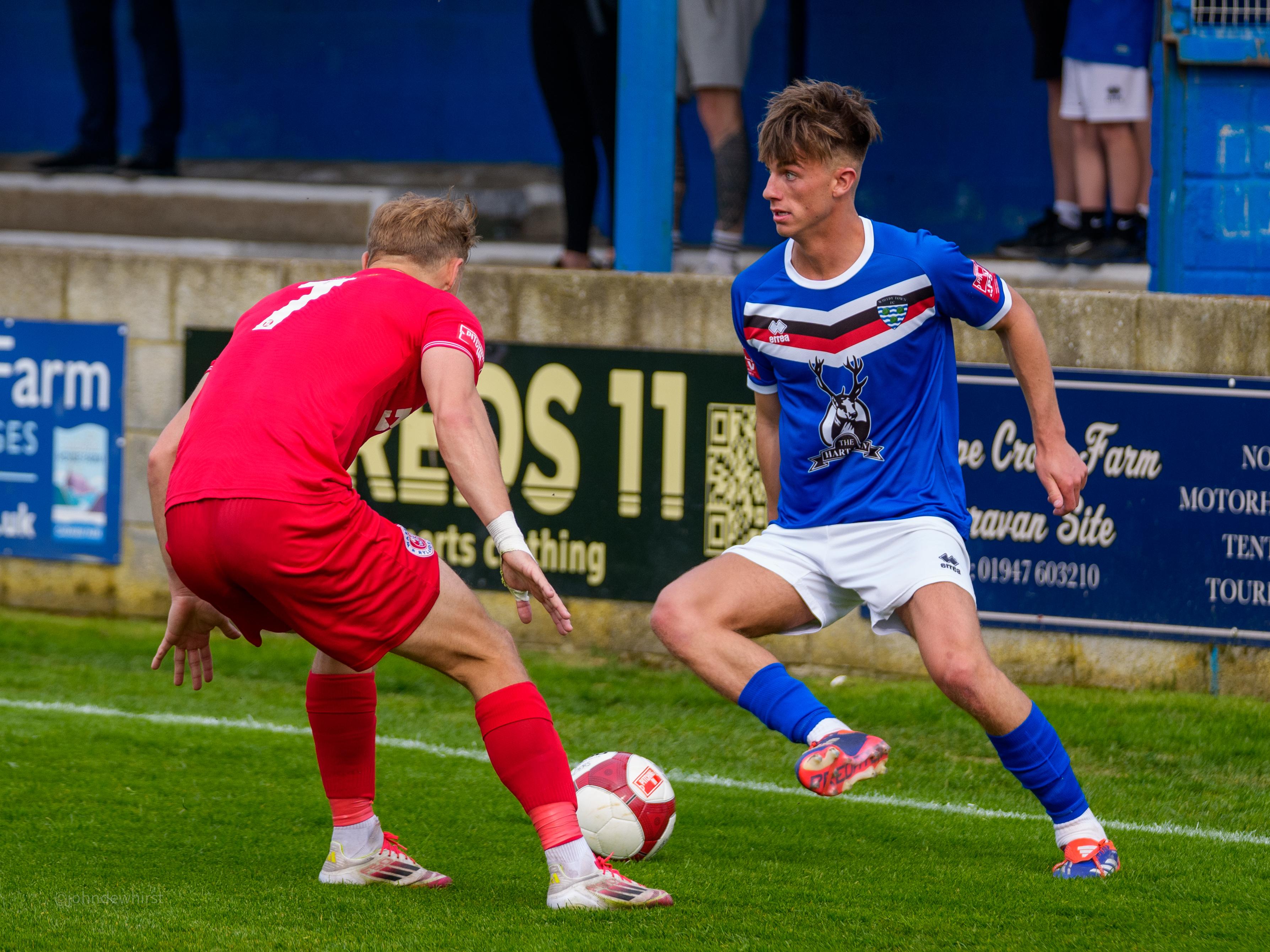
Photos from my visit to the Turnbull Ground to see Whitby Town vs Warrington Rylands in the Northern Premier League, Premier Division on 12th April, 2025. Whitby won the game 1-0.


** If you are interested in football photography then have a look for issue #2 of BRADFORDIANA which features Valley Parade. BRADFORDIANA is a photozine with 12 issues being published during 2025 in celebration of Bradford.
Bradfordiana – Of Bradford, about Bradford
I am delighted to announce the planned launch of BRADFORDIANA, a photography ‘zine with a sole focus on the Bradford district.
There is no shortage of material published about parts of the UK deemed to be trendy (for example hipster centres on the south coast or east end of London) and I thought it was about time to start waving a flag for Bradford, particularly given that 2025 is our year.
The inspiration came from the Cafe Royal series of photo booklets and having co-founded The City Gent ‘fanzine’ dedicated to the glories of BCAFC in 1984 I was up for the challenge of launching a similar physical publication as an antidote to digital media.
Each issue will feature contemporary photographs in both colour and monotone based around a specific theme with images selected from my archive. The project is a not-for-profit initiative with the objective being to recover costs and there will be no advertising or promotion of commercial interests.
BRADFORDIANA will be available to order online from a new website [B R A D F O R D I A N A] and I am looking to arrange sales through a couple of outlets in the centre of Bradford. I am committing to produce twelve issues during the course of the year and take it from there.
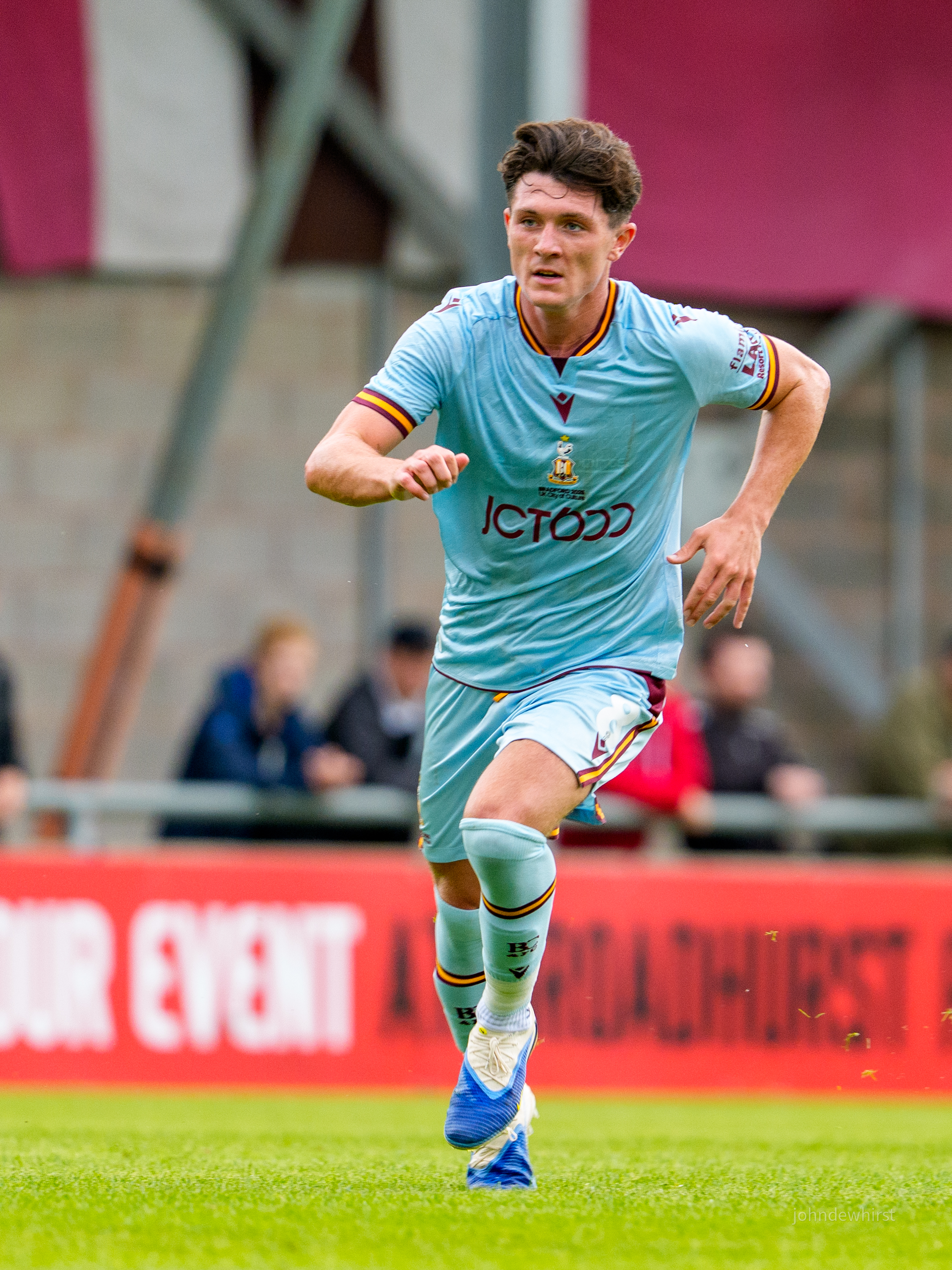
The objective is to encourage interest in Bradford as a place for photography, showcase the diversity of subject matter available as well as to provide a historic record for the future. Essentially this is something of an experiment. I am not pretending that my photos are prize-winning material but hopefully they show what sort of photographic opportunities exist in the Bradford district. If that inspires interest in Bradford or encourages others to do something similar or better then that is the measure of success.
Your support would be very much appreciated and I ask people to spread the word on social media. The first issue of BRADFORDIA will be released on 29th May but advance orders are being taken from the website. Nearer the time I will be tweeting updates from @jpdewhirst. You can email me to register interest and get updates – johnatbradfordianadotnet
John Dewhirst
Reflections about 11th May, 1985
Links to features written about the disaster published on the Width of a Post website.