When Thomas tried to get to the other side of Bradford

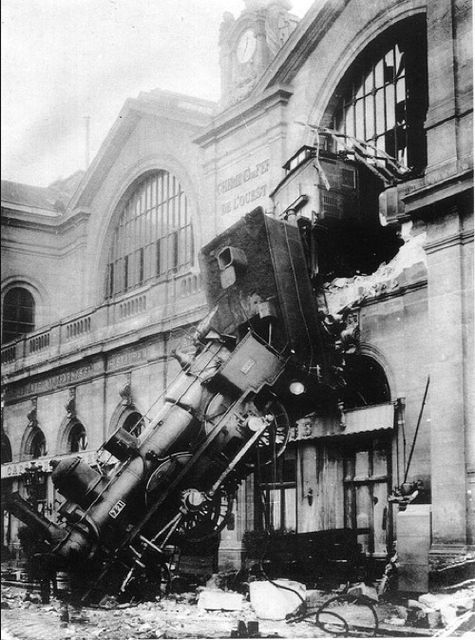
The following image will be familiar to many, often annoted with the caption ‘Oh Shit’. The incident dates from 1895 at the Gare Montparnasse, Paris. Of course such incompetence could never have occurred in Victorian Britain, or could it?

4b0c679768e80edab643b3dc2bcfb59f

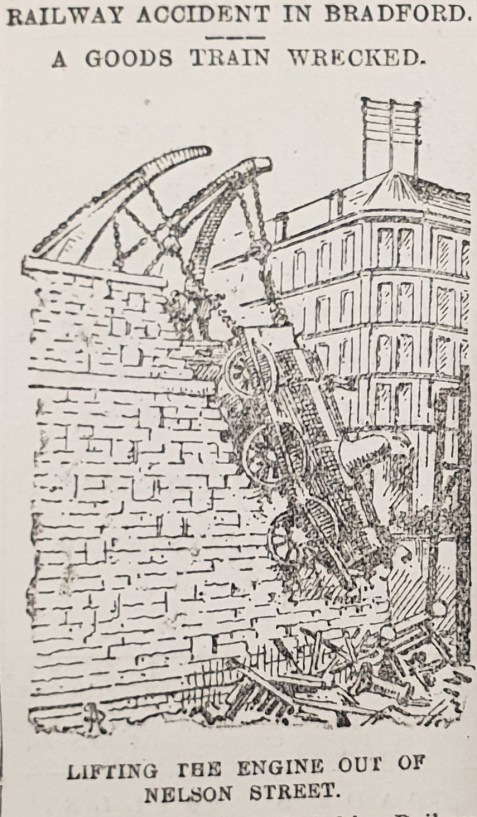
I confess a combination of surprise and amusement to have come across the following illustration in the Bradford Illustrated Weekly Telegraph of 1891 featuring an accident much closer to home in Nelson Street, Bradford. In its day this must surely have been quite a sight to behold.

1891-09-05 bwt nelson st

Nelson Street, Bradford – 1891 

The Fat Controller was so cross with Thomas that he said he would never allow a cross-Bradford rail link. Sadly this meant that Thomas could never meet his friends on the Midland line.

POSTSCRIPT. What happened in 1891 was not the end of it. I have been informed that there were at least three other instances in the Bradford district of runaway trains and spectacular crashes. In November, 1964 there was an incident at the former Adolphus Street station (picture below – thanks to Kieran Wilkinson for bringing this to my attention). In 1916 as well as in 1885 there were accidents involving runaway trains at Windhill. (Detail of the Windhill accidents from the Bradford T&A)

D-flnvZX4AIT2i9.png

Henry landed with a big bump.


John Dewhirst @jpdewhirst

===========================================================
Thanks for visiting my blog.

Link to other features on this blog about Bradford railway history

You will find links from the menu above to other features I have published online about the history of football in Bradford and Bradford City in particular. I contribute to the BCAFC match day programme and you can also find archive images as well as a number of book reviews. The links provide free, accessible history about BCAFC based on substance rather than soundbites.
===========================================================

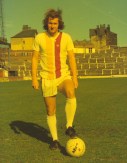
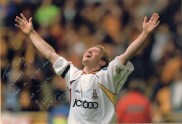
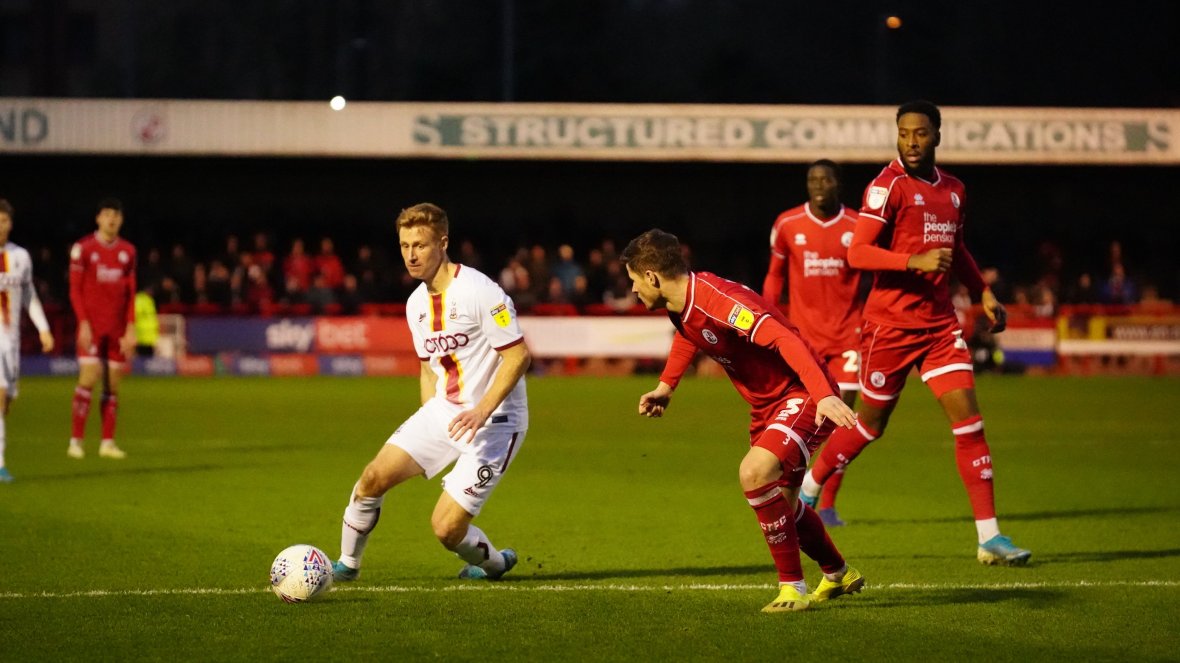
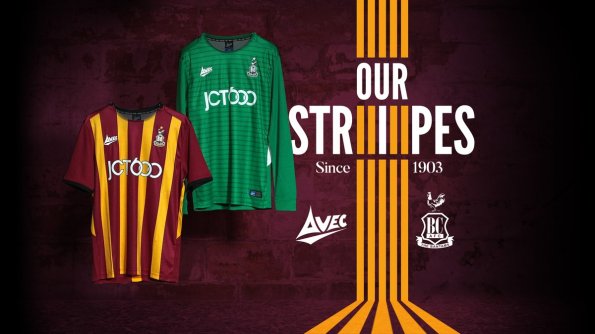
Tradition and the return of striped shirts

In June it was announced that Bradford City AFC will return to a striped shirt for the 2019/20 season…
D9hsYc2WsAAT43N.jpg

I was both amused and saddened by the quote credited to a club official a few years ago in respect of the design of team strip: ‘It is difficult to determine what is traditional given the various changes in recent years’. My observation is that given the embedded practice of radical changes every year there is a risk of this statement becoming self-fulfilling and before long we won’t have any identifiable tradition beyond the kit manufacturer’s design studio.

The commercial imperative is now to change the design for the sake of it and then to accommodate a template design provided by the manufacturer. Surely there is a strong argument that the choice of team strip is too important to be left to the club and its kit manufacturer alone.
1911

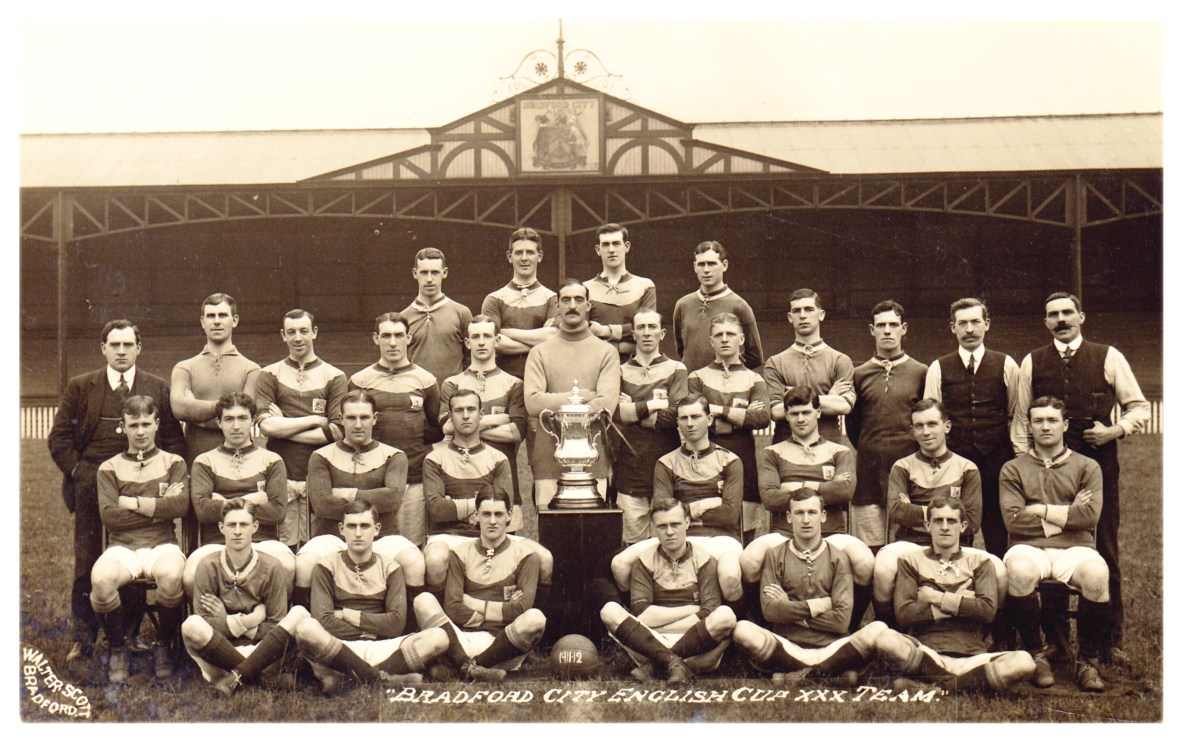
So what is the club’s traditional strip? Is it the favourite shirt that we recall from our early years supporting the club and by definition something unique to everyone of us? Is it the City Gent strip of the 1965/66 to 1971/72 era, the 1911 FA Cup Final shirt or the reincarnated hoops of our celebrated League Cup campaign? Each of these examples have been popular and significant in the club’s history and could be described as ‘classic’. Maybe the best way to answer the question is ask the same of other clubs. For example we would have little difficulty identifying the traditional shirt design of Liverpool, Newcastle United or Manchester United for the very reason that whoever is in charge of those clubs knows that the one thing they can’t – or indeed shouldn’t – change is the generic shirt design.

With the exception of Cardiff City who recently abandoned blue for red before reverting back again, tradition is generally written in tablets of stone. However there have been many other precedents of clubs changing their colours. In 1911 for example Bradford Park Avenue abandoned its traditional red, amber and black colours for green and white and subsequently alternated between the two combinations. Green and white had been introduced in February of that year following the appointment as manager of Tom Maley, previously a Glasgow Celtic player and administrator as well as avowed Irish nationalist. Adoption of those colours was part of the offer made by the Park Avenue chairman Arthur (Harry) Briggs to tempt the former Manchester City manager out of retirement. It is quite possible that they were also viewed as a means to attract local Irish immigrants to Park Avenue. It begs the question whether a similar colour change might one day be introduced at Valley Parade to attract ethnic support.

In the very beginning Manningham FC wore black shirts and black shorts before adopting claret and amber hoops in 1884 prior to moving to Valley Parade [Read here about the military heritage of the colours]. The new Bradford City club wore hoops in its first Football League game, thereafter adopting claret and amber stripes with white shorts – new shirts not being available for the game, the team wore the old rugby jerseys of Manningham FC. Stripes were considered in keeping with association football whereas hoops were associated with rugby and in 1903 the new club was anxious to distinguish itself from the rugby traditions of Manningham FC at Valley Parade, notwithstanding the retention of claret and amber. Until 2012/13 hoops were not worn again by Bradford City.

The determinant of kit design has always been commercial in nature. In the last twenty years decisions have been based principally around selling replica shirts as a leisure garments whereas previously it came down to securing the playing kit for as cheap as possible. Because the club’s colours – claret and amber – are relatively unique there have been constraints in terms of what a manufacturer can supply. Even now, standard template designs are a factor for what can be manufactured.

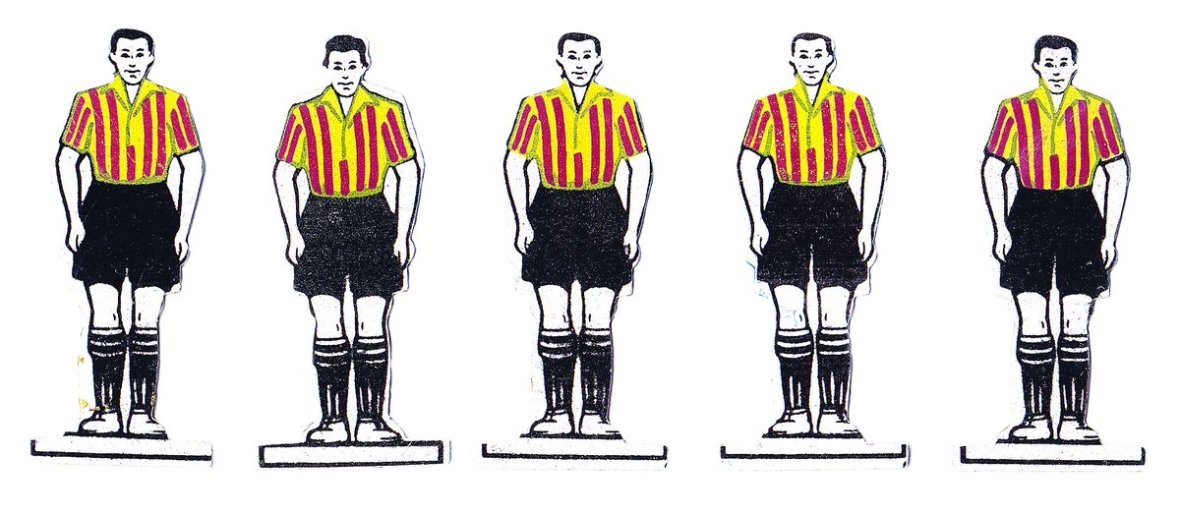
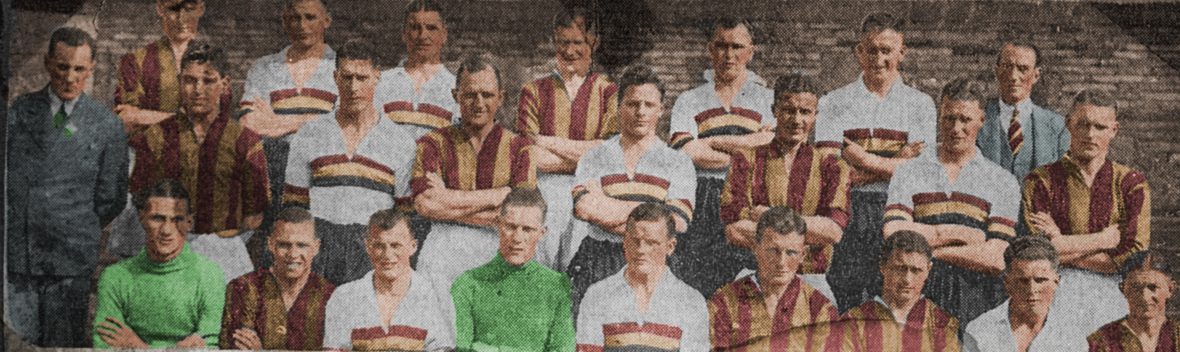
In 106 seasons of peacetime League football there have been four main colour combinations in the design of club strip. My classifications allow for broad and elastic interpretation given the imagination of recent designs but confirm that in 61 seasons claret and amber stripes have been worn (which includes the recent diagonals and chequer board styles). This also includes the 2013/14 single striped shirt and the number would increase to 65 if we include seasons in which claret and amber stripes have appeared on a white shirt. In 29 seasons there has been a predominantly claret shirt – ranging from the yoke shirt worn in the FA Cup Final and revived in 1949 to the claret shirt with amber collar worn until 1909 and then again between 1953 and 1959. Of the remainder, 5 have been in a predominantly amber shirt and 10 in a predominantly white shirt (or 6 if the kits of 1923/24 and 1974 to 1977 are classified as ‘striped’) and one in hoops.
subbuteo.jpg

Taking the 106 League seasons, the most common configuration has been claret and amber stripes with black shorts (28). The next has been a predominantly claret shirt with an amber collar or yoke design worn with white shorts in 26 seasons, albeit not adopted since 1959.

The other main combinations have been claret and amber stripes with white shorts (17) and finally claret and amber stripes with claret shorts (16) which has been the most common combination this century (in 10 out of 20 seasons) and which first appeared in 1977.

Predominantly white shirts as worn in 1923/24 and later between 1974 and 1977 as well as 1978 to 1985 have proved to be a temporary phenomenon. White was historically the club’s third colour and traditionally used for away shirt design up to 1972. (This was the traditional default change kit of League clubs and regulations stipulated that clubs should travel with white shirts in case of a colour clash.) During the inter-war period the shirts were often reversible and could be worn inside out if necessary. Shirts were also worn until they wore out. That often meant being used for away shirts (for example the white shirts with sashes originally worn in 1923/24 or the amber shirts first worn in 1973/74) and until the early 1980s it remained the practice for old kit to be worn on the training ground.

It was originally planned for white shorts with a claret and amber striped shirt to be worn in 2004/05 and stock was produced by Diadora, the suppliers. However, the strip was only worn in a handful of League games at the start of the season – an unusual legacy of our financial troubles at the time. White shorts were reintroduced with the claret and amber hoops in 2012, the first time that they had been worn by the club since 1985.

Following the fire disaster in 1985 the club has had a policy of including black in the home shirt design as a commemoration of the Valley Parade disaster. With effect from 2008 this has been incorporated in a crossed ribbon motif.

Away shirts have been of varied and multiple designs in the last thirty years. My understanding is that the first time that the club strayed from its traditional colours was between 1958 and 1961 when blue shirts were adopted.

Advertising was introduced in the 1982/83 season when the Darley Street retailer TOY CITY had its name proudly emblazoned on the shirt. There has been a high turnover of advertisers during the last 38 seasons, of which JCT 600 (16 seasons), Bradford Council Economic Development Unit (5 seasons; Myth Breakers, 1983-88) and Bradford & Bingley (4 seasons, 2006-10) have been most prevalent. JCT 600 is the only sponsor to have had two separate periods of sponsorship from 1997 to 2006 and again from the 2013/14 season.

The principal designs of claret and amber home shirts are as follows:

Predominantly claret body, white shorts (26)

Claret and amber stripes, white shorts (17) – see also the title image of this blog

Claret and amber stripes, black shorts (28)

Claret and amber stripes, claret shorts (16)

For what it’s worth my preference is for a claret and amber striped shirt but given that this isn’t everyone’s favourite and mindful of the commercial pressure for change, I’d like to see the club rotate its home shirt design between the three traditional styles that have been worn since 1903. That is: (i) a striped shirt; (ii) a predominantly claret body with amber collar or yoke; and (iii) a predominantly white shirt with claret and amber stripes / detail.

Last season’s home shirt was a major disappointment and certainly didn’t pay homage to tradition with its black sleeves. The final design of last season’s shirt is understood to have been dictated by Edin Rahic against the advice of club staff. Rahic apparently described the shirt as evoking a warrior spirit. Ironically the internal recommendation had been to adopt a style similar to that of 1907-09 and as worn in the Division Two Championship season of 1908/09 which would have been a claret shirt and amber collar/cuffs with white shorts.

Updated from ‘A History of Bradford City AFC in Objects’ (BANTAMSPAST, 2014)

John Dewhirst

Tweets @jpdewhirst

Revival of white as the BCAFC away strip in 2019/20

===========================================================

Thanks for visiting my blog. You will find links from the menu above to other features I have published online about the history of football in Bradford and Bradford City in particular. I contribute to the BCAFC match day programme and you can also find archive images as well as a number of book reviews. The links provide free, accessible history about BCAFC based on substance rather than soundbites.

Links to features about the Bradford City crest and identity

===========================================================

If you are interested in the history of Bradford sport then visit VINCIT www.bradfordsporthistory.com where you will find features about the history of different sports and clubs in the district.

Recent articles published on VINCIT written by myself include:

The Paraders’ record breaking season of 1928/29

Centenary of Scholemoor Ground, Lidget Green and revival of Bradford RFC

The story of Shipley FC and Bradford’s other c19th junior rugby clubs

The origins of women’s football in Bradford

The significance of sport in shaping a Bradford identity

History of the Bradford Charity Cup

Compendium of Bradford sports club names

The late development of soccer in Bradford

John Nunn, Bradford physical aesthete

The story of the Belle Vue Hotel, a nineteenth century pub adopted as a sports headquarters in Bradford

The history of Bradford rugby and the case to reassess the split in English rugby in 1895 My findings from investigation of the origins and development of Bradford football provide sufficient evidence to challenge the orthodox view that the split in English rugby was driven by social class as opposed to the economics of sport.

The myth that the City – Avenue rivalry was based on class politics

The political origins of Bradford Cricket Club in 1836: Blaming the Tories

Cricket: the DNA of Bradford sport
===========================================================

Details of the books published in the BANTAMSPAST HISTORY REVISITED SERIES

20190625_1113352213717056585807535.jpg

No Pushball in Bradford

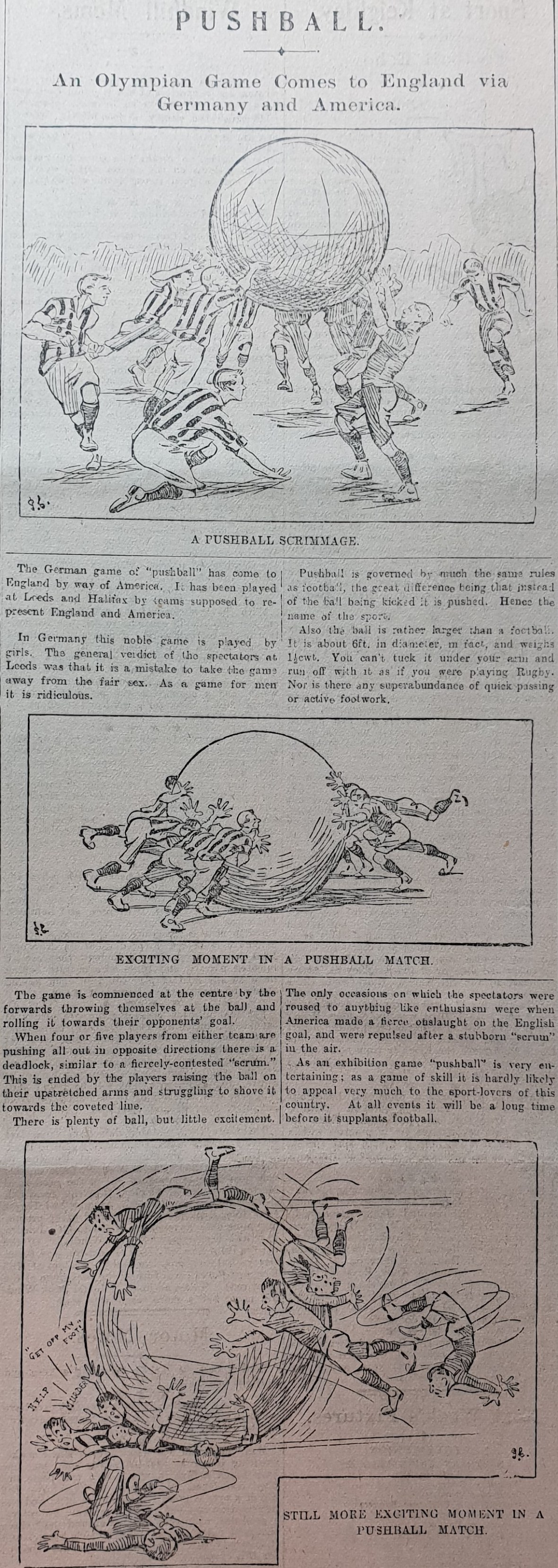
I came across the following article in the Yorkshire Sports of 6th September, 1902 whilst undertaking some research about early football in Bradford.

1902-09-06 ys pushball

The game of pushball had been devised in the United States in 1891. In the late summer of 1902 there was a series of exhibition matches in England, Scotland and Ireland, best described as a speculative commercial venture intended to win converts. There was a lot of hype involved with its promotion and to judge from attendances there was success in appealing to the curiosity of the public.

The tour included games in Sheffield, Leeds, Hull and Halifax but surprisingly did not involve two other centres of West Riding sport, Bradford and Huddersfield. The venues adopted included Crystal Palace in London (where the FA Cup Final was played) and St James Park, Newcastle. In August, 1902 there were games at Headingley, Leeds (which attracted just over four thousand), the Boulevard in Hull (five thousand crowd) and Hanson Lane, Halifax (only one thousand attending, attributed to wet weather).

For the three Northern Union (rugby) clubs it represented a welcome revenue generating opportunity and hence why it is notable that Bradford and Huddersfield were excluded. It is possible that cricket commitments at Park Avenue in Bradford and Fartown in Huddersfield precluded pushball being staged. On the other hand the leadership of the Bradford and Huddersfield clubs, as well as Manningham FC, may have had misgivings about involvement. For example the staging of the Savage Africa Show at Valley Parade the previous year had had limited financial benefit and been at the expense of the playing field.

There is no reason to believe that the three Yorkshire rugby clubs staging pushball envisaged abandoning their sport for the new game, notwithstanding growing apathy about Northern Union rugby relative to the popularity of association football or ‘socker’ as it was known locally. The general consensus of newspaper accounts was that pushball was unlikely to catch on (as was indeed the case).

It will be noted that according to the Yorkshire Sports, pushball was considered a game to be played by girls, a statement betraying contemporary attitudes with a rigid cultural delineation of sports by sex [1]. By contrast, football – a generic term embracing both rugby and association – was considered to be a masculine sport, the best demonstration of which was played in a scientific fashion rather than being a superficial entertainment or show as was the case with pushball.

More about Pushball: Wikipedia The Guardian The Slate

John Dewhirst

[1] Refer to my feature about The origins of women’s football in Bradford (updated with new images since originally published in September, 2018).

===========================================================

Thanks for visiting my blog. You will find links from the menu above to other features I have published online about the history of football in Bradford and Bradford City in particular. I contribute to the BCAFC match day programme and you can also find archive images as well as a number of book reviews. The links provide free, accessible history about BCAFC based on substance rather than soundbites.

===========================================================

If you are interested in the history of Bradford sport then visit VINCIT www.bradfordsporthistory.com where you will find features about the history of different sports and clubs in the district.

Recent articles published on VINCIT written by myself include:

The Paraders’ record breaking season of 1928/29

Centenary of Scholemoor Ground, Lidget Green and revival of Bradford RFC

The story of Shipley FC and Bradford’s other c19th junior rugby clubs

The origins of women’s football in Bradford

The significance of sport in shaping a Bradford identity

History of the Bradford Charity Cup

Compendium of Bradford sports club names

The late development of soccer in Bradford

John Nunn, Bradford physical aesthete

The story of the Belle Vue Hotel, a nineteenth century pub adopted as a sports headquarters in Bradford

The history of Bradford rugby and the case to reassess the split in English rugby in 1895 My findings from investigation of the origins and development of Bradford football provide sufficient evidence to challenge the orthodox view that the split in English rugby was driven by social class as opposed to the economics of sport.

The myth that the City – Avenue rivalry was based on class politics

The political origins of Bradford Cricket Club in 1836: Blaming the Tories

Cricket: the DNA of Bradford sport
===========================================================

Details of my books published in the BANTAMSPAST HISTORY REVISITED SERIES
Tweets: @jpdewhirst

Recent posts

Thanks for visiting my blog! 

Scroll down on this page and you will find articles uploaded to this blog in chronological order (most recent at the top). The majority are articles also published in the BCAFC programme and you will find links to these from the menu above.

The links provide free, accessible history about BCAFC based on substance rather than soundbites. During the course of researching the origins of sport in the Bradford district I have discovered the extent to which there have been inaccurate and superficial narratives about what happened. I’d go so far as to say that the history has been done an injustice. Hence the intention is that this blog will be developed as a reliable source of historical reference and complements what I have written in my books as well as on VINCIT, the online journal of Bradford Sport History.

I will be posting content during the summer and detail of updates will be tweeted.

Tweets: @jpdewhirst

20181215_1356157789815872076883622.jpg

The following are features (other than BCAFC programme articles) that have been published on this blog during the last six months:

The sorry record of 2018/19

Valley Parade disaster fund raising 1985

Glorious 1911

Portsmouth & Chelsea fans come to Bradford (1912)

Book Review – Football Fans by Ian Beesley

Transfer window

History in the making this season?

Photos of Valley Parade in the 1970s

Photos of Valley Parade in the 1980s

Photos of Valley Parade redevelopment, 1986

Photos of Valley Parade in the 1990s

Campaigning against Edin Rahic

Die Deutsche Frage, visit to Germany Nov-18

Book Review – One Year, Two Seasons by Richard Wardell

Book Review – The Beautiful Badge by Martin Routledge

Book Review – Kick Off by David Pendleton

Book Review – How football began by Tony Collins

Completely different:

The Stranglers March, 2019 tour

The Stranglers in Los Angeles, May 2019

Refer to the menu above to navigate.


Bradford shield.jpgMy recent articles on VINCIT:

The Paraders’ record breaking season of 1928/29 

Centenary of Scholemoor Ground, Lidget Green and revival of Bradford RFC

Railways and the early development of Bradford football

The long forgotten story of Shipley FC.

The origins of women’s football in Bradford – NB updated with new images.

Forgotten & Forlorn – the Belle Vue Hotel


Published on PLAYING PASTS in Feb-19: Football clubs and how they fail. (I am presenting a paper on the same theme at the International Football History Conference in Manchester in June, 2019.)
Details of my books and others in the Bantamspast History Revisited series


Dead Loss Angeles, May-19

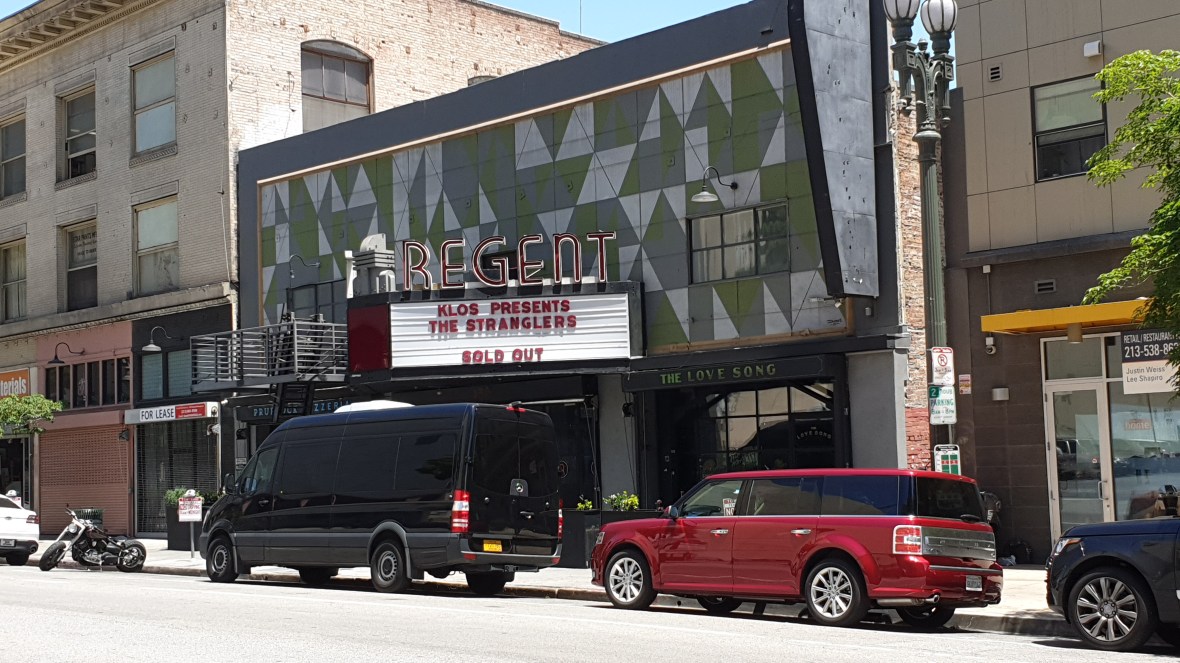
From Saufend Pier in March to Santa Monica and Venice Beach in May, pack your bucket and spade along with the earplugs. Photos from the sell-out concert at the Regent Theatre, Los Angeles on 29th May, 2019 and an eclectic tourist trail.

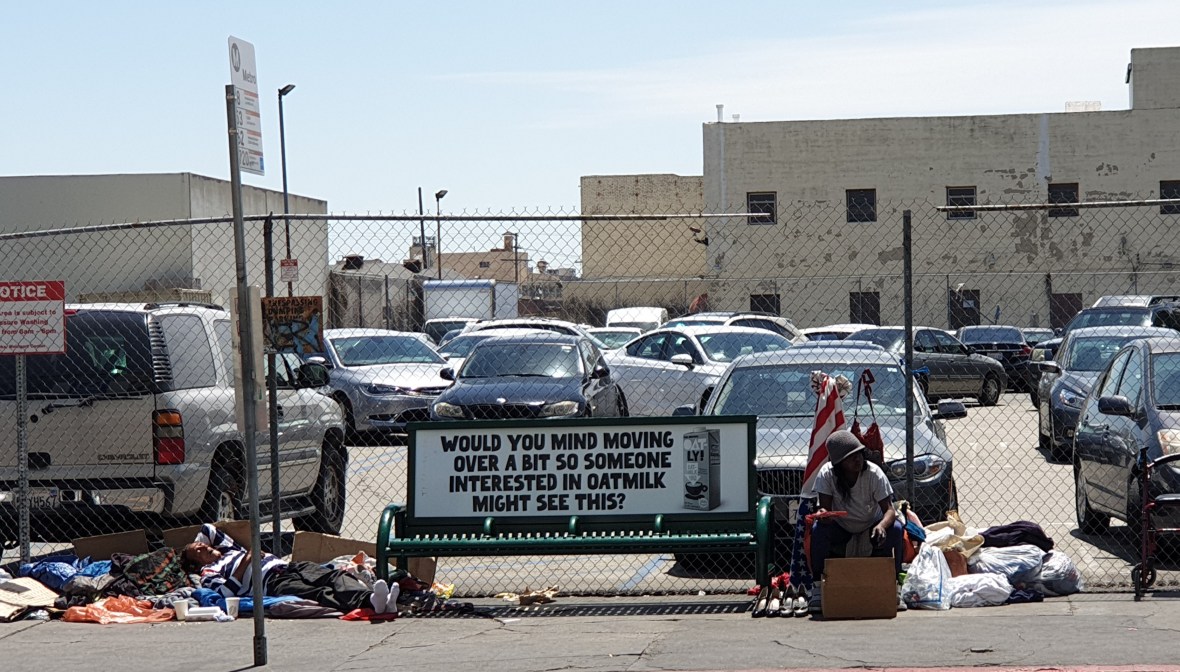
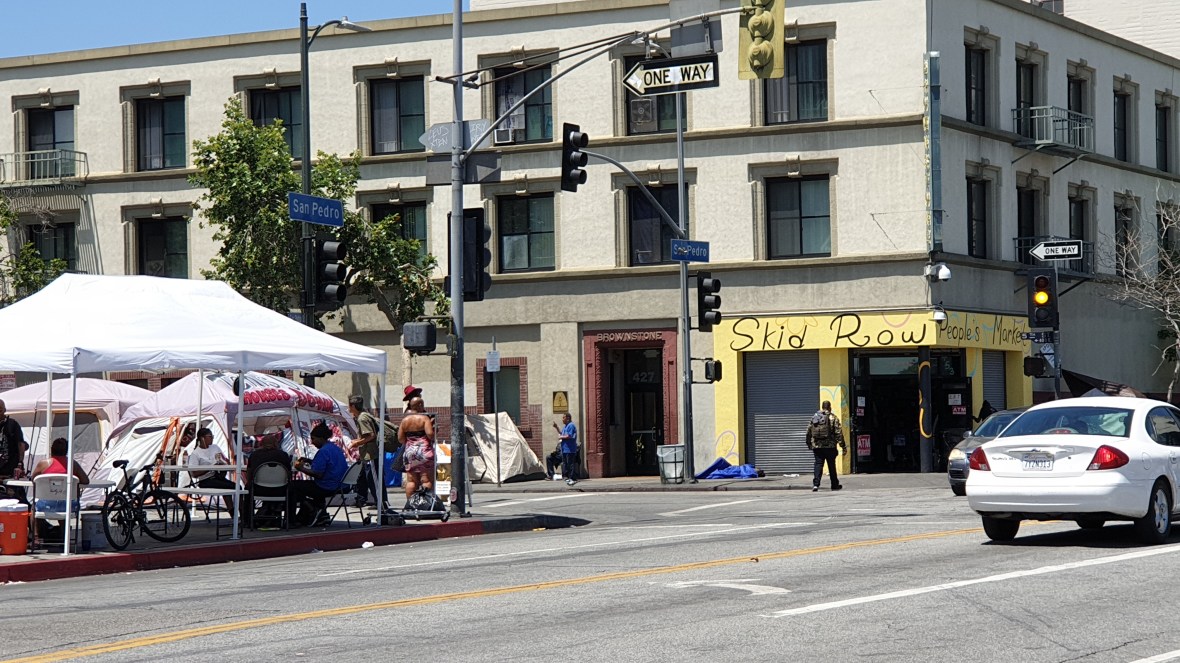
This was probably the first time I have been to a concert within walking distance of a district inhabited by 10,000 homeless people living in tents which is Skid Row. On the other hand it is reportedly the biggest concentration of homeless people in the Free World so pretty exceptional.

20190529_132652

20190529_134943

20190529_135245

The bobber – a Yamaha 1100cc – belonged to the head of security at the theatre. I have a 2017 Triumph 1200cc equivalent so was interested to compare and we had a fairly lengthy conversation about the relative features. He told me it’s parked outside most days without a chain or lock but watched closely by him and frankly I doubt that many would have wanted to chance it with him. However it should be said that the security staff were probably the friendliest and most easy going of any I have come across. After the show the theatre bar stayed open for at least two hours after which I went back to my hotel in an Uber (having been advised that to walk ran the risk of homicide, my own that is).

Photos above of Broadway, LA and from the rooftop of the Ace Hotel. The Downtown district has distinctive architecture from the early c20th and is undergoing gentrification.

Near to Regent Theatre is a brilliant bookshop, The Last Bookstore which also sells vinyl and had a good selection of The Stranglers.

20190529_163746

The Union Station is a classic Art Deco structure.

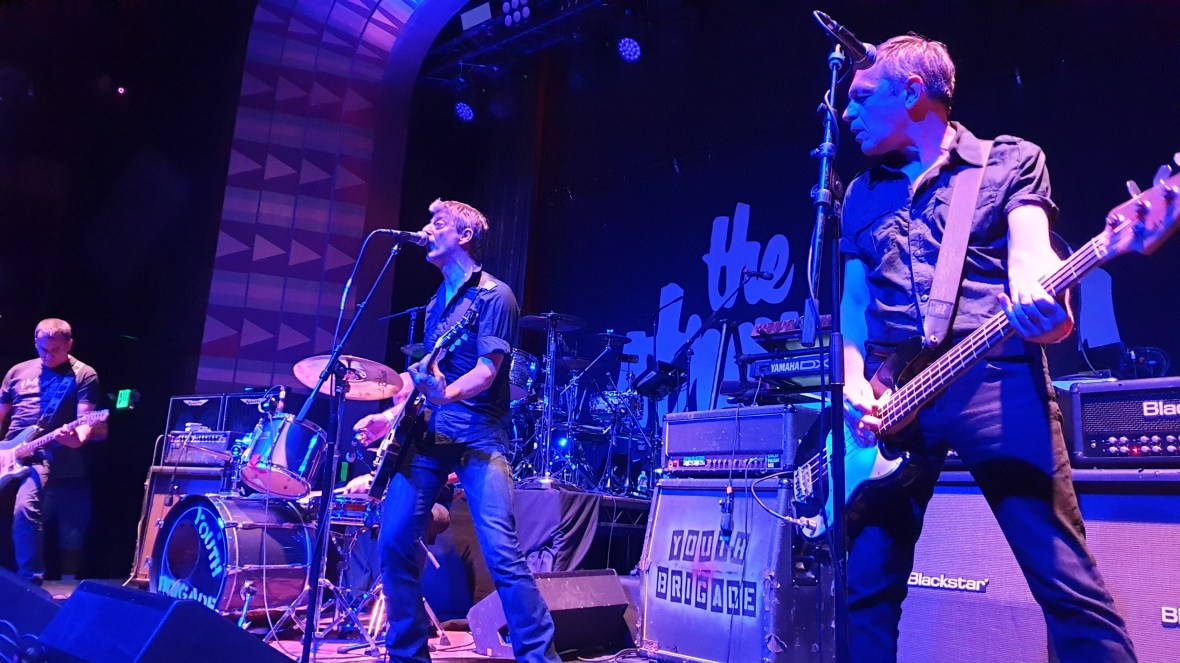
The support band was LA based Youth Brigade with strong credentials from the American punk scene and gave a good show. With the Doc Martens Airwair the look was more British than Californian.

20190529_204612

The Stranglers had a similar set to that of the British tour in March although Tank was not played. The audience was enthusiastic with plenty of whooping and the band was well-received although I couldn’t help but notice a few shocked faces during the course of Bring On Nubiles. By way of an excuse for the lyrics, Baz explained that The Stranglers was an English band and there were no protests. The audience was very friendly and among the smattering of Brits were people from France, Canada and across the USA.

The entree to No More Heroes had the usual heavy bass that could truly be felt. Was it any coincidence that there was a 2.8 earthquake reported in LA that night? This was no dead loss event.

This slideshow requires JavaScript.

By John Dewhirst

@jpdewhirst

This blog is principally about Bradford City AFC (with links to my books) but you can find sundry other stuff including photos of The Stranglers‘ March, 2019 tour from this link. I’ll be posting photos from North Korea after a visit this summer.

PS Split focus effect on a number of photos through use of a LENSBABY lens. Blame my photography but not your eyes.

The sorry story of 2018/19

This week marks the end of the end of the 2018/19 football season, one that ended much sooner as far as Bradford City AFC was concerned. Behind the scenes there is much that needs to be done to rebuild the club but changes are already underway. From an historical perspective it is astounding how badly the record of 2018/19 compares to other prior seasons when failure could have been excused by virtue of financial weakness. What makes it so unforgiveable is that in relative terms at least, the club squandered resources last season that many of its rivals did not enjoy. It was said on many occasions in the last twelve months that we’ve had it tough at Valley Parade previously. True. But the following analysis demonstrates that 2018/19 was…

…even worse than what your grandad watched

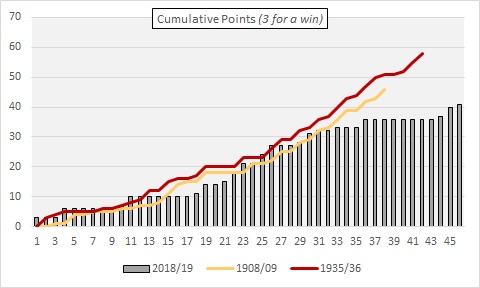
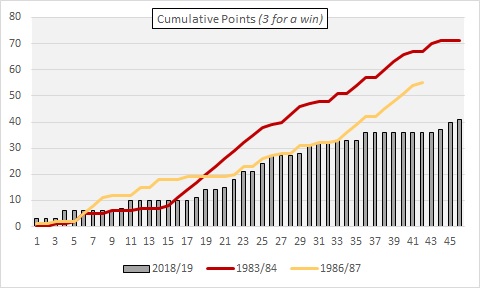
Back in December it seemed that the Bantams might transform the season and avoid relegation and I was not alone in believing that 2018/19 could have been memorable for good reasons. [Refer to an earlier post uploaded on 29th December: History for the Making!] Sadly it wasn’t to be and these updated graphs show how the recovery had petered out by the end of January. We managed 21 points in the first half of the season (with just 6 wins) and no more than 20 points (and only 5 wins) in the second not to mention 7 successive defeats.

A Great Escape would have been exceptional but by no means unprecedented in the history of Bradford City. There have been four such instances of a miraculous recovery in the second half of a season when relegation had looked all but inevitable at the beginning of December.

The campaigns to note were 1908/09, 1935/36 and 1986/87 when the points accumulated in the second half were significantly higher than in the first. A fourth season, 1983/84 is remembered for an impressive mid-season recovery that actually commenced prior to the midway point of the season. The cumulative points in each of these seasons are compared to 2018/19.

1908/09 = First Division

City’s first season in Division One having been promoted as champions. The club avoided relegation with victory in the last game of the season after a significant improvement in form in the second half of the season. Bottom of the division from the start of the season, by the end of November it seemed a hopeless situation. Thereafter began a fightback and even though Bradford City remained in bottom position at the end of January, the club was no longer adrift. Victory in the final game at home to FA Cup winners Manchester United secured the escape and we finished 18th out of 20; of 38 games played there were 12 wins and 10 draws. The origins of our Bantams nickname date from this season, introduced at the end of November to inspire a recovery and raise morale. The turnaround provided the momentum that led to a 7th place finish in 1909/10 and then 5th in 1910/11, not to mention FA Cup victory in April, 1911.

1935/36 = Second Division

Having finished the previous season in 20th position, there were limited expectations in August, 1935 and the club hovered just above the relegation places through to the end of March, 1936. However signs of a recovery came at the beginning of January with victory over Manchester United at Valley Parade. In the final 20 games of the season in 1936 there were 11 wins, five draws and only four defeats. We finished 12th out of 22 and of 42 games played: 15 wins, 13 draws and 14 defeats. Unfortunately the following season the club was relegated finishing second to bottom.

escape b

1983/84 = Third Division

The Bantams had been promoted from Division Four in 1981 and had consolidated at a higher level, finishing 12th in 1982/83. That season however had been torn apart in November, 1982 when manager Roy McFarland (who had been appointed less than 18 months before) opted to take charge of his former club Derby County. His decision was highly controversial but with news of financial difficulties at Valley Parade at the end of the 1982/83 season it seemed that McFarland may have had forebodings. Following insolvency in the summer of 1983 it was a minor miracle that the club was able to begin the new season. With a threadbare squad and the loss of star striker Bobby Campbell to Derby County few gave the club much hope to avoid a return to the basement division. By the middle of November the Bantams were in 23rd position with one win from 15 games and five points adrift from 20th. Thereafter began a sensational recovery with ten successive victories. Statistically the improvement in the second half of the season relative to the first was not impressive but as a mid-season turnaround what happened in 1983/84 is without precedent in the club’s history. By the end of January, 1984 Bradford City were in a safe midtable position with a 13 point buffer relative to the relegation places. The season finished 7th (out of 24). Of 46 games played the team managed 20 wins and 11 draws.

1986/87 = Second Division

Homeless after the Valley Parade fire, the 1985/86 season had been a difficult experience and it was a major achievement to have finished 13th. ‘Home’ games had been played at Elland Road, Leeds and Leeds Road, Huddersfield and then Odsal Stadium in the new year. Odsal proved to be unpopular venue and far from ideal as a football ground. Despite a decent start to the season and positioned 8th after eight games, a collapse in form left the club sitting just above the relegation places by the end of December, 1986. The return to Valley Parade at the end of December gave hope and inspired an improvement in performances. Nevertheless at the end of February, 1987 the club was bottom of Division Two with seven wins and seven draws out of 28 games. The signing of Ron Futcher is generally regarded to have invigorated the team and eight wins and three draws in the last 14 games saw the club rise up the table. Bradford City finished 10th out of 22. In total there were 15 wins and 10 draws from 42 games.

escape a

It’s truly been a poor season…

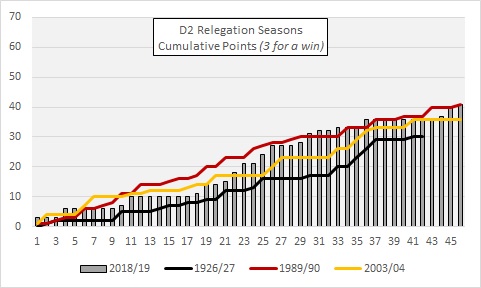
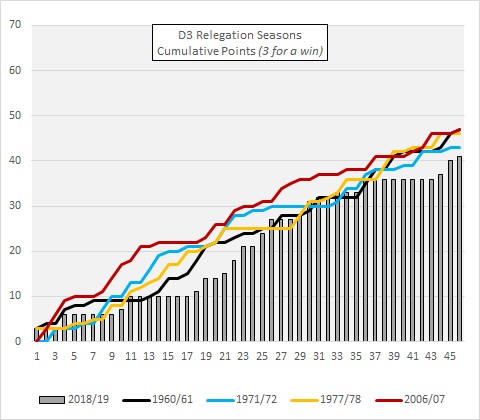
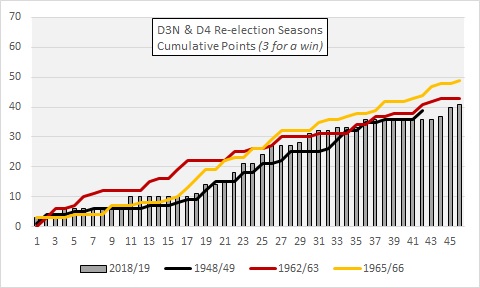
Since the formation of the club and its membership of the Football League in 1903 there have been eight promotion seasons (1908; 1929; 1968; 1977; 1982; 1996; 1999 and 2013) and now ten relegation seasons (1922; 1927; 1961; 1972; 1978; 1990; 2001; 2004; 2007 and 2019). There have also been three occasions on which Bradford City has been forced to apply for re-election to the Football League (D3N: 1949; D4: 1963 and 1966). Comparison of the points tally in the relegation and re-election seasons is as below and it doesn’t make pretty reading: 2018/19 has been virtually as bad as anything your grandfather saw. Character building stuff indeed.

D1 relegation

D2 reegation

D3 relegation

D4 reelection

A Great Bounceback?

Instead, what about our prospects of bouncing back from the basement division? Since the establishment of a four tier, national league in 1958 there have been four previous occasions when Bradford City AFC has been relegated to Division Four: 1961; 1972; 1978 and 2007. In 1971/72 the club finished bottom of Division Three with the equivalent of 43 points (11 wins) compared to 41 in the season just gone.

On no occasion has there been an immediate return from Division Four to Division Three. Promotion was subsequently achieved in 1969; 1977; 1982 and 2013 – in other words our shortest stay has been four seasons and as we recall only too vividly from the last experience, historically it has been a difficult division to escape from.

Whilst the club has been relegated after only one season at a higher level (in 1977/78) it has never managed an immediate return after relegation and the best has been two seasons in a lower division.

In 1927 the club was relegated to Division Three (North) with an even worse comparable record than 2018/19 but returned to Division Two in spectacular fashion in 1929, promoted as champions. Hopefully what happened in 1928/29 could provide some inspiration for 2019/20.

Read about what happened in 1928/29 in this feature published on VINCIT.

In the meantime here is to a welcome break and thank God that 2018/19 is now just about formally ended.

John Dewhirst

Thanks for visiting my blog which will be added to on an irregular basis during the summer. The drop down menu provides links to other features I have uploaded and this link summarises content about the history of Bradford sport I have had published on other sites including VINCIT, the online journal of Bradford Sport History. The following provides links to recent posts on this blog.

Promotion to the Premier League, 1999

A HISTORY OF BRADFORD CITY AFC IN OBJECTS

Published in the match day programme: Bradford City v Wimbledon 4th May, 2019

1998-aug.jpg

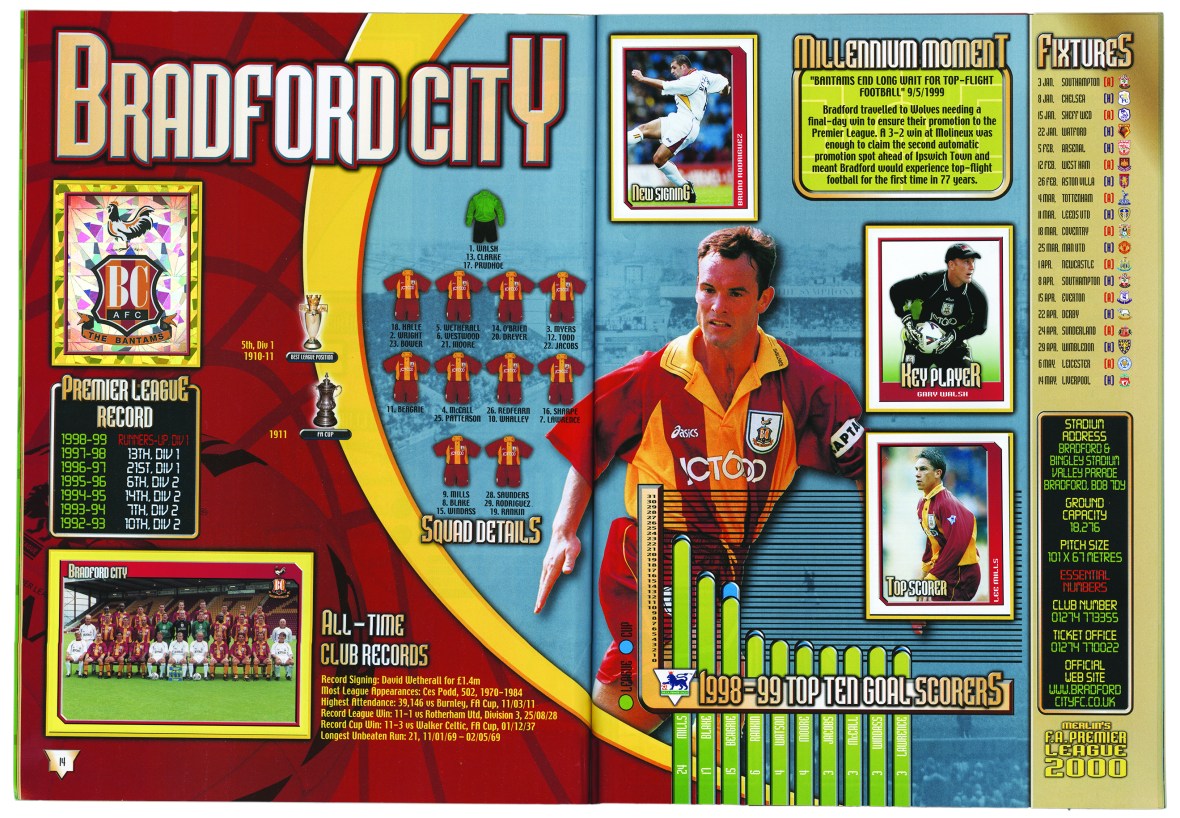
These artefacts are of a world long gone, dating back twenty years ago to 1999 when we contemplated a new adventure in the Premier League. It was the club’s greatest achievement since Glorious 1911 when the FA Cup had been won.

In the current circumstances it seems hard to imagine…

prem_league_joined.jpg

In recent issues of the Parader (LINKS FROM MENU ABOVE) I have featured a number of anniversaries that have fallen due this season. Ninety years ago, the club secured promotion back to Division Two in record-breaking fashion. It was all the more remarkable for the fact that twelve months’ previously a financial crisis had threatened the survival of Bradford City. The next notable anniversary was seventy years ago when the club finished bottom of Division Three (North) and was forced to apply for re-election. Once more the club had been weighed down by financial troubles and it was not until twenty years later that that there was something to celebrate. Fifty years ago, in 1968/69 came promotion from Division Four which was the club’s first success since 1929.

For most of the club’s existence there has been a struggle to remain solvent and, more often than not, there have been recurrent financial difficulties. Relegated from the first division in 1922 it seemed that the glory years were long gone and indeed, when Bradford City won promotion to the second division in 1985 it was the first time in 48 years that it had escaped the lower divisions.

Which brings us to the anniversary of our promotion to the Premier League in 1999, all the more poignant for the fact that we now find ourselves facing relegation from the third division. Our moment in the sun seems such a long time ago. For all our hope that the club’s fortunes would be transformed for the better, we find ourselves once more defined by failure.

38.1 lead image on first page of section

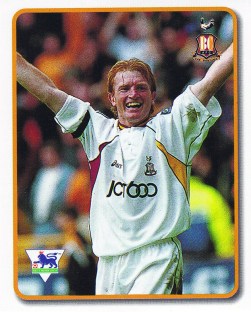
Twenty years ago, on 9th May 1999 it was such an immensely proud moment to witness the 3-2 victory at Wolverhampton that secured automatic promotion to the Premier League. For those who had followed the club in its dark days it was a genuinely satisfying moment and the experience of the Premier League during the next two seasons was indeed truly memorable.

Nevertheless, we have suffered a long hangover since with countless reminders that ours is not a club with a silver spoon in its mouth. The Bantams are neither fashionable nor media luvvies but we are fighters and no strangers to the struggle against adversity.

The club has defined itself through resilience and the fact that we don’t need the Premier League as the reason to support Bradford City is in my mind what distinguishes us. We therefore celebrate the historic achievement of promotion to the Premier League rather than mourn the fact that we could not sustain ourselves at that level. In the meantime we turn our attention to once more rebuilding and revitalising the club.

John Dewhirst

car stickers x_0002.jpg

trade_0077.jpg

Highly recommended this photo record of the first season in the Premier League: ‘Football Fans’ by Ian Beesley

The drop down menu above provides links to previous programme articles, archive images, book reviews and features on the history of Bradford sport that I have written. The links provide free, accessible history about BCAFC based on substance rather than soundbites.

I have written widely about the history of sport in Bradford: Links to my features on the history of Bradford sport

Updates to this site are tweeted: @jpdewhirst

Feedback welcome: You can contact me at johnpdewhirst at gmail dot com

Thanks for visiting my blog and a special mention to the growing number of overseas visitors.
Published on PLAYING PASTS in Feb-19: Football clubs and how they fail. (I am presenting a paper on the same theme at the International Football History Conference in Manchester in June, 2019.)

===============================================================

Details here about the bantamspast History Revisited book series and the new book by Rob Grillo which can be ordered online – SUBSCRIBER DEADLINE 5th MAY: BANTAMSPAST HISTORY REVISITED BOOKS

Late to the Game.jpg

Glorious 1911

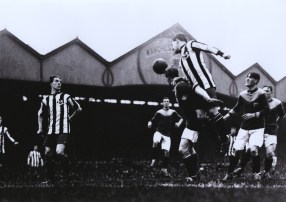
In 1911 – only eight years after soccer had been launched at Valley Parade – Bradford City AFC won the FA Cup against Newcastle United in the replay at Old Trafford, Manchester on 26th April. It remains the club’s greatest achievement and a defining part of the club’s identity.

1911 FAC Final replay

Until the emergence of the Premier League in 1992 the FA Cup commanded enormous interest both domestically and abroad and prior to World War One the FA Cup overshadowed the Football League Championship in terms of prestige. Numerous commemorative items were produced to capitalise on the interest.

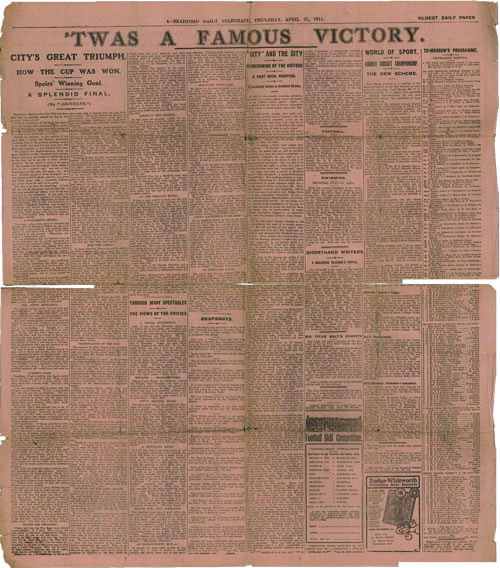
On 27th April, 1911 under the headline ‘Twas a Famous Victory’ the Bradford Daily Telegraph reported: ‘Never in the history of Bradford has such a sporting triumph been consummated… The eyes of the English speaking world are upon Bradford today; the team have brought honour and glory not merely to themselves and to the club, but to the city of their football adoption.’

telegraph

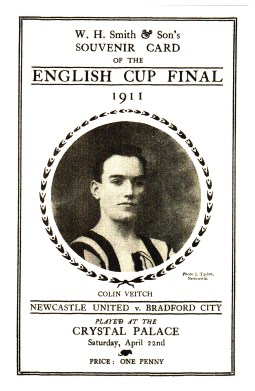
WH Smiths published a team card for the final at Crystal Palace and the other example was published by The Sportsman. The latter is notable for the number of adverts evidently aimed at a London based readership. My understanding is that a single, definitive or official programme was not published until the 1920 FA Cup Final at Stamford Bridge. Hence it is quite possible that these team cards were not the only ones available in April, 1911.

1911 final good scan

The following is an account of the achievement published in the club’s own match day programme:

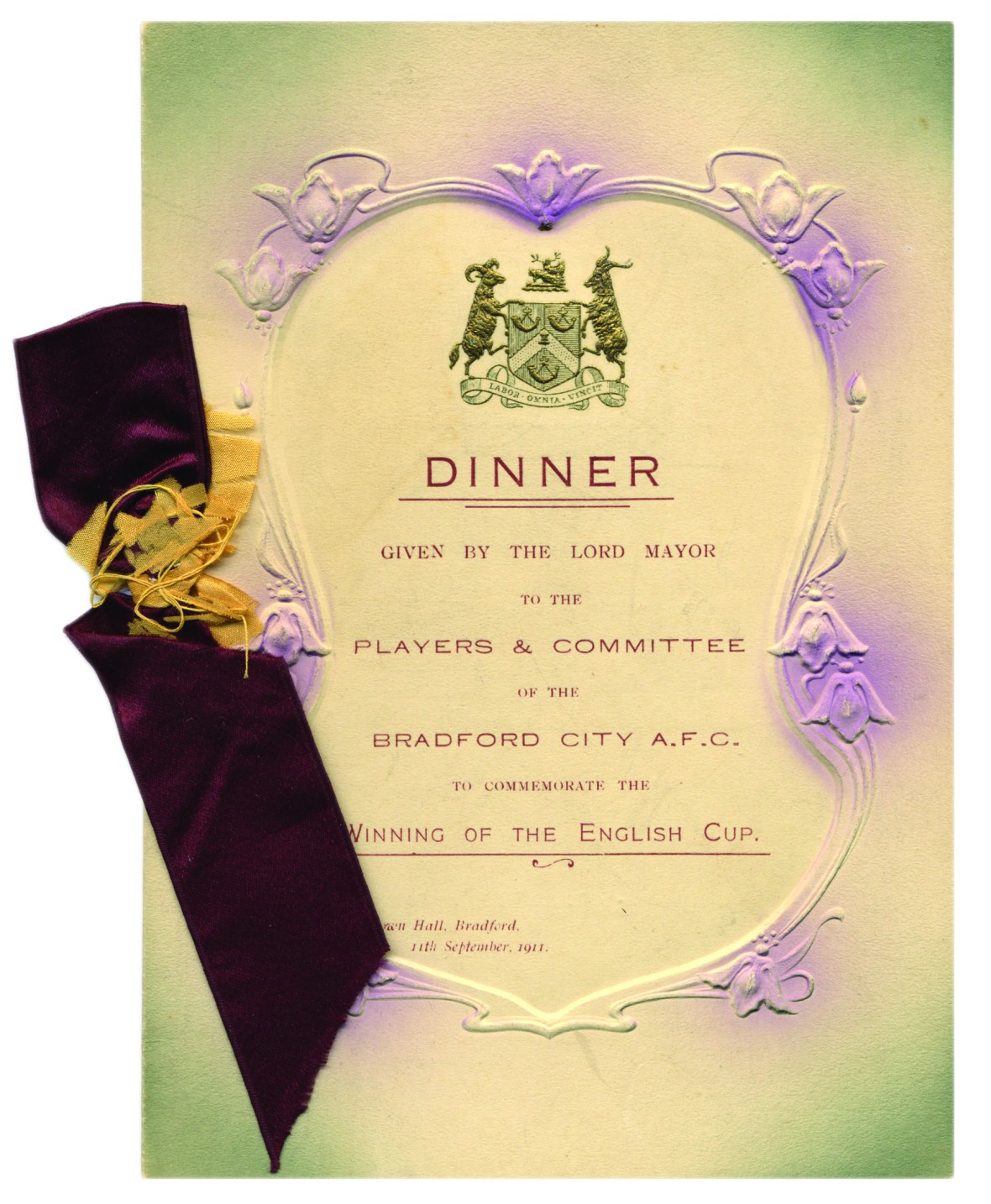
The 1911 FA Cup success followed in a tradition of earlier sporting achievements by the senior Bradford clubs, most notably Bradford FC winning the Yorkshire Challenge Cup in 1884 and Manningham FC the inaugural Northern Union championship in 1896. However what was unprecedented was the assembly of people – estimated to be 100,000 – who greeted the successful team on its successful return from Manchester to Bradford on 26th April, 1911. That same evening there was a celebratory dinner at the Midland Hotel, the first of many.

front cover

We also remember the fact that two members of the FA Cup winning team were killed in World War One: Jimmy Speirs who had scored the winning goal and Bob Torrance, man of the match in the Cup Final replay. 

1911 FA Cup medal replica.jpg


1911 fac final team.jpg

John Dewhirst

The drop down menu above provides links to previous programme articles, archive images, book reviews and features on the history of Bradford sport.

Updates to this site are tweeted: @jpdewhirst

===============================================================

Details here about the bantamspast History Revisited book series: BANTAMSPAST HISTORY REVISITED BOOKS

*** DEADLINE for SUBSCRIBER COPIES for the latest volume, LATE TO THE GAME by Rob Grillo is 5th MAY ***

==============================================================

Bottom of the League: 1948/49 remembered

A HISTORY OF BRADFORD CITY AFC IN OBJECTS

Extended version of the feature published in the match day programme: Bradford City v Gillingham, 22 April, 2019

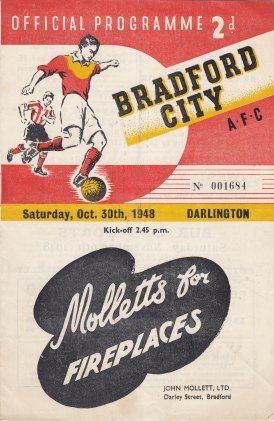
Thank you to David Wilkins for sharing his copy of a Bradford City programme from October, 1948 featuring the game with Darlington, a 0-2 defeat. The contrast with match day magazines of today is significant, both in terms of quality and content. It is a flimsy publication, has no photos, comprises just eight pages and is printed on cheap paper. Yet when it was introduced that month it was a big step forward, the first time that colours had been used in the club’s programme design (and the same style of cover remained in use at Valley Parade until the end of 1956).

The cover was introduced in the same month to herald a fresh start and as illustrated, signalled a return to the famous yoke shirt design, better known from the victorious 1911 FA Cup campaign.

darlo 30-oct-48

The cheap and cheerful publication was typical of football programmes just after the war when paper was not only expensive but in short supply. During the course of the next decade there were improvements in the standard of programmes at many other clubs. However it reflected the financial constraints and lack of imagination at Valley Parade that things didn’t really change until the mid-1960s when Stafford Heginbotham took control.

The Bradford City programme mirrored the state of the club and the doldrums of the immediate post-war period. What happened seventy years ago, in the 1948/49 season had a big part in defining the era and by finishing bottom of Division Three (North), the club’s ambitions were completely reset. No longer could City pretend to a big club in exile. The evidence was now plain to see, that it was instead a lower division side and a struggling one at that.

The 1948/49 season was the third since the resumption of peacetime football and there were hopes that the club might challenge at the top of Division Three (North) to return to the second division for the first time since relegation in 1937. Indeed, there was genuine enthusiasm and optimism about the club’s prospects under new manager David Steele and people were prepared to believe that the 14th place finish in 1947/48 had been an anomaly. No-one could have expected that City would struggle to the extent that they did and it had been thought that the club could get away without strengthening the squad.

By the end of October 1948, City were already at the bottom of the table and prior to successive victories over Oldham Athletic (away and then home) over the Christmas period, the team had managed only a solitary win in the first 18 games. It was a run of form comparable to 1926/27, a dismal season in which City had been relegated from Division Two with only 7 wins from 42 games. In December, 1948 there was a revival of newspaper talk about merger with Bradford Park Avenue.

You could be forgiven thinking that history repeats itself at Valley Parade. Indeed, the disappointment of this season has been witnessed on all too many occasions previously. There have been countless crises before and on each occasion the club has relied on its supporters to get itself back up. The circumstances of 2019 are no different to 1949 or any other time in any other decade of the club’s history going back to its origins as Manningham FC in 1880.

Seventy years ago the lack of finance was the root cause of the club’s problems. The fact that Valley Parade is built on a steep hillside has always posed a particular challenge and a costly one at that. The expense of Valley Parade has thus always been an additional burden for the club.

During the 1948 close season – in the aftermath of the Burnden Park disaster that had occurred in March, 1946 – the Midland Road stand was inspected by Bradford Corporation (as the licensing authority) and declared unsafe with its capacity restricted to two thousand. Additionally the club faced costs of £7,000 to make the stand safe. The construction of the stand in 1908 had pioneered the use of ferro-concrete and probably paid a price for experimentation in so far as the structure was found wanting forty years later. Additionally the stand was prone to storm damage due to its exposure and maintenance work had been minimal after World War One. However, given the circumstances of what happened at Bolton where 33 supporters were killed in a stampede on a banked terrace, it would not have been difficult to envisage potential safety risks on the Midland Road side where there were steep exit stairways. In 1946 the chairman, Robert Sharp had been quoted to the effect that the club was considering installation of a loudspeaker system to assist public safety. Needless to say, Bradford Corporation considered this to be inadequate in isolation.

In October, 1948 Councillor Rose assumed the role of chairman at Bradford City and David Steele was appointed as manager. To signal the fresh start there was a change of programme cover design at the end of that month and in January, 1949 the yoke shirt famously worn in the 1911 FA Cup Final was reintroduced. It was reported in the programme for the game with New Brighton on 11th December, 1948 that ‘at the (recent) directors’ meeting we met a few businessmen who are interested in the club and are prepared to get together to form a working committee for the City Supporters’ and Shareholders’ Association’. Thus came the revival of the Bradford City Shareholders’ and Supporters’ Association and in the following two decades it was the efforts of the BCSSA that kept the club afloat.

The BCSSA introduced a number of initiatives and fund raising events to assist the club. The bantam identity was restored, later featuring on the club shirts and in a flag that flew from the Burlington Terrace offices in the north-west corner of the ground. The revival of the yoke shirt was similarly intended as a totem of good fortune, to raise spirits. The BCSSA did not succeed in transforming the club overnight but it was successful in raising morale among supporters and restoring hope. If there are lessons for these times it is that there was a focus on the small things and City’s recovery was eventually derived from the aggregate benefit of numerous marginal changes. A traditional strip that dated back to 1909; a revival of a popular identity; improved communications and the rebuilding of trust with the club among them.

1909 BDV silk

Was it not for a second half recovery, with 7 victories in 21 games the outcome in 1948/49 would have been much worse. Nevertheless, with only 10 wins in total there was little surprise that the Paraders finished bottom of Division Three (North), five points adrift of Accrington Stanley in 20th position who avoided the ignominy of having to apply for re-election.

Not surprisingly the gates at Valley Parade were impacted and although the average League attendance of 10,447 in 1948/49 was higher than in the previous two seasons, it was well down on pre-war levels. In fact, the gates could reasonably have been expected to be much higher given the boom in attendances nationally and it is notable that the average was not that much greater than at other northern clubs in the third tier. It was evidence that Bradfordians had begun to turn their back on the club and City faced competition for interest from a resurgent Bradford Northern whilst Bradford Park Avenue were placed in the division above. That average was also distorted by the 27,083 who had attended the game with leaders, Hull City at Valley Parade in February, 1949 when City had managed a rare win. It was reported that many people were locked-out of the ground which was full to capacity. For safety reasons people were not allowed to use the rear portion of the Midland Road stand which was fenced off (refer images below). Demolition began at the end of November, 1951 and was completed the following spring.

1949-02-19 at VP v Hull

The Hull result was the highlight of the season and interest in the fixture was occasioned by the presence of the former Sunderland and England international striker, Raich Carter who had been appointed player-manager of the Tigers the previous summer. Carter had had a big impact on Hull City and attendances at Boothferry Park, something that didn’t go unnoticed in Bradford where a similar appointment was envisaged as a magical solution to the Paraders‘ woes. Sadly, Bradford City remained in Division Three (North) until the launch of a national third division (as now) in 1958 and never climbed back to the second division until 1985.

John Dewhirst

The drop down menu above provides links to previous programme articles, archive images, book reviews and features on the history of Bradford sport that I have written. The links provide free, accessible history about BCAFC based on substance rather than soundbites.

My book A HISTORY OF BCAFC IN OBJECTS (vol 1 in the BANTAMSPAST HISTORY REVISITED series) provides background about City memorabilia and is on sale in the City Shop at Valley Parade.

I have written widely about the history of sport in Bradford: Links to my features on the history of Bradford sport

Updates to this site are tweeted: @jpdewhirst

Feedback welcome: You can contact me at johnpdewhirst at gmail dot com

Thanks for visiting my blog and a special mention to the growing number of overseas visitors.

===============================================================

Details here about the bantamspast History Revisited book series: BANTAMSPAST HISTORY REVISITED BOOKS

*** DEADLINE for SUBSCRIBER COPIES for the latest volume, LATE TO THE GAME by Rob Grillo is 5th MAY ***

==============================================================

Promotion season: 1968/69

A HISTORY OF BRADFORD CITY AFC IN OBJECTS

Published in the match day programme: Bradford City v Doncaster Rovers 6th April, 2019

Thank you to Sean O’Grady for sharing his copy of the Bradford City promotion handbook, published in August, 1969 to commemorate the club’s success the previous season. It had been 40 years since Bradford City had previously been promoted and the solitary club honour since 1911 had been the Division Three (North) championship in 1929.

promotion brochure 1969

Unlike previous promotion seasons in 1928/29 and 1907/08 – when the club had finished top of its division – on this occasion it was fourth place in the fourth division that was celebrated. Whilst it might seem a modest achievement, it was far from being insignificant. For a start it was promotion and an escape from the basement division occupied since 1961. Crucially it also confirmed the ascendancy of the club over Bradford Park Avenue, by this time adrift at the foot of the Football League having finished 91st in 1966/67 and then bottom in in 1967/68 and 1968/69. In the desperate rivalry between the two and the struggle for financial survival, it was a massive victory to achieve promotion. And indeed, it was celebrated by City supporters as though their team had won the League Championship.

The 1960s had been a difficult decade for both Bradford clubs. In 1963 and 1966 City had finished 91st in the Football League and 87th in 1965. After surviving a financial crisis in 1966 the club had made progress under the leadership of its new chairman, Stafford Heginbotham but the death of manager, Grenville Hair in March, 1968 had been a major setback. His replacement was the 34 year old former Reading striker, Jimmy Wheeler who was appointed as manager in June, 1968. Finances dictated recruitment and City began the 1968/69 season with only three new signings – Peter Middleton from Sheffield Wednesday, Ron Bayliss from Reading and goalkeeper John Roberts, a triallist from Australia.

During the first half of the season the Paraders managed just seven wins and by mid-January, 1969 were 13th. It was the signing of centre forward Norman Corner from Lincoln City in January, 1969 that transformed the team. Corner made his debut at Park Avenue in the last ever League derby (a 0-0 draw) and he scored 8 times in 21 consecutive appearances in 1968/69.

Bradford City were undefeated in 21 games before a 1-2 reverse in the penultimate game of the season at Brentford which meant that victory was necessary in the last match of the season at Darlington to guarantee promotion. That game on Friday 9th May, 1969 was one of the most memorable in the club’s post-war history and a bumper 11,851 crowd witnessed a thrilling 3-1 win by City. Today’s visitors Doncaster Rovers finished as champions and the two other promoted clubs were Halifax Town and Rochdale.

In addition to an own goal, it was notable that Bobby Ham and Bruce Bannister both scored that night. Ham, an ever-present in 1968/69 was top scorer with 18 and he formed an excellent partnership with Bannister (7 goals from 30 League games). However, there were other regular goalscorers in the team including John Hall (9 goals), Tony Leighton (8 goals) and Charlie Rackstraw (7).

Promotion was secured on the basis of strong home form with only two defeats at Valley Parade in 1968/69. The Paraders remained undefeated at home throughout 1969 and there was a sequence of 23 undefeated games between January, 1969 and January, 1970. Sadly, the momentum of promotion success was not sustained and the failure – or inability – to strengthen the team led to eventual relegation in 1972. However at least the club didn’t have to wait another 40 years for its next promotion success and in the last fifty seasons it has been achieved on no less than six occasions.

John Dewhirst

The drop down menu above provides links to previous programme articles, archive images, book reviews and features on the history of Bradford sport that I have written. The links provide free, accessible history about BCAFC based on substance rather than soundbites.

My book A HISTORY OF BCAFC IN OBJECTS (vol 1 in the BANTAMSPAST HISTORY REVISITED series) provides background about City memorabilia. In issues of The Parader I feature objects that tell the history of the club.

I have written widely about the history of sport in Bradford: Links to my features on the history of Bradford sport

Updates to this site are tweeted: @jpdewhirst

Feedback welcome: You can contact me at johnpdewhirst at gmail dot com

Thanks for visiting my blog and a special mention to the growing number of overseas visitors.
Published on PLAYING PASTS in Feb-19: Football clubs and how they fail. (I am presenting a paper on the same theme at the International Football History Conference in Manchester in June, 2019.)

===============================================================

Details here about the bantamspast History Revisited book series: BANTAMSPAST HISTORY REVISITED BOOKS

==============================================================