Recent posts

Scroll down on this page and you will find articles uploaded to this blog in chronological order (most recent at the top). The majority are articles also published in the BCAFC programme and you will find links to these from the menu above.

20181215_1356157789815872076883622.jpg

The following are other features on this blog published during in the last six months:

History in the making this season?

Photos of Valley Parade in the 1970s

Campaigning against Edin Rahic

Photos of Valley Parade redevelopment, 1986

Die Deutsche Frage, visit to Germany Nov-18

Book Review – One Year, Two Seasons by Richard Wardell

Book Review – The Beautiful Badge by Martin Routledge

Book Review – Kick Off by David Pendleton

Book Review – How football began by Tony Collins

Refer to the menu above to navigate.

Thanks for visiting my blog!


My most recent article on VINCIT tells the long forgotten story of Shipley FC.

Tweets: @jpdewhirst

Valley Parade photos: 1970s

Welcome to my blog where you will find features about the history of football in Bradford – in particular about Bradford City AFC – a number of which have been published in the BCAFC matchday programme.

The drop down menu above provides links to articles as well as sundry book reviews. I am also uploading an irregular series of online albums recording various themes, typically archive photographs or Bradford City and Bradford Park Avenue memorabilia from my own collection.

These photographs feature Valley Parade in the early 1970s when I first attended games. Of note is the photo from 1970 with the chimney of the old Valley Road power station. The basic design of the old Main Stand can also be seen which was dilapidated even by then, dating back to 1907.

John Dewhirst

Another batch of images will be uploaded later this month. Refer previous album by following ‘Archive Images‘ as above.

Scroll down and you will find articles uploaded to this blog in chronological order (most recent at the top). The majority are articles also published in the BCAFC programme and you will find links to these from the menu above.

Other archive images of Valley Parade from these links:

The development of Valley Parade, 1886-1908 – includes a history of the early development of the ground.

Valley Parade in the 1960s

Valley Parade photos from the 1980s

Photos of the rebuilding of Valley Parade in 1986 – Part 1

Valley Parade photos from the 1990s

Construction of the Midland Road stand in 1996

Valley Parade of today (photos taken by myself at the Stephen Darby Testimonial July, 2019)

More photos of today’s Valley Parade (photos taken by myself at the Salford City fixture in December, 2019)

Other galleries to follow with links updated from here.

Refer to the menu above to navigate.

Thanks for visiting my blog!

Tweets: @jpdewhirst


The Glorious Revolution

In the history of Bradford City AFC there has never been anything like the revolt against Edin Rahic but the way in which the revolution took place has also been quite distinct from what might have happened in an earlier age. My personal observations thereon…

When the announcement came yesterday about Edin Rahic’s departure it felt like a massive relief. Only six months earlier it seemed that Bradford City might be heading in the same direction as Blackpool or Coventry, its affairs dominated by bitterness towards the club’s owners and division among supporters. Yet now the bogey man has gone.

Nevertheless, whilst we continue to celebrate his exit we also need to be realistic about the immediate outlook. Notwithstanding that he has gone, the affairs of the club will not magically be transformed overnight and it is important to manage expectations. The hard work of rebuilding the club now begins, not just on the field but also in many other areas behind the scenes and it is going to be a long slog. During the course of the next few months we will continue to have reversals and inevitably frustrations will arise.

The biggest danger is that new scapegoats emerge and blame becomes directed at members of the club’s leadership team. What is needed now is unity and for everyone to get behind the efforts of David Hopkin, Julian Rhodes and Stefan Rupp in driving a turnaround. We are vulnerable to the negativity of the cynics and conspiracy theorists in our ranks, those who have enjoyed the opportunity to be negative during the last twelve months and who will struggle to quit the snide and contrarian comments.

The experience of the last year has demonstrated both the strength and weakness of social media in the sort of situation that has existed at Valley Parade. As supporters we have much to thank THE WIDTH OF A POST for. Its role in helping to articulate the grievances of supporters has been pivotal and it has also set the tone for how those concerns should be expressed. Not surprisingly it has been hugely influential in presenting compelling arguments about the need for change at Bradford City and encouraging feedback and contribution on its site from readers. For anyone wanting to follow events at Valley Parade from afar, the WOAP pages have provided a succinct and real time summary of views. It has thus been an invaluable supporter resource.

If WOAP has represented a strength of social media, Twitter and certain supporter forums have also revealed the dark side. Whilst Twitter and the forums have provided an important means to exchange information and opinion, they have also facilitated the expression of what can only be described as emotive and inchoate noise as well as abuse. Twitter has been a prime example of this with a number of contributors thriving in being deliberately contrarian to get attention, focused more on witty and distracting soundbites than constructive comments. (For the record, IMHO the Bantams Talk forum is leagues apart from the apt named bovine slurry forum and is generally sensible in its content. Judge The Cow’s Arse forum for yourself – it’s pretty obvious why they are not taken seriously with occasional nuggets of wisdom obscured by the slurry of expletives.)

In a similar situation in the days before the internet we might have been forced to rely upon protests at games to make the point. Based on what I recall in the 1980s and 1990s, the directors would then have resorted to challenge the legitimacy or validity of protests and the focus would have shifted away from the issues at hand to the personalities of the opposition and the circumstances of the protests. In other words, one of the reasons why supporter protests have tended to be ineffective is that they create distraction from the core grievances and potentially undermine arguments for change.

More often than not, protests fail to communicate exactly what people are upset about. Another massive risk is that they give rise to extreme emotions which again undermines the credibility of the arguments. Last but not least, many people who have grievances have little interest in joining a picket line or protest march or funding a flypast and this can result in protests being entirely unrepresentative.

Edin Rahic was / is a manipulative individual and there is little doubt that had there been a programme of supporter protests he would have claimed that these were the cause of the club’s problems rather than himself. The planned flypast would have been entirely counter-productive to the very objective it sought to achieve and would have more likely emboldened him.

Given that just over twelve months ago Rahic had himself been feted by travelling supporters in Germany, he was able to dismiss supporter disenchantment as fickle emotion. Besides he also deflected legitimate complaints as xenophobic reactions. A campaign of protests was therefore never going to be effective to depose him and despite a certain individual demanding that we ‘show some bloody fight’ it was never quite explained how to do so. Far easier for him to dismiss others as ‘apologists’ than explain how a successful protest could have ever taken place.

For these reasons, this is why the WOAP coverage and the strategy of getting media attention about the circumstances at Valley Parade was going to be more effective at convincing the principal decision-maker of the need for change. Ultimately WOAP proved influential because it helped give expression to a groundswell of genuine and heartfelt comments and this was always going to be more persuasive than chants or tweets of ‘Edin Out’. It was notable that Stefan Rupp followed WOAP and that in the final event he would listen to reason. However, ‘cash tells its own story’ – the decline in form and the deteriorating finances at the club spoke volumes and it was only a matter of time before change had to happen.

Just as the supporter protests proved unnecessary, so too the Supporters’ Trust has proved completely ineffectual which raises fundamental questions about its relevance and reason to exist. One of the priorities for the new regime will be to redefine its communications and PR strategy, not least how it engages with supporters. This in itself demonstrates how things have changed at Valley Parade and the fragmented nature of the support base makes it questionable whether a central supporters’ body is needed. The experience of the last few months has shown quite the opposite, that the voice of supporters has been given expression in an altogether different way that has completely bypassed the BCST. Like the resort to protests, the BCST belongs to an earlier era.

The true test of this revolution will be the next six months and I genuinely believe that the club will eventually emerge stronger. Long live Bantam Progressivism!

John Dewhirst

Recent posts

Scroll down on this page and you will find articles uploaded to this blog in chronological order (most recent at the top). The majority are articles also published in the BCAFC programme and you will find links to these from the menu above.

20181215_1356157789815872076883622.jpg

The following are other features on this blog published during 2018:

Photos of Valley Parade in the 1970s

Campaigning against Edin Rahic

Photos of Valley Parade redevelopment, 1986

Die Deutsche Frage, visit to Germany Nov-18

Book Review – One Year, Two Seasons by Richard Wardell

Book Review – The Beautiful Badge by Martin Routledge

Book Review – Kick Off by David Pendleton

Book Review – How football began by Tony Collins

The saga of Bradford’s cross-city rail links

Refer to the menu above to navigate.

Thanks for visiting my blog!

Tweets: @jpdewhirst

Valley Parade photos: rebuilding work 1986

Welcome to my blog where you will find features about the history of football in Bradford – in particular about Bradford City AFC – a number of which have been published in the BCAFC matchday programme.

The drop down menu above provides links to articles as well as sundry book reviews. I am also uploading an irregular series of online albums recording various themes, typically archive photographs (the majority of which taken by myself) or Bradford City and Bradford Park Avenue memorabilia from my own collection.

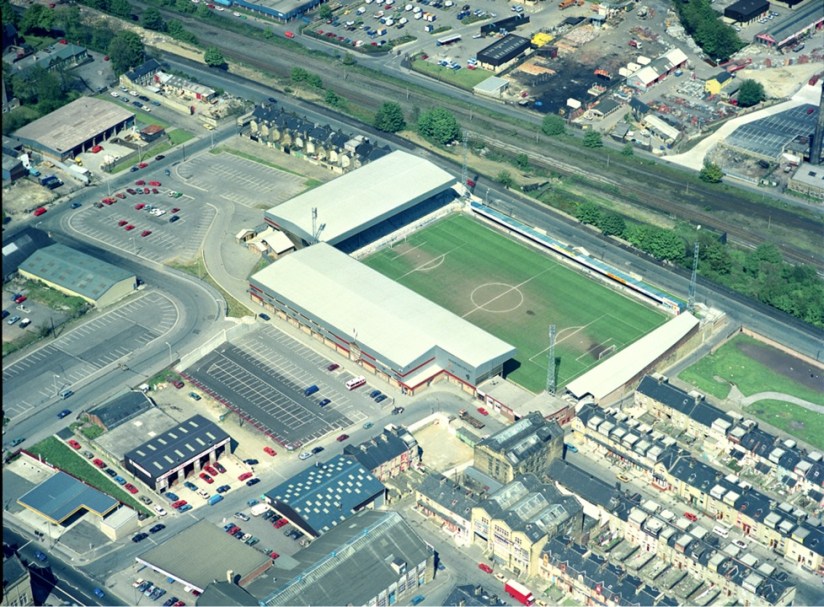
These photographs feature the rebuilding of Valley Parade after the fire tragedy in 1985. The first image is an aerial photo of the ground in the aftermath of the fire and then the service of remembrance on 21 July, 1985 before rebuilding took place.


The demolition of the ground proceeded apace during 1986 after new funding was confirmed. Two particular photos are of note. The first which shows the remains of the ferro-concrete foundations of the original Midland Road stand, 1908-1950 and evidence of the old Bradford rivalry in the graffiti on the back of the then Midland Road shed.

The other photo to highlight focuses on the site off South Parade where the old Main Stand had stood. This shows the slope afforded by the topography that provided an excellent vantage for spectators. It was this that made the ground a cost-effective, economical option for the former Manningham FC that played rugby at Valley Parade between 1886-1903 (full details of the origins and history of the ground is narrated in my book, ROOM AT THE TOP). The slope provided a ready made terrace (and Bowling FC similarly exploited a railway embankment to create a crude terrace at its Usher Street ground in the nineteenth century).


The new Valley Parade was reopened in December, 1986 with a fixture between Bradford City and an England XI. The aerial photo from that time confirms that the only surviving structure at the ground is the dressing rooms/office complex in the south west corner that dates from 1960.


Valley Parade 1986

Further albums will be uploaded in due course and the drop down menu *Archive Images* will provide links. News of updates will be tweeted: @jpdewhirst

John Dewhirst

I have written widely about the history of sport in Bradford – Links here to my online articles – and I am involved with the VINCIT online journal that covers the history of Bradford sport with articles written by a number of enthusiasts:  www.bradfordsporthistory.com


The Beautiful Badge

A HISTORY OF BRADFORD CITY AFC IN OBJECTS

Published in the match day programme: Bradford City v Oxford United, 24-Nov-18

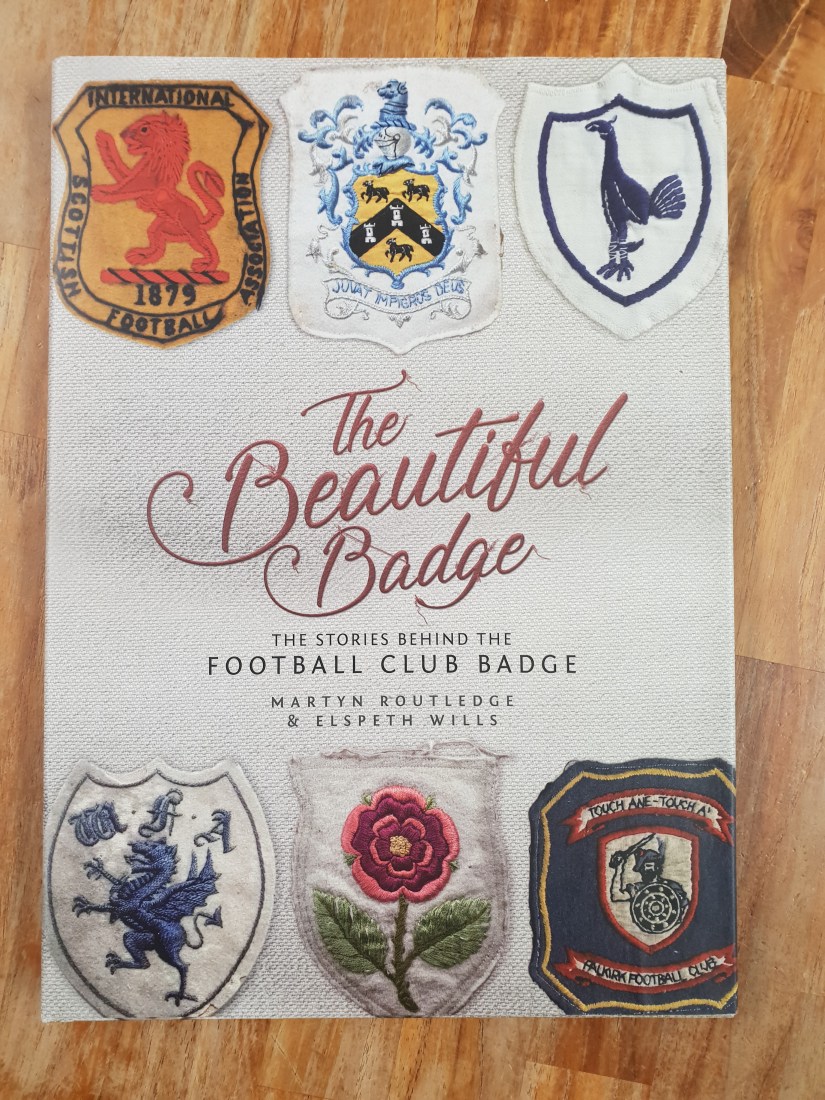
Your chance to win a copy of The Beautiful Badge: The Stories Behind the Football Club Badge by Martyn Routledge and Elspeth Wills (Pitch Publishing, 2018)

20180914_205453.jpg

If anyone is looking for a Christmas gift to satisfy a hard to please football supporter, look no further than this book that combines outstanding design with an authoritative narrative. Never before has there been a book to explain the origins of British football club badges.
As a child I had the 1971/72 Batholomews Football map of Great Britain on my bedroom wall that was illustrated with club crests as well as team strips – badges of Bradford City and Bradford Park Avenue as shown below. Nothing better gave me a basic knowledge of British geography and civic crests. Nowadays club crests are visible on an almost daily basis, thanks to a large degree to digital design and the internet but they were not always so commonplace. In the main they tended to be confined to boys’ comics and it was otherwise rare to see a compilation of crests.

The Beautiful Badge is a true indulgence that allows comparison of badges not only from different clubs but from different eras. What is so enjoyable about the book is that it has extensive coverage of early club badges dating back to the pre-World War One era and there is a treasure trove of artefacts and illustrations. Bradford City supporters will be satisfied that the club is well-represented and indeed there is a good share of graphics relating to the Bantams / Paraders.

The history of changes to the Bradford City crest is pretty much consistent with what has happened at other clubs, alternating variously between a civic crest themed badge, monograms, an identity based around a creature (ie bantam) and the adoption of a character (ie City Gent). All of these developments are tracked in The Beautiful Badge.

The book is based on the research undertaken by Routledge for an undergraduate dissertation and around twenty years ago I provided him with some background about the various crests that have been adopted by Bradford City AFC. I have also assisted him with the production of this book, providing detail about Bradford City as well as my involvement with the rebadging of Scunthorpe United in 1981. Indeed I was the man responsible for the design of that club’s ‘Unity fist’ badge having entered a competition advertised in the Scunthorpe v City programme in October that year.

If I had to recommend a football book as a special Christmas gift, this would be it. Readers have a unique chance to win a copy of The Beautiful Badge by answering the following question: In which year was the current Bradford City crest introduced?

Send your answer to Badge Competition, c/o Bantamspast PO Box 307, SHIPLEY BD18 9BT

The winning entry will be selected at random on 30th November and the winner contacted.

*** THE ANSWER TO THE COMPETITION WAS 1991 & THE WINNER HAS BEEN NOTIFIED***

John Dewhirst

John’s book A HISTORY OF BCAFC IN OBJECTS (vol 1 in the BANTAMSPAST HISTORY REVISITED series) provides background about City memorabilia. In future issues of The Parader he will feature objects that tell the history of the club. If you have a City artefact in your possession that you would like him to feature in the programme contact him at johnpdewhirst at gmail dot com or tweets @jpdewhirst
John has written widely about the history of sport in Bradford: Links to his features on the history of Bradford sport where you will find features about the history of BCAFC badges.

Elsewhere on this blog you can find his programme articles from earlier games this season and last.

===============================================================

Details here about the new bantamspast History Revisited book by Jason McKeown and other volumes in the same series: BANTAMSPAST HISTORY REVISITED BOOKS

==============================================================

Discover more about Bradford football history at www.bradfordsporthistory.com

Bradford Sport History

Interested in Bradford sport history? Have a look at VINCIT  an online journal dedicated to writings about the origins and development of sport in Bradford, embracing all codes and clubs. I have written a number of features that have been published, including the most recent which tells the long forgotten story of Shipley FC.

My interest in Shipley FC arose from wanting to discover more about a club that would have been my local side, playing opposite the Ring Of Bells public house. It reveals an alternate perspective to the history of rugby in the Bradford district and demonstrates that the story of how spectator sport developed in Bradford cannot be told with an exclusive focus on Bradford FC and Manningham FC alone.

Football supporters in Bradford have tended to ignore what happened before the formation of Bradford City AFC in 1903 despite the fact that the club had its origins as a rugby organisation. (NB Prior to World War One the term ‘football’ was synonymous with both rugby and soccer but in West Yorkshire it tended to mean rugby.)

Rugby League followers have similarly tended to overlook what happened prior to the launch of the Northern Union in 1895. Going further back you find common roots between rugby and cricket in Bradford.

The history of the origins of sport in Bradford and these common links has been ignored. Likewise the subtleties of what happened have been missed altogether and it is a subject area that has fallen foul of simplistic narratives. Surprisingly perhaps it has been overlooked that Bradford sport in the nineteenth century was heavily influenced by the military and motives of charitable giving. Sport was also recognised by our Victorian forebears as an important form of expression for civic pride and identity (or what was then described as local patriotism), another theme that has been forgotten despite its relevance for today.

If you want to discover more you will find plenty online. There are links to what I have written about the origins of Bradford sport here. The drop down menu on the VINCIT site will also take you to features about different sports in the district with contributions from a number of other writers and enthusiasts. You can read more in my books about the early history of Bradford sport and in particular, football (embracing both rugby and soccer) before 1908.

John Dewhirst

Die deutsche Frage

For the avoidance of doubt this is a personal blog, not a news site…

Of all the nations in Europe it is Germany that has fascinated me the most, probably because what has happened in Germany in the last 150 years has had a massive bearing on the history of Europe and Great Britain. The German community in Bradford between the middle of the nineteenth century and World War One was no less a product of what was happening in Germany. The so-called German Problem dominated international relations and so it would seem, another German Question dominates the discussion of Bradford City supporters. It is all rather surreal to anyone who followed the club before the Premier League era that our dear institution would be the target of foreign ownership in 2016. Nearly three years later it seems to be ending in tears.

I have spent quite a lot of time in Germany and Berlin in particular. I have also had some exposure to German football, albeit mainly of that in the former GDR. On my part I consider myself something of a Germanophile and was among those who welcomed the acquisition of Bradford City by Stefan Rupp and Edin Rahic. I saw them as good for the club, capable of driving a transformation at Valley Parade both on and off the pitch.

In contrast to the UK, when it comes to business the Germans have distinct cultural traits but ultimately I have found them to be thorough and pragmatic in their approach. Any criticism levelled at the speed of decision-making is countered by the fact that they are typically more focused on longer term gains than tends to be the case with Anglo-Saxon investors. Neither is wrong or right, it comes down to the circumstances and mutual understanding.

With regards to football, the Germans also have their own ways and no-one can argue otherwise that it tends to be successful. With regards club football, thirty years ago German supporters were derided by the English as sausage chompers recognisable by the mullet hairstyles and denim waistcoats adorned with badges. Nowadays they are much less fixated with English fandom and attempts to imitate the example of the Anfield Kop. Quite the opposite in fact because if you compare the atmosphere of Bundesliga games with that of the soulless grounds of the Premier League, the Germans are definitely not to be ridiculed.

I have visited Berlin on numerous occasions on an irregular basis since 1983 and found it fascinating to track the changes. I spent quite a bit of time there as a student and might have remained had I accepted the offer of a job in the then GDR in 1986. At the time it was a difficult decision because the terms seemed too good to be true for a recent graduate but I did the right thing to turn it down and after the fall of the Wall (in 1989) I discovered that I would have been in the employ of the Stasi. What I find amusing is that East German intelligence interpreted the City Gent and flag graphic (introduced by myself to the cover of The City Gent in 1986) as indicative of revolutionary aspirations and the likelihood of being ‘a fellow traveller’.

Going back to my time in East Germany I saw a number of football games and had a particular affection for 1FC Lokomotive Leipzig, producing the spoof fanzine ‘Und Nun Voll Dampf‘ (translated: ‘And Now, Full Steam‘). One club that fascinated me was 1FC Union Berlin that played its games in Kopenick, (east) Berlin. Union was a mainstay of the GDR Oberliga, rivals of the favoured Dynamo Berlin who enjoyed the patronage of leading figures in the SED ruling regime.

During the 1980s football came to represent an outlet for youth disaffection and restlessness in the GDR and I suspect that the regime considered football rivalry to be a way for young men to let off steam. The gang violence I witnessed at a game in Leipzig was far more vicious than anything I saw in England in the 1980s and yet nothing of the phenomenon was ever reported in the British media.

Although I saw Union play in Leipzig I had never watched them play in Berlin and as one of those bucket list items I finally made amends at the weekend. The experience was a reminder of how football can be an engaging, compelling experience. From the display of flags and scarves to the sheer noise, the atmosphere at the quaintly named Stadion An der Alten Forsterei takes some beating (translated ‘by the old forester’s house‘ – it is literally situated on the edge of a forest). The stadium has a capacity of 22,000, seated accommodation for just under four thousand with covered terraces on three sides. It is a stadium that the club’s supporters helped to construct themselves and it has a homely, utilitarian feel about it. Union is a family friendly, inclusive club closely connected with its community and the pride and passion of its fans is genuine. At the time of writing the club is unbeaten, challenging at the top of Bundesliga 2 and playing in front of near capacity crowds. For a club that has struggled financially in the aftermath of German reunification it is a heartening recovery, testament to the commitment and faith of its supporters.
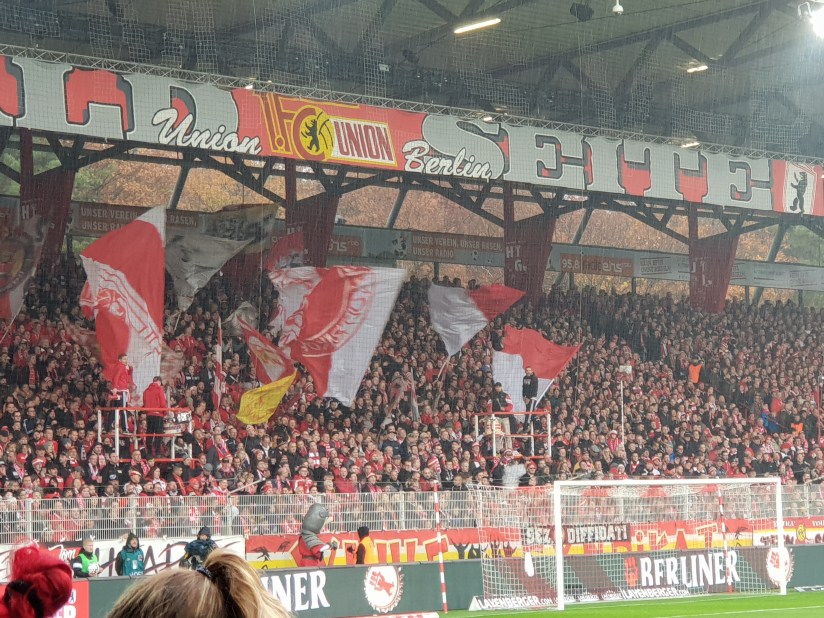
20181111_133313

I couldn’t help but feel a number of parallels with Bradford City, a similarly unfashionable club that has struggled against financial constraints and been reliant on its supporters to overcome obstacles. The same passion on the terraces of Stadion An der Alten Forsterei existed at Valley Parade not that long ago. I came away believing that Union Berlin provided inspiration for what could be achieved at Valley Parade, a demonstration that the German example has relevance to us. It was a further reminder of the vitality of a club with strong local roots and identity as identified in Jason McKeown’s new book, Who We Are.

(NB Whilst the terraces and the beer played a big part in building the atmosphere at Union, the big difference was that the noise tended to be orchestrated by cheer leaders rather than the more spontaneous chanting of which we are familiar.)

Thus far, talk of the ‘German way‘ at Valley Parade has been restricted to coaching and youth development. The efforts of Edin Rahic will be best remembered for relaying the pitch at Valley Parade and there is precious little evidence of transformation elsewhere. All the more remarkable has been the failure to encourage the German crowd experience at Valley Parade and initiatives introduced prior to the change of ownership at the end of the 2015/16 season seem consigned to history.

What is to be done? Last week I was a signatory to an open letter published on Width of a Post urging supporters to back Julian Rhodes, something that prompted a passionate debate as well as personal criticism on Twitter. Anyone who reads my tweets (@jpdewhirst) will be aware that I have had my supporter credentials questioned and somewhat incredulously I have been described as an apologist for the affairs at Valley Parade by one individual who has sat on the fence about the Rahic issue until fairly recently. Another has even accused me of not attending games but needs to know that I am unlikely to see him at Valley Parade because I don’t frequent the hospitality lounges and have no interest in business networking or wearing a suit at football matches. If anyone needs to know when I am at Valley Parade, mine is the Triumph Bonneville parked in the motorcycle area at the back of the main stand (with the exception of when it pours down).

Another angry tweeter (who was vociferous until around Easter telling the world about how lucky we were to have Edin Rahic at Valley Parade) tells me that I am out of touch with working class supporters. Sorry, this has nothing to do with social class. I am not ashamed to say that my proletarian credentials evaporated two generations ago but it doesn’t make me any less a City supporter. I am a Bradford man first and foremost and proud that I can trace my family history back two hundred years to pre-industrial Bradford. I genuinely don’t believe that I have anything to prove about the validity of my credentials as a City supporter. My concern first and foremost is the football club and I have as much of an emotional commitment to Bradford City AFC as anyone else. What I want is to safeguard the future prospects of the club as a Bradford institution and that brings me to why I travelled to Bavaria from Berlin yesterday.

Notwithstanding that I might be seemingly out of touch with the common man, I enjoy a degree of credibility with the decision-makers at Valley Parade and I understand business. I have been in contact with Stefan Rupp since February this year and reached out to him last month to meet him. Eventually this was arranged at Munich Airport on Monday 12th November (and for the record, the meeting was confirmed ahead of Julian Rhodes being appointed as a consultant at Valley Parade). I know that Stefan reads Width of a Post and not surprisingly follows the affairs at Valley Parade online. The purpose of our meeting was with the future of the club in mind, to allow me to convey the concerns of supporters and in turn, to understand his perspectives.

Let me put on record that I like the guy who is down to earth and without pretensions. For want of a better term, he is something of an enigma to City supporters and he confessed that his preference is to avoid publicity. What I wanted to do was build a degree of trust and understanding with him to allow a frank and open exchange between us. I conveyed my observations in no uncertain terms and he listened. I am not going to betray any confidences but I have peace of mind that he understands the need for change. Equally important, he has assured me that he will stand by the club financially to avoid any prospect of cash crisis or insolvency.

No doubt there will be people who read this and express scepticism but if I did not believe him I would not be going on record with these comments. I am independent minded and in no-one’s pocket; my tweets and the articles / book reviews published on this blog should confirm that I don’t suffer fools. I have also told Stefan Rupp that I will give my time to work with Julian and other staff members at Valley Parade should it be required – I hasten to add in a financial management capacity and not on the football side. For those who declare the need for action maybe ask of yourselves. All I can say is please get behind Julian’s efforts and things will take care of themselves.

John Dewhirst


Home page: http://www.johndewhirst.blog
 

Remembrance Day reflections

Poppyremembrance

We remember

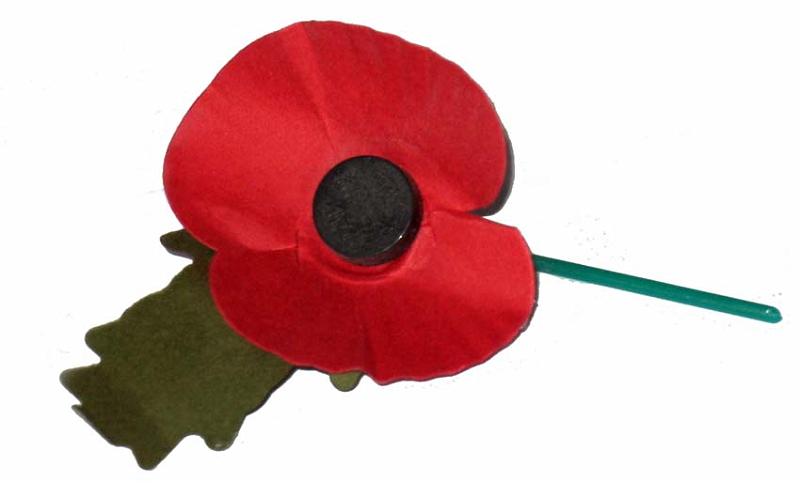
This Sunday, 11th November marks the centenary of the end of World War One. It was a conflict that has a particular poignancy for Bradford City supporters given that three serving as well as seven former players of the club lost their lives. The fatalities included Jimmy Speirs, team captain and scorer of the winning goal in the 1911 FA Cup Final replay as well as Bob Torrance, acclaimed as man of the match in the replay.

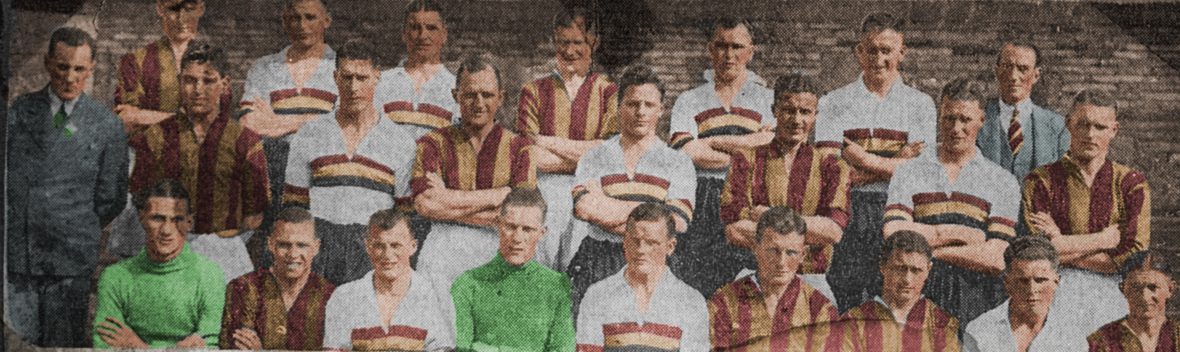
Whilst it is important to remember the sacrifice of the club’s players we should also recognise that the so-called Great War of 1914-18 impacted greatly on the football club. Indeed, what tends to be overlooked is that numerous supporters of the club were also among the war dead and injured. In turn the war touched upon the families of Bradfordians. In the aftermath of the war nothing was quite the same for either the city of Bradford or Bradford City. Aside from the personal tragedies, the city had lost its German community and the finances of Bradford City AFC were depleted to the extent that the club lost its first division status in 1922.

Historic links between sport and the military in Bradford

The war also redefined the links between the football club and the local military. When I undertook my research on the origins of football in Bradford, it became apparent that the historic ties between sport and the military in the district had long since been forgotten. This is ironic given the constant reminder provided by the traditional club colours of City and Avenue / Northern having been derived from military connections. My belief is that after the carnage of the Great War the military heritage tended to be overlooked, not necessarily for ideological reasons but because it was probably seen as outdated, if not irrelevant as people looked to the future.

The early history of Manningham FC – established in 1880 and the predecessor of Bradford City AFC in 1903 – had strong links with the citizen soldiers of Bradford. The generation of men involved with establishing ‘football’ clubs in Bradford during the second half of the 1870’s was typically connected with the Volunteer – or territorial – army units in the town and ‘athleticism’ in the widest sense was considered to be a form of military training by virtue of its health benefits.

The Volunteers had been established in 1859 to provide a home defence force to protect the UK from invasion and in Bradford the principal units were the 3rd Yorkshire (West Riding) Rifle Volunteer Corps and the 2nd Yorkshire (West Riding) Artillery Volunteers Corps.

One reason for the popularity of the Volunteers was that they provided recreational opportunities and in particular access to new sporting activities such as gymnastics and ‘football’ (which in Bradford meant rugby). There was even a dedicated side, Bradford Rifles FC established in 1875 which comprised of a high proportion of Bradford Caledonian FC players (one of the oldest clubs, established in 1873 and also the biggest), a number of whom subsequently became associated with Manningham FC in leadership roles.

This connection encouraged a natural sympathy towards the military but so too did the proximity of Valley Parade to Belle Vue barracks where the 3rd YWRRVC was based. Closer still were the artillery barracks adjacent to Cottingley Terrace just off Valley Parade. Both were used on various occasions for meetings as well as changing and training facilities by Manningham FC and the infant Bradford City club.

The dominant political culture at Valley Parade and Park Avenue prior to World War One was unquestionably Conservatism and it was second nature for the two clubs and their membership to espouse patriotism. A good example of this was the decision to adopt claret and amber in 1884. This came at a time of patriotic fervour associated with the Sudan crisis and the excitement that Bradford men might actually go to war. Arguably it was the same enthusiasm thirty years later with spectators at Valley Parade being actively encouraged to enlist to fight on the western front.

The traditional sporting colours of Bradford were red, amber and black whose origin can be traced to the original Bradford Volunteers of the Napoleonic era. The colours of the local West Yorkshire regiment with whom the 3rd YWRRVC was affiliated were claret and amber.

The Valley Parade War Memorial

FullSizeRender

In addition to Jimmy Speirs and Bob Torrance, the war dead included England internationals Evelyn Lintott and Jimmy Conlin, James Comrie, George Draycott, Ernest Goodwin, Harry Potter and Gerald Kirk. Unfortunately the status of Ernest Kenworthy who played two games for the club in 1906/07 was not established until after the erection of the memorial in the Valley Parade reception in 2015. (NB George Draycott, Ernest Goodwin and Bob Torrance were serving players of BCAFC at the time of being killed in action.)

Subsequent to the war, Jimmy Speirs and others with a Valley Parade connection were remembered first and foremost as fallen soldiers among comrades in arms. So many men had been killed that there was a reluctance to differentiate former professional football players as deserving of unique attention and the players would have concurred with this treatment. Nowadays the fallen players are afforded particular prominence whereas prior generations tended to remember them among countless others who never returned. The distinct commemoration of footballers killed in action has thus been a more modern phenomenon.

A memorial to the war dead of Bradford City was not erected at Valley Parade until 2015 and this hangs in the Valley Parade reception. (The person who made this possible was supporter John Barker of Farsley who arranged its production.) The memorial was funded by a badge sale that I helped organise through Bantamspast and the proceeds also helped fund a stone memorial to the Bradford Pals at Serre near the Somme battlefield in France.

bantamspast Bfd Pals badges

Further detail of Bradford’s military history is told my book ROOM AT THE TOP, available from Waterstones and Salts Mill or direct from BANTAMSPAST HISTORY REVISITED BOOKS.

John Dewhirst

I have written widely about the history of sport in Bradford: Links to my features on the history of Bradford sport

Read about Jimmy Speirs and Bob Torrance (published in BCAFC programme 2017/18).

Read about Bradford City’s tour of Germany in 1914

The role of the military and the Rifle Volunteers was so integral to the story of the origins of sport in Bradford and such an influence on the Manningham / Bradford City club that I am unforgiving of anyone overlooking the theme and particularly so when the individual otherwise makes bold, vainglorious claims to be an authority about sporting history in the north of England. To ignore the importance of the military influence on the history of Bradford sport beggars belief (although it isn’t the only glaring omission by the author concerned).

—————————————————————————————————–

The drop down menu above provides links to features published in the BCAFC programme, book reviews and sundry articles about the history of Bradford and its sport.

If you are interested in local sporting history, visit the dedicated online journal VINCIT

The Tragedy of War

A HISTORY OF BRADFORD CITY AFC IN OBJECTS

Published in the match day programme: Bradford City v Portsmouth, 03-Nov-18

The tragedy of war

In April and May, 1914 Bradford City AFC embarked on a tour of France, Germany and Switzerland. This included ten games of which all were won except the third of the tour in Frankfurt am Main on 2nd May against Frankfurter Fussball-Verein (a predecessor club to Eintracht Frankfurt who were formed in 1920).

The fixture had been arranged at short notice and the City team included a number of reserve players. Defeat was later attributed to the distraction of a Zeppelin flying overhead as well as the combination of hot conditions and a ground that was hard as stone. The crowd was reported to be around four thousand. The local newspaper reported that the visitors were so annoyed by the defeat that they did not attend the post-match banquet!

1914-05-02 Bradford City COPY FOR WCR

Of the players in this photograph no less than four were killed in World War One including Bob Torrance (standing, far right) who was killed in Belgium in April, 1918. Among the German fatalities was Rudi Schlüter, scorer of all his team’s goals in the 3-1 victory, killed in Galicia in 1915. Others included Alois Braun who was injured on the western front in August, 1914 and died shortly after as well as Dr. Friedrich Claus who died of injuries sustained in Mesopotania in 1915.

Other players who featured in the above game included Dickie Bond, (third, left) who later became a prisoner of war and Jock Ewart, (fifth, right) who suffered shell shock.

A total of ten current and former Bradford City players were killed in the war. This included the 1911 FA Cup final goalscorer and former captain, Jimmy Speirs, Bob Torrance, England internationals Evelyn Lintott and Jimmy Conlin, James Comrie, George Draycott, Ernest Goodwin, Harry Potter and Gerald Kirk. Unfortunately the status of Ernest Kenworthy who played two games for the club in 1906/07 was not established until after the erection of the memorial by Bantamspast in the Valley Parade reception in 2015.

John Dewhirst

John’s book A HISTORY OF BCAFC IN OBJECTS (vol 1 in the BANTAMSPAST HISTORY REVISITED series) provides background about City memorabilia. In future issues of The Parader he will feature objects that tell the history of the club. If you have a City artefact in your possession that you would like him to feature in the programme contact him at johnpdewhirst at gmail dot com or tweets @jpdewhirst

John has written widely about the history of sport in Bradford: Links to his features on the history of Bradford sport

Elsewhere on this blog you can find his programme articles from earlier games this season and last.

Reviews of books

===============================================================

Details here about the new bantamspast History Revisited book by Jason McKeown and other volumes in the same series: BANTAMSPAST HISTORY REVISITED BOOKS

==============================================================

Discover more about Bradford football history at www.bradfordsporthistory.com