Other Bantams

A HISTORY OF BRADFORD CITY AFC IN OBJECTS

Published in the match day programme: Bradford City v Coventry City, 23-Oct-18 

Coventry City is the only other Football League club to have adopted the bantams nickname, albeit swept aside at the time of Jimmy Hill’s relaunch of the club as Sky Blues in 1962. According to Wikipedia: ‘Coventry were first called the Bantams in December, 1908 after the local newspaper noted that they were one of the few clubs who did not have a nickname. Being the lightweights of the Southern League, the Bantams was suggested and stuck with the press and supporters.’

What is notable is that Coventry adopted the nickname only a month after Bradford City. As I mentioned in the Sunderland programme, it came at a time when it was the fashion for clubs to adopt animal and bird identities. However, given that Bradford City chose the nickname because of association with the bird’s fighting qualities, Coventry did so for apparently different reasons.

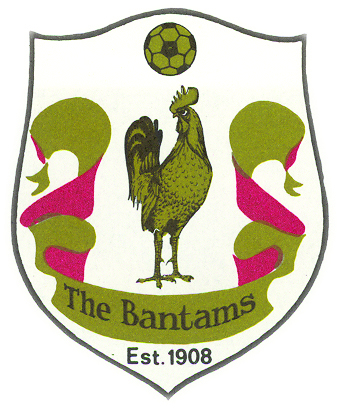
In 1962 Coventry considered the nickname to be old fashioned and there was a similar decision at Valley Parade not long after. The bantam identity was retained by Bradford City until 1966 when it was swept aside by the City Gent and the restoration of the ‘Paraders’ nickname. In practice the bantams identity had faded with more relevance for headline writers and journalists writing match reports. Apart from featuring in a Bradford City Shareholders’ and Supporters’ Association badge design in 1962, and on the cover of the programme in 1963/64, the bantam identity had become almost incidental.

1981

The subsequent bantam revival by Bob Martin in 1981 was more remarkable for the introduction of three different club crests in as many years. Frankly all three designs were poor and bear testament to the difficulty in the pre-internet era of securing a realistic drawing of a cockerel, let alone a bantam cock. The crest of 1982 for example has an abundance of ribbon in the shield as if the designer was desperate to fill the space. Furthermore, if you take into account the relative proportions of the cockerel and the ball it suggests a giant bird that is almost certainly not a bantam.

1982 logo

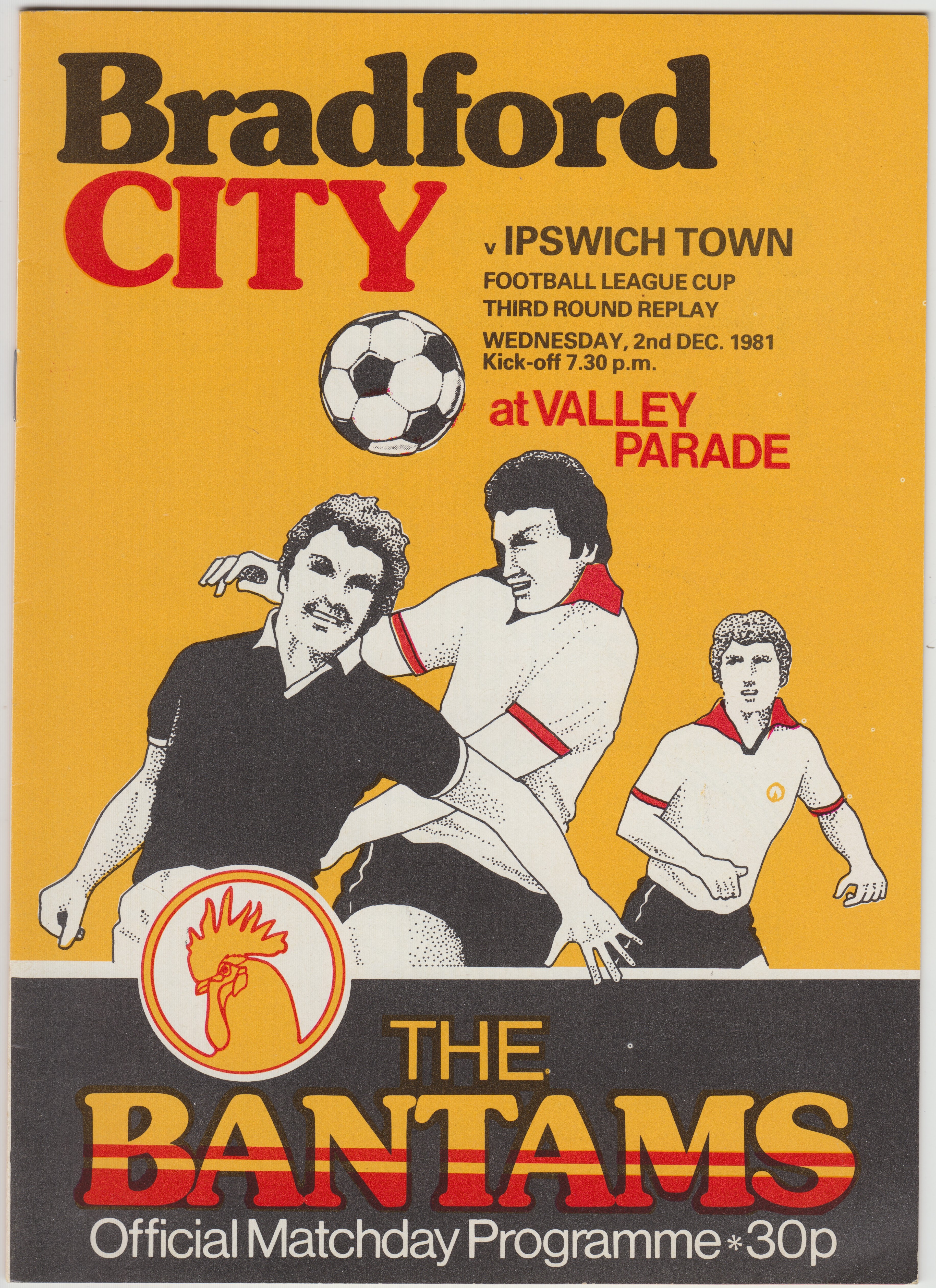
The circular design was introduced mid-season and despite new crests being introduced in 1982 and 1983 this continued to be used on merchandise and in the club programme. A Junior Bantams supporters’ club had been established during the 1981 close season but the formal revival of the ‘Bantams’ identity by the club did not happen until the following December. In fact it was launched on the occasion of the League Cup Third Round replay with Ipswich Town on 2nd December, 1981 – a game that had been delayed due to gale damage at Valley Parade, the embarrassment of which probably further discouraged the continued use of the ‘Paraders’ nickname.

1983 logo

What seems unusual is that despite the rebranding of Bradford City a bantam crest never featured on the club shirt at this time. Instead supporters had the indignity of the TOY CITY shirt advertising. At least in 1983 this was replaced by the Bradford Mythbreakers logo of the Bradford Council’s Economic Development Unit.

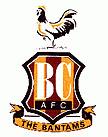
In 1985 Stafford Heginbotham revived the boar’s head identity for the club that survived until the introduction of the current crest (below) in the 1991 close season. It seems anomalous for the crest to have a white bantam when the original was firmly associated with claret and amber but that is another matter.

!bccrest

John Dewhirst

John’s book A HISTORY OF BCAFC IN OBJECTS (vol 1 in the BANTAMSPAST HISTORY REVISITED series) provides background about City memorabilia. It is available from Waterstones, Wool Exchange or Salts Mill bookshops or follow the link below for BANTAMSPAST HISTORY REVISITED. In future issues of The Parader he will feature objects that tell the history of the club. If you have a City artefact in your possession that you would like him to feature in the programme contact him at johnpdewhirst at gmail dot com or tweets @jpdewhirst

John has written widely about the history of sport in Bradford: Links to his features on the history of Bradford sport

Features on the BCAFC identity:

Bradford City AFC & the Boar’s Head identity

Application of the Bradford civic crest

How Bradford City became known as the Bantams

The ‘bc’ logo of 1974-81

The City Gent

Elsewhere on this blog you can find his programme articles from earlier games this season and last.

===============================================================

Details here about the new bantamspast History Revisited book by Jason McKeown and other volumes in the same series: BANTAMSPAST HISTORY REVISITED BOOKS

==============================================================

Discover more about Bradford football history at www.bradfordsporthistory.com

The first game of soccer at Valley Parade

A HISTORY OF BRADFORD CITY AFC IN OBJECTS

Published in the match day programme: Bradford City v Rochdale, 20-Oct-18

It may come as a surprise that the first recorded game played by association football rules at Valley Parade was on 7 May, 1895 and that it was a women’s match. As such it would best be described as an exhibition game by so-called ‘Lady Footballers’ that formed part of a series of matches staged across the country. The motives were entirely commercial, organised to exploit the curiosity of people in women’s football at a time when ‘soccer’ was fast emerging as the dominant winter code.

The organiser was the so-called British Ladies Football Club that had been formed in January, 1895 and which toured Great Britain during its brief existence until around September, 1896.

A crowd of between two to three thousand people came to watch the spectacle that had been arranged at the Manningham FC ground at relatively short notice. The Bradford Daily Telegraph however was pretty dismissive about the match falling a long way short of being a competitive contest and did not disguise the fact that a predominantly male audience had attended for reasons other than to watch a serious sporting spectacle: It was fun that was expected by the spectators, and fun was all that was forthcoming, the attempts at football being feeble and farcical.

Its comments were equally sexist: There was nothing in the costume of the lady footballers to shock the sensibilities of Mrs Grundy, but all the same the attire is not likely to become popular with the fair sex, for the simple reason that it is not becoming. Had the lady footballers been less favoured by Nature they would have presented a ‘dowdy’ appearance, but the natural beauty and grace of several saved the team from this.

The great drawback to ladies’ football, however, seems to lie in the fact that it seems a physical impossibility for ladies to run quickly and gracefully. As an exhibition of football the play was a miserable travesty of a splendid game and as an entertainment it soon became tedious.’

Women’s football received a boost during World War One when teams were formed by munitions workers and indeed, on 6 August 1917 Park Avenue staged an exhibition game between two such works sides. It was during the war that the famous Dick, Kerr Ladies came to prominence and in the immediate aftermath was successful at attracting large crowds to its games. On Boxing Day, 1920 for example 53,000 came to watch the Preston side at Goodison Park. The example of Dick, Kerr’s inspired the formation of other works teams including those at Manningham Mills and Hey’s Brewery in Bradford during 1921.

The next game of women’s football at Valley Parade was on 13 April, 1921 when the Manningham Mills Ladies’ side (also known as Lister Ladies) was defeated 0-6 by the Dick, Kerr team in front of 14,000 spectators.

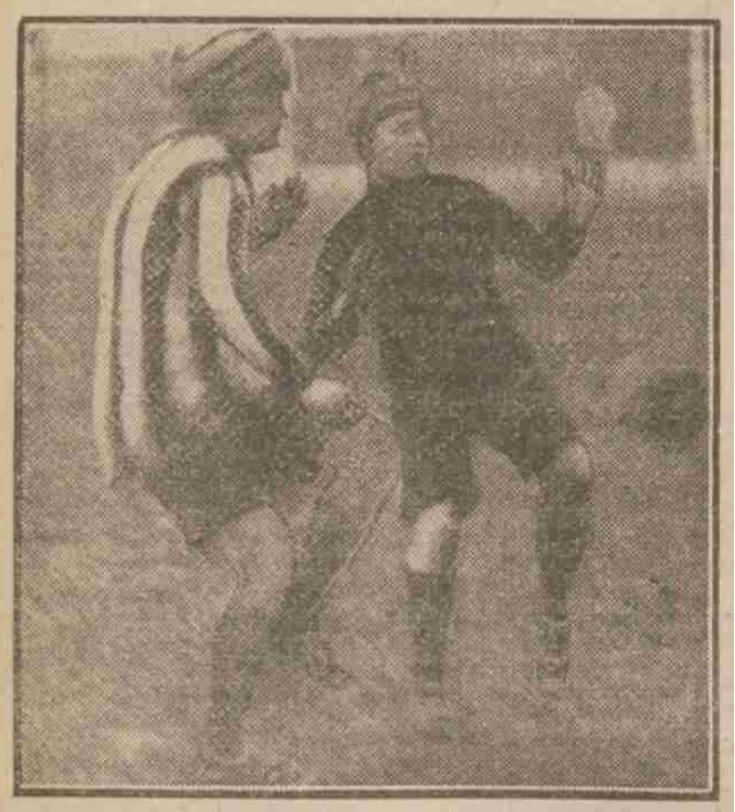
Dick Kerr v Listers at VP Apr-21Thank you to David Wilkins for sending a photo of that game which shows DKL in stripes.

In October, 1921 Hey’s Ladies were defeated 1-4 by Dick, Kerr’s at Valley Parade and the crowd of that game has been variously reported as 4,070 and 10,000 (the higher attendance claim may have been exaggerated for effect).

The following December the Football Association enforced a ban on women’s football that endured for 50 years and which prevented women’s football being staged on the pitches or grounds of FA registered clubs. Similarly, FA registered referees were barred from officiating women’s football games.

The story of the origins of women’s football in Bradford is told on the VINCIT website  where you will find other features about the origins of sport and football in the district.


John Dewhirst

John’s book A HISTORY OF BCAFC IN OBJECTS (vol 1 in the BANTAMSPAST HISTORY REVISITED series) provides background about City memorabilia. In future issues of The Parader he will feature objects that tell the history of the club. If you have a City artefact in your possession that you would like him to feature in the programme contact him at johnpdewhirst at gmail dot com or tweets @jpdewhirst

John has written widely about the history of sport in Bradford: Links to his features on the history of Bradford sport

Elsewhere on this blog you can find his programme articles from earlier games this season and last.

===============================================================

Details here about the new bantamspast History Revisited book by Jason McKeown and other volumes in the same series: BANTAMSPAST HISTORY REVISITED BOOKS

==============================================================


Book Review: One Year, Two Seasons

‘One Year, Two Seasons’ by Richard Wardell (City Gent Publications, 2018) £3.00

Author Richard Wardell had long thought about writing a book about supporting Bradford City and he could not have chosen a more eventful period to write about. In fact some of us would say that he has successfully written a horror story featuring Bradford City!

It is a long, long time since the Wembley Play-off Final in May, 2017 against Millwall when it seemed that Bradford City supporters were assured of a bright future. Fast forward to the beginning of the 2018/19 and it feels as though the world has been turned upside down. Optimism has been swapped for despondency and rancour. How we will look back upon this period in the future is anyone’s guess but Richard Wardell has done a mighty fine job of documenting the change in outlook during the twelve months that followed the club’s final game of the regular season at Rochdale on 30th April, 2017.

Put together in the same format as The City Gent, it is better described as a booklet (72 pages in size) but with the splendid cover by Paine Proffitt and a good selection of photographs One Year, Two Seasons is well produced and equally well-written. Published to raise money for the Plastic Surgery & Burns Research Unit and the Huntington’s Disease Association it is richly deserving of support.

Richard is a longstanding supporter and one who is unlikely to have his commitment to the club shattered by what has happened at Valley Parade of late. His loyalty to the club and infectious enthusiasm is writ large on each page despite the tangible evidence of the implosion and dramatic loss of form from the end of December, 2017 about which we are all aware. This is a man who should be a positive thinking coach, if not a therapist.

Written as a journal Richard reveals the extent to which supporting his team has come to dominate his life and despite the bad results and disappointments, he demonstrates how it can be a satisfying experience with its various routines. It is something of an understatement when he writes that ‘football is so much more than the 90 minutes on the pitch. It’s about forming and maintaining friendships, it’s about sharing stories with strangers, it’s about communities, and it’s about creating history and making happy memories.’ 

Amen to all of that. Richard demonstrates that without people like him we wouldn’t have a football club and in truth, it would not be worth following. Long after foreign owners have got bored by their dalliance it will be the likes of Richard Wardell who will help Bradford City AFC begin the process of recovery and rebuilding.

John Dewhirst

You can find other book reviews on this blog – refer links from HERE


.


Black cats and bantams

A HISTORY OF BRADFORD CITY AFC IN OBJECTS

Published in the match day programme: Bradford City v Sunderland AFC, 06-Oct-18 

DSC03293

The nickname of our visitors, Sunderland AFC – the ‘Black cats’ – has origins not dissimilar to that of our own ‘Bantam’ identity. A black cat was credited with having brought good fortune to the team in its victory against Bury at the beginning of January, 1909 and was adopted as club mascot shortly after. Around that time it was not uncommon for football clubs to seek animal character nicknames and indeed the ‘Bantam’ identity had been adopted at Valley Parade not long before.

The first game between Bradford City and Sunderland was at Valley Parade on 24 October, 1908. The 0-2 defeat left the home side stranded at the bottom of the first division with only one win and six goals scored from the first nine fixtures. It had proved to be a difficult baptism for City, promoted as Division Two Champions the previous season.

With only two points from the next four games, by the end of the following month it was beginning to look as though relegation was inevitable. Accordingly, few gave the club much chance of getting a result from the match with League leaders, Everton at Valley Parade on 28 November and yet that game proved to be a real turning point, remembered for the launch of the club’s bantam identity.

The characteristic of bantams as small but fearless fighting creatures suited the self-image of the club and typified its personality. Manningham FC had always considered itself as a challenger to much bigger sides (in particular Bradford FC at Park Avenue) and Bradford City had inherited the same sense of being an underdog. As the club struggled to consolidate in the first division, the notion of bantam fighting spirit was equally motivational for players and supporters alike. The new identity proved totemic and inspired a recovery: a draw with Everton was followed by two successive victories at the beginning of December. The club eventually secured its place in the first division with victory over Manchester United in the last game of the season.

The City side was still struggling at the foot of the division on 20 February, 1909 when it faced Sunderland in an FA Cup tie at Valley Parade. The near forty thousand capacity crowd was said to have been a new record for a cup tie in the city and a good number of spectators was reported to have come from the Leeds district. At half time a dummy bantam was placed on the crossbar at the Spion Kop end to inspire the Bradfordians but it was Sunderland who progressed to the next round, winning 1-0.

There was a subsequent meeting at Roker Park the week after in the return league game. Unfortunately that also ended in defeat for City by 1-2. The Yorkshire Evening Post reported that the home supporters in the 15,000 attendance afforded Bradford City a cordial reception. A bantam cock was thrown onto the pitch shortly before City secured an equaliser with a penalty kick. It was said that the bantam ‘provided a diverting spectacle’ and ‘there was the suggestion that it should be handed over to the tender mercies of Sunderland’s black cat to save further trouble.’ (For the record, City won the next game in the series, 3-1 at Valley Parade the following December.)

The adoption of the ‘Bantams’ nickname captured the imagination of the City faithful. The following season a new shirt was adopted by the club with a yoke collar said to resemble a bantam’s plumage – the same shirt that was worn when Bradford City won the FA Cup in 1911 when they defeated Newcastle United – the Magpies – in a replay. To my knowledge Sunderland AFC has never adopted a shirt in the guise of its mascot, surely a lost opportunity for the Mackems!

John Dewhirst

John’s book A HISTORY OF BCAFC IN OBJECTS (vol 1 in the BANTAMSPAST HISTORY REVISITED series) provides background about City memorabilia. In future issues of The Parader he will feature objects that tell the history of the club. If you have a City artefact in your possession that you would like him to feature in the programme contact him at johnpdewhirst at gmail dot com or tweets @jpdewhirst

John has written widely about the history of sport in Bradford: Links to his features on the history of Bradford sport

Features on the BCAFC identity:

Bradford City AFC & the Boar’s Head identity

Application of the Bradford civic crest

How Bradford City became known as the Bantams

The ‘bc’ logo of 1974-81

Bantam identity of the 1980s

Elsewhere on this blog you can find his programme articles from earlier games this season and last.

===============================================================

Details here about the new bantamspast History Revisited book by Jason McKeown and other volumes in the same series: BANTAMSPAST HISTORY REVISITED BOOKS

==============================================================

Discover more about Bradford football history at www.bradfordsporthistory.com

The ‘bc’ logo 1974-81

A HISTORY OF BRADFORD CITY AFC IN OBJECTS

Published in the match day programme: Bradford City v Bristol Rovers, 29-Sep-18

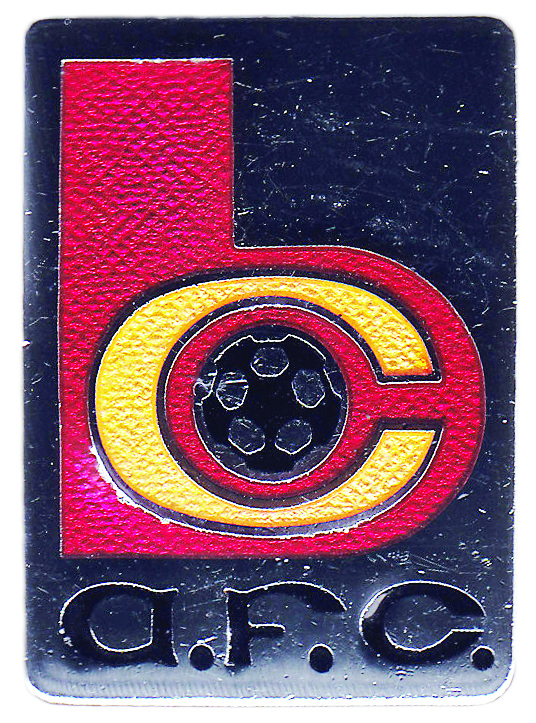
In the early 1970s football identities were subject to further radical change and a shift to minimalist design. Forged on the back of an envelope (literally so) in the commercial office at Valley Parade in the close season of 1974 came the ‘bc’ logo which was described in the programme as having a 32 panel football in the centre.

bc logo polished

Featured above is a lapel badge of the era based on the design.

The new Bradford Metropolitan District Council had itself adopted a modern style monogram bmdc logo without any reference to traditional heraldic devices (see below). In the space of a few weeks in the spring of 1974, both the old city of Bradford authority and Bradford Park Avenue AFC had disappeared – the latter after sharing Valley Parade for its final season.

bmdc logo

The introduction of the new logo at Valley Parade was about signalling a new era.  Chairman Bob Martin also wanted to show that a new regime was in place following the departure of Stafford Heginbotham in November, 1973. Martin had assumed power with the promise that he and his fellow directors would introduce new money and new ideas.

In April, 1974 the Bradford City board announced its decision to rename the club as Bradford Metro FC to signify a fresh start as a united Bradford club. The timing was in response to the demise of Bradford Park Avenue but the choice of name was inspired by changes in government organisation that year, considered to be radical and ‘modernising’. Bob Martin was convinced that the new metropolitan district would bring with it more people who would identify with Bradford and that the sole remaining football club in the district needed to capitalise on the opportunity. Like the new club identity, the proposed team colours of amber and brown (the same as the new Bradford authority and its dustcarts) were equally radical. However City supporters, backed by former chairman Stafford Heginbotham, were unanimous in rejecting the proposal which the directors were then forced to abandon.

The ‘bc’  logo took its place on the cover of the programme in August, 1974 displacing the popular City Gent character that had been a feature of the previous eight years. As if that was not enough, Martin introduced a predominantly all-white playing strip with solitary claret and amber stripes as a sop to tradition. Although white had been the club’s traditional third colour it rankled the sensibilities of the faithful during the course of the next eleven years.

John Dewhirst

Postscript

In 1969 Bradford Corporation introduced a new logo to signify a modern identity for the city and this was briefly adopted by both Bradford clubs. However the BCAFC shirt badge from 1970 appears to have been a one-off, possibly designed on a speculative basis that never featured on the team strip.


John’s book A HISTORY OF BCAFC IN OBJECTS (vol 1 in the BANTAMSPAST HISTORY REVISITED series) provides background about City memorabilia. In future issues of The Parader he will feature objects that tell the history of the club. If you have a City artefact in your possession that you would like him to feature in the programme contact him at johnpdewhirst at gmail dot com or tweets @jpdewhirst

John has written widely about the history of sport in Bradford: Links to his features on the history of Bradford sport 

Features on the BCAFC identity:

Bradford City AFC & the Boar’s Head identity

Application of the Bradford civic crest

How Bradford City became known as the Bantams

The BSA Bantam character

The ‘bc’ logo of 1974-81

Bantam identity of the 1980s

The City Gent

Elsewhere on this blog you can find his programme articles from earlier games this season and last.

===============================================================

Details here about the new bantamspast History Revisited book by Jason McKeown and other volumes in the same series: BANTAMSPAST HISTORY REVISITED BOOKS

==============================================================

Discover more about Bradford football history at www.bradfordsporthistory.com

Baines Cards

A HISTORY OF BCAFC IN OBJECTS

My feature in the Bradford City programme v Charlton Athletic, 15-Sep-18

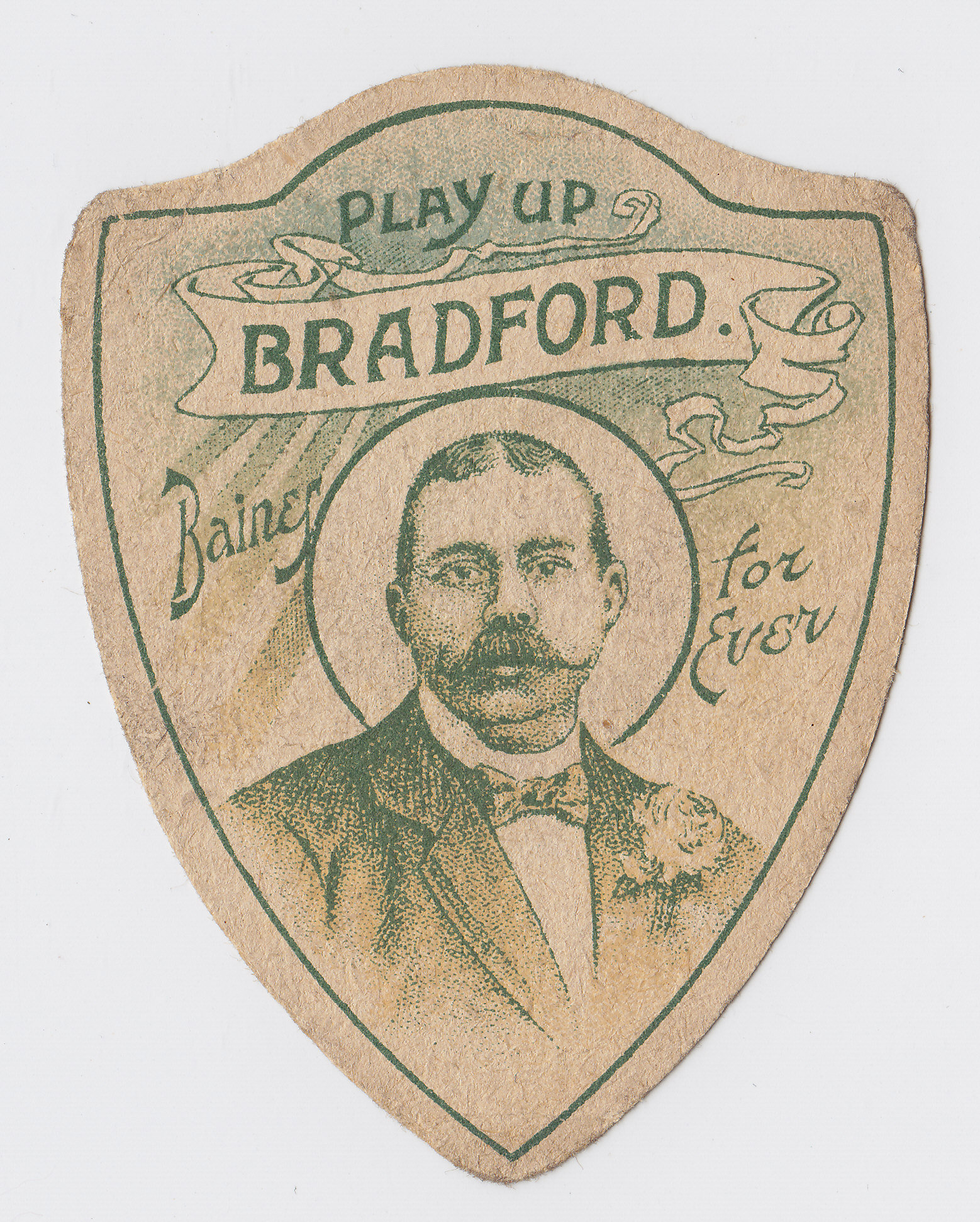
As if no other reminder was necessary, the beginning of the Premier League season is invariably heralded by the sale of Panini football stickers in newsagents. With the notable exception of 1999/00 and 2000/01, this has been a phenomenon that has bypassed Bradford City. Yet Bradford can boast having played a big part in the origins of these football collectables. Indeed, long before Pannini stickers had become a multinational business, a local printing business in Oak Lane, Heaton had derived its own profits from the sale of what became known as ‘Baines cards.’

IMG_0001

The launch of these collectables in 1885 came at the height of the rugby boom in West Yorkshire and in Bradford in particular. At the time Manningham FC was emerging as a challenger to Bradford FC (who were based at Park Avenue) and this was considered something of a sporting sensation such had been the reputation of the senior side. It was the club’s growing confidence that encouraged Manningham FC to relocate to Valley Parade from Carlisle Road in 1886.

The launch of the Yorkshire Cup in the 1877/78 season had been the catalyst of local public interest in rugby union and indeed, the rivalry between the Manningham and Bradford clubs was based around the cup competition. In 1884 Bradford had won the trophy, having defeated Manningham in an earlier tie. In 1885 there had been the prospect of a Worstedopolis final but Bradford FC was defeated in its semi-final. Although Manningham FC reached the final, the club was defeated and unable to emulate the achievement of its Park Avenue rivals twelve months before. The following season Bradford defeated Manningham in a quarter-final tie only to lose in the 1886 final. Later it was the controversial postponement of a cup tie between the sides in March, 1887 that defined relations between the Valley Parade and Park Avenue organisations for the next twenty years (the background to which is told in my book ROOM AT THE TOP).

Not surprisingly, the rivalry between the clubs and popular interest in rugby provided a febrile environment for John Baines to launch his initiative. His patented football cards were initially based around sides from the north of England as well as Scotland in fairly standardised formats. By the 1890s they had extended to coverage of teams in the south as well as Ireland, including soccer and cricket. In 1893 the business relocated to 15 North Parade and by this stage faced competition from another Bradford printer, W N Sharpe which responded with its own range of ‘Play Up’ cards. It was a buoyant market and in 1920 for example it was claimed that 13.5 million cards had been produced by Baines that year. Finally, in 1926 the enterprise was sold to a Barnsley firm although by this time cigarette cards were capturing the appeal of collectors.

John Dewhirst

John’s book A HISTORY OF BCAFC IN OBJECTS (vol 1 in the BANTAMSPAST HISTORY REVISITED series) provides background about City memorabilia. In future issues of The Parader he will feature objects that tell the history of the club. If you have a City artefact in your possession that you would like him to feature in the programme contact him at johnpdewhirst at gmail dot com or tweets @jpdewhirst

John has written widely about the history of sport in Bradford: Articles by John Dewhirst on the history of Bradford sport

Elsewhere on this blog you can find his programme articles from earlier games this season and last. The site has recently been refreshed and new postings in the last week include book reviews – refer menu links.

===============================================================

Details here about the new bantamspast History Revisited book by Jason McKeown and other volumes in the same series: BANTAMSPAST HISTORY REVISITED BOOKS

==============================================================

Discover more about Bradford football history at www.bradfordsporthistory.com

Book Review: The Beautiful Badge

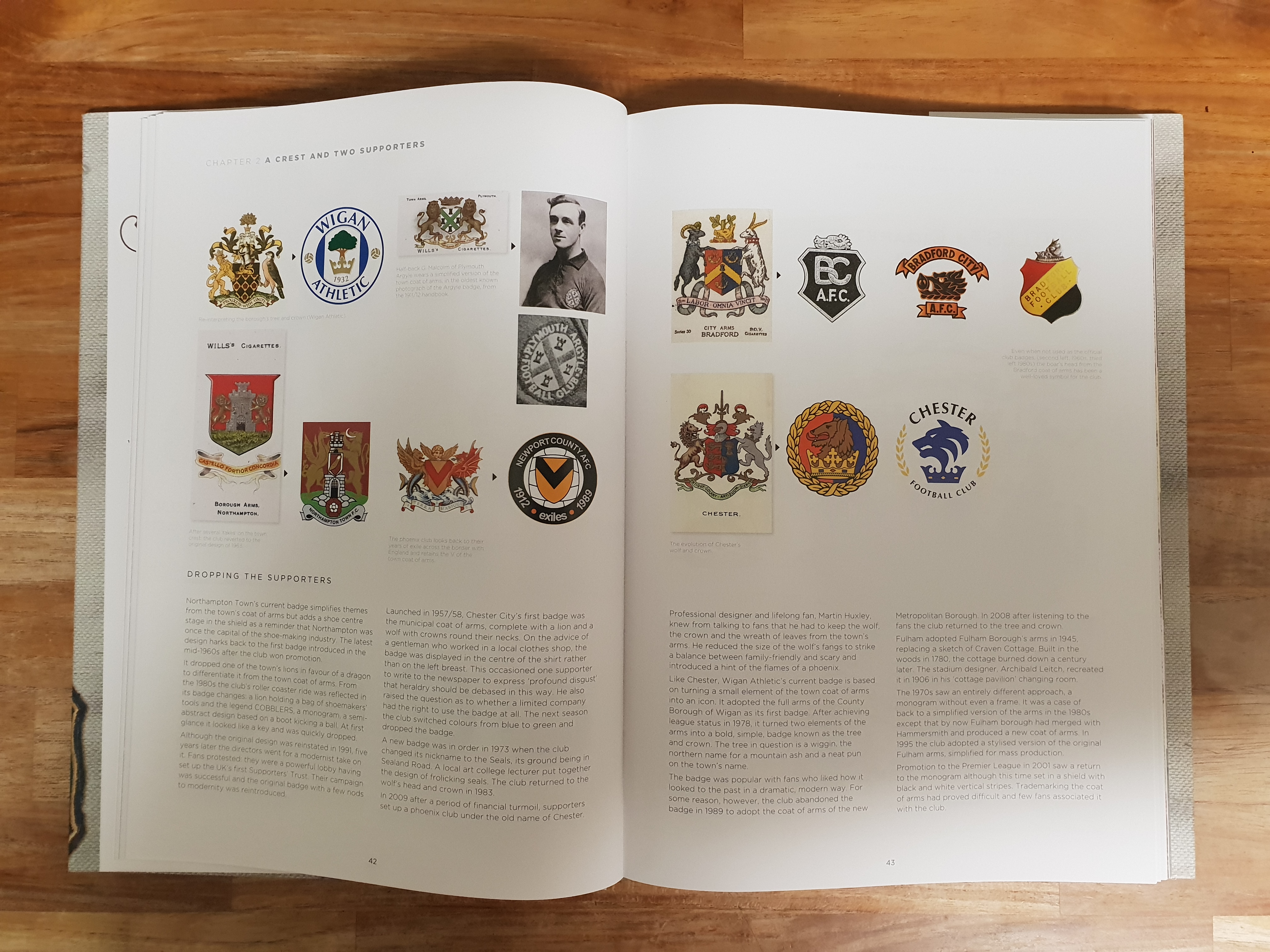
The Beautiful Badge: The Stories Behind the Football Club Badge by Martyn Routledge and Elspeth Wills (Pitch Publishing, 2018)

It is rare for a book to combine outstanding design with an authoritative narrative but this is a classic. Frankly I am in awe of the effort that has been put into it which probably explains why there has never been anything like it before.

As a child I had the 1971/72 Batholomews Football map of Great Britain on my bedroom wall that was illustrated with club crests as well as team strips. Nothing better gave me a basic knowledge of British geography and civic crests. Nowadays club crests are visible on an almost daily basis, thanks to a large degree to digital design and the internet but they were not always so commonplace. In the main they tended to be confined to boys’ comics and it was otherwise rare to see a compilation of crests.

The Beautiful Badge is a true indulgence that allows comparison of badges not only from different clubs but from different eras.What is so enjoyable about the book is that it has extensive coverage of early club badges dating back to the pre-World War One era and there is a treasure trove of artefacts and illustrations. Bradford City supporters will be satisfied that the club is well-represented and indeed there is a good share of graphics relating to the Bantams / Paraders. A minor blemish is that a Bradford AFC badge originating from Park Avenue, c1896 has been attributed as City related but it hardly detracts. (I wish the same could be said of my own photograph in the section about Scunthorpe.)

The history of changes to the Bradford City crest is pretty much consistent with what has happened at other clubs, alternating variously between a civic crest themed badge, monograms, an identity based around a creature (ie bantam) and the adoption of a character (ie City Gent). All of these developments are tracked in The Beautiful Badge.

20180915_055725.jpg

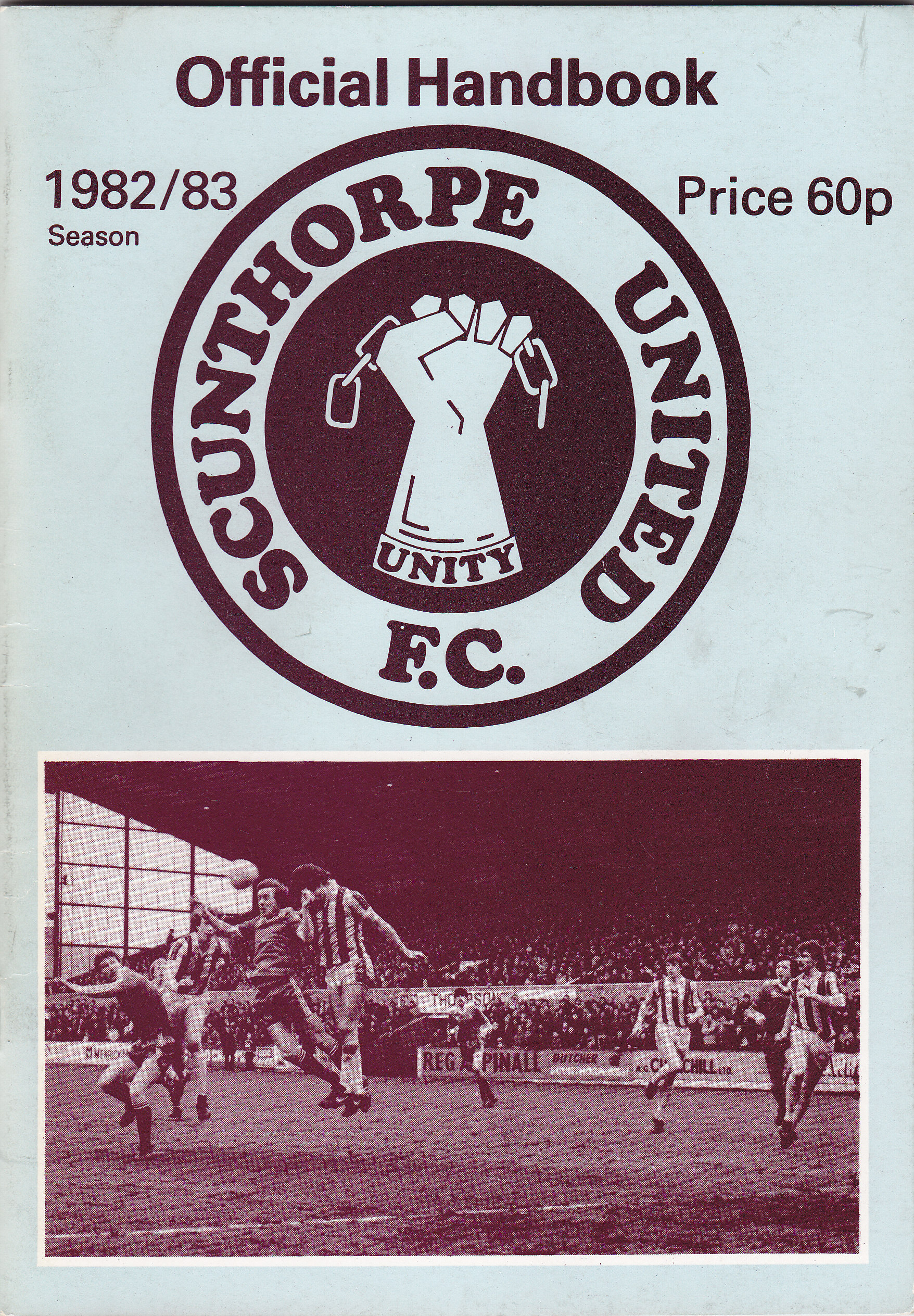
The book is based on the research undertaken by Routledge for an undergraduate dissertation and around twenty years ago I provided him with some background about the various crests that have been adopted by Bradford City AFC. I have also assisted him with the production of this book, providing detail about Bradford City as well as my involvement with the rebadging of Scunthorpe United in 1981. Indeed I was the man responsible for the design of that club’s ‘Unity fist’ badge.

In October, 1981 I attended an away game at the Old Show Ground where City managed a convincing 3-1 victory. The programme included an appeal for design ideas for a new Scunthorpe badge, to introduce a new image. The winner was offered a £10 prize.

By my own admission I have no love for Scunthorpe United and even less skill as a graphic designer but not to be put off I sketched a design on a food wrapper whilst on the journey home on the CTC ’73 supporters’ coach. I posted it off and forgot all about the episode. Imagine my surprise when I saw my design in a copy of the Rothmans Yearbook the following summer. I genuinely couldn’t believe that my drawing had been chosen without any alteration because it was awful. It spoke volumes for the sheer amateurism of the era that a rebranding exercise could have been dealt with in this way.

scunthorpe badge 1982

En route to Cleethorpes to watch City in a pre-season fixture I called at the Scunthorpe club shop and introduced myself as the person who had drawn the crest to claim my prize. For my efforts I was awarded a couple of lapel badges and a letter certifying that I had won the design competition. I never received the advertised prize money but instead I had the dubious honour of having designed the Scunthorpe United crest. The badge lasted no more than a few seasons to be replaced by a more ‘family friendly’ version but nevertheless it proved popular with the club’s fans. I still chuckle at my contribution.

If I had to recommend a football book as a special Christmas gift, this would be it. At the time of writing it is topping the Amazon charts and I know that it will be hugely popular and successful. My understanding is that within the first month of going on sale there has been a reprint.

John Dewhirst

I have written widely about the history of sport in Bradford and you will find various features on this blog.

For those interested in the history of Bradford City crests the following articles are of note:

The BC logo of Bradford City, 1974-81

About the Bradford City AFC boar’s head identity

Application of the Bradford civic crest

How Bradford City became known as the bantams

Revival of bantams identity in the 1980s

Later this season I shall be uploading a feature with the the story of the City Gent character which will also be published in the Bradford City AFC matchday programme. 


My Other Book Reviews


Book Review: Kick Off!

‘Kick Off! The start of spectator sports’ by Dr David Pendleton (Naked Eye Publications, 2018)

I had been looking forward to the publication of this book and set aside an evening to digest. As it turned out my cup of tea was still warm by the time I’d finished reading. This is indeed a short book; it lacks illustrations and I doubt that there could be more than 40,000 words. Any shorter and it would probably be described as a pamphlet. The content of the book broadly mirrors that of the author’s 120,000 word dissertation about the origins of sport in Victorian Bradford minus its academic literature review. However there is the addition of references to womens sport, a number of which are lacking in substance but were presumably sufficient to meet the stipulations of the publisher.

The author examines a selection of the sporting activities undertaken in Victorian Bradford beginning with cricket and the early history of Bradford CC as well as entertainments such as knurr and spell, horse racing and pedestrianism that were common in the early to mid-century. The bulk of the coverage however relates to rugby and association football.

Bradford established for itself a reputation as a hotbed of sporting activity and enthusiasm in the nineteenth century, a pioneer of commercial rugby at Park Avenue and in the first decade of the twentieth century, of soccer at Valley Parade. Bradford witnessed a revolution in the commercialisation of sport and the transformation of sports clubs from recreational bodies to fully-fledged businesses. As in other northern towns, sport became an expression of civic patriotism and pride. Without a doubt Bradford offers a fascinating case study of how sport became commercialised and yet, until recently, what happened in Bradford has been given little attention and the early sporting history of the district had been forgotten.

Surprisingly there is very little coverage in the book to explain how the Bradford experience differed to what happened elsewhere in Great Britain or for that matter, elsewhere in the Anglophone world. Even a fleeting comparison of the experience in Bradford with that in say Newport, a similar industrial frontier town (and one likewise wedded to rugby) or with what happened in other industrial areas at the time would have been relevant. People seeking a broader perspective will be disappointed and the title is misleading by not making clear that it is concerned only with Bradford.

Described as a ‘popular edition’, being a distillation of his dissertation, I struggle to see what audience the author or the publisher is really trying to reach. ‘Kick Off! The start of spectator sports’ does not bring fresh observations or frameworks to the wider academic discussion about nineteenth century sport which may explain why the original dissertation has not been published for an academic readership. It is equally challenging to see what it offers non-academic readers who will find it the equivalent of eating empty calories. On this occasion neither is there any outstanding graphic design to compensate. All told it seems more like a vanity publication for its own sake.

Ultimately my criticism of this book is derived from the omission of a number of key themes from the author’s discussion of spectator sports becoming established in Bradford. Given that they would explain how and why commercialised sport developed as it did in Bradford – with distinct, local characteristics – it is not insignificant that they should have been missed out.

I am credited in the foreword with having provided the author with assistance (although I did notice that my books are not listed at the back of his own for further reading or reference). However the credit should not be interpreted as an implied endorsement of what he has written because quite clearly he has not read what is in my own books or articles published online (VINCIT etc – links below).

I am genuinely surprised that during the course of his doctoral research Pendleton failed to identify the motive of charity fundraising; the role of the Rifle Volunteers (territorial army); the influence of cricket on the commercial development of football; of how Bradford CC had been conceived in 1836 as an electoral vehicle by the Tories; the importance of the railways; the impact of urban geography and the property market; or the pioneering efforts of Jack Nunn – all of which were critical in the origins of sport and the eventual development of professional sport across the town. Mention is also lacking of how Bradford FC became known as a team of celebrities, the club that provided more England internationals before 1895 than any other in the north of England. Each of these is a major omission and collectively it undermines his credibility. For the author to have missed so much raises fundamental doubts about his scholarship.

Incredibly none of these examples afforded a mention in his dissertation – let alone in this book – and hence it is difficult to avoid the charge that Pendleton’s coverage is both superficial and patchy.

There is not even a footnote reference about the Bradford Charity Cup launched in 1884 which had a massive role in the development of a local football culture. Its influence was not just confined to rugby and can be linked to subsequent local rivalries in the Bradford & District Football League (from 1899) and the Bradford Cricket League (after 1903), as well as being a formative influence on Bradford cricket’s Priestley Cup.

Whilst there is considerable discussion of how public houses promoted leisure attractions and sporting entertainments as commercial initiatives in the mid nineteenth century, no mention is given of how the town fathers sanctioned a cultural commitment to recreation in Bradford through the development of civic parks across the district. The town’s first had been Peel Park which opened in 1853, becoming the venue for the popular West Riding galas and military tattoos that were the original mass spectator events in Bradford.

Although a distinct development, Park Avenue (opened in 1880) should be seen in the context of the programme of new public parks that followed in the decade after the opening of Lister Park in 1873 (ie Horton Park (1878), Bowling Park (1880) and Bradford Moor Park (1884)). Those parks were a source of considerable municipal pride and a statement that Bradford, and Bradford people, valued recreation. Park Avenue thus shared the cultural spirit that those parks represented. Crucially Bradford sports clubs saw themselves following in the tradition of respectable recreation as distinct from public house and showground ventures such as those at Quarry Gap, Dick Lane that were considered vulgar and mercenary, a point missed by Pendleton.

Likewise the author fails to explain how ‘football’ (in the case of Bradford, rugby) achieved such a broad take-up during the second half of the 1870s through to the triumph of Bradford FC in the Yorkshire Cup in 1884. A major factor in this was the extent to which social groups in Bradford were networked, linking people as diverse as those associated with half-day closing campaign groups, Volunteers, merchants, warehousemen and Scottish immigrants. No recognition is given to the importance of the Leuchters Restaurant in Kirkgate, Bradford as an important early meeting place for sports enthusiasts. Social networks were a vital mechanism to build popular support for the game in Bradford, another subtlety that has been missed.

One of the biggest influences on the commercial development of rugby in Bradford in the final quarter of the nineteenth century was the railways. The urban geography of the town and its topography created limitations on where the game could be played and the catchment of potential spectators. The railways played a major role in making venues accessible to people living within and without the district. The best illustration of this was the site adjacent the Stansfield Arms at Apperley Bridge and it was no coincidence that each of the major grounds in Bradford were within walking distance of a railway connection: for example not just Valley Parade and Park Avenue but Usher Street (St Dunstans station) and Bowling Old Lane (Bowling). During the 1870s, rugby fixtures at Peel Park and Lister Park similarly benefited from the proximity of Manningham station. Railways also allowed Bradford FC to establish a national reputation through tours to Scotland and the south of England and railways were the means by which teams could visit the town and allow Bradford people to attend games elsewhere in the county.

Equally surprising is that his discussion of gate-taking football clubs is confined to Bradford FC and Manningham FC (not Bradford RFC and Manningham RFC as he refers) which overlooks the significant number of junior clubs in the Bradford district who operated as commercial undertakings – the likes of Shipley FC, Bowling FC, Bowling Old Lane FC and other village sides. The story of how they failed is equally relevant to understand why others were successful.

Nor is there any reference to other participation sports such as athletics, cross country running, swimming, gymnastics, cycling, lacrosse, rowing, skating or even chess. Recognition of the fact that a number of these spawned commercial activity would have been relevant, as would comment about why they failed to become established as spectator sports even though on occasions large crowds assembled in Bradford to watch competitors in some of these activities.

There is also a number of historical inaccuracies in the book, for example the statement that the first attempt to launch an association club in Bradford was in 1895 and the suggestion that former Park Avenue chairman Harry Briggs was known for having been a former player. The first recorded instance of women’s football was not in Inverness in 1888 but Edinburgh in 1881 and in that earlier year there was even a match at Windhill, Shipley. Nor was it the case that Manningham FC was actively involved in raising funds on behalf of strikers during the Manningham Mills dispute in 1891. Amusingly Pendleton refers to the fact that Manningham RFC (sic) have oft been described as ‘a peoples’ team’. Amusing because to my knowledge it is only he who has ever done so, a description that is of dubious validity as I have said before.

With regards female participation in football, the author overlooks the practice of games being staged for the amusement and titillation of spectators, principally as shows of farce and mockery. For example, newspaper accounts of games at Windhill in 1881, Valley Parade in 1895 and Park Avenue in 1917 are consistent in highlighting that those attending had not done so for the purpose of watching football. Neither is there mention of the practice of mixed pantomime matches which were staged at Valley Parade and Park Avenue after 1891 involving entertainers from the Bradford theatres. These were initially rugby games but later, soccer and despite being staged for charity, the FA adopted a rather highbrow attitude in 1907 declaring that they did not want the game to become pure burlesque. (Quite likely the same attitude was one of the factors in the FA ban on female football introduced in 1921.)

‘Kick Off!’ provides a broad outline of what happened in Bradford in the nineteenth century but singularly fails to provide explanation of the how and why. It’s not simply that the author has overlooked a number of key points which is a major failing in itself. It is the lack of a bigger picture perspective that has denied him the means to identify the same underlying themes impacting on successive decades – the themes which shaped the development of sport in the city with distinctly local characteristics. In so doing, Pendleton has not grasped his opportunity to be original which should have been possible even within the word limit.

Submission of a doctoral dissertation requires a review of what others have already written on the candidate’s chosen subject. Having read his original dissertation I can see that Pendleton fulfilled this in great detail but I can’t help feeling that he spent more time thinking about what other people had written about other places than developing his own thoughts about somewhere (ie Bradford) that had previously been overlooked by academics. Hence he has missed many of the themes that were prominent locally quite simply because they may have been less relevant elsewhere and had not been flagged in the literature. Therefore, whilst his final dissertation was perfectly adequate to secure an academic qualification it’s not necessarily the basis for narrating a convincing account of what happened locally.

A further observation is that Pendleton’s reliance for the bulk of his research on the Bradford press denied him the more detached and candid observations provided by newspapers published in Leeds. Their reports would have afforded him an alternative and bigger picture perspective of events in Bradford and this shortcoming in his research is apparent in a number of the conclusions he reaches. Each of the Leeds papers, and the Yorkshire Evening Post in particular, had considerable coverage of Bradford sport. The celebrated YEP journalist, Alfred Pullin – known as ‘Old Ebor‘ (1860-1934) – was intimate with happenings in Bradford cricket and rugby, writing in detail about the town’s clubs and sportsmen yet he is not cited at all in Pendleton’s dissertation. Pullin it should be noted is recognised as having been a pioneer of sports journalism and an authority on late Victorian sport. He had himself played rugby in Bradford in his younger days.

Pendleton likes to presents himself as an authority yet is prone to leaps of imagination and narrating an imagined, wishful history. He can tell a good story but beware his casual sound bites that lack substance and defy critical examination. His claim for example that German money won the FA Cup for Bradford City AFC in 1911. There’s certainly no evidence for it in the club accounts of that era and no documented reference to such largesse in newspaper reports but heavens, don’t let it get in the way of him spinning a yarn. The same individual who claimed that Manningham FC was a bastion of ‘progressive politics’, ignorant of the inconvenient reality that the club leadership was dominated by Liberal Unionists and Tories.

The rear cover describes David Pendleton as ‘one of the north’s leading historians of sport and leisure‘. Seriously? If indeed that is the case – as opposed to being a casual statement of vanity – then the reader could reasonably expect more than sloppy research and assessment of findings that is neither thorough nor original. Either way it sets a standard by which this book can be judged. This book is certainly not a good advert for his supposed skills of scholarship.

‘Kick Off!’ reads better as individual chapters or essays in isolation rather than as a complete publication and it is a bit like the curate’s egg with some parts better than others. The book lacks a thread providing linkage between the constituent parts and reads like a compilation of disparate stories about a limited selection of Bradford sport that the author has struggled to meld into a whole. The reader is left with more questions than answers and without satisfactory explanations for how – and why – the development of sport in Bradford came to be shaped as it did. Even at £8.99 (*) I am not convinced that it is worth the money and besides, it makes a mockery of Dr Pendleton’s supposed stature in the academic world. The publisher boasts that this is a readable and accessible book which is indeed the case. It’s just a shame about the content and the empty calories.

(*) As at September, 2021 reduced in price to £2.15 on Amazon but still not worth the price or indeed the postage.

John Dewhirst

I have written widely about the history of sport in Bradford and you will find various features on this blog.

My two most recent books, ROOM AT THE TOP and LIFE AT THE TOP narrate the origins of sport in Bradford and its subsequent development. Further details can be found at: BANTAMSPAST HISTORY REVISITED BOOKS

The following is a summary link of online Articles by John Dewhirst on the history of Bradford sport
Book Review: How Football Began

‘How Football Began: A Global History of How the World’s Football Codes Were Born’ by Tony Collins (Routledge, 2018), softback £19.99

Tony Collins is a prolific author having originally established his reputation recording the history of Rugby League and then Rugby Union, followed by narrating the global spread of rugby. His latest book investigates the origins of football in the nineteenth century and how different codes evolved through the Anglophone world to become a global phenomenon, all the more remarkable for the fact that each of the principal codes emerged within the space of a generation in the third quarter of the nineteenth century.

Sports histories have traditionally focused on single codes and historians have tended to overlook the parallels and similarities in different sports. In Bradford for instance, those interested in the history of the city’s association football clubs have tended to neglect the history of rugby football. Rugby League supporters have been equally dismissive of Rugby Union. It is all the more surprising given that in Bradford the two senior football clubs changed codes not once, but twice from Rugby Union to and then from the Northern Union to become ‘soccer’ clubs.

Collins highlights the fact that for the Victorians, football was a single game played under different rules. Newspapers and the public alike referred to football whether played with an oval or round ball and in West Yorkshire, rugby was commonly known as football (and football as soccer) prior to World War One. It is a crucial but fundamental observation that encourages new perspectives about the origins of soccer and rugby, encouraging a different interpretation of how football in the widest sense became commercialised to become an industry in itself. At a stroke Collins also shatters the longstanding myth that Sheffield FC (established in 1857) should be credited as pioneers of association football by pointing out that the club regularly played games according to rugby rules until as late as 1876. Similarly Collins highlights the influence of cricket clubs and cricket culture upon the formation of footballing sides – a good example of which is Bradford FC whose formation in 1863 was linked to Bradford Cricket Club on whose ground ‘football’ was first played. Indeed I can attest that in Bradford, cricket provided the DNA for organised sport.

In fact Collins could have added that the Victorians originally regarded football as merely another branch of athleticism and that during the 1860s there were other activities – among them gymnastics, assaults at arms, athletics, rowing, swimming and from 1868, cycling – that young men began to dabble with. Again in Bradford there is evidence that each of these, as well as football, became subject to the whims of fashion among those who had the time or money to indulge. The conclusion I have derived was that around this time there was considerable enthusiasm to experiment and in Bradford, cricket was considered distinctly passe. Notable also was the fact that membership of the Rifle Volunteers had also become popular after the launch of the movement in 1859 and not only did this encourage a passion for soldiering but athleticism as well. The example of Bradford clearly demonstrates that people were receptive to sporting activity and that a form of pent-up demand helped drive the explosive growth of football.

There is a strong case to be made that any history of the origins of sport has to be written bottom-up, based around an understanding of what happened in individual towns. Collins does this admirably with chapters in respect of Sheffield, Glasgow as well as Melbourne. Inevitably I am inclined to compare my knowledge of the experience in Bradford with what happened elsewhere. Broadly speaking it accords to the narrative at a national level although there were notable local characteristics that defined the course of events. As I have written in Room at the Top, it was the topography of Bradford and a shortage of flat areas suitable for playing sport that proved a critical factor and one that also ensured that soccer was crowded out for so long. Collins cites the church, the workplace and the pub as important drivers of the democratisation of football but gives no mention of the influence of the Rifle Volunteer movement and a notional commitment to charitable giving that proved significant in shaping Bradford sport. (NB In Bradford the influence of organised religion was limited.) Collins might also have mentioned that if Bradford is anything to go by, it was the influence of local personalities and so-called physical aesthetes – such as John Nunn – who were significant in promoting the cult of athleticism and with it making people open to new pastimes such as football.

Whilst Collins brings valuable insight into the origins of football, in my opinion there is another perspective that is lacking from his version of events. I might add that he betrays his RL heritage with his class-based narrative, in particular relating to the thorny issue of professionalism – the apparent raison d’etre of the Rugby League. In particular I am not entirely convinced by the suggestion that RFU opposition to professionalism was a form of ‘proxy for wider concerns about the rise of the working class’. What I consider to be missing is the perspective of an economic historian to explain how it was that sports clubs transformed themselves into businesses which in turn became members – and competitors – in an emergent industry. It was the conduct of the Bradford and Manningham football clubs as competing businesses which was the defining theme from my own findings into what happened in Bradford in the nineteenth century and it is this which offers an altogether different interpretation to the commercialisation of sport. The ascendancy of soccer over rugby by the end of the nineteenth century, like that of rugby over cricket a quarter of a century before can essentially be likened to the outcome of business cycles, the growth then maturity and decline curve of industries. That association football has succeeded in continually reinventing itself is another discussion but testament to the strong foundations and global reach established pre-World War One that Collins describes.

Given the explosive growth of football, one is tempted to look for a Big Bang moment of evolution, the stage at which creatures emerged from the oceans. Collins identifies cup competition as having been the catalyst – and in the case of Yorkshire football he cites the Yorkshire Challenge Cup (rugby) competition which began in 1877/78. But equally significant was how football clubs began monetising their activities and of how they persuaded people to pay to watch. This was the moment when football went from being dependent upon the supply of enthusiastic participants to the demand of potential spectators. For sure, cup competition set events in motion but it needed football clubs to have the necessary structures in place to become commercial entities. Adaptation to the new environment required business behaviours, the equivalent of former sea creatures now having to breathe oxygen. It was not simply footballers who facilitated the commercialisation of sport but administrators, club officials and emergent ruling bodies at a local level and this was not something that came out of nowhere. In this regard the example of Bradford shows how significant was the role of cricket in having already defined a commercial operating model that could be adopted and adapted by football.

Thus it seems incompatible for Collins to talk of sport being commercialised yet giving minimal reference to how sports clubs operated as commercial organisations. Besides, looking at football clubs as businesses offers alternative insights. The issue of professionalism for example can be seen as one concerned with wage control and profit management rather than necessarily about attempts to exclude working men from playing the game. An understanding of the profit motive likewise helps explain how clubs organised themselves and made decisions. Collins recognises that league structures came about for the purpose of optimising the profits of participant clubs but fails to acknowledge that in the north of England – and most certainly in Bradford – it was the economic implications of professionalism that carried more weight than any deep-rooted commitment to look after the interests of working men by paying them a wage. Furthermore, the leadership of the two senior Bradford clubs at Park Avenue and Valley Parade respectively were firmly Conservative (One Nation) in outlook.

My own study of Bradford confirms that the Northern Union’s emphasis on class identity (later inherited by the Rugby League) emerged only when that sport was facing the damaging impact of competition from professional soccer such that it sought to position itself as the authentic game of the people. Arguably this longstanding interpretation of RL history is contradicted by what happened in Bradford (and other northern towns) where working men continued to play Rugby Union and resisted the suggestion of throwing in their lot with the Northern Union until faced with the impending bankruptcy of their clubs. Junior sides in Bradford were unambiguous in their antipathy to the Northern Union after its formation in 1895 (which they regarded as a cartel established at their expense) and arguably had more in common with fellow Rugby Union sides based in leafy Surrey than the economic behemoth, Bradford FC on their doorstep at Park Avenue.

There is a temptation to view the Victorian sporting era as one of sportsmanship and pre-capitalist purity yet nothing could be further from the truth. Newspaper readers in the 1890s were equally aghast as their modern counterparts when informed about spiralling wage costs and football clubs veering perilously close to insolvency. Gambling was also endemic. And to suggest that this was a golden age of sportsmanship in England is wishful thinking. Returning again to class relations, there were good reasons why a team represented by sedentary middle class lawyers or businessmen should not relish the prospect of playing rugby against a team of manual labourers or miners.

Football was a dog eat dog world and the economic losers were equally as significant as the winners. Collins refers to the turnover of clubs and a high failure rate among early pioneers such that of the 32 clubs in the Football League in 1896 only eight had been formed before 1871 and of those only five were still in existence in 1901. A means by which clubs achieved economic advantage was through investment in grandstands and stadia that helped to redefine existing relationships and inequalities between them. This was evident first hand in Bradford after the development of Park Avenue in 1880 such that by the end of the decade the Bradford town club was reputedly one of the richest in Great Britain alongside Aston Villa. Yet by the end of the 1890s it would be overtaken by the wealth of those such as Everton and despite conversion to soccer in 1907, history records that the formerly pioneering Bradford FC remained very much a follower and overtaken by its former rugby rival Manningham FC who became Bradford City AFC in 1903.

My observations above do not detract from the opinion that How Football Began is a real tour de force and one deserving of wider readership beyond those with an academic interest. A strength of the publication is that it will encourage debate and the challenging of long established truths that have been taken for granted about the origins of football. The accompanying podcasts by Collins confirm that the punchy chapters are well suited to a radio or maybe even a TV series. Undoubtedly there is sufficient to capture public interest.

What distinguishes How Football Began is the sheer scope of its coverage and there are other dimensions that make it a unique publication. Collins’ style is very impressive, taking the reader across the continents with ease whilst also pausing to reflect on the fact that womens football never gained momentum. His chapter on womens football provides the sort of understanding that the vast majority of traditional football supporters (myself included) lack. To what extent the FA discriminated on the basis of misogyny as opposed to what it may have seen as a threat to the national game from the promotion of womens football as a spectacle for titillation and mockery is difficult to say. Either way it does not look good in the rear view mirror.

To be able to trace the parallel historical development of football in different continents is a considerable scholarly achievement. Again it is fascinating to make connections not just between the different codes but also geographies. Collins convincingly demonstrates the common origin as well as the similar growing pains of the different football codes in Australia, North America and Ireland (the common denominator of which was finance, again highlighting the need for this theme to be afforded prominence). He thus contradicts the efforts of the various codes to differentiate themselves as distinct and unique. In so doing I can’t help but think that How Football Began is capable of great mischief across the Atlantic. Whilst he credits the seminal influence of the British and the role of ex-pats who became sporting missionaries, he also highlights the influence of sporting culture in Melbourne, Australia and the manner in which Gaelic and Australian Rules football came to represent a nationalist identity as a counter to that of Imperial Britain. Football became a significant British cultural export not only across the Empire but in South America and Collins touches on how the game fascinated European visitors (in particular Germans) who launched their own clubs at home.

All told I warmly endorse this publication and can only encourage people to buy it. You can’t ask much more from a book that it should be original, engaging and thought provoking. As with all Tony’s other publications you get this in abundance and I look forward to the sequel.

John Dewhirst

I have written widely about the history of sport in Bradford and you will find various features on this blog.

My two most recent books, ROOM AT THE TOP and LIFE AT THE TOP narrate the origins of sport in Bradford and its subsequent development. Further details can be found at: BANTAMSPAST HISTORY REVISITED BOOKS

The following is a summary link of online Articles by John Dewhirst on the history of Bradford sport

80 Years Ago – 8th January, 1938

Published in the BCAFC programme v Northampton Town on 13th January, 2018

On Saturday, 8 January, 1938 all three of the senior Bradford clubs played at home and their games were watched by a total of just under 38,000 people. At Valley Parade there were 13,088 spectators to witness City’s FA Cup Third Round tie against Chesterfield; at Park Avenue, 12,700 to see the Third Round tie against Newport County; and at Odsal, 12,000 watched Bradford Northern. Whilst there would have been away supporters in attendance, it is unlikely to have been a significant number such that it could reasonably be said 35,000 Bradfordians were seeing their teams in action.
Yet it was not the highest gathering of football followers in Bradford. That was on 15 February, 1936 when a total of 57,980 attended the Fifth Round FA Cup games in the city – 33,927 at Valley Parade to see the tie with Derby County and 24,053 at Park Avenue to see that with Spurs.
The statistics are notable by way of illustrating the extent to which the three clubs competed for spectators and diluted the available catchment. It was a factor that undermined the finances of each organisation and goes a long way to explain the fate of Bradford soccer in the twentieth century.
For much of the 1920’s, it had been Bradford RFC – the amateur side at Lidget Green – who commanded the interest of rugby enthusiasts and it was not until Bradford Northern relocated from Birch Lane to Odsal that attendances were boosted, arguably at the expense of soccer.
City had traditionally been the better supported of the two soccer clubs but there tended to be a good number of people who floated between them according to the fixtures. Many had been disgruntled with the policy of the Bradford City directors to sell a number of the club’s leading players, considered a contributory factor to relegation to Division Three (North) in 1937. Of course City remained in exile from the higher divisions until 1985.
Not surprisingly given the status of Bradford (PA) as members of Division Two, gates at Park Avenue had been higher during 1937/38. Yet whilst it may have been unexpected that the attendance for the cup game at Valley Parade should exceed the crowd at Park Avenue, it came down to the draw – a potential giant-killing against second division Chesterfield was probably more appealing than Avenue’s tie with lower division opposition. Nevertheless, those attending Park Avenue would have considered the home side’s 7-4 victory more entertaining than City’s 1-1 draw and Bradford went on to reach the Fifth Round whilst the Paraders were eventually defeated by Chesterfield.
The gates at Valley Parade and Park Avenue that day were above the average for those attending league games in 1937/38 and for City in particular, it provided welcome respite to the club’s finances. The economics of two Bradford clubs was based on a decent cup run and bumper derby gates. With 19,005 having watched the clash at Park Avenue in August, 1936 and 28,236 the return game at Valley Parade in December, 1936 the revenues were significant. The loss of the derby fixture further compounded the problems at Valley Parade where average crowds dropped from 10,046 in 1936/37 to 6,011 in 1937/38 although it is notable that despite the loss of the derby game, average attendances at Park Avenue increased from 10,424 to 11,111 with the benefit of ‘floaters’.
NB Contrary to what has been quoted in the press, it is a myth and an idle claim that there were regular crowds of 35,000 at Park Avenue. Had there been, the ground would not now be derelict nor attracting archaeologists and botanists. Indeed, the record attendance at the ground was 32,810 and on only five other occasions did crowds ever exceed 30,000.

John Dewhirst

John has written widely about the history of sport in Bradford: Articles by John Dewhirst on the history of Bradford sport
Elsewhere on this blog you can find his programme articles from earlier games this season and last.

===============================================================

Details here about the new bantamspast History Revisited book by Jason McKeown and other volumes in the same series: BANTAMSPAST HISTORY REVISITED BOOKS

==============================================================

Discover more about Bradford football history at www.bradfordsporthistory.com