The Boar’s Head identity

My previous article about Bradford City’s ‘bantam’ identity in the BCAFC match programme has prompted feedback about the club’s earlier boar’s head identity…

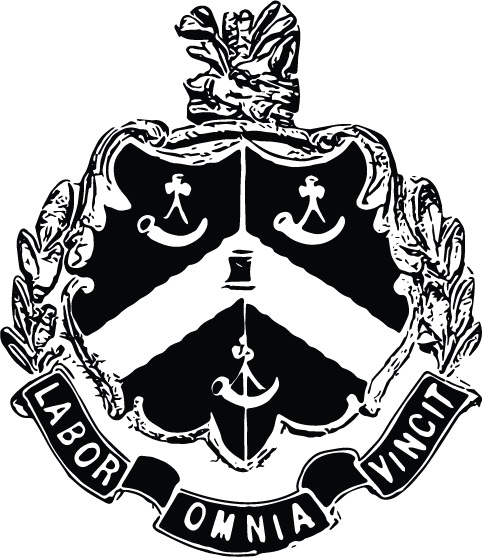
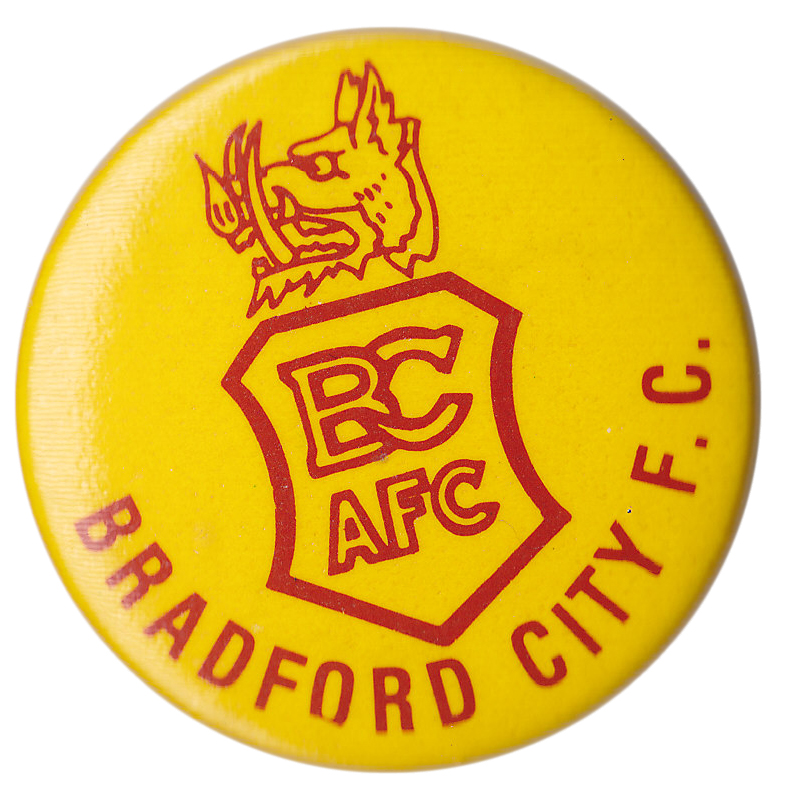
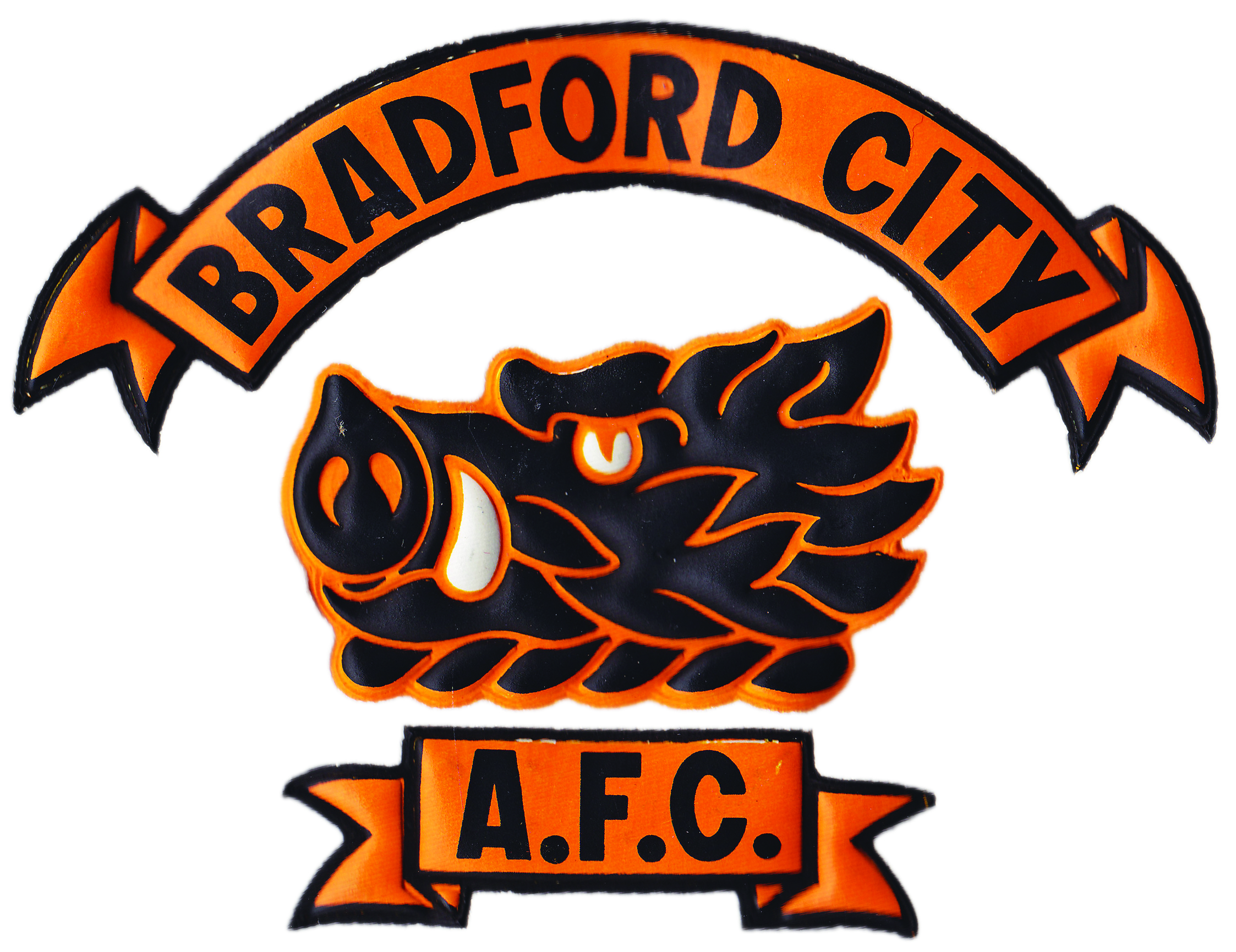
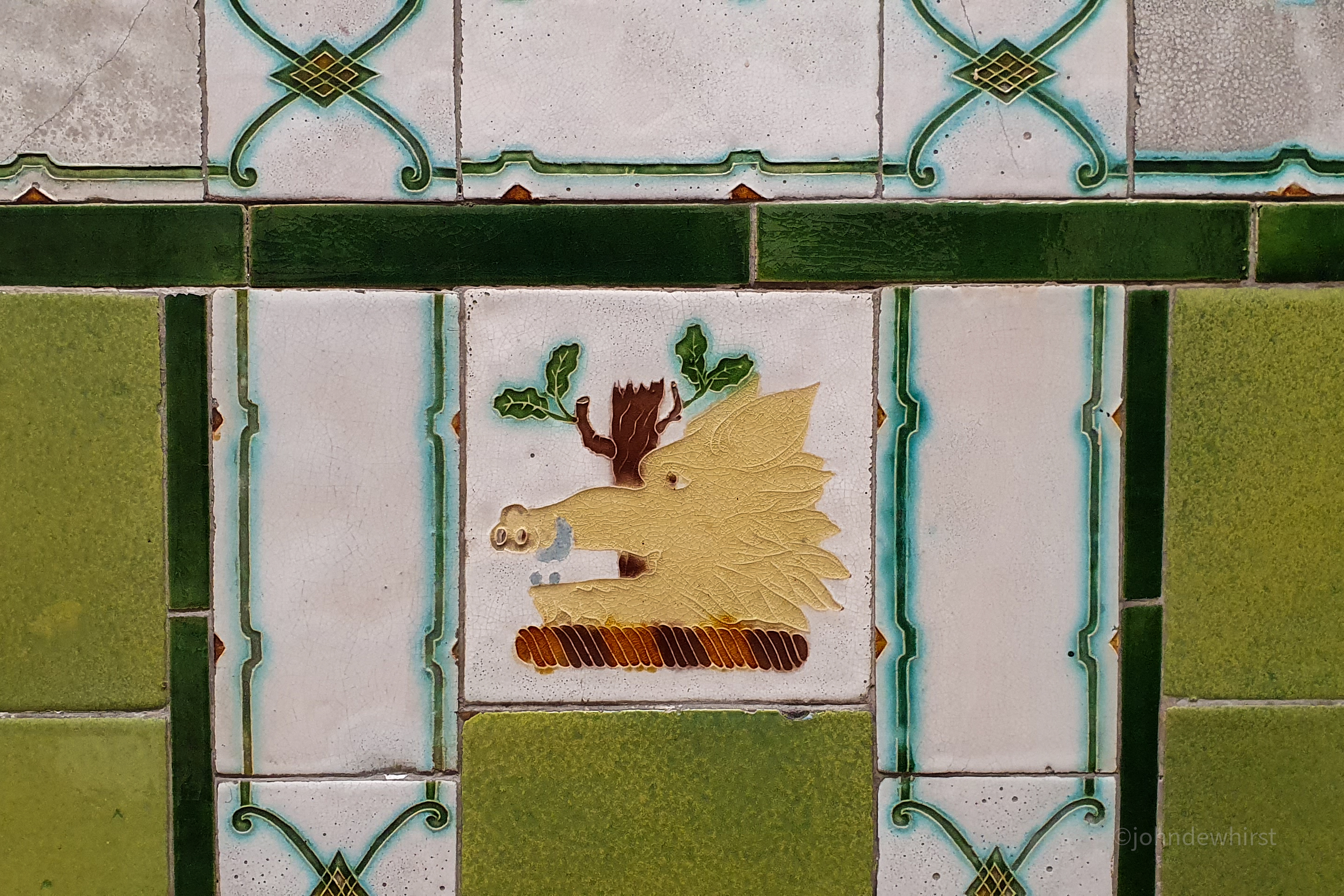
The (tongueless) boar’s head is derived from the old coat of arms of the city of Bradford – the one worn on the shirts of the 1911 FA Cup winning team. A boar’s head badge with BC-AFC monogram was adopted by Bradford City AFC as a club crest between 1968-74 and then 1985-91. (NB Chairman Stafford Heginbotham had introduced this design in 1968 and sponsored its return after the 1983 insolvency, initially adopted as blazer badges for club officials in 1984 and then used in club merchandise and printed matter.)

Scan_20200422 (61)

This blog provides some background to the Bradford civic crest and personal thoughts about how it could be revived as a sporting identity shared by all clubs of the district, irrespective of code or status.
bc1986 button

The boar’s head badge was essentially a civic identity and a statement of civic patriotism whereas the bantam identity signified a state of mind or attitude (and as I explained previously, was introduced for motivational purposes). To that extent the boar’s head and the bantam are entirely compatible.
boars head 1990 shirt badge.jpg

The following provides detail about Bradford’s coat of arms and is taken from my book A HISTORY OF BCAFC IN OBJECTS.

The Bradford coat of arms, 1908-74

The City of Bradford was awarded a coat of arms on 31st December, 1907 (albeit ten years after Bradford had been granted city status) and this was embraced by most local institutions. It became commonplace in the city, most visibly on the side of trams and buses. The ram and the angora goat signified the textile industry.
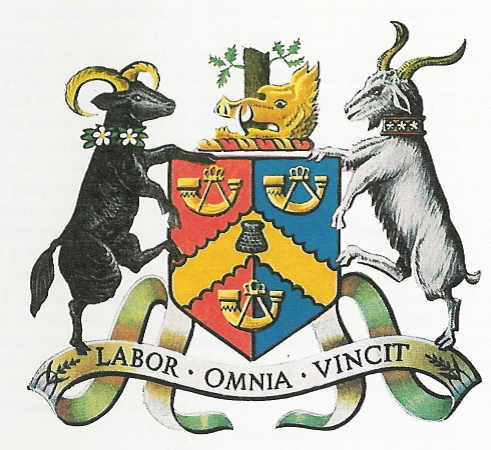
The original city of Bradford coat of arms as granted to the city in 1907.

The Bradford shield, 1847-1908

Bradford shield

Prior to 1908 the ‘badge’ of Bradford was the (tongueless) boar’s head and Bradford shield (without the ram or goat), the shorthand of which was the boar’s head. Despite the new coat of arms (above) the Bradford shield with boar’s head continued to be used, probably because the design was easier to apply but also well recognised.

In an article in The Bradford Antiquary in 1895, William Cudworth describes how the Bradford arms were derived from the Bradford family who settled at Warmfield, Heath, and Stanley near Wakefield but who had owned land in Bradford in the sixteenth century. The original Bradford shield dates from 1847 when Bradford was a county borough. On the shield are three hunting horns.

  • The Bugles

The bugles recall the traditional custom of blowing the horn on St. Martin’s day in the forenoon in the Market Place at Bradford. This commemorates part of the service in which the manor of Bradford was granted by John of Gaunt, the Earl of Lancaster, to John Northrop of Manningham.

  • The Well

The well in the middle of the shield is attributed to signify either the Bradford Beck or Boar’s Well.

  • The Boar’s head

The boar’s head refers to a 14th century legend about a dangerous boar which drank from a well in Cliffe Wood that terrorised the local population. The reward of a piece of land was offered by John of Gaunt to anyone who killed the boar. A hunter killed the animal but the carcass was too heavy to carry so he cut out the tongue as proof to claim the reward. However someone else found the body, cut off the head, and took that as evidence of his kill. The second person tried to claim the bounty first but the arrival of the original hunter with the tongue ensured that the rightful person got the prize.

  • Branch and leaves

The branch and leaves that accompany the boar’s head represent Cliffe Wood. As an aside, the location of Boar’s Well in Cliffe Wood (off Bolton Road) is visible from the main stand at Valley Parade.

The motto

According to The Bradford & Wakefield Observer; and Halifax, Huddersfield, and Keighley Reporter in October, 1847 at the time of incorporation the original motto of Bradford was intended to be ‘perseverantia vincit‘. However, the Heralds’ Office could not allow this as it was associated with the Bradford family from Arksey, near Doncaster and hence the alternative, ‘labor omnia vincit’.

The motto, ‘labor omnia vincit‘ – ‘hardwork overcomes all‘ came to symbolise a Bradford mindset in all aspects of life, sport included.

The significance of the Bradford identity
20190511_1145186144019250477243403.jpg

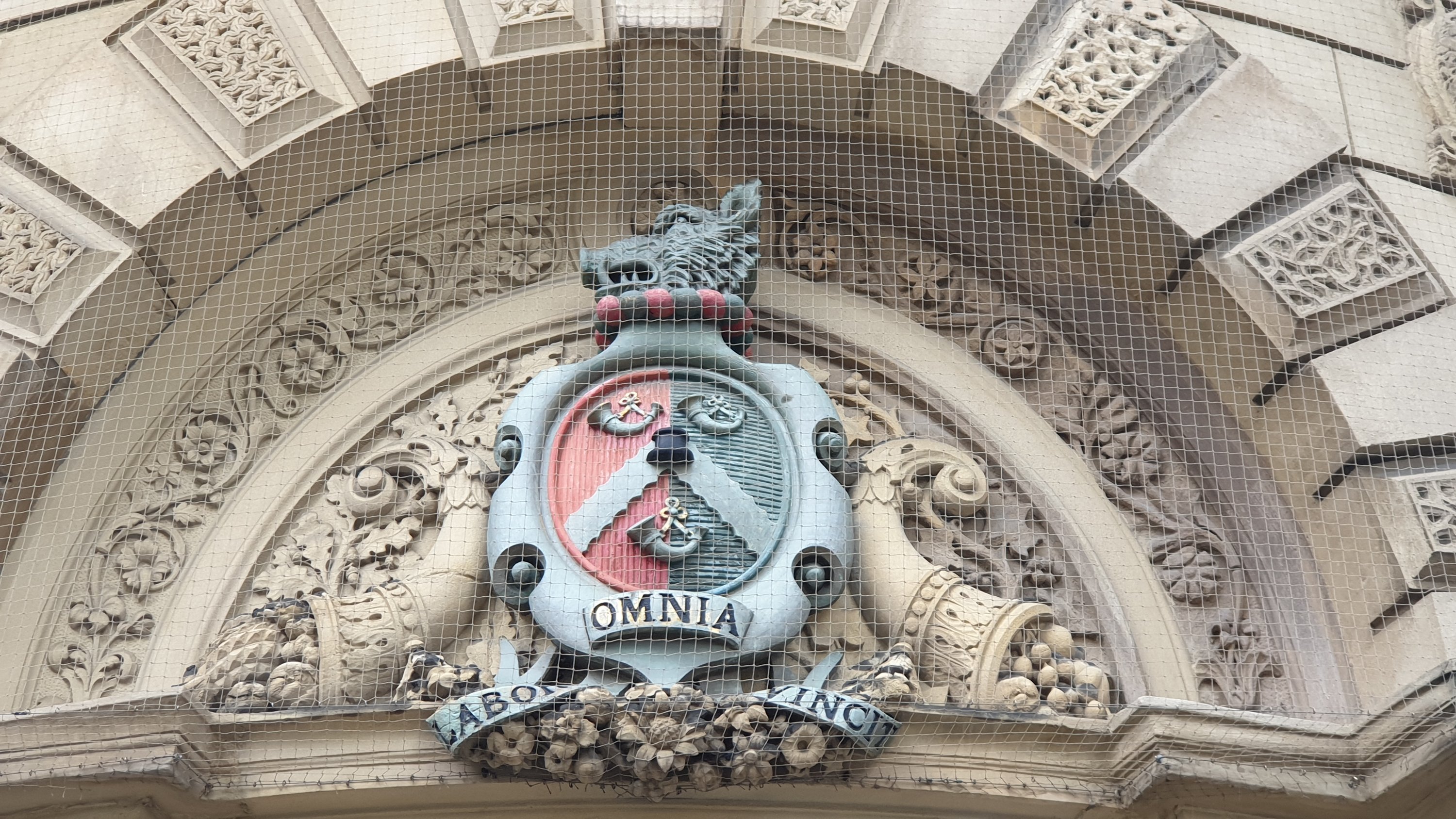
Evidence of this original Bradford identity dating from 1847 abound on surviving Victorian and Edwardian buildings in the city. The shield was instantly recognisable as being ‘of Bradford’ and its application can be seen across different areas of civic life. The boar’s head motif has been applied in the same way. I sense that they had considerable psychological value to Bradford given the circumstances of its rapid growth in the nineteenth century. For example rapid industrialisation had been associated with mass immigration and also dirty working conditions. They provided a degree of respectability whilst also fostering a common identity. I question whether this offers a lesson for today?

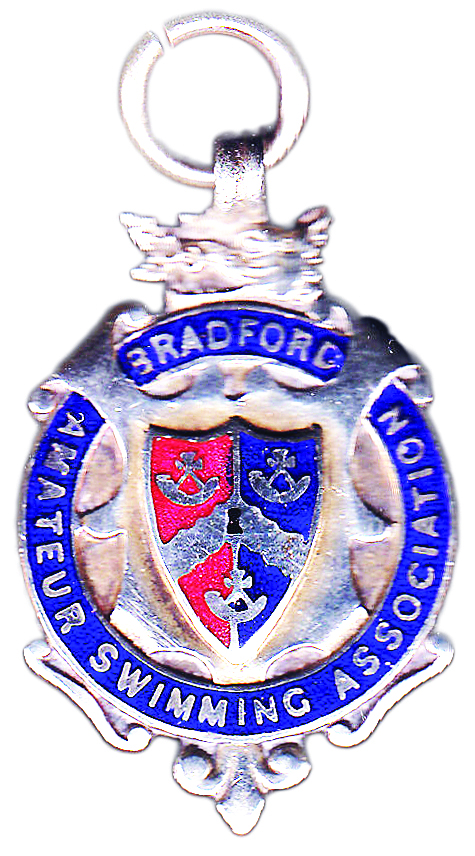
In the sporting world the Bradford shield was embraced by Bradford’s sporting clubs who were effectively ambassadors of the town/city. The provincial rivalry of northern towns extended beyond civic themes to the sports field and the Bradford shield was thus an expression of identity.
swimming

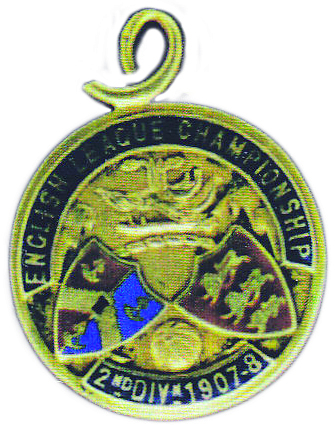
Enamel badges and medals with the Bradford shield were manufactured in considerable numbers by Messrs Fattorini of Bradford. Examples included the medals presented to the players of BCAFC’s successful League Division Two championship side of 1907/08. The application of a civic crest to a football medal was not unique, for example medals presented to the Everton players who were League champions in 1914/15 carried the ‘Liver’ bird of Liverpool.
1908 (1).jpg

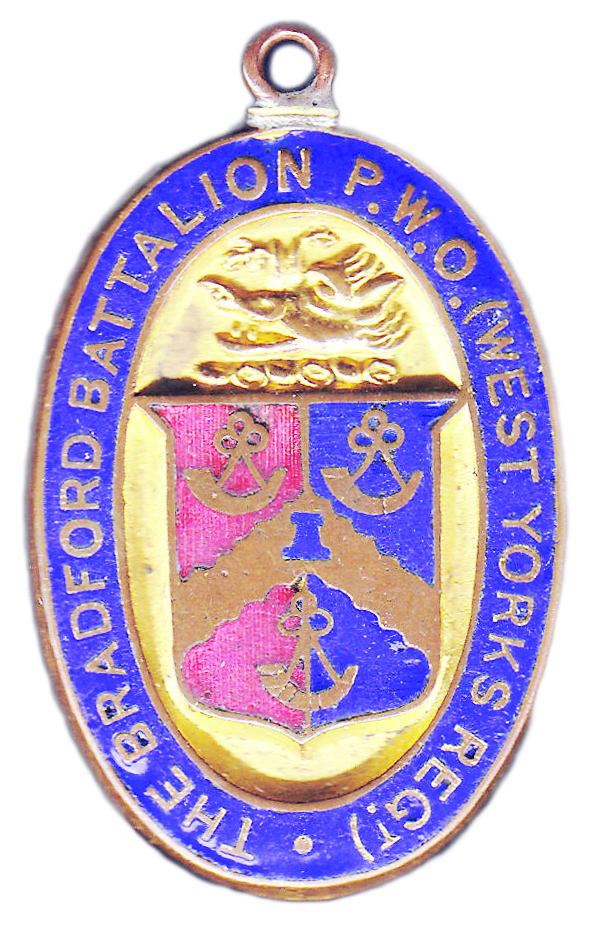
The Bradford shield and boar’s head was ominpresent. Just about every badge of every historic Bradford club / society / organisation adopted it, one of the best examples of which being the Bradford Pals in World War One.
west_yorks_btn.jpg

Could the civic identity be re-adopted by Bradford City AFC?

In recent years civic identities have been restored and actively incorporated in club crests; in that regard clubs as diverse as Wolverhampton Wanderers, Bristol City and Luton Town come to mind. However the original city of Bradford coat of arms was abandoned on April Fools’ Day 1974 with the introduction of the metropolitan district authority and the subsequent arms now incorporate identities from Keighley, Baildon, Bingley, Silsden, Queensbury and Shelf.

The obvious question therefore is that if BCAFC was to re-adopt a Bradford civic crest should it be the original December, 1907 version or the current? The traditionalist in me favours the former but the club can hardly encourage a retreat to the original city of Bradford boundaries given that a high proportion of its supporters live beyond them.
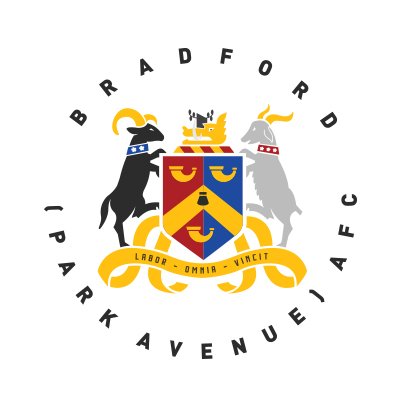
In 1988 the reformed Bradford Park Avenue revived the old civic arms as its badge. Ironically the original club had been liquidated in 1974, coincidentally the same year as the old coat of arms was abandoned. Yet whilst a critic could claim that this is anachronistic, the manner in which the identity is now being applied is anything but. In 2019 the club introduced a new version of the crest based on a new digital reworking consistent with the traditional dimensions. Few will argue otherwise that it looks good (compare to the original below).

Bradford Park Avenue has wholeheartedly embraced the traditional Bradford identity as part of a wider initiative to promote community sporting engagement. The totem is being promoted as part of its #onebradford campaign and there is a good chance that this will encourage further application of the boar’s head motif.
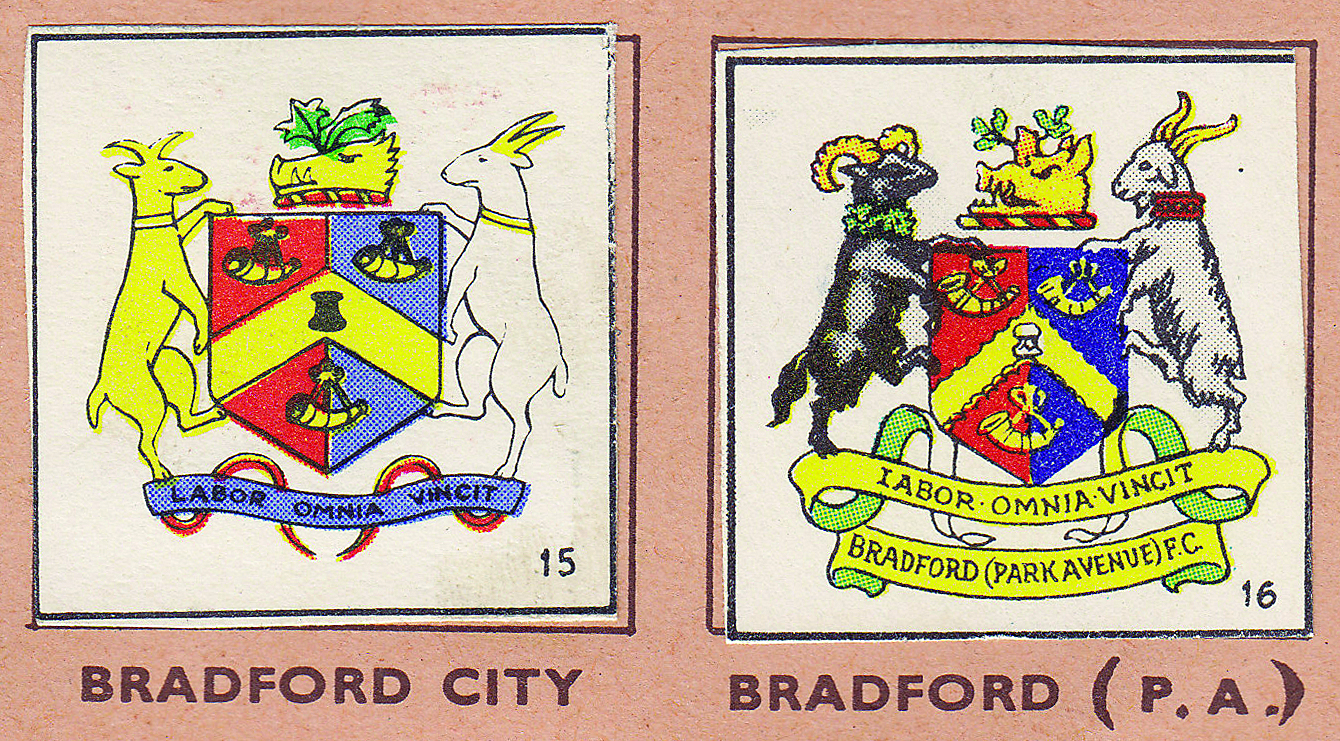
tiger badges hires.jpg

I am not convinced that the current Bradford District coat of arms (below) would offer an inspiring option for a new club crest. The most obvious civic identity that has been unchanged since 1974 is the boar’s head and I consider it a shame that it wasn’t kept as a club logo (being displaced in 1991). There is surely no reason why the club couldn’t have a formal civic crest but retain the ‘bantams’ identity as a shirt badge for instance.
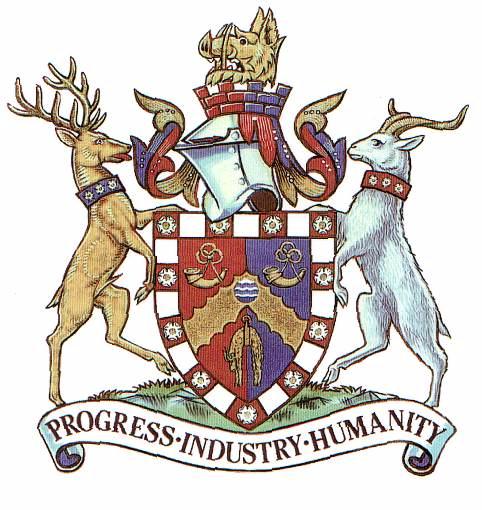
Bradford

The design of the boar’s head in the civic crest introduced in the first half of the 1980s (as above) was adopted first by Bradford Northern (below) and then by Bradford City in 1985 (refer to button badge at top of page).
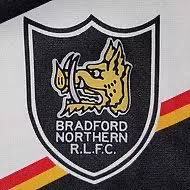
Bfd Northern

NB In 2017 Bradford Met Council itself undertook a digital reworking to simplify the lines of the current civic crest, the simplified version as below.
wordpress-post-simplified-logo1 BMDC 2017.png

A common Bradford sporting identity to drive regeneration

If sporting failure undermined self-belief and self-respect in Bradford in the second half of the last century, since the late 1990s we have seen glimpses of the potential that sport has to offer the district – its contribution to a feel-good factor can be gauged by the experience of the last four years at Valley Parade and the mood in the district at the beginning of this century when the Bulls dominated their code. Dare I suggest that sport has also demonstrated its capability to be a social unifier.

Bradford Council has discovered for itself that grandiose regeneration schemes have been singularly unsuccessful and nor is a ‘Greater Leeds’ rebranding exercise going to solve the city’s problems and deliver a magic solution. Crucially there has been no initiative to encourage a sense of pride and belonging. Anyone serious about trying to revive the Bradford brand can do worse than consider the potential of sport to generate a common identity of our own.

Whilst the lead flag bearers would inevitably be Bradford City (and hopefully Bradford Bulls, maybe even Bradford Park Avenue), there is no reason why junior sports teams in the city – from rugby to athletics to cricket – cannot be engaged as ambassadors for Bradford with all concerned wearing a common emblem. Another lesson of history was the enthusiasm with which Bradford clubs and societies at the turn of the twentieth century adopted the Bradford shield and coat of arms as their common identity – a tribute in part to the marketing nous of the Fattorinis who sold countless enamel badges.

Summary

The official crest of Bradford City AFC has traditionally been the coat of arms which was replaced in 1968 by the boar’s head crest. Between 1974-85 and then since 1991 the club’s crest has been of a ‘non-civic’ derivation (officially the bantams 1981-85 and then 1991 to date).

The club’s name – Bradford City – was selected to emphasise its civic roots and the fact that it represented the city of Bradford. A civic crest was thus consistent with this.

A boar’s head signifies being ‘of Bradford’ and is firmly a Bradford identity.

The bantam nickname was adopted to emphasise the state of mind / attitude of the club and its players as a motivational identity.

The club was simultaneously ‘of Bradford’ but also ‘bantams’.

There are other instances with clubs with a strong civic identity alongside a distinctive nickname – for example Newcastle United / Magpies or Bristol City / Robins. For BCAFC to adopt a civic crest alongside the bantam signifies that the club represents Bradford and declares the culture of the club (ie underdog fighters). It is entirely compatible to have a civic crest alongside a nickname identity.

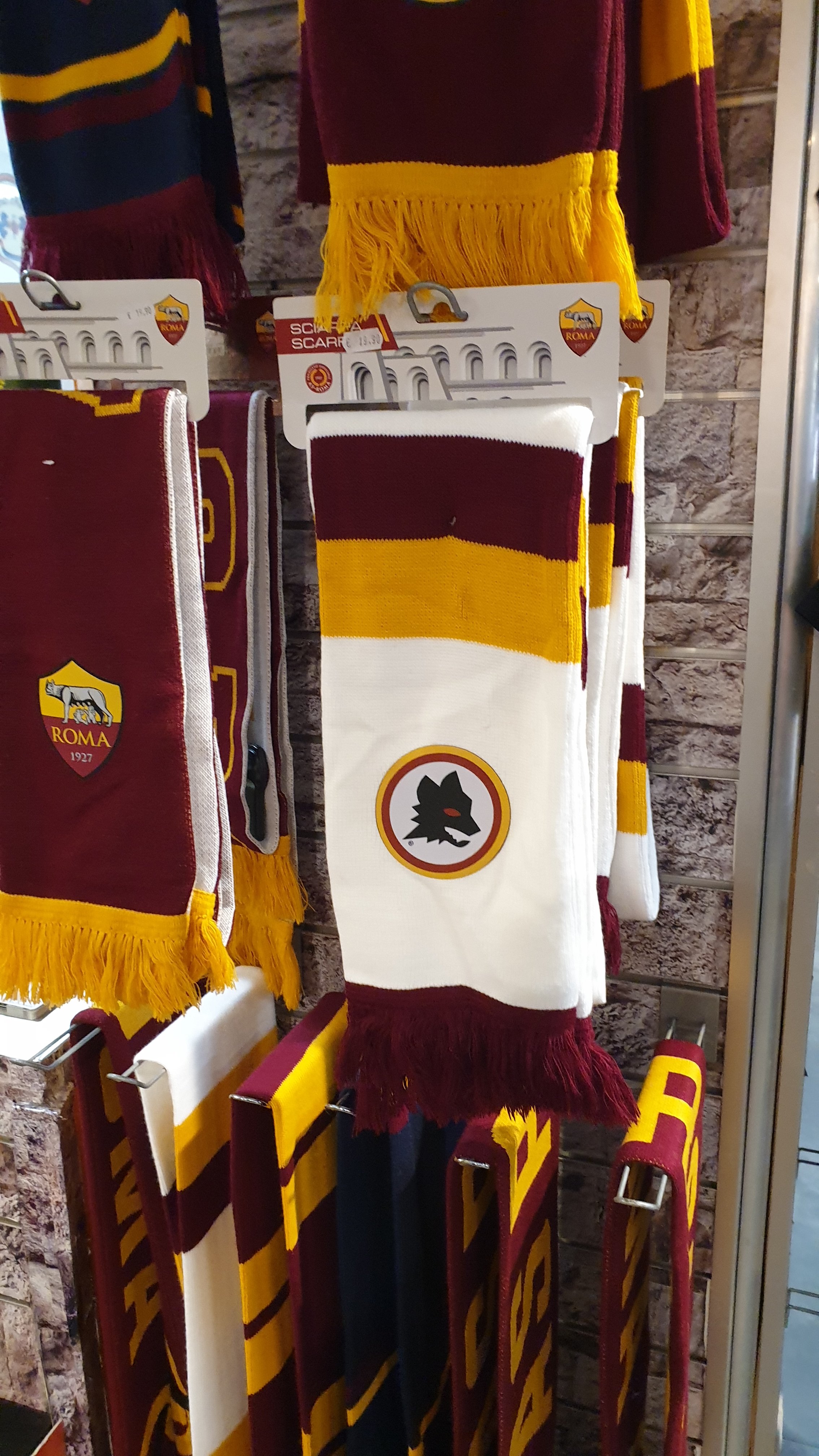
BCAFC could adopt a formal civic crest yet still retain a bantams identity as a shirt badge and/or for merchandising. Such a dual badging approach is far from unique as the claret and amber example of Roma FC demonstrates.
The boar’s head – as a Bradford motif – has wider potential as a shared identity for all Bradford sports clubs and could be encouraged much in the same way as the Manchester bee has been rediscovered to foster a common identity among people living in Manchester. (In terms of regeneration, Bradford’s problem is as much that of identity as image. The boar’s head is a longstanding Bradford identity with strong historical heritage that should not be overlooked or forgotten.)

Manchester has rediscovered its bee, isn’t it time for Bradford to revive its own boar’s head as a common Bradford brand?

Adoption of a boar logo by Bradford Park Avenue in 2019:
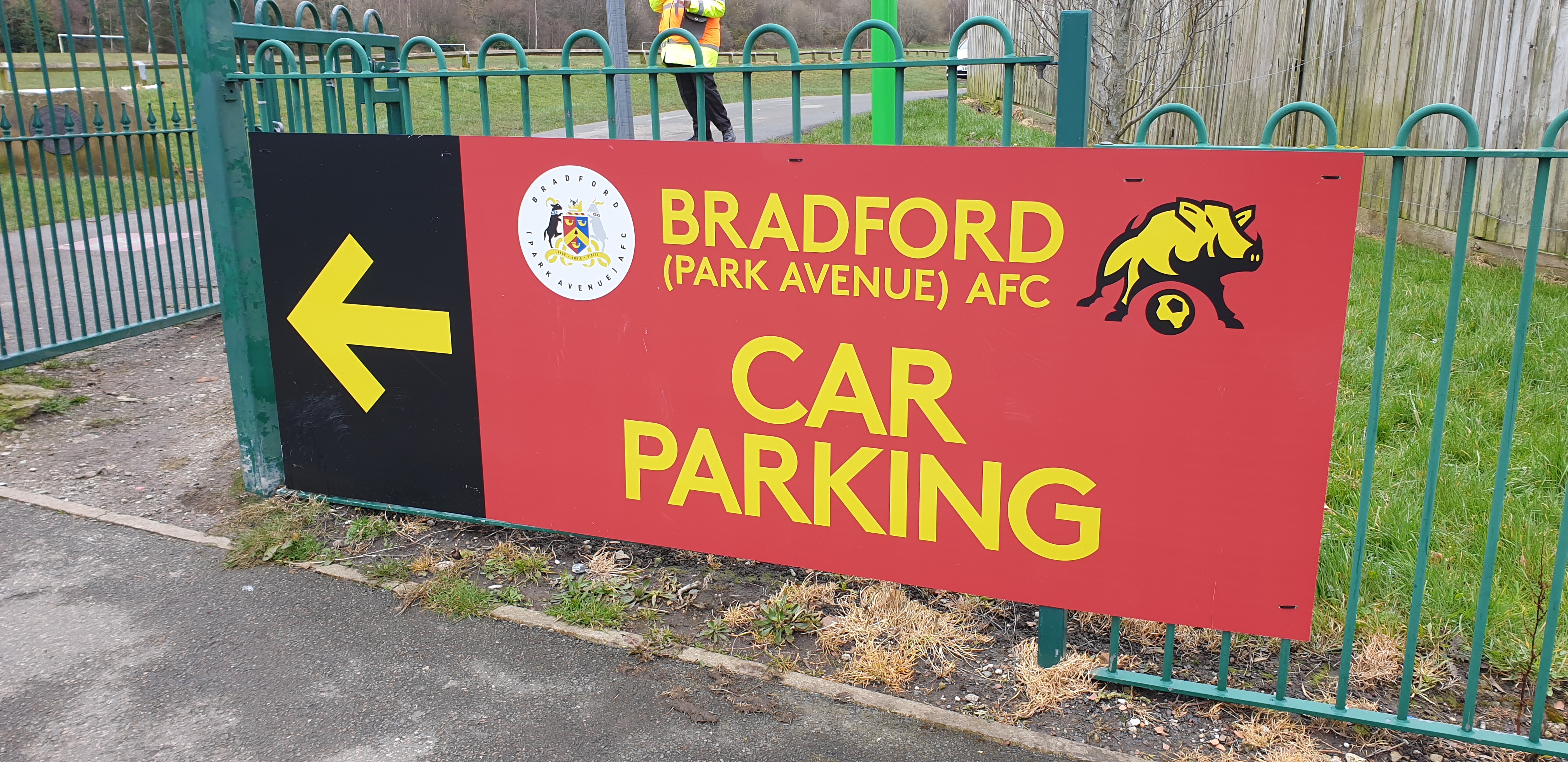
20200314_131859

LINK HERE to BBC feature about the boar’s head

By John Dewhirst

(My books ROOM AT THE TOP and LIFE AT THE TOP narrate the origins of sport in Bradford and how sport played a big part in shaping a distinctive Bradford identity before World War One, a phenomenon that I strongly believe has relevance today.

Thanks for visiting my blog. For details about my books in the BANTAMSPAST History Revisited series which tell the history of sport in Bradford – and in particular football visit http://www.bantamspast.net The books seek to explain why things happened as they did instead of simply recording what occurred and readers may be surprised at the extent to which they contradict many of the myths and superficial narratives that have circulated previously. You won’t get fancy art school graphics but you will find substance and historical accuracy in the content. Of course if you prefer an abundance of pictures accompanied by text written for a Year 5 schoolchild you’ll find them ball-achingly boring.

Tweets: @jpdewhirst and @woolcityrivals

Features on the BCAFC identity:

Application of the Bradford civic crest

How Bradford City became known as the Bantams
The ‘bc’ logo of 1974-81

Bantam identity of the 1980s

The BSA Bantam character

The City Gent

Toilet decor in City Hall, Bradford
The origins of the Bradford City nickname, ‘The Bantams’

How and why Bradford City came to be called the Bantams… and why the identity is equally relevant today.

My column in the BCAFC programme v Rochdale, 9 December, 2017:

One of the most common questions asked about the history of Bradford City is how we came to be called ‘The Bantams’. Pictured below, matchday mascot ‘Billy Bantam’.

JPD03816x

If you go back to the nineteenth century, the nicknames ‘Valley Paraders’ and ‘Paraders’ were frequently used in press reports from around 1890 to describe Manningham FC. During the early history of Bradford City the club was variously referred to as ‘The Citizens’ and ‘The Paraders’ but all of this was the product of journalistic licence as opposed to any attempt by the club itself to encourage nicknames.

After promotion to Division One in 1908 it was considered appropriate for the club to follow the fashion among other leading sides and adopt a nickname. The suggestion that the club needed a new good luck charm to replace a lost silver horse-shoe – and that it was the idea of (club director) Tony Fattorini’s daughter – makes it seem that the choice of a bantam identity was almost accidental and arbitrary.

On the contrary it was a calculated branding strategy by Fattorini, one of the leading sporting goods entrepreneurs of his age. The characteristic of bantams as small but fearless fighting creatures suited the self-image of the club and typified its personality. Manningham FC had always considered itself as a challenger to much bigger sides (in particular Bradford FC at Park Avenue) and Bradford City had inherited the same sense of being an underdog. As the club struggled to consolidate in the first division, the notion of bantam fighting spirit was equally motivational for players and supporters alike.

The origins of the ‘bantams’ identity can thus be traced to November, 1908 and the timing at the end of the month came when Bradford City were adrift at the bottom of Division One with only one win out of 13 games. Introduced for the fixture with League leaders, Everton at Valley Parade the bantam identity proved totemic and inspired a recovery: a draw with Everton was followed by two successive victories at the beginning of December.

In the context of the age, a bantam metaphor had a cultural resonance. For a start, bantams were popular show birds and thus well-known at the time as attractive yet fierce birds. People were also familiar with the practice of journalists – and newspaper cartoonists – portraying two competing sports teams as animals in combat. For example I have seen specific instances of local journalists referring to a less-fancied team (particularly in a cup contest) as bantams. And even if the practice had been outlawed since 1835, covert cock-fighting contests still took place. In other words, the symbolism of bantams as underdog fighters would have been understood.

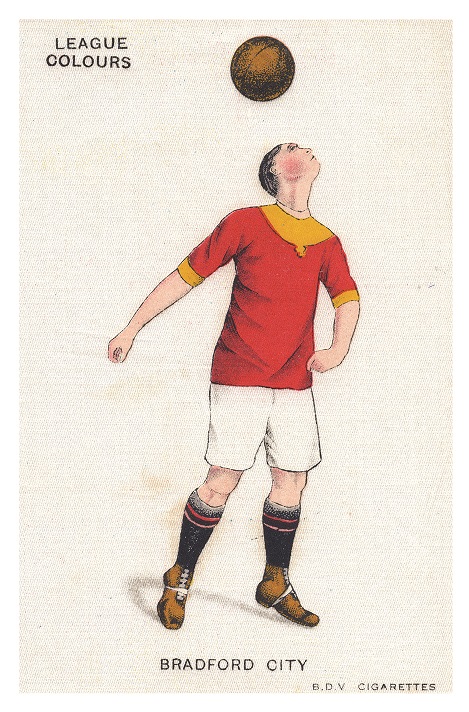
The naming of the club in this way captured the imagination of the City faithful, no less the players who managed to avoid relegation on the last day of the campaign. The following season a new shirt was adopted by the club with a yoke collar said to resemble a bantam’s plumage – the same shirt that was worn when City won the FA Cup in 1911. Nevertheless the club continued to be referred to as the Paraders or the Citizens in newspaper reports with a bantam representing more of a totemic mascot.

The club’s handbook for the 1909/10 season similarly featured a bantam on its front cover and the drawing was based on a Staffordshire breed descended from a fighting bird that was popular among bird fanciers.

bantam graphic 1909.jpg

Although hens were known to have been kept at Valley Parade in earlier years, there is no record of the club having adopted a live bantam as a mascot. Nevertheless, there are reports from before World War One that refer to bantams being taken to games by supporters. One example was in February, 1909 when a ‘dummy bantam’ was put on the crossbar at the Kop End during the half-time interval of the FA Cup tie with Sunderland. It was reported that this remained in place for the second half and a week later when City visited Roker Park for a League game, a bantam was released on the pitch.

The bantam identity inspired a new playing shirt at the beginning of the 1909/10 season, as later worn in the 1911 FA Cup final. Note the resemblance of the yoke on the shirt to the bantam plumage.

1909 BDV silk

*** Coventry City adopted the same ‘Bantams’ nickname in December, 1908. According to Wikipedia ‘Coventry were first called the Bantams in December, 1908 after the local newspaper noted that they were one of the few clubs who did not have a nickname. Being the lightweights of the Southern League, the Bantams was suggested and stuck with the press and supporters.’ Around this time it was common among English clubs to look for nicknames / mascots and it is not inconceivable that the choice of Bantams was copied from Bradford City who were then a much bigger club than Coventry City (elected to the Southern League in 1908 and only elected to the Football League in 1919).

Read more about the origins of the different crests adopted by Bradford City AFC in my book A HISTORY OF BCAFC IN OBJECTS.

You may also be interested to read my feature on Bradford City AFC & the Boar’s Head identity

Feature on VINCIT about origins of City and Avenue nicknames

Other features on the BCAFC identity:

Application of the Bradford civic crest

How Bradford City became known as the Bantams

The ‘bc’ logo of 1974-81

Bantam identity of the 1980s

The BSA Bantam character

The City Gent

  • Thanks for visiting my blog. Scroll down for details about my books in the BANTAMSPAST History Revisited series which tell the history of sport in Bradford – and in particular football. The books seek to explain why things happened as they did instead of simply recording what occurred and readers may be surprised at the extent to which they contradict many of the myths and superficial narratives that have circulated previously. You won’t get fancy graphics but you will find substance and historical accuracy in the content. Tweets @jpdewhirst

If you are interested in Bradford sport history visit VINCIT: https://www.bradfordsporthistory.com

Long distance football

From the matchday programme, Bradford City v Plymouth Argyle FAC R2 2nd December, 2017:

This is the first time that Bradford City and Plymouth Argyle have met in the FA Cup. Games between our sides have been relatively few in number but on this occasion, there is a certain familiarity about the encounter given the League fixture only three weeks ago. Credit is due to those visiting supporters who have repeated the 660 mile round trek to Bradford today.

Long distance travel is part and parcel of being a Plymouth supporter although it probably helps that the products of the club’s local sponsor are sold in most motorway service stations. The furthest that Bradford City have ever had to travel for an FA Cup game was in December, 1947 when we were drawn away at Bournemouth & Boscombe in the second round (a 0-1 defeat). By road, Bournemouth is 275 miles distant but seventy years ago the journey was made by train and it appears to have been a particularly enjoyable occasion notwithstanding the result. In fact, there is surviving film of the trip which shows the Bradford City players accompanied by the directors and a small number of supporters.

The film was commissioned by former chairman, Bob Sharp whose fund-raising efforts (and personal contribution) during the war years kept the club solvent. Twenty years ago, the footage was shown at Pictureville in Bradford but can nowadays be accessed via the Yorkshire Film Archive website.

Older supporters have their own stories about trips to Plymouth and one in particular stands out. In February, 1978 we were due to play Argyle in a third division fixture. City were rooted at the bottom of the table and the game with Plymouth who were a few places above us was something of a four pointer (there being two points for a win). Despite poor away form the game was eagerly anticipated because the City team had been strengthened by a couple of record signings, Mick Wood and David McNiven whose transfers from Blackburn (£15,000) and Leeds (£25,000) respectively had been funded by the club’s lottery proceeds.

Sadly the game was abandoned – the consequence of a major snow storm – with City leading 1-0. The fun began shortly after when the City Travel Club bus got stranded in the snow. Ian Hemmens was one of the fans there that day and recalls that ‘we were accommodated in the Royal Marines barracks at Devonport until the Wednesday following. Before mobile phones we made the headlines on BBC Look North to confirm our safety… all in all, an eventful few days!’ The rearranged game took place at the beginning of May, 1978 by which time we were already relegated and the 0-6 defeat is best forgotten.

I first travelled to Plymouth in February, 1983 and having made my way to the town from London arrived much sooner than the other City supporters travelling with the CTC’73 coach. I bought a programme in the Home Park shop and was greeted by the Argyle club secretary who gave me a tour of the ground. I will never forget the friendliness of the people and confess that I have always had a soft spot for Plymouth – as well as a liking for Ginster cornish pasties.

John Dewhirst

Thanks for visiting my blog. Scroll down for details about my books in the BANTAMSPAST History Revisited series which tell the history of sport in Bradford – and in particular football. The books seek to explain why things happened as they did instead of simply recording what occurred and readers may be surprised at the extent to which they contradict many of the myths and superficial narratives that have circulated previously.

If you are interested in Bradford sport history visit VINCIT: http://www.bradfordsporthistory.wordpress.com

Civic Identity

My column published in Bradford City programme on 21 November, 2017 v Scunthorpe United:

On 31 December, 1907 the city of Bradford was granted a formal coat of arms which remained the civic crest of Bradford until the formation of the metropolitan district in 1974. It comprised the red/blue Bradford shield with three bugles, a boar’s head on top with a ram and a goat on either side. Its replacement (which is still used) was derived from an amalgam of characters from the constituent parts of the new authority, the most obvious change being the stag of Keighley and a knight’s helmet.

In 1908 the Bradford arms were featured prominently on the new Midland Road stand. Across at Park Avenue, the grandstand constructed in 1907 incorporated the traditional Bradford shield on the two end gables. Both clubs were eager to portray themselves as representatives of Bradford and in 1909 the coat of arms began to appear on the BCAFC club shirt, famously worn when the club won the FA Cup in 1911. Avenue similarly adopted the badge (although not on shirts).

The Bradford coat of arms remained the official club crest at Valley Parade until 1966 when it was replaced by a boar’s head atop a shield containing a BC-AFC monogram. In turn that was retained until 1974 when replaced by a modernist graphic that lasted only 7 years. Anxious for a fresh image, chairman Bob Martin revived the club’s historic bantam identity in December, 1981 and with the exception of a revival of the boar’s head (with the BC-AFC shield) between 1985-91, a bantam has continued to be the main feature of the club crest ever since.

Despite the boar’s head (without a tongue) being a traditional emblem of Bradford, derived from the legend about the killing of the wild boar in Cliffe Wood (on the hillside opposite Valley Parade) in the 14th century, it is no longer used by either of the city’s two senior clubs, City or Bulls (the latter who relaunched itself in the Super League in 1996 with a new identity).

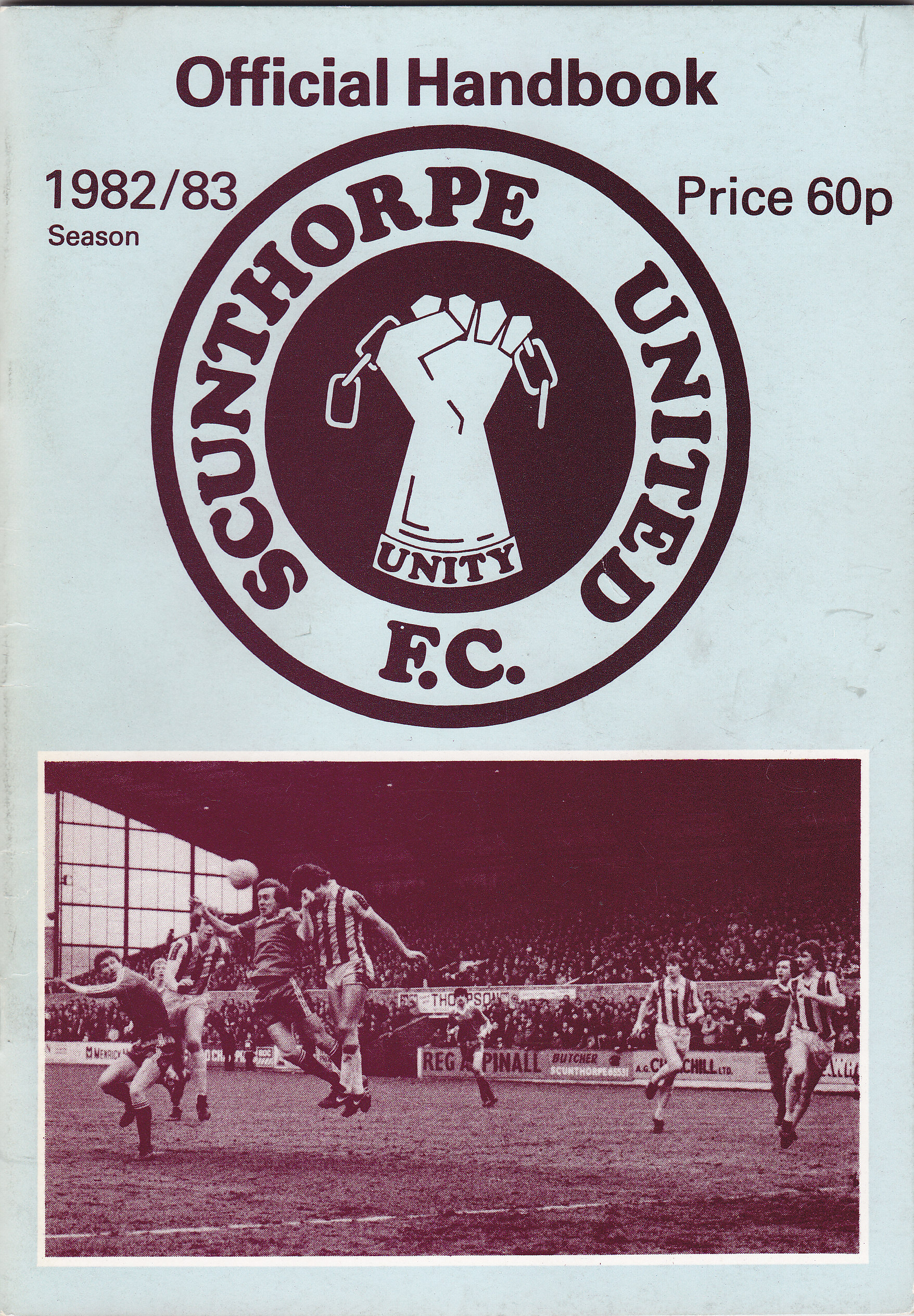
Bradford City is not the only club to have spurned a civic identity. The traditional crest of Scunthorpe United was similarly the civic coat of arms, the central feature of which was a chain of five links representing the constituent villages that formed the town. Desperate for a makeover, Scunthorpe United advertised a competition for a new crest in the club programme for the fixture with Bradford City on 3rd October, 1981 and the following season it abandoned its all-red strip for claret and blue whilst also introducing a radically different badge.

That new emblem was the so-called ‘Unity fist’ that incorporated the chain of the old crest in a clenched gauntlet with the epitaph ‘unity’. The club retained the design until 1990 when it was dropped in favour of the current style of badge that features an iron girder. I understand the ‘Unity fist’ was abandoned on account of being considered unsuitable as a family brand but was revived in 2014 on the club’s third shirt following a campaign by Scunthorpe supporters for a return to a ‘traditional’ design.

scunthorpe badge 1982What Scunthorpe fans might not appreciate is that I was the person who designed their ‘Unity fist’ badge and that it was sketched on a sandwich wrapper en route home to Bradford on a supporters’ coach. It spoke volumes about amateurish branding in 1981 that Scunthorpe should rely upon my efforts but I am flattered that the design achieved popular acclaim and its place in the history of our visitors today.
  • Thanks for visiting my blog. Scroll down for details about my books in the BANTAMSPAST History Revisited series which tell the history of sport in Bradford – and in particular football. The books seek to explain why things happened as they did instead of simply recording what occurred and readers may be surprised at the extent to which they contradict many of the myths and superficial narratives that have circulated previously. You won’t get fancy graphics but you will find substance and historical accuracy in the content! Tweets @jpdewhirst
  • More here about the BCAFC boar’s head crest
  • If you are interested in Bradford sport history visit VINCIT: www.bradfordsporthistory.com

The military connection

The following was published in the Bradford City AFC matchday programme on 11th November, 2017 (Plymouth Argyle):

When I undertook my research on the origins of football in Bradford, it became apparent that the historic links between sport and the military in Bradford had long since been forgotten. This is ironic given the constant reminder provided by the traditional club colours of City and Avenue / Northern having been derived from military connections. My belief is that after the carnage of the Great War the military heritage tended to be overlooked, not necessarily for ideological reasons but because it was probably seen as outdated, if not irrelevant as people looked to the future. Nonetheless it is unforgivable that the military links have been forgotten and surprisingly overlooked by aspiring academics.

The early history of Manningham FC – established in 1880 and the predecessor of Bradford City AFC in 1903 – had strong links with the citizen soldiers of Bradford. The generation of men involved with establishing ‘football’ clubs in Bradford during the second half of the 1870’s was typically connected with the Volunteer – or territorial – army units in the town and ‘athleticism’ in the widest sense was considered to be a form of military training by virtue of its health benefits.

The Volunteers had been established in 1859 to provide a home defence force to protect the UK from invasion and in Bradford the principal units were the 3rd Yorkshire (West Riding) Rifle Volunteer Corps (3rd YWRRVC)and the 2nd Yorkshire (West Riding) Artillery Volunteers Corps.

One reason for the popularity of the Volunteers was that they provided recreational opportunities and in particular access to new sporting activities such as gymnastics and ‘football’ (which in Bradford meant rugby). There was even a dedicated side, Bradford Rifles FC established in 1875 which comprised of a high proportion of Bradford Caledonian FC players (one of the oldest clubs, established in 1873 and also the biggest), a number of whom became associated with Manningham FC in leadership roles.

This connection encouraged a natural sympathy towards the military but so too did the proximity of Valley Parade to Belle Vue barracks where the 3rd YWRRVC was based. The facilities were used on various occasions (in addition to the former artillery barracks on Valley Parade) for meetings as well as changing and training facilities by Manningham FC and the infant Bradford City club.

The dominant political culture at Valley Parade and Park Avenue prior to World War One was unquestionably Conservatism and it was second nature for the two clubs and their membership to espouse patriotism. A good example of this was the decision to adopt claret and amber in 1884. These were the regimental colours of the West Yorkshire Regiment which had been established in 1881 from the 14th Regiment of Foot as part of a reorganisation of the military to assign a fixed recruiting area. In the same year the Childers reforms had resulted in the 3rd YWRRVC becoming the volunteer battalion of The Prince of Wales’s Own (West Yorkshire Regiment).

The Manningham FC founders comprised men who had served in the Bradford Volunteers in the 1870s, drilling and parading alongside one another at Belle Vue Barracks and Cottingley Terrace. When, four years after the club’s founding, they came to change its colours in April 1884 against the backdrop of the Sudan crisis and the Gordon Relief expedition, they would naturally have reached for a colour identity rooted in the patriotic-military culture in which their own adult social identity had been formed. Whether claret and amber matched any specific regiment’s regulation facings at that moment is almost beside the point — the decision was symbolic, not heraldic. It was a statement of where these men saw themselves standing in relation to the Bradford civic-patriotic tradition: with the Volunteers, with the garrison at Belle Vue, with the town’s long martial heritage stretching back to the original 1794 scarlet-and-buff that had been worn by the original Bradford Volunteers of the French Revolutionary era.

The occasion of Manningham FC adopting claret and amber  in 1884 thus came at a time of patriotic fervour associated with the Sudan crisis and the excitement that Bradford men might actually go to war. Arguably it was the same enthusiasm thirty years later with spectators at Valley Parade being actively encouraged to enlist to fight on the western front.

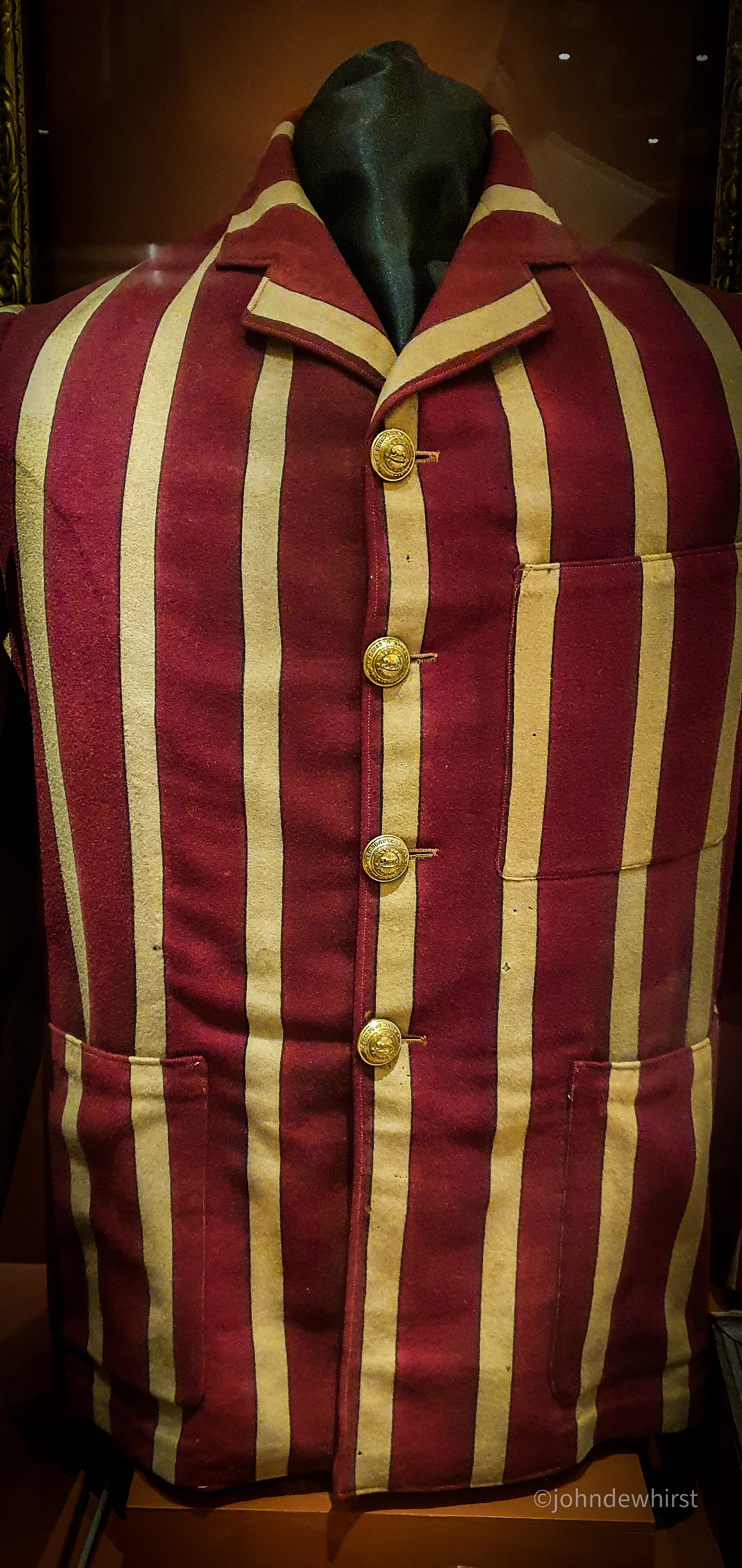
In 1884 the new Manningham shirts were hooped with the width of the claret being twice the width of the amber, consistent with the blazer design below (stripes apart).

The traditional sporting colours of Bradford were red, amber and black whose origin can be traced to the original Bradford Volunteers of the Napoleonic era.

Further detail of Bradford’s military history and the circumstances surrounding the adoption of claret and amber is told my book ROOM AT THE TOP, available from Bantamspast.net 

This feature published on VINCIT tells the story of the Bradford Rifles

John Dewhirst

Bury FC has a similar military link to claret and amber (link to Bury blog)

  • Thanks for visiting my blog. Scroll down for details about my books in the BANTAMSPAST History Revisited series which tell the history of sport in Bradford – and in particular football. The books seek to explain why things happened as they did instead of simply recording what occurred and readers may be surprised at the extent to which they contradict many of the myths and superficial narratives that have circulated previously.
  • If you are interested in Bradford sport history visit VINCIT: http://www.bradfordsporthistory.wordpress.com

A sporting jacket in the regimental colours of the West Yorkshire Regiment from c1900 on display at York Army Museum.

The attraction of the FA Cup

My feature in the match day programme, Bradford City vs Chesterfield FA Cup Round One, 4th November, 2017

Attendances for games in the early rounds of the FA Cup are nowadays a fraction of league gates, a phenomenon that is not unique to Bradford City. And yet, prior to the 1980s at least, the FA Cup was always certain of attracting decent crowds to Valley Parade even for first round contests. In fact, the FA Cup was invariably a highlight of the season and the draws eagerly awaited. From a financial perspective, success or otherwise in the FA Cup could dictate profit or loss over a season.

Cup campaigns feature prominently in the history of Bradford City AFC, most notably triumph in the FA Cup Final of 1911 and celebrated giant-killings including that of Chelsea in 2015. In this context it is disappointing that our game with Chesterfield will be attended by so few, particularly given bumper average league attendances.

The predecessor club at Valley Parade, Manningham FC also had a strong cup-fighting tradition and its original rise to prominence was derived from performances in the Yorkshire Challenge Cup (rugby union competition) during the 1880s. The most celebrated cup achievement of Manningham FC was when the club reached the final in 1885 only to be defeated by Batley.

Manningham FC were defeated by Bradford FC at Park Avenue in the Yorkshire Cup in March, 1884 and again two years later. When the clubs were drawn together in March, 1887 it had all the makings of an ultimate grudge confrontation. The night before that game was due to take place there was a heavy snowfall in West Yorkshire and the match at Park Avenue was called off. However it subsequently transpired that Bradford FC officials had made no effort to clear the pitch and despite the weather, other games had taken place elsewhere in the county. It was alleged that the Bradford club had deliberately sought to get the tie re-arranged knowing that the Manningham FC players would be unable to play mid-week. Bradford FC was censured by the Yorkshire RU and the controversy ended in the high court with the club withdrawing from the Yorkshire Cup competition for the next two seasons in protest.

The event became enshrined in Bradford sporting legend and helped define the subsequent rivalry of the successor soccer clubs. The historic allure of the FA Cup in Bradford was enhanced by the prospect that City might be drawn against its Park Avenue rivals. Indeed, I confess that I held out hope that there could have been a meeting between Bradford City and the reformed side at either Valley Parade or Horsfall in the first round.

City and Avenue met in the FA Cup on three occasions (all at Park Avenue) with City being victorious twice. In March, 1920 both City and Avenue were defeated in the quarter-finals, the nearest that the city ever came to its sides meeting in the final stages of the competition.

Chesterfield FC have previously been drawn against Bradford City in the FA Cup three times and only once have City been winners. In November, 1903 they were in fact the first club to defeat Bradford City in the competition, winning 2-1 at Saltergate in the fourth qualifying round.

In January, 1938 second division Chesterfield defeated City in a second replay of the third round tie. It was a result that caused considerable disappointment in Bradford because having been relegated to Division Three (North) in 1937, the City club had hoped that the FA Cup could provide an opportunity for glory and financial relief. Non-League Walker Celtic had caused a shock by drawing at Valley Parade in the first round but the 11-3 victory in the replay set a club record in the competition. Victory at Wrexham in the second round then led to the tie with Chesterfield. The first game at Valley Parade attracted a crowd of thirteen thousand but the second replay at Bramall Lane was watched by 21,061.

The last time Chesterfield played Bradford City in the FA Cup was in November, 1975 when the visitors were defeated 1-0 at Valley Parade in the first round. The attendance on that occasion was 4,352 and it is sobering to note that there were only two league games that season which attracted a higher crowd. The defeat of third division Chesterfield by Bradford City (who were then members of Division Four) proved the start of a memorable cup run and the club progressed to the quarter finals and eventual defeat by Cup winners Southampton. Few of us expected that feat to ever be repeated and yet in 2014/15 City once again reached the last eight of the competition, reason enough as far as I am concerned that the FA Cup does not deserve to be overlooked.


John Dewhirst

  • Thanks for visiting my blog. Scroll down for details about my books in the BANTAMSPAST History Revisited series which tell the history of sport in Bradford – and in particular football. The books seek to explain why things happened as they did instead of simply recording what occurred and readers may be surprised at the extent to which they contradict many of the myths and superficial narratives that have circulated previously.
  • If you are interested in Bradford sport history visit VINCIT: http://www.bradfordsporthistory.wordpress.com 

The Grand Bazaar of October, 1927

My feature published in the BCAFC programme vs Charlton Athletic on 21 October, 2017.

Among the various relics in my collection of Bradford City memorabilia, one of my favourites is a book published in 1927 to accompany the grand fund-raising bazaar in October of that year.

It is an evocative publication with illustrated adverts of long gone Bradford businesses that are equally fascinating as the editorial content. The rear cover features the FA Cup trophy adorned with claret and amber ribbons and the wistful epitaph ‘Glorious 1911’, a reminder of a former era of glory. In addition to a statistical record it includes a history of Bradford City written by the journalist William Sawyer. The edition was updated in 1953 to mark the club’s jubilee but incredibly, it remained the only account of the history of the club until 1988.

Organised by the Bradford City Supporters’ and Shareholders’ Association, the bazaar was an initiative to restore the finances of the parent football club which had been relegated to Division Three (North) after a calamitous season in 1926/27 during which the team had won only 7 of its 42 league games. New money was desperately needed to provide a degree of stability and recruit players. In May, 1927 supporters had been told that the club desperately needed £5,000 to remain solvent and there had been concerted effort during the summer to promote the sale of season tickets.

Lottery legislation restricted options and bazaars were therefore a common response to a financial crisis. Halifax Town had had one in 1923 and the supporters club at Park Avenue likewise in November, 1925 which raised £1,000. The Bradford City bazaar took place between 26-29 October, 1927 at Church House on North Parade and would have been recognisable as a typical community fete with various stalls selling home produce and refreshments as well as attractions such as tombolas. What is notable is that everyone associated with the club was involved including players, officials and their wives. It was a genuine collective effort.

In the nineteenth century bazaars had been a traditional response by members of sports clubs in Bradford to raise funds and in November, 1896 Manningham FC had organised a fund raising bazaar in the Belle Vue drill hall. On that occasion the Manningham committee invited a celebrity Indian cricketer, Prince KS Ranjitainhji (an undergraduate at Cambridge University) to be guest of honour but regrettably he sent a telegram at short notice to apologise for his non-attendance.

Typically bazaars were more significant for galvanising support and common purpose than the amounts they raised. However, they allowed supporters of a club to feel that they were doing something to safeguard its future and hence they had a benefit to morale. Although the proceeds of the bazaar in 1927 helped the club, the amount was immaterial in terms of transforming the finances and there was general disappointment that only £1,150 was raised.

Nonetheless I can’t help but feel that it must have been a unique event. It is one that I believe is deserving of commemoration on its centenary as a reminder that Bradford City has invariably relied upon the support of volunteers to survive. For that matter, it might be quite amusing to restage the bazaar as a ‘Roaring Twenties weekend’ so make a note in your diaries as a reminder for 2027.

* * * * * * * * * * * * * * * *

Thanks for visiting my blog. Scroll down for details about my books in the BANTAMSPAST History Revisited series which tell the history of sport in Bradford – and in particular football. The books seek to explain why things happened as they did instead of simply recording what occurred and readers may be surprised at the extent to which they contradict many of the myths and superficial narratives that have circulated previously.

If you are interested in Bradford sport history visit VINCIT: http://www.bradfordsporthistory.com

Twenty Years ago

The following was published in the Bradford City programme v Oldham Athletic on 17 October, 2017

On 18th October, 1997 a goalless draw at Port Vale left Bradford City in sixth position in the second division with five wins and four draws out of the first eleven games. The Richmond era was by now in full swing. After narrowly avoiding relegation at the end of the previous season, there had been an ambitious policy to strengthen the team during the summer in pursuit of the ultimate promotion. Scarred by the disappointment of the ‘nearly season’ ten years before, few supporters were prepared to get carried away and indeed, it was often said that Richmond had more ambition than the fans. However, with a quarter of the season completed, in 1997 there was a growing sense of self-belief. After all, in February of that year the club had signed a Brazilian, Edinho and on 27 March, 1997 Her Majesty The Queen had visited Valley Parade. It seemed that anything was possible.

It was a remarkable phase in the club’s history and one that has tended to be overlooked after the financial implosion that eventually occurred five years later. At the time it was about living a dream but none of us could ever imagine the roller coaster ride that was about to begin.

Bradford City was not the only club enjoying the high life. Five other clubs more used to lower division fare found themselves that season in what was then called Football League Division One. Of Bury, Crewe, Port Vale, Stockport and Tranmere, the latter two are currently outside the top four divisions and Oxford United was another that suffered loss of League status. The headline of the season however was the relegation of Manchester City alongside Stoke City and Reading.

Today’s opponents Oldham were in the division below us, alongside three clubs currently in the Premier League – Bournemouth, Burnley and Watford, and two others who are now outside the Football League – Wrexham and York City. In the Premier League were Blackburn, Coventry and Wimbledon and in the League’s basement were Brighton, Cardiff, Chester, Darlington, Hull, Scarborough and Swansea. If ever a season in recent memory had to be selected as a snapshot of upward and downward mobility, I would nominate 1997/98 as my choice.

Games with Manchester City were some of the most memorable that season. Defeat at Maine Road in November, 1997 signalled that the club was not yet strong enough for a sustained promotion challenge. Another defeat at the ground in the FA Cup third round in January, 1988 cost manager Chris Kamara his job. Kamara’s £625k signing of John McGinlay from Bolton Wanderers in November, 1997 proved to be one of the biggest transfer flops in the club’s history.

The highest attendance at Valley Parade that season was for the fixture with Manchester City on 28 March, 1998 which attracted ‘only’ 17,099 of which there could not have been more than three thousand from Manchester. The Sky Blues – Uwe Rosler, Kinkladse et al, were a big part of the story that season and results at Valley Parade had a big bearing on their fortunes. Other than our victory in that League game, it was a home defeat for City on the last day of the season that sealed the fate of the Manchester side – victory for Portsmouth at Valley Parade secured that club’s own escape.

John Dewhirst

The formation of Bradford City

The following is my column published in the Bradford City matchday programme on 30 September, 2017 (v Doncaster):

Doncaster Rovers FC was formed in 1879 and was first elected to the Football League in 1901. What is quite unique for the club is that it has had no less than four distinct periods as members of the Football League: 1901-03; 1904/05; 1923-98; and 2003 to date.

In May 1903 Bradford City AFC gained election to the Football League alongside Stockport and Burnley at the expense of Doncaster. City led the ballot of applicants securing 30 votes, followed by Stockport County 20; Burnley 19; Doncaster Rovers 14; Crewe Alexandra 7; West Hartlepool 7; Southport Central 4; and Willington Athletic 1.

It was an unprecedented outcome that a club which had not even played a game should be allowed to join the League and, needless to say, the Doncaster officials and supporters were aggrieved. The complaint was made that ‘Bradford was a paper club without players’ and that undue influence had been brought to bear on the delegates to procure votes. Indeed, the Football League was anxious to get representation in West Yorkshire and Doncaster Rovers were sacrificed accordingly.

Ironically it was the example of Doncaster Rovers that had enabled Bradford City AFC to be formed in the first place. Faced with losses and the declining popularity of Northern Union rugby, Manningham FC had sought to introduce professional soccer to Valley Parade. The principal obstacle however was the lack of funds to raise a team and it was Doncaster who provided the idea of how best to do so.

Doncaster Rovers had regularly staged an archery contest which to my knowledge dated back to at least 1891. In essence it was a lottery, but was promoted as a contest of skill to avoid running foul of legislation on gambling. It thus exploited a legal loophole and chairman Alfred Ayrton identified it as the obvious solution to the needs of Manningham FC.

The event took place at Valley Parade on New Year’s Day, 1903. There were prizes with a total value of £500, the first prize being £85 of furniture, the second a grand piano and the 150th for 5s. A total of 115,000 tickets were sold in blocks of 30, 40 and 50 at 6d apiece which raised £2,875 and one individual was reported to have bought 120, equivalent to £3. The ticket stubs were attached to a 16 ft revolving target and from a platform, independent archers fired arrows until all 150 prizes were claimed.

A subsequent version of events was that the Chief Constable had plotted a raid to arrest the participants but the mayor of Bradford was invited by Ayrton to shoot the first arrow and in so doing averted police action.

The success of the archery contest gave stimulus to the association project. It meant that Manningham FC could secure its short term survival by paying off its debts and the remaining funds allowed Manningham FC to recruit professional soccer players and stake its claim for membership of the Football League.


The record League attendance at Valley Parade, September 1927

The following was published in the Bradford City AFC programme (vs Rotherham United) on 16 September, 2017:

On 17 September, 1927 Bradford City hosted Bradford (Park Avenue), the first meeting of the sides in a Football League fixture since the 1920/21 season when the two were members of Division One. Such was the interest that it attracted a reported crowd of 37,059 to Valley Parade, a record for a League fixture at the ground. (The record attendance is recorded as 39,146 for the FA Cup quarterfinal tie with Burnley in March, 1911.)

The attendance was a measure of the enthusiasm for derby football in Bradford but it also revealed the pent-up demand for success and excitement. In the six seasons since they had last been in the same division, both clubs had been relegated twice: Avenue had dropped out of the first division at the end of 1920/21 and the following season City had been relegated from Division One and Avenue from Division Two. With City’s relegation at the end of the 1926/27 season, Bradford found itself with two clubs in Division Three (North).

The collapse of the two clubs had been remarkable and the back-to-back relegations of Bradford PA was unprecedented. City’s record in 1926/27 was also notable for the fact that the side had won only 7 of its 42 League games, an unenviable ratio that remained the club’s worst until 2000/01 when City were relegated from the Premier League with only 5 wins out of 38.

For a city that had boasted such a strong pedigree in sport it was a real low point in its sporting history. Neither were Bradford Northern doing much better at Birch Lane, struggling at the bottom of the Rugby League and in a weak financial state. By far the most successful side in Bradford was the amateur Bradford Rugby Club at Lidget Green, winners of the Yorkshire Challenge Cup three times in succession 1923-25 and regularly enjoying five figure crowds.

Older sportsmen in the city must have questioned the wisdom of rugby having been abandoned at Park Avenue in 1907 and besides, Bradford Rugby demonstrated the continuing affection for Rugby Union. At Valley Parade questions had also been asked about whether Bradford could support two professional soccer clubs although the suggestion of merger was dismissed by supporters of both.

Avenue won the derby at Valley Parade by 3-2 and later achieved the double at Park Avenue in January, 1928 defeating City 5-0. By the end of 1927 the club sat at the top of Division Three (North) where it remained for the rest of the season. It marked the beginnings of a new era and judged in terms of League performance, Bradford PA remained the top side in Bradford for the next quarter century.

City finished 1927/28 in 6th position but the following season secured promotion as champions in record fashion, scoring 128 goals. The recovery of Avenue and City – and their return to the second division – convinced soccer followers that there was room for both clubs after all and talk of amalgamation was abandoned… at least until the next crisis.

John Dewhirst