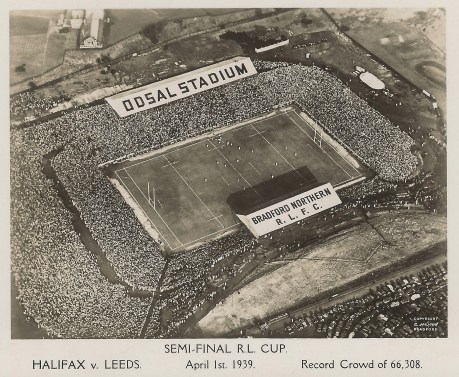
Curtains at Odsal

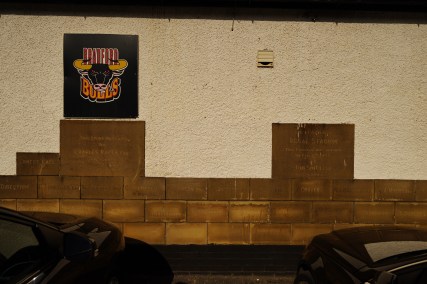
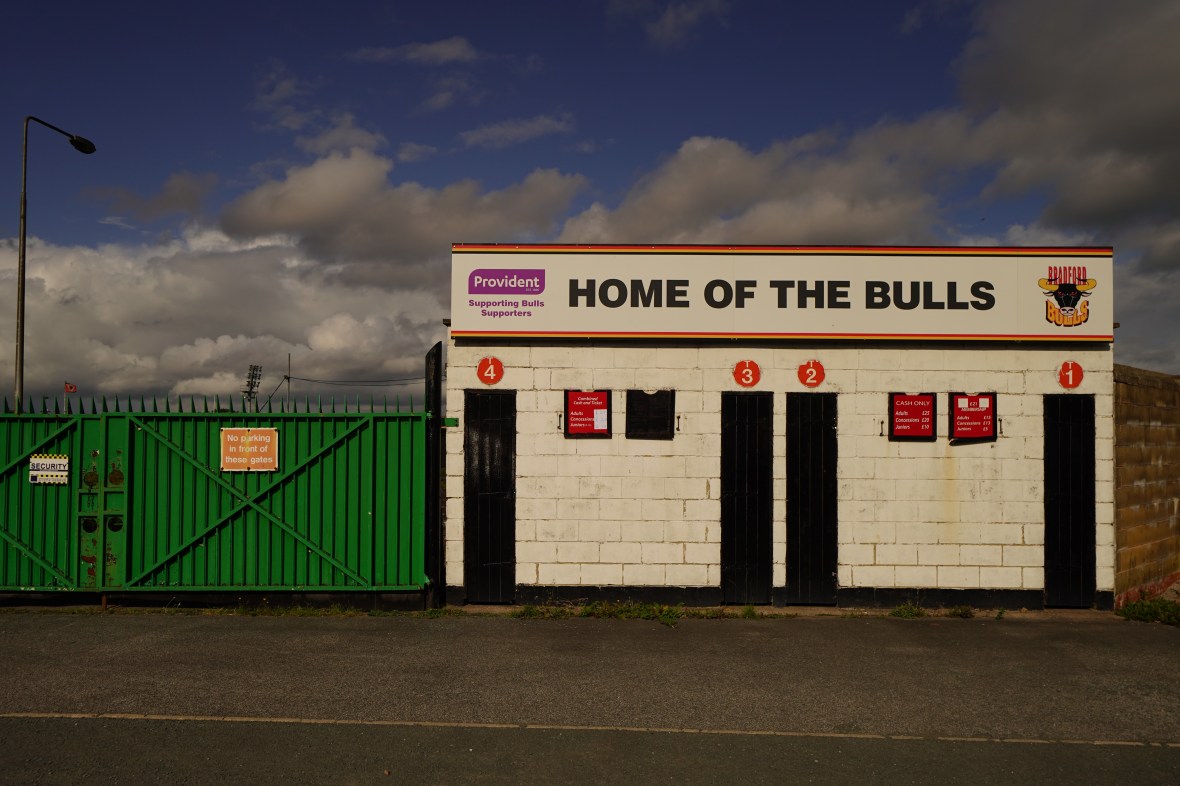
Today – 1st September 2019 – was an historic day for Bradford sport. Bradford Bulls played Sheffield Eagles in what was billed as the final game of professional rugby at Odsal Stadium thus marking the end of an 85 year tenure and with it questions about where the club will play next. Given the historical significance I headed to Odsal with my camera and a wide angle lens to record the occasion for posterity.

JPD01417.JPG

Although I am not a Rugby League fan the Odsal saga has long fascinated me. This is not due solely to the ground’s significance in the history of professional football in Bradford, but because on a number of occasions it seemed that Bradford City AFC might relocate there. Thankfully it has never come to pass that Odsal became a permanent home for the Bantams. Indeed, Odsal is not a ground that I have particularly enjoyed visiting and between 1985-86 I was active in campaigning with other City fans against the prospect of our club abandoning Valley Parade in favour of Odsal.

JPD01409.JPG

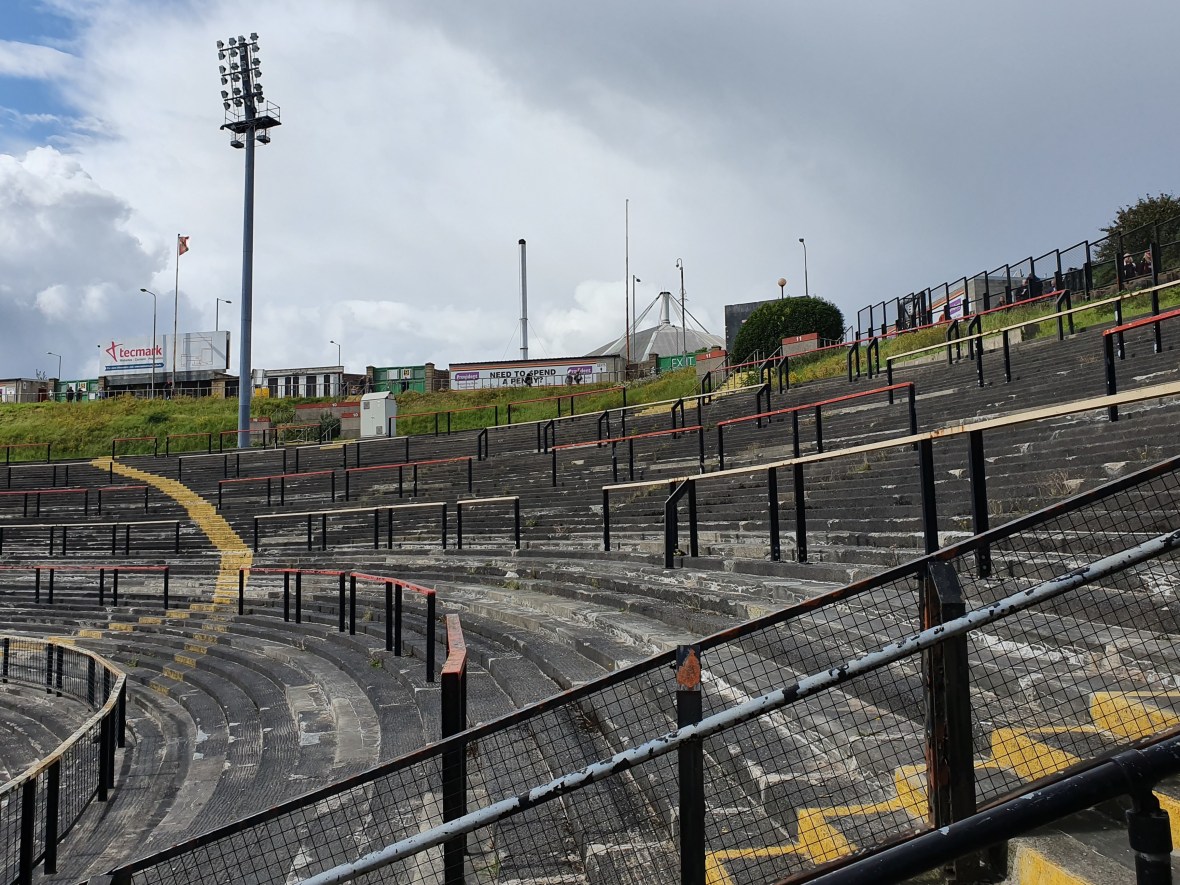
The layout of the current stadium is pretty much the same as that developed ahead of the 1985 Speedway World Championships with the exception of the hospitality block at the southern end, constructed between 2001-03. The speedway track has long since been covered in tarmac and there is little trace of speedway remaining.

This was my first visit to Odsal in nearly five years and I confess that I was surprised at the extent to which the ground is run down. It is evident that there has been minimal maintenance and repair undertaken in recent years. Whilst it is by no means derelict to the extent of the disrepair at football grounds in the 1980s, it is a long way from the standard you would nowadays expect even at clubs in the basement of the Football League. It seems pretty clear that the stadium has no future. Just about the only feature in the ground’s favour is the standard of its PA system (which is very loud) – take that away and it really would be a soulless place. The bank of terracing at the northern end of the ground (as below) is condemned and entry forbidden but recent crowds have been insufficient to justify upgrading even if the cost could be afforded.

20190901_144247

What also shocked me is the extent to which the Bradford Bulls set up is a pale shadow of the glory era. It reminded me very much of the state of Bradford sport in the 1970s when all three Bradford clubs were on their knees. The collapse of Bradford Bulls is lamentable and sad but this is not the place to apportion blame.

The RFL has reportedly made the Bradford Bulls subject to ‘special measures’ and it doesn’t take much to guess the concerns of the sport’s governing body. On the basis of what I saw today it is fanciful to believe that the Bulls could finance a new stadium and it wouldn’t come as a surprise to me if the next headlines were downbeat about the club’s future options.

JPD01405.JPG

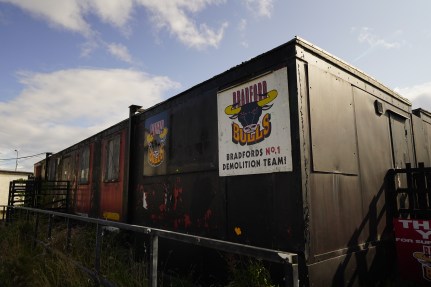
The following photographs have been uploaded in chronological order, consistent with my wandering through the stadium. They record the quirky features of the ground, the multitude of portakabins and the Anderson shelter inspired toilet blocks. It was a day of big skies and Odsal was certainly the place to watch the clouds. Bradford Bulls defeated Sheffield Eagles 30-10 and the crowd was reported as 7,531. Unfortunately other results meant that the club failed to secure a final play-off place which could prove to be decisive in the short term.
As regards what happens next, there will be plenty more cloud gazing to come…

This slideshow requires JavaScript.

This slideshow requires JavaScript.

This slideshow requires JavaScript.

This slideshow requires JavaScript.

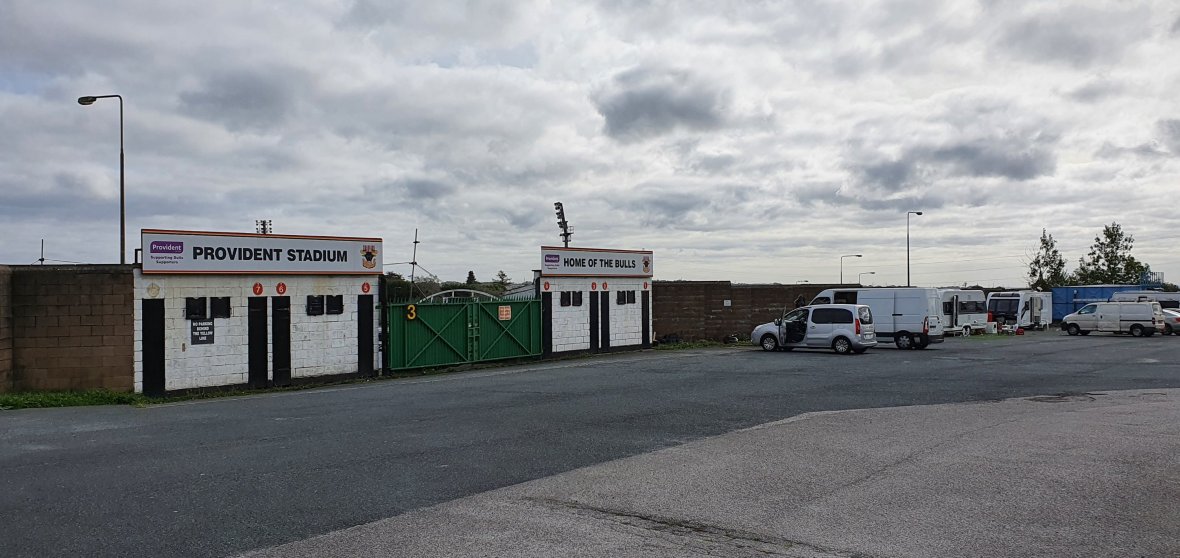
Postscript. Twelve months later Odsal Stadium becomes home to a gypsy camp…

You can find archive images of Valley Parade and soon to be added images of Bradford City AFC at Odsal in 1986 from this link.

To read features written by the author about the early history of rugby / soccer and the origins of sport in nineteenth century Bradford go to this link.

For details about my books on the origins of rugby in Bradford and the early history of Bradford FC and Manningham FC go to this link. I am currently working on a history of the City / Avenue rivalry, 1908-74 which will include previously overlooked detail of the origins of the Rooley Avenue / Odsal Stadium just over 90 years ago.

If you are interested in the history of Bradford sport: VINCIT, the online journal of Bradford Sport History.

John Dewhirst

Tweets: @jpdewhirst

PS I have no objections if people wish to download any of the images on this page but I would ask that I am credited.

Odsal record crowd

Forest Green Rovers: 24th August, 2019

PROGRAMMES OF OLD

Published in the Bradford City AFC match day programme for the above fixture

We welcome today a club with whom we play our first ever fixture. By virtue that this column features historic matchday programmes involving games between Bradford City and the opposition of the day, it’s been something of a challenge to find a connection with our visitors. However it did strike me that what our clubs have in common is origins in areas that were – and arguably still are – rugby strongholds.

In terms of Football League membership, Forest Green Rovers is a relatively young club – this being only their third season in the competition. However, with a history dating back to 1889 the club’s origins predate the playing of association football in Bradford on a competitive basis by six years as well as the formation of Bradford City AFC eight years after that. In 1889 Bradford was firmly a rugby town with a fierce rivalry between Manningham FC at Valley Parade and Bradford FC at Park Avenue. Indeed rugby overshadowed and crowded out association football in West Yorkshire, a state of affairs that arguably persisted for much longer in Gloucestershire.

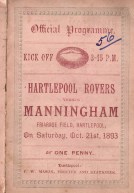
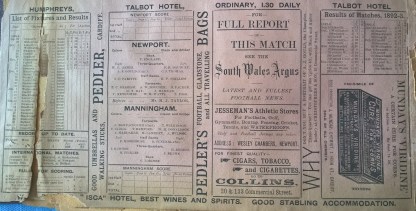
Lorimer Baines Card.jpgValley Parade was the home of Manningham FC between 1886 and 1903, hosting Rugby Union and, after 1895 Northern Union rugby games. Surviving artefacts relating to the club are few and far between, the most common examples being Baines trade cards which display the claret and amber hoops of the Manningham team (Bradford City AFC retained the colours in 1903 but adopted stripes on account that it was a style more commonly associated with soccer). It was the practice in the 1890s to print team cards for high profile rugby games and it is highly likely that they were sold at Valley Parade although I have yet to see one. These examples are from two other areas of Great Britain where professional soccer emerged in the twentieth century, in Newport and Hartlepool. Of course Newport County now play at Rodney Parade, the spiritual home of Newport Rugby.

Manningham v Hartlepool.jpg

Manningham v Newport.jpg

You can find other features about the history of Bradford City AFC on this blog as well as links to other content that I have published previously. The menu provides links to archive images featuring historic photographs of Valley Parade as well as old programmes.

Details of my books.

Tweets: @jpdewhirst

John Dewhirst

Oldham Athletic: 17th August, 2019

PROGRAMMES OF OLD

Published in the Bradford City AFC match day programme for the above fixture

Although we have previously played against all but Forest Green Rovers and Salford City in the Football League, what is notable is that our first fixtures against the vast majority of other League Two sides took place after the last war. The exception to this comprises Grimsby Town (1903/04), Port Vale (1903/04), Leyton Orient (1905/06), Oldham Athletic (1907/08), Crewe Alex (1927/28), Carlisle United (1928/29) and Plymouth Argyle (1930/31).

Of our rivals this season, Oldham Athletic and Port Vale are the clubs with whom Bradford City is by far the most familiar. We have played Port Vale on 100 occasions in the Football League and Oldham on 98 – a degree of familiarity previously reserved for Stockport County (102 meetings between 1903-2011).

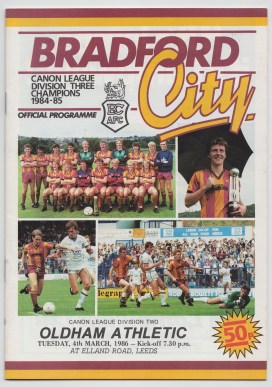
We first played Oldham in September, 1907 – the Latics having only been elected to the Football League the previous June and we have played them in every decade since. What is notable about our rivalry with Oldham Athletic is that we have played each other at every level of the Football League, including the former Division Three (North). Between 1910/11 and 1921/22 the clubs were both members of the first division. Nevertheless this season is only the third that we have competed with Oldham in the fourth tier, the last meeting being in December, 1962.

BCAFC v Oldham 1910-11

BCAFC v Oldham 1920-21

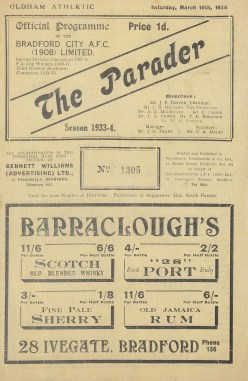
oldham 33-34

Oldham 85-86

Featured are the home programmes at Valley Parade from 1910/11, 1920/21 and 1933/34 as well as at Leeds in March, 1986.

John Dewhirst


You will find other Bradford City archive images by following the links in the drop down menu above. Also published on this blog are my features in the BCAFC programme from previous seasons, book reviews and sundry content about the history of Bradford sport.

On this blog you can find features about the origins of the club identity, crests and nickname.

Details of my books.

Tweets: @jpdewhirst

Bradford City AFC programmes from the 1980s

During the 2019/20 season my column in THE PARADER, the BCAFC matchday programme will feature issues of old programmes and those relating to historic fixtures with the opposition of the day. Additionally I will be uploading features on this blog that record changes in the design of the publication in earlier decades. Through the menu links above the blog will provide a point of reference to those interested in the history of Bradford City AFC.

Featured below are Bradford City programme covers from the 1980s. My book A HISTORY OF BCAFC IN OBJECTS (BANTAMSPAST, 2014) includes other examples not to mention a full range of historic City memorabilia and relics…

The eagle eyed reader will note that the programme cover featured from August, 1981 (vs Mansfield Town) shows a silhouette of Park Avenue – rather than Valley Parade – on the cover. The designer, Pete Bell was a former Avenue supporter who had subsequently followed City and this was his mischief.

You will find other Bradford City archive images by following the links in the drop down menu above. Also published on this blog are my features in the BCAFC programme from previous seasons, book reviews and sundry content about the history of Bradford sport.

On this blog you can find features about the origins of the club identity, crests and nickname.

The drop down menu provides links to other features I have written published elsewhere including on VINCIT, the online journal of Bradford sport history

Updates to this site are tweeted: @jpdewhirst

Cambridge United: 3rd August, 2019

PROGRAMMES OF OLD

Published in the Bradford City AFC match day programme for the above fixture

Mention of Cambridge United in the context of Bradford football history brings to mind the fact that the Cambridge club was elected to the Football League in favour of Bradford Park Avenue in 1970. Another connection with our former rivals is the FA Cup tie between those sides in a second round tie in December, 1953. Avenue’s 2-1 away win allowed them to progress to the next round, a tie against Manchester City at Park Avenue that attracted a 22,000 crowd which provided a much needed financial boost.

Cambridge Utd v BPA FAC 1953-54.jpgLike Oxford United, Cambridge United was not the traditional town club in the respective city. During the 1960s it was Cambridge City FC that was considered the stronger and more likely to achieve Football League status than Cambridge United who were known as Abbey United between 1912-51.

The first competitive game between Bradford City and Cambridge United was in October, 1972 at the Abbey Stadium with the return game at Valley Parade the following March. It was in fact our first season back in the fourth division after relegation the previous May and by way of comparison the crowd at Cambridge was 3,960 and that at home was 5,031. The 1976/77 season would prove the last that we played each other at this level, Cambridge United promoted as champions and ourselves in third position.

Scan_20190702.jpg

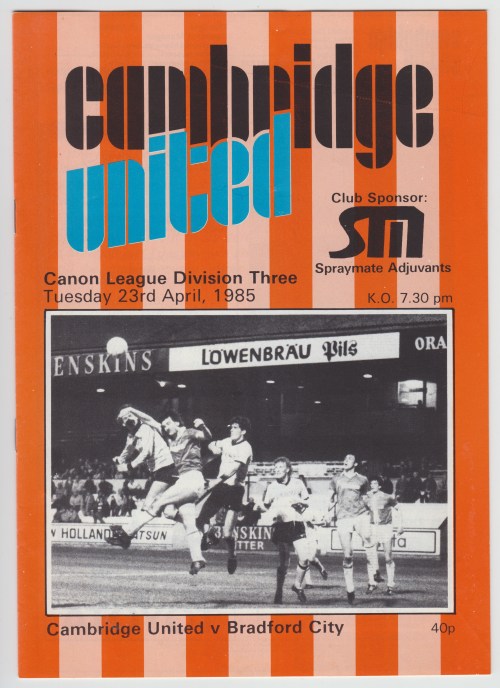
My own particular memory of Cambridge United is that of our visit in April, 1985 when a 4-0 victory made pretty much certain that we would be promoted to the second division.

Pictured are the away programmes from 1972/73, 1976/77 and 1984/85 as well as that of our first meeting at Valley Parade and the FA Cup programme involving Bradford Park Avenue.

You will find other Bradford City archive images by following the links in the drop down menu above. Also published on this blog are my features in the BCAFC programme from previous seasons, book reviews and sundry content about the history of Bradford sport.

On this blog you can find features about the origins of the club identity, crests and nickname.

The drop down menu provides links to other features I have written published elsewhere including on VINCIT, the online journal of Bradford sport history

Details of my books.

Tweets: @jpdewhirst

John Dewhirst


Back to the Future

Bradford shieldThis season marks the fiftieth anniversary of Bradford Park Avenue’s last in the Football League. The club had joined the League in 1908, five years after Bradford City and renewed a rivalry that had previously been contested as a rugby club against Manningham FC. It was a bitter relationship and the final demise of the Bradford club – known by its fans and the press as Bradford and with particular sensitivity about the ‘Park Avenue’ suffix being applied in brackets [1] – involved a rancorous relationship with the Valley Parade based rivals. In the end only one club of the two was likely to survive. The Bradford club was liquidated in 1974 after playing a final season ground-sharing in BD8. The former Park Avenue stadium was abandoned in 1973 and demolished shortly after with little trace that it was once a football ground.

In 1988 there was a revival of Bradford Park Avenue, a phenomenon that enjoyed considerable support and goodwill among younger generations of City fans for whom the traditional rivalry was an anachronism. Since then the club has reached the sixth tier of English football albeit without ever seriously challenging to regain Football League status. Nevertheless, on a couple of occasions in the noughties it seemed that the Avenue might be elevated to be the senior side in the district by virtue of financial implosion at Valley Parade.

The potential of the Horsfall based Bradford Park Avenue has ultimately been constrained by the ageing of its support base and those with an emotional attachment from having followed the club prior to 1974. Quite simply it has previously failed to encourage sufficient new fans to lift crowds. The facilities at Horsfall combined with the enticement of cheap tickets and a higher standard of football at Valley Parade has represented a collective obstacle to progress. This has been despite the fact that in recent years the team has punched above its weight.

In 2014 the club was rescued by Texas billionaire Gareth Roberts, brought up in Holmewood in a household that was, to say the least impoverished. The owner’s vision however has never been to do a Salford, rather promote Horsfall as a community sporting hub. With all the happenings at Valley Parade, developments at Horsfall have to a large degree gone unnoticed yet they are very significant for the future of football and sporting activity in Bradford. What is planned at Horsfall is also revolutionary in the wider context of British football and financial commitments being made elsewhere by wealthy owners. In this case it is underpinned by deliberate as opposed to accidental philanthropy. (Arguably Stefan Rupp sits in the latter category by having made good the losses at Valley Parade incurred during the last couple of years.)

The investment in new facilities is intended for wider community benefit to create a lasting legacy and further detail about what this involves is the subject of a feature by Jason McKeown to be published on Friday 26th July, 2019 on The Width of the Post website. This will represent a not insignificant investment in sporting assets for the district and it is conceivable that the same training facilities might one day be utilised by Bradford Bulls and/or Bradford City.

What is equally notable is that the Bradford Park Avenue project seeks to embrace the original historic sporting heritage of Bradford and is defined by ideals that have a lot in common with the Victorian origins of organised sport in the district.


Revival of red-amber-black: the traditional Bradford sporting colours

bpa 1928-29In the same way that tradition is being revived at Valley Parade with the restoration of stripes, at Horsfall the original red, amber and black sporting colours of Bradford are once more being adopted (image left from 1928). Those colours were associated with Bradford Cricket Club and my research during the course of writing ROOM AT THE TOP suggests that they were formally adopted in around 1844 having previously been associated with the Bradford Volunteers of the Napoleonic era. The colours became the de facto Bradford identity, subsequently adopted by Bradford FC, achieving prominence in Rugby Union and latterly Northern Union rugby competition. In 1907 the colours were adopted by the newly formed association football club at Park Avenue as well as the new Bradford Northern club.
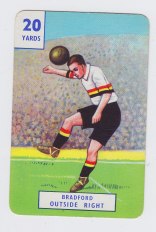
Pepys Its a goal game 1950Bradford Park Avenue retained red, amber and black although there were spells when green and white was worn (1911-24 and 1956-67). From 1988 when the club was revived, until this season the Bradford Park Avenue home shirt has been green and white.

The new Bradford shirt designs have a strong historical flavour with the red, amber and black bands consistent with the traditional shirt worn in the heyday of Victorian rugby as well as by Bradford Park Avenue prior to 1956. Whilst the new third shirt which is predominantly white with red, amber and black bands and is more recently associated with Bradford Northern and Bradford Bulls, it was worn at Park Avenue through to the 1950s and is a design originally worn by Bradford FC as a Rugby Union club prior to 1895.img_20190425_0749323217599045373721342.jpg
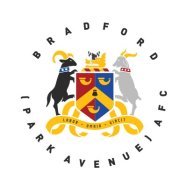
Additionally there has been a reworking of the club’s traditional crest, the coat of arms of the city of Bradford that were originally granted at the end of 1907 and retained until 1974 when the new Bradford Metropolitan District authority succeeded the former Bradford Corporation. When Bradford Park Avenue was reformed in 1988 the crest was revived in its original form. A new version has been introduced which is a digital reworking of the original and consistent with its dimensions. Full detail about the Bradford crest and boar’s head identity can be found elsewhere on this blog. [2]


Back to the Future

The homage to history is more than simply kit design or a new club crest. What in my opinion makes this such a distinctive project is that it is deliberately looking back to the future and deriving inspiration from the past to encourage and promote a local identity. On my part I have long argued that Bradford’s problem is less to do with image and more to do with identity and I am delighted that the Horsfall initiative recognises the importance and potential of sport to foster a sense of belonging. [3]

The term ‘topophilia’ is credited to WH Auden who used it in his 1948 introduction to a book of poetry by John Betjeman. According to Wikipedia ‘it refers to a strong sense of place, which often becomes mixed with the sense of cultural identity among certain people and a love of certain aspects of such a place.’ Our Victorian forebears would have recognised the meaning when they talked about ‘civic patriotism’. And in Bradford, sport came to be considered as an expression of topophilia / local patriotism, contributing to sentiments of identity and belonging. The Victorians also recognised the value of athletic activity as a means of social uplift. How quaintly old-fashioned and yet remarkably relevant to today…

The history of Bradford sport and the story of its origins in the nineteenth century has been neglected and badly served by historians who have failed to recognise its contribution defining a local identity. What the Victorians themselves described as ‘civic patriotism‘.

In the mid-nineteenth century, in the midst of the industrial revolution, Bradford was a divided city both in terms of ethnic composition as well as politics, but sport provided a unifying force that strengthened feelings of a common identity.

‘Athleticism’ was also considered a vital factor in boosting the health of the population, principally for military preparedness but also for the general wellbeing of individuals and the good of society. Through its links with charity, sport came to be identified as a force for good.

Notwithstanding that Bradford later became associated with sports capitalism there was a strong local ethos of sport – or ‘athleticism’ as it was known – for its own sake. Sport assumed a spiritual dimension, embraced by religious zealots who promoted muscular Christianity as well as secular individuals who identified it as a form of constructive recreation. The lesson of history that has long since been forgotten is that sport could be harnessed to promote change.

Bradford prided itself that ‘Labor Omnia Vincit’ was not an idle motto and that it was a guiding principle. Bradfordians were known for their pluck – a competitive, determined frame of mind – but it was not confined to industrial or civic activity. Sport provided further affirmation of the Bradford character and sporting success was considered the prize of a work hard, play hard outlook.

Such was the emotional, time and financial investment in sport by local people (from a multitude of social backgrounds) that its importance to the development of the cultural life of Victorian Bradford cannot be understated. Yet the significance of sporting activity has been overlooked by countless writers whose focus has been the social and political history of Bradford [4].

The history of what happened in Victorian Bradford is relevant in demonstrating how sport impacted on society as well as being shaped by it. This year marks the 140th anniversary of a vision to establish a new permanent home for the then homeless and dormant Bradford Cricket Club, a project that also incorporated developing an enclosure to host other forms of athletic activity including (rugby) football.

Current developments at Horsfall similarly represent a radical sporting vision for the district. It is revolutionary for the fact that it is not a public-funded, council initiative but one driven on a bottom-up basis, financed privately not-for-profit. In some ways it is also about going back to the future with parallels to what happened in Bradford, 140 years ago. Indeed, there has been nothing like it since then. And just as in 1879, we have a divided city and one which could benefit enormously from encouragement of sporting activity and healthy living.

In 1879 the original vision for Park Avenue had been to create a town club that championed athleticism in its widest sense although it was also intended to bring sporting success to Bradford. The construction of the sporting enclosure which opened in 1880 was funded by subscriptions and backed by leading dignitaries in the town (a cross-section of all political backgrounds) who recognised the social value of athleticism. Bradford FC was one of the sections of that club and ultimately it came to dominate affairs such that the original vision was later abandoned and paid only lip service. Ironically Park Avenue also became a divisive issue for football followers and the destructive, bitter rivalry between the Bradford and Manningham clubs.

The crucial difference in 2019 however is that there is no imperative to promote a single club and the Horsfall initiative is not about catapulting Bradford Park Avenue into the Football League. Instead this is about the promotion of sport through the provision of facilities and the encouragement of a Bradford sporting identity. The development of Horsfall is intended to complement the efforts of Bradford City AFC, not to challenge them. It represents a vision to improve lives through sport and for sporting activity to help make a positive contribution to society. It is the philanthropic contribution of a Bradfordian exile, Gareth Roberts wanting to give back to his home city.

Bradford has for so long been associated with sporting failure which makes it all the more exciting that this initiative is happening in our city and to be that of Bradford. The other lesson of history, again long forgotten, is that in the nineteenth century Bradford became known as a centre of sporting enthusiasm and excellence. To go back to the future will be no bad thing.


#onebradford

The Bradford Park Avenue initiative is accompanied by a social media campaign with a couple of distinctive hashtags, #onebradford and #properbradford and these seek to emphasise a shared sense of purpose and identity with the other Bradford clubs. The latter makes an implicit claim of Bradford Park Avenue being the authentic Bradford club with local roots.
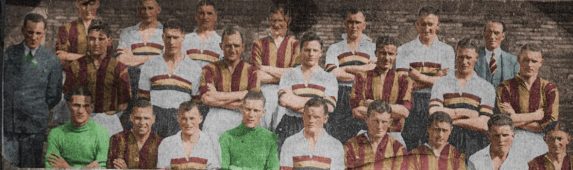
jdewhirst woolcityrivals colourised image1937.jpg

Pictured above the two Bradford sides pose ahead of their Division Two derby fixture at Park Avenue on the opening day of the 1936/37 season. The two clubs struggled at the foot of the division that season but it was City who were relegated to Division Three (North). Avenue won the game in August, 1936 as well as the return at Valley Parade the following February. (Image colourised by George Chilvers.)

My understanding is that the boar’s head may also be adopted as part of the club’s marketing. However, its revival is intended as a shared identity rather than being appropriated. Again, this follows the example of our Victorian forebears who similarly embraced Bradford iconography as a proud display of identity, shared among all its sports clubs.
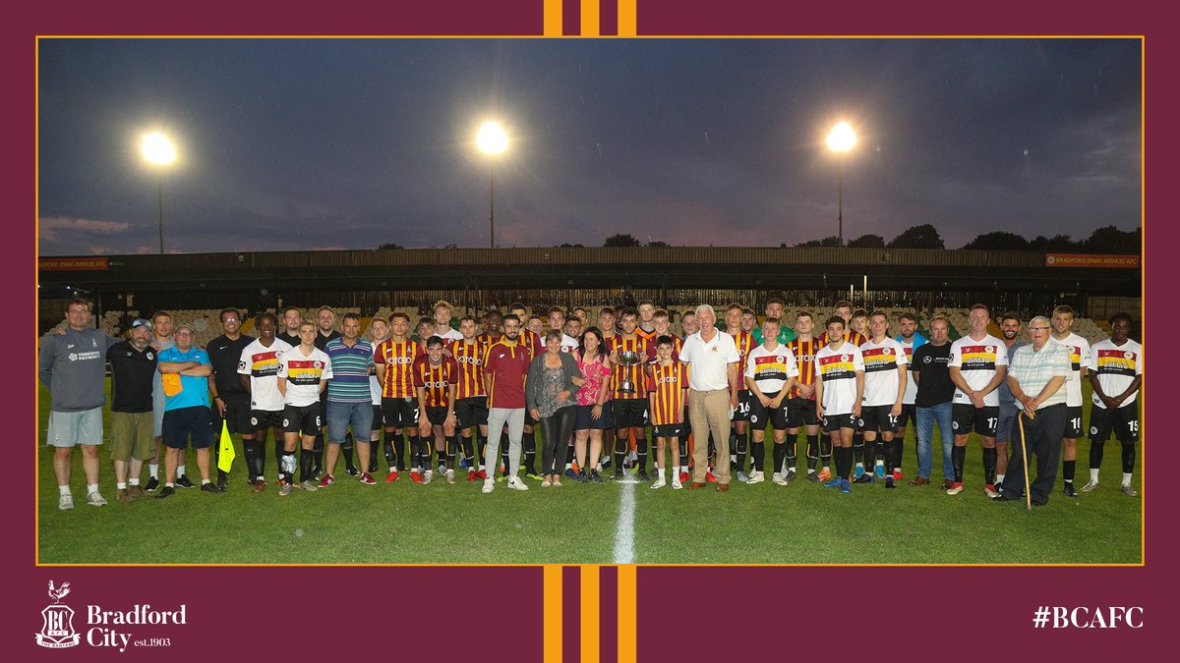
BPA v BCAFC 23-Jul-19

Pictured above the City and Avenue teams on the occasion of the pre-season friendly at Horsfall on 23rd July, 2019

The Park Avenue and Valley Parade clubs always had a hard core of partisan supporters with no love for their rivals. Historically however there was a high proportion of floating support in the district and shared goodwill. By the 1960s, support for City and Avenue had become far more polarised and the two were increasingly reliant on their partisan followers. Needless to say, the final chapter in the history of the Wool City rivalry was incredibly bitter but that should not have to define the future relationship between the clubs. Indeed, the opportunity exists to learn from history and to develop a constructive relationship for the wider benefit of Bradford.20190425_081515-1975297445-1556177868351
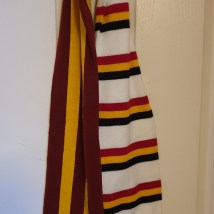
I am first and foremost a City fan but when it comes to sport my instinctive shout is ‘C’mon Bratfud’ irrespective of the club or for that matter the code. I can only express my enthusiasm and support for this ambitious initiative to succeed. I genuinely hope that it gets the full support not only of Bradfordians, but of each and every sports club in the district at every level – including BCAFC – as well as Bradford Council.

How good it feels that there is an uplift in spirits at Valley Parade and Odsal accompanied by such an innovative and ambitious project at Horsfall. For the first time in ages there is the making of positive sporting headlines in Bradford.

John Dewhirst

The author is currently working on an illustrated history of the Bradford City / Park Avenue rivalry which is planned to be published as two separate volumes in the BANTAMSPAST History Revisited series and follow his earlier books about the origin of sport in Bradford and the rivalry of Bradford FC and Manningham FC as rugby clubs.

[1] The saga of the brackets: What’s in a name? Semantics about Bradford City and Park Avenue – a feature published on this blog in 2017.

[2] The boar’s head Bradford identity – a feature published on this blog in 2017.

[3] The historical significance of sport in the Bradford identity – a feature written by myself, published on VINCIT in 2017.

[4] Remarkably, even an author who boasts that he is one of the ‘leading historians of sport and leisure in the north of England’ failed to grasp how athleticism contributed to the cultural spirit of Bradford. The review of his book (published in 2018) can be found elsewhere on this blog.
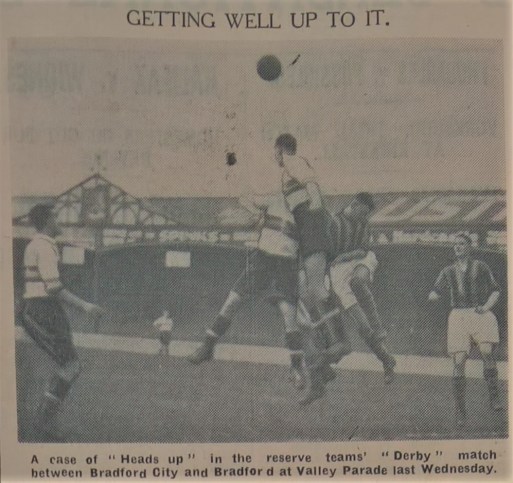
Oct 1937 BCAFC v BPA.jpg

===============================================================
The drop down menu above provides links to previous programme articles, archive images, book reviews and features on the history of Bradford sport.

Updates to this site are tweeted: @jpdewhirst
===============================================================

Details here about the bantamspast History Revisited book series: BANTAMSPAST HISTORY REVISITED BOOKS

*** Online ordering of the latest volume, LATE TO THE GAME by Rob Grillo ***
==============================================================
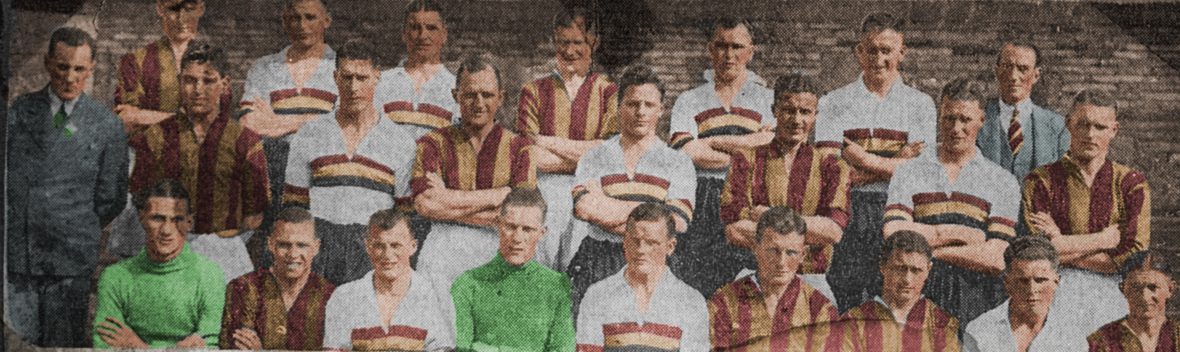
Bradford City AFC programmes from the 1990s

During the 2019/20 season my column in THE PARADER, the BCAFC matchday programme will feature issues of old and those relating to historic fixtures with the opposition of the day. Additionally I will be uploading features to this blog that record changes in the design of the publication in earlier decades.

Featured below are Bradford City AFC programme covers from the 1990s. My book A HISTORY OF BCAFC IN OBJECTS (BANTAMSPAST, 2014) includes other examples (not to mention a full range of historic City memorabilia and relics…).

You will find other Bradford City archive images by following the links in the drop down menu above. Also published on this blog are my features in the BCAFC programme from previous seasons, book reviews and sundry content about the history of Bradford sport.

On this blog you can find features about the origins of the club identity, crests and nickname.

The drop down menu provides links to other features I have written published elsewhere including on VINCIT, the online journal of Bradford sport history

Updates to this site are tweeted: @jpdewhirst


Valley Parade testimonials

PROGRAMMES OF OLD

Published in the Bradford City AFC match day programme for the Stephen Darby Testimonial game on 14th July, 2019

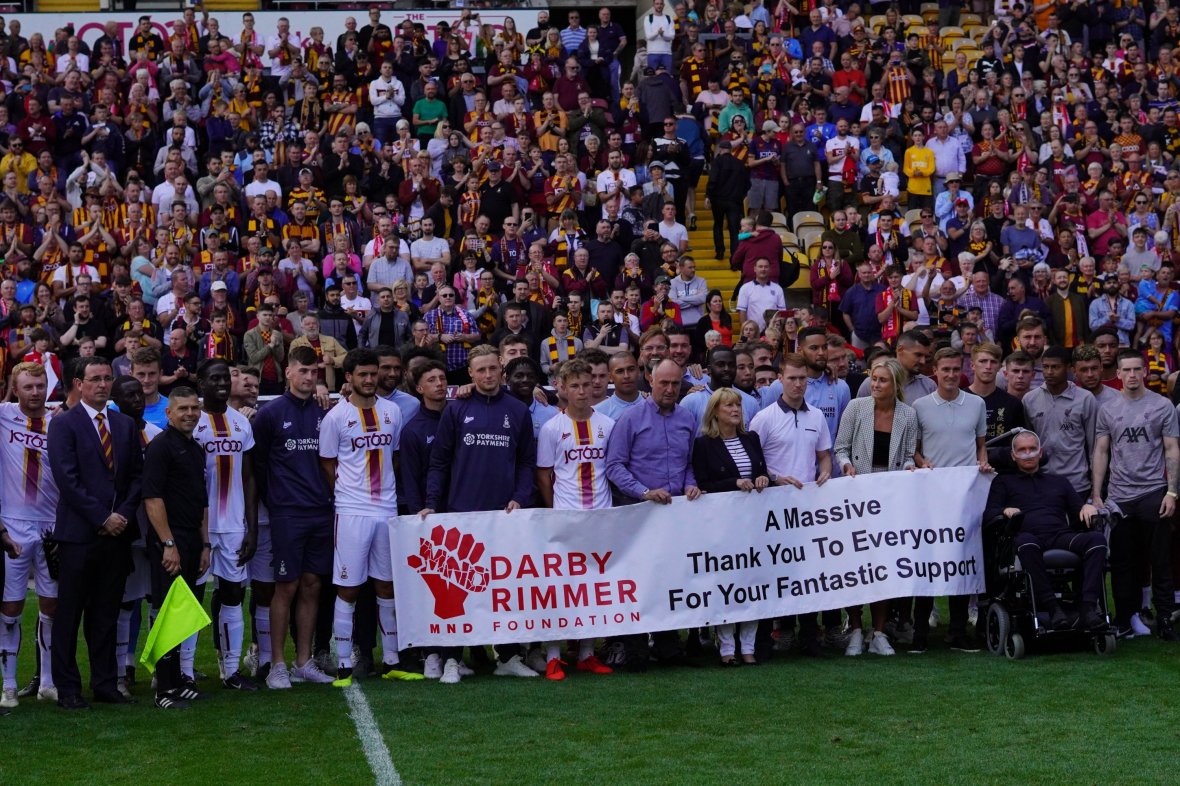
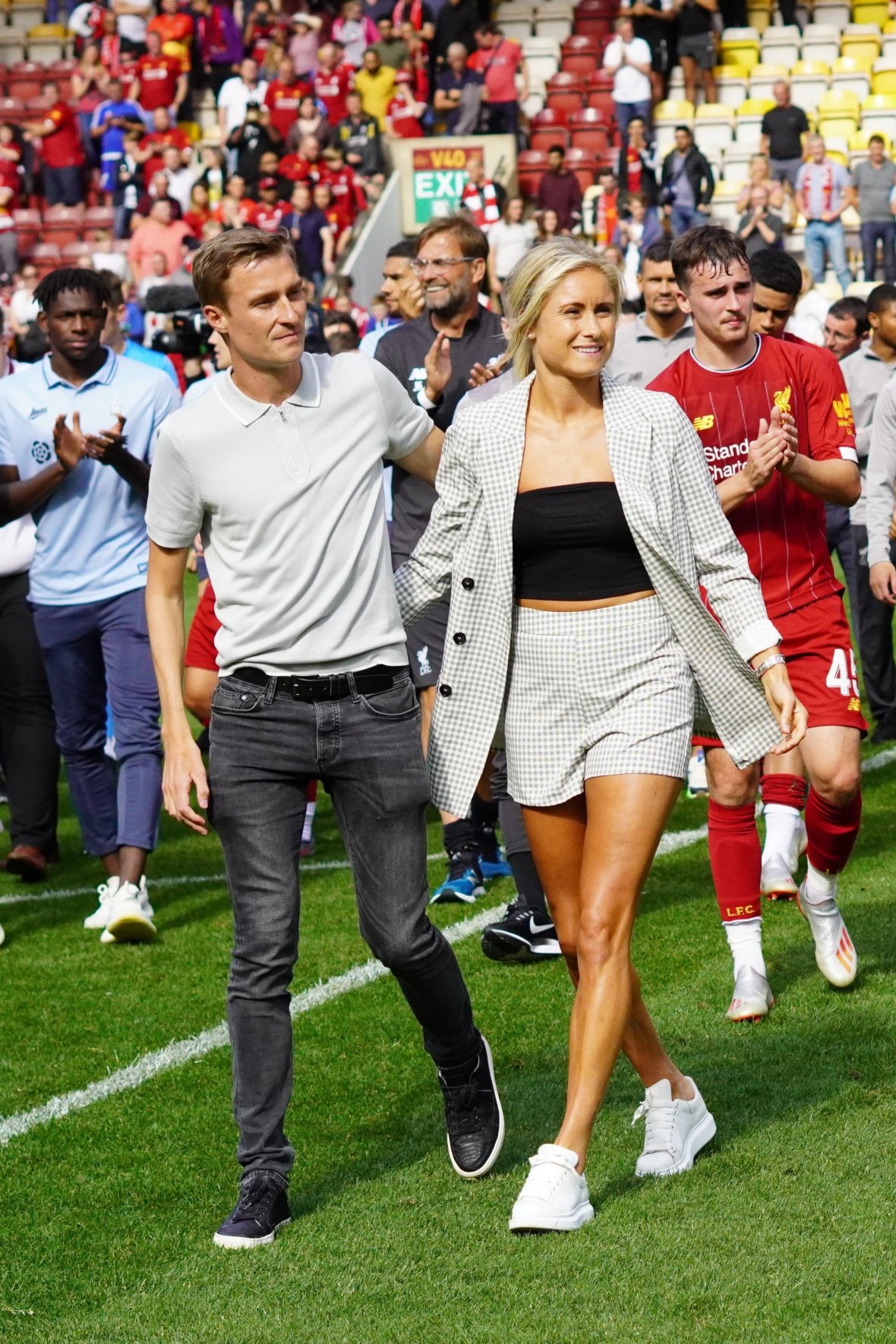
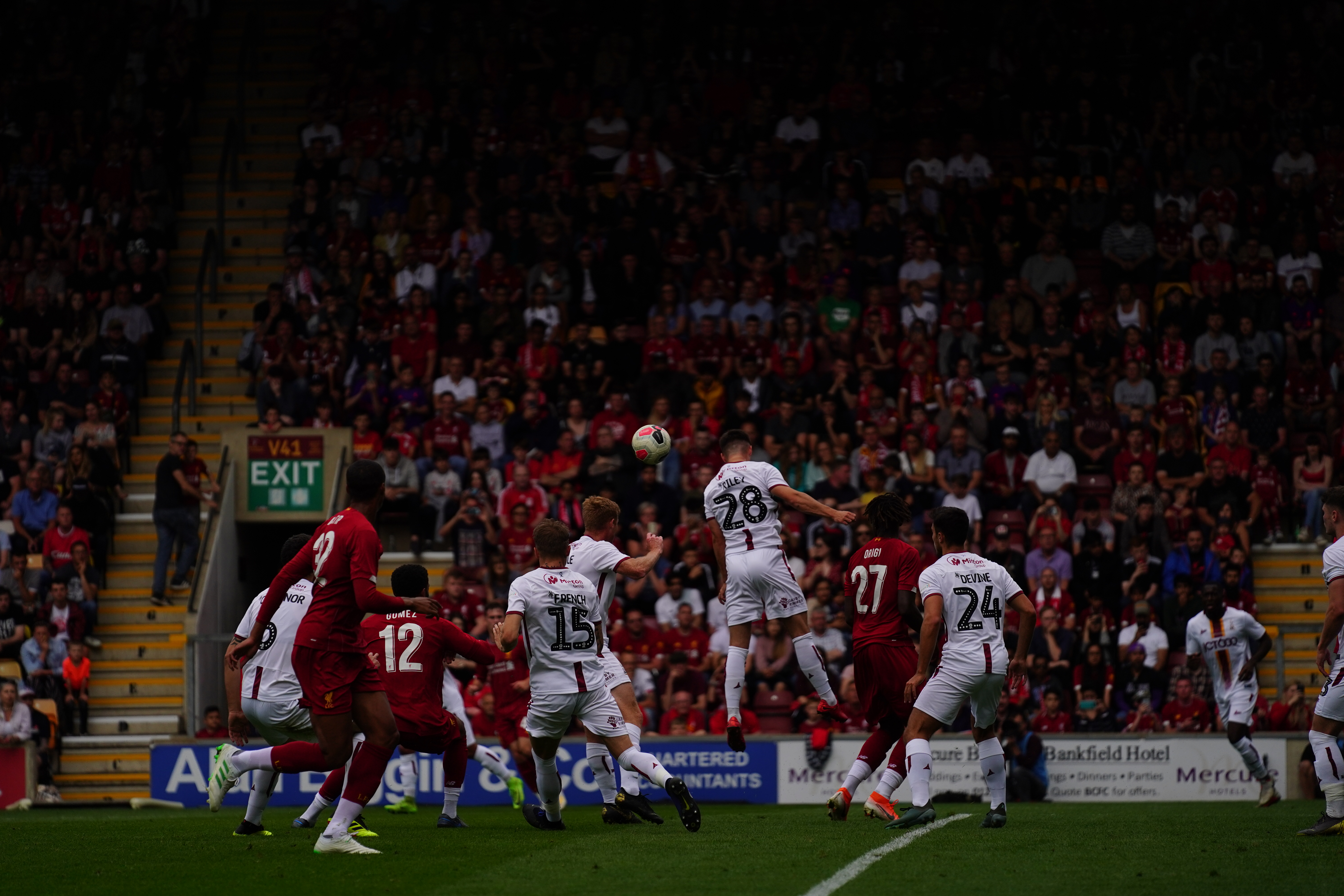
Not since 2004 had there been a testimonial game at Valley Parade. Previously, a testimonial has been granted in recognition of long service but Stephen Darby’s commitment and contribution to the club is out of all proportion to the time he represented Bradford City AFC. The record crowd of 24,343 that attended his testimonial featuring Bradford City against Liverpool is testament to his reputation as a club hero.

Historically the offer of a benefit game was a key factor to secure the services of a target signing. Accordingly, players would be awarded with the gate receipts of a nominated (league) game. The post-war practice has been to grant a special testimonial match to a long-serving player, typically based on ten years’ service featuring former players and/or unique opposition. The principle originated from the fact that few players were able to live on their club wages, much less save for retirement. Many of the players granted testimonials at Valley Parade were locals who had presumably chosen to remain in the area rather than seek transfers. In recent years testimonials have been less commonplace, surely a reflection of the fact that there has been such a high turnover of playing staff.

IMG_0076.jpg

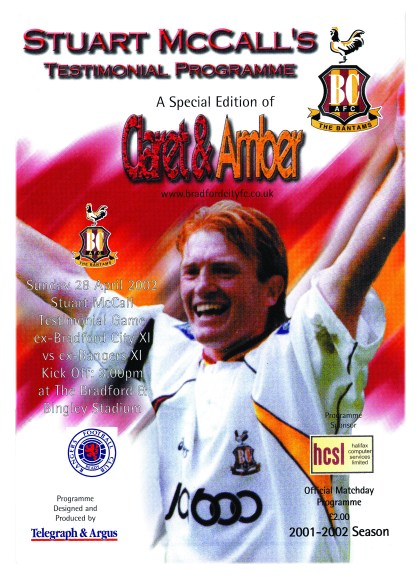
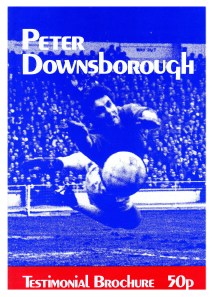
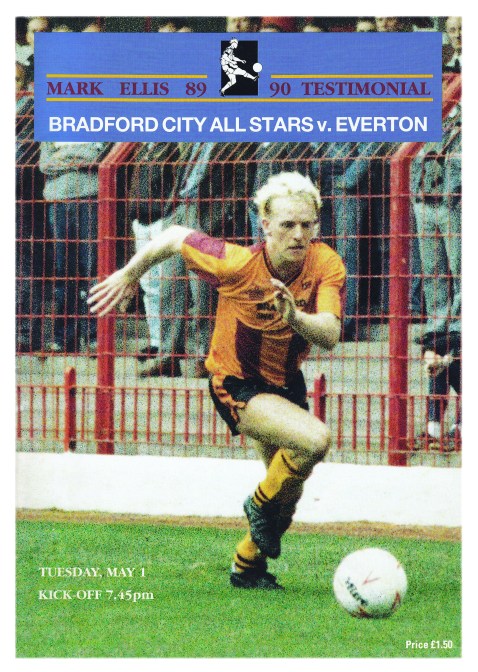
By far the best attended testimonial (with a crowd in excess of twenty-one thousand) was that of Stuart McCall (April, 2002). Others of note included Wayne Jacobs (July, 2004); Allan Gilliver (July, 1998); Gavin Oliver (August, 1994); Maurice Lindley (July, 1991); Mark Ellis (May, 1990); Ces Podd (March, 1981);Peter Downsborough (May, 1980); Ian Cooper (May, 1977); Bruce Stowell (November, 1969); Willie Robb and Jeff Suddards (May, 1959); George Williamson (April, 1957) (vs Airdrie scanned); Jock Whyte (October, 1955); David Gray (April, 1954); and Dick Conroy / Bill Murphy (April, 1952). On those occasions the match programmes have provided a break from the regular design of that season’s issues.

IMG_0054.jpg

The Podd and Downsborough testimonial programmes for example were of much higher standard than the contemporary league programmes and were relatively groundbreaking for their photographic content. Ces Podd was the first black player in the Football League to earn a testimonial and the game against an All Star Black team at Valley Parade raised a club record sum of £5,147 for a testimonial. On the other hand John Hall’s testimonial in May,1974 was commemorated with a single Banda-copied teamsheet.

downsboro test.jpg

ellis test.jpg

ian cooper test.jpg

You can find other features about the history of Bradford City AFC on this blog as well as links to other content that I have published previously. The menu provides links to archive images featuring historic photographs of Valley Parade as well as old programmes.Details of my books.

Tweets: @jpdewhirst

John Dewhirst

More photos of 14 July, 2019 from this link

Valley Parade photos July, 2019

Photos taken by myself at Valley Parade on 14th July, 2019 on the occasion of Stephen Darby’s testimonial. The attendance of 24,343 set a new record for the stadium since its rebuilding in 1986.

The images have been taken using a combination of regular zoom/prime lenses in addition to a fisheye lens and a Lensbaby split focus lens. The latter creates a zone of focus surrounded by blur, admittedly an acquired taste.

JPD07390x

JPD07372x

This feature forms part of a collection of historic images of Valley Parade since its first use by Manningham FC between 1886-1903 and then as the home of Bradford City AFC: Links from here.

On this blog you will find my features previously published in the BCAFC matchday programme, The Parader, historic content and book reviews as well as a recent feature about the revival of white by BCAFC in 2019/20.

Refer to the drop down menu. Thanks for visiting!

Tweets: @jpdewhirst

JPD03816x.jpg

JPD04162x

JPD07982

===========================================================
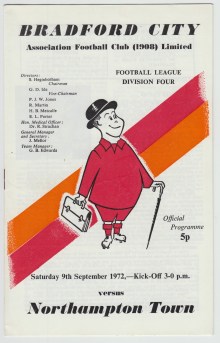
If you are interested in the history of Bradford sport then visit VINCIT www.bradfordsporthistory.com where you will find features about the history of different sports and clubs in the district.

Recent articles published on VINCIT written by myself include:

The Paraders’ record breaking season of 1928/29

Centenary of Scholemoor Ground, Lidget Green and revival of Bradford RFC

The story of Shipley FC and Bradford’s other c19th junior rugby clubs

The origins of women’s football in Bradford

The significance of sport in shaping a Bradford identity

History of the Bradford Charity Cup

Compendium of Bradford sports club names

The late development of soccer in Bradford

John Nunn, Bradford physical aesthete

The story of the Belle Vue Hotel, a nineteenth century pub adopted as a sports headquarters in Bradford

The history of Bradford rugby and the case to reassess the split in English rugby in 1895 My findings from investigation of the origins and development of Bradford football provide sufficient evidence to challenge the orthodox view that the split in English rugby was driven by social class as opposed to the economics of sport.

The myth that the City – Avenue rivalry was based on class politics

The political origins of Bradford Cricket Club in 1836: Blaming the Tories

Cricket: the DNA of Bradford sport
===========================================================
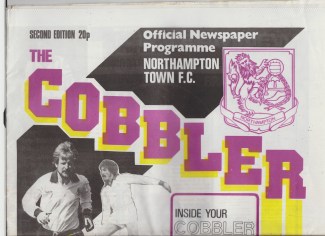
Details of my books published in the BANTAMSPAST HISTORY REVISITED SERIES

Revival of white

In July it was announced that Bradford City AFC will adopt a predominantly white shirt as the club’s away choice in the 2019/20 season…
Large[30238].jpg
In 1974, club chairman Bob Martin was anxious to launch a fresh start for Bradford City for the beginning of his first full season in charge. Having been relegated from the third division in 1972, the Paraders had failed to challenge for promotion. With public interest waning, Martin knew that change was necessary.
Earlier in the year it had been confirmed that Bradford Park Avenue would be wound-up at the end of the 1973/74 season. The club had ground-shared at Valley Parade after vacating Park Avenue in 1973 but its own attendances had plummeted. Sensing an opportunity presented by there being only one senior club in the district, Martin had proposed a controversial change of name [More from this link: The story of when it was proposed to rename Bradford City AFC as Bradford Metro] which was emphatically opposed by City supporters, led by former chairman Stafford Heginbotham (a man with no love for Bob Martin).
As part of the new identity, Martin had proposed introducing new club colours of amber and brown, the same as those adopted by the new metropolitan authority. It is unknown whether the new colours were to be worn as stripes – a style traditionally associated with City, as opposed to Avenue – or in some other configuration. With the rejection of the new colours, claret and amber were retained as the primary colours of Bradford City which had originally been adopted by the former Manningham FC in 1884 [More from this link: The military heritage of Bradford City AFC].
Palace 1972-73

Nevertheless Martin was still able to introduce radical changes to the club identity with a new club crest and a predominantly white strip supplied by Litesome of Keighley. The design of the shirt was not dissimilar to a style previously worn by Crystal Palace in 1972/73. Yet whilst the new shirt was promoted as a new modern identity, in reality it restored the club’s traditional third colour – white – to the strip.

For a start, the club’s shorts had traditionally always been white. Furthermore, under Football League regulations every club had been required to have white shirts in the event that a colour clash arose. To that extent white was the club’s de facto away shirt. On certain occasions before World War One, the team even wore a plain white shirt at Valley Parade, presumably for practical reasons of the other shirts not being available at the time.
Pictured below the Bradford City squad at the beginning of the 1909/10 season. Both the yoke and white shirts were worn with the city’s coat of arms which was the club’s crest.
1909-1910
1923

Besides, in 1974 it was not the first time that the club had opted for a predominantly white shirt as first option. As long ago as 1923 the club had introduced a new predominantly white shirt as its first choice. In all likelihood the change at that time had been a matter of expediency based on economy rather than branding and similarly it has to be remembered that the shirts were not sold as consumer items for supporters to purchase. From the evidence of old team photographs this distinctive white strip with claret/amber ‘V’ was retained for at least three seasons until it wore out but the traditional claret and amber yoke strip design was retained as the alternative (and the club reverted to this).

hockey

Pictured wearing the new shirt in 1974 is Keighley-born, Welsh international Trevor Hockey who became Martin’s celebrity signing in the 1974 close season when he re-signed for the club having previously been on the books in 1960/61. Hockey, who was 31 at the time of returning to Valley Parade spent two final seasons with Bradford City.

The new strip did not create an immediate uplift in fortunes in 1974/75 and the following season the club found itself struggling near the bottom of the fourth division with finances dictating its fate.
sotonpics09

However it was the FA Cup run of 1975/76 that rescued the club from financial disaster and also encouraged a revival in public interest. By this stage there had been a subtle change to the design of the shirt with changes to the collar as well as the width and position of the stripes. A new version altogether was introduced for the FA Cup Quarter Final tie against Southampton at Valley Parade (pictured). Even at that time however it was uncommon for supporters to purchase replica shirts and they tended to be available only in schoolboy sizings.

With the momentum provided by the FA Cup run, in 1976/77 Bradford City achieved promotion from Division Four whilst wearing the new white strip. Don Hutchins is pictured wearing the promotion strip – note the lack of a club crest, only the Litesome motif.

1976 Hutchins Kop.jpg
Back in Division Three, white was abandoned in 1977/78 but restored in 1978/79 when the club secured a supply arrangement with Admiral and adopted a style of kit more commonly associated with Leeds United that was based on a standard template. The Admiral strip was the first to be made available through active merchandising. In 1981/82 came a new predominantly white strip, albeit with claret shorts that bore an uncanny resemblance to the style then being worn by Derby County – presumably more than a coincidence given that the club’s player-manager was Roy McFarland, formerly of Derby.
Once more, in 1981/82 a white strip became associated with a successful promotion season, in this case from Division Four. Maybe there was a degree of superstition that the predominantly claret and amber strip of 1977/78 had been linked with relegation. That kit had been supplied by Litesome but in 1983 the club secured a supply arrangement with Patrick based around a predominantly white strip and a second that featured claret and amber stripes. The white strip was that commonly associated with the 1984/85 championship success.
S. McCall v Wolves

In 1985 Stafford Heginbotham restored claret and amber stripes. At the time it was the focus of a campaign by The City Gent for a stripes revival but it was very much a case of kicking an open door because Heginbotham was firmly a man in favour of the stripes as well as the traditional boar’s head crest [Background about the boar’s head crest from this link]. Since then, claret and amber has remained the primary colours of the home shirt. Nonetheless there has been a revival of a white away strip based around the style introduced by Bob Martin in 1974. Both were introduced by Geoffrey Richmond, a man with an eye to commercial opportunity in 1996 (Beaver) and then in 1999 (Asics), the latter being closely associated with our Premier League promotion success.

The new away shirt differs to the classic style by virtue of the central stripes but this has much to do with the fact that the shirt has been designed for sale as leisure wear. It was recognised that two individual stripes in the style worn by the team in the late 1970s would not necessarily be flattering on contemporary supporters with less than athletic physiques.
I think it’s great that the club’s heritage is being revived in this way and I hope that in future we’ll see a return of white shorts with a traditional claret and amber shirt.
For what it’s worth my preference is a claret and amber striped shirt but given that this isn’t everyone’s favourite and mindful of the commercial pressure for change, I’d like to see the club rotate its home shirt design between the three generic styles that have been worn since 1903. That is: (i) a striped shirt; (ii) a predominantly claret body with amber collar or yoke; and (iii) a predominantly white shirt with claret and amber stripes / detail. Either way, after the disappointment of last year’s home strip – with the final design understood to have been dictated by Edin Rahic against the advice of club staff who had recommended a style similar to that of 1907/08 – in 2019/20 we will have a combination of shirts likely to be well received.
John Dewhirst
Tweets: @jpdewhirst
JPD03815x.jpg
Billy Bantam wears the new white shirt.

===========================================================
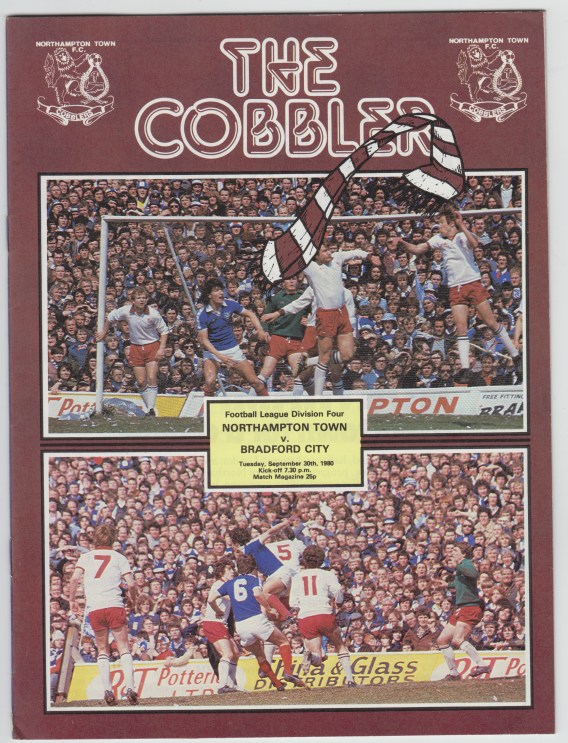
Thanks for visiting my blog. You will find links from the menu above to other features I have published online about the history of football in Bradford and Bradford City in particular. I contribute to the BCAFC match day programme and you can also find archive images as well as a number of book reviews. The links provide free, accessible history about BCAFC based on substance rather than soundbites.

===========================================================

If you are interested in the history of Bradford sport then visit VINCIT www.bradfordsporthistory.com where you will find features about the history of different sports and clubs in the district.

Recent articles published on VINCIT written by myself include:

The Paraders’ record breaking season of 1928/29

Centenary of Scholemoor Ground, Lidget Green and revival of Bradford RFC

The story of Shipley FC and Bradford’s other c19th junior rugby clubs

The origins of women’s football in Bradford

The significance of sport in shaping a Bradford identity

History of the Bradford Charity Cup

Compendium of Bradford sports club names

The late development of soccer in Bradford

John Nunn, Bradford physical aesthete

The story of the Belle Vue Hotel, a nineteenth century pub adopted as a sports headquarters in Bradford

The history of Bradford rugby and the case to reassess the split in English rugby in 1895 My findings from investigation of the origins and development of Bradford football provide sufficient evidence to challenge the orthodox view that the split in English rugby was driven by social class as opposed to the economics of sport.

The myth that the City – Avenue rivalry was based on class politics

The political origins of Bradford Cricket Club in 1836: Blaming the Tories

Cricket: the DNA of Bradford sport
===========================================================
Details of my books published in the BANTAMSPAST HISTORY REVISITED SERIES