Book Review: Diary of a Lost Cause: Bradford (Park Avenue) AFC – 1966-1970 by Jeremy Charnock

It is nearly 50 years since Bradford Park Avenue AFC was voted out of the Football League at the end of the 1969/70 season. Nowadays it seems quaint to think that the city had two senior clubs and that the rivalry between City and Avenue should have been so emotional. With the liquidation of the original Park Avenue club in 1974, a sporting rivalry that stretched back 90 years to an era of rugby (both Rugby Union and Northern Union) was put to rest.
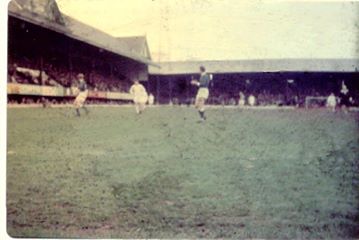
10389343_1479461769001561_1690847460942194280_n

During the 1960s, if not the 1950s it had become increasingly likely that at least one of the two Bradford clubs would disappear as a consequence of financial failure. Until around 1967 it seemed that Bradford Park Avenue was more likely to survive. Miraculously, it was Bradford City under Stafford Heginbotham that achieved a revival whilst Avenue went into freefall. After finishing second to bottom of the basement division in 1966/67, the following three seasons they finished bottom. The meltdown was spectacular and Bradford Park Avenue – or rather, Bradford – finished far adrift from their nearest rivals in the bottom four places.

The embarrassment was made all the worse by the unwelcome headlines drawing attention to the dysfunctional off-field affairs at Park Avenue. If ever there was a case study of a football club imploding, this is it. Jeremy Charnock’s book Diary of a Lost Cause: Bradford (Park Avenue) AFC – 1966-1970 was published last month and is a detailed chronicle of Bradford’s last four seasons in the Football League, a weekly record of a football club’s sorry and pitiful collapse.

The author was familiar with the period as an Avenue supporter and had compiled a scrapbook of match reports from the Telegraph & Argus. The fact that it has taken him nearly fifty years to write his book probably says a lot about how painful was the experience of following his team. Indeed, you could be forgiven the observation that this publication has been a long overdue cathartic exercise for him.

bartholemew badges_0002

Bradford (Park Avenue) crest 1971/72

Not that long ago I wondered if Bradford City might ‘do an Avenue’ and have a similar meltdown. What City supporters experienced during 2018 was not dissimilar to what happened at Park Avenue between 1966-70 as things fell apart both on and off the field. What we saw for ourselves was how easy it can be for the plates to stop spinning and an organisation become trapped in a downward spiral. In such circumstances it becomes increasingly difficulty to effect a turnaround and reverse the cycle of decline. The loss of confidence is debilitating, impacting everyone involved with a football club and a handicap to making a fresh start. So too a club becomes associated with failure and struggles to attract new talent or people who could make a difference to the way it is run.

Supporters become despondent and inevitably the gates decline. Before too long the problems are exacerbated by financial crises and decisions become increasingly short-termist. We saw for ourselves what happens when a club goes off the rails but thankfully the backwards drift at Valley Parade was arrested. Unfortunately, at Park Avenue things became progressively worse and by the end of 1969, if not much sooner it had become a hopeless situation.
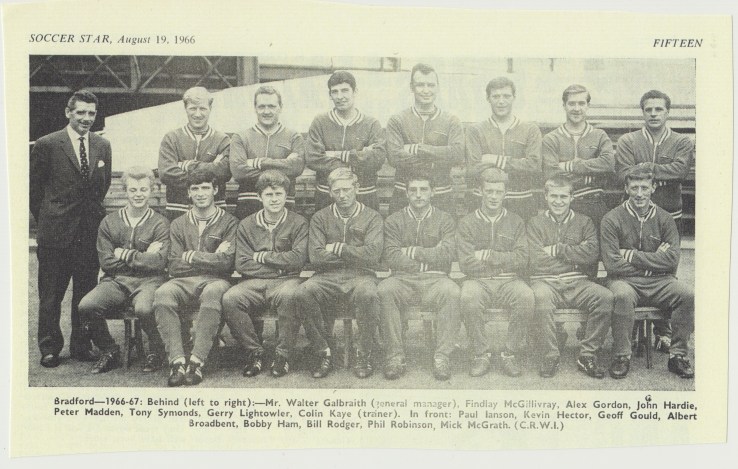
BPA 19-Aug-66.jpg

Jeremy Charnock rightly pinpoints the transfer of Avenue’s goal-scoring legend Kevin Hector to Derby County in September, 1966 as a crucial milestone. The failure to replace Hector was the headline failure of those in charge at Park Avenue although to be fair, it was always going to be a difficult task to replace someone of Hector’s class. Subsequent changes of manager had little impact and neither Jack Rowley nor Laurie Brown were capable of rebuilding the Avenue team despite funds (modest amounts but investment nevertheless) being made available by the directors. With boardroom squabbles thrown in, it seems that everything that could have gone wrong at Park Avenue did so. All that kept Bradford Park Avenue in the Football League for so long was the so-called ‘Old Pals Act’ and the re-election process to determine relegation from the competition.

What distinguishes this book is the extent to which team selection and decisions by managers as well as directors are diagnosed in meticulous detail. Those long ago seasons are relived on a weekly basis and it is fascinating to read about how people responded to disappointments and then tried to pick themselves up for the next game. It is a remarkably engrossing book and you sense that the author has long agonised over whether things could have turned out differently at Park Avenue. Indeed, Jeremy Charnock interviews a number of former players and club officials to ask exactly that and the responses are fascinating. Yet whilst the reader is left with the impression that the club did not have luck on its side in terms of how events turned out, the point that is missed is that the club’s existence was already precarious and finely balanced even before Hector was sold. Indeed, the underlying (and enduring) financial frailty of Bradford Park Avenue was the reason why Kevin Hector had had to be sold in the first place.

The micro analysis of Diary of a Lost Cause cannot be faulted but a detached (macro) perspective of Avenue’s circumstances as well as the club’s historical legacy is missing. The fact that Bradford City staged a recovery at the time that it was going pear shaped at Park Avenue undoubtedly added to the financial pressures as floating fans opted for Valley Parade in preference. The rivalry with City dictated football finances in Bradford and long before Avenue’s eventual demise it had been recognised that Bradford could not support two senior football clubs. In other words, with Bradford Park Avenue sitting on such shallow financial foundations it was always questionable how the club could ensure its viability.

The liquidation of Bradford Park Avenue in 1974 should be seen as the culmination of a lingering demise that went back much further than 1966. The acceleration in the decline of the club in its final four years in the Football League was the later stage of a process that had commenced much sooner. After the club’s relegation from the second division in 1950 the club had consistently struggled to stay afloat. Recurring financial difficulties had been a factor at Bradford Park Avenue ever since the death of the club’s original benefactor, Harry Briggs in 1920 and exacerbated following the resignation of the Waddiloves as bank guarantors in 1955. Therein was the cold reality that the club had always existed hand-to-mouth. In the absence of someone with deep pockets to fund its losses, Bradford Park Avenue could not defy financial gravity indefinitely.

In 1969 it seemed that Bradford had discovered a new benefactor and Herbert Metcalfe was the man who supporters hoped would transform the club’s finances. Metcalfe had had no prior football involvement and yet for reasons best known to himself wanted to become a director of a club at the bottom of the fourth division, rooted in 92nd position. Just about the only positive factor in its favour was that Bradford Park Avenue AFC owned its ground and other properties.

Jeremy Charnock is surprisingly charitable in relation to Metcalfe’s agenda whereas a cynic could be forgiven the suggestion that ulterior motives were at play. The most polite description would be to refer to him as a distress investor, the likes of whom have become more commonplace in English lower division football in the past fifty years. For good reason, supporters nowadays would be suspicious of a latterday Herbert Metcalfe but in 1969 it was a different environment and an unchartered phenomenon. It wasn’t that controversy didn’t exist, rather that people spoke in hushed tones and preferred to believe otherwise. However, subsequent disclosures arising from the Poulson scandal – and locally, the revelations of lax governance within Bradford Corporation – played their part in demonstrating to the public that the respectability of men in suits could not always be taken for granted. Inevitably it would encourage a degree of cynicism about people in positions of power in public institutions – football clubs included – that did not exist previously.

Modernity had seemingly fostered a more brazen approach on the part of those identifying investment opportunities in areas that had previously been off-limits, whether civic infrastructure or football clubs. In Bradford, the old cosy approach to doing things was being challenged and it was no coincidence that outsiders played their part in introducing new ways, from the influence of T. Dan Smith on the one hand to Herbert Metcalfe on the other. It was not necessarily without results – take for example the fact that the revival at Valley Parade had been spearheaded by another larger than life outsider, Stafford Heginbotham. So too the Park Avenue faithful had put their trust in a Lancastrian and accepted the need for radical change. (Equally telling is that a Bradford businessman had not come forth to bankroll either City or Avenue.)

By the time of Metcalfe’s appearance at Park Avenue, the affairs of the club were already so desperate that Avenue supporters were prepared to give him the benefit of the doubt. The apathy of Bradfordians about the city’s football clubs was another factor why the Metcalfe regime was given little scrutiny and so too the fact that it lasted little more than twelve months. However, that his involvement has not been investigated in detail is something of a glaring omission in Diary of a Lost Cause. This is particularly so given that Metcalfe’s behaviour had a big bearing on the perceptions of other clubs about how Bradford Park Avenue was being run – the same clubs whose goodwill and patience was vital to secure (and the ones who eventually voted to expel Avenue from the Football League at the end of 1969/70).

The fascinating question is how affairs might have been different had Herbert Metcalfe not died in October, 1970 although I am in no doubt that the die had been cast for Bradford Park Avenue long before. Whether Metcalfe would still have been acclaimed as a saviour of the club by its dwindling band of supporters seems unlikely. His death may have spared potential controversy and exposure.

Notwithstanding the judgement of Herbert Metcalfe, I recommend this book which provides an insightful record of players and managers struggling from one week to the next to lift their team. Pity Stanley Pearson, the T&A correspondent who must have struggled to write his match reports and balance the expectations of supporters, club officials and readers – as well as his professionalism – in what he wrote. And pity the fans who stood by their club. There but for the grace of God it could have been Bradford City in this situation.

Diary of a Lost Cause is a painful account about a dysfunctional football club and of how things went badly wrong. Whilst it concerns events that took place over fifty years ago, it is difficult to believe that the same basic ingredients of failure were unique to Bradford Park Avenue (even if the circumstances were exceptional) or for that matter, unique to the 1960s. As an antidote to the usual stories of football success and triumph, this is a book deserving a readership beyond former Avenue supporters still wrestling with what might have been. Diary of a Lost Cause is a publication that I heartily recommend.

=====================================

Diary of a Lost Cause: Bradford (Park Avenue) AFC – 1966-1970 by Jeremy Charnock (pub by 2QT, Dec-19) is available from the Bradford (PA) club shop, on ebay, Amazon and from the author: j.charnock@btinternet.com / 22 Rylands Avenue, Bingley BD16 3NJ RRP £25

=====================================

*** You can read my other book reviews from here.

The following is a link to a feature I wrote published on PLAYING PASTS in February, 2019 on The failure of football clubs.

I am currently working on the history of the City / Avenue rivalry between 1908-74 that will be published in two, possibly three separate volumes. News of the first will be announced in early 2020 and will go on sale later in the year as part of the BANTAMSPAST HISTORY REVISITED series.
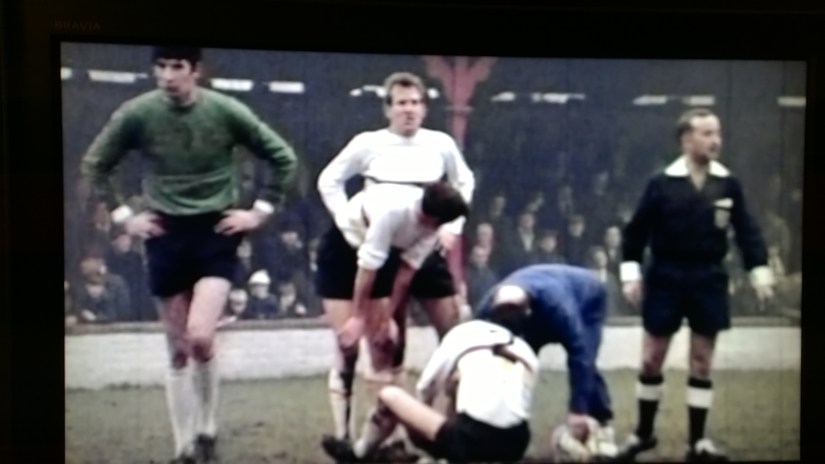
WP_20150417_017.jpg

Morecambe, 1st January 2020

PROGRAMMES OF OLD

Published in the Bradford City AFC match day programme for the above fixture

This is the seventh season in which we have competed at the same level as Morecambe FC who gained membership of the Football League as recently as 2007. In fact, games with Morecambe have been synonymous with the Bantams playing in the basement division between 2007-13 and again this season. Previously it was Bradford Park Avenue who had competed with Morecambe FC (as members of the Northern Premier League between 1970-74) and in December 1973 the Shrimps had visited Valley Parade to fulfil a fixture with Avenue in that competition.

Scan_20190702 (26).jpg

Like many other (admittedly older) Bradfordians I spent a number of childhood holidays in Morecambe, a destination once known as ‘Bradford by the Sea’. I was not alone in having relatives who had retired to Morecambe and so cannot deny having a softspot for the town.

Morecambe is also a decent ride from Bradford. Last October I took advantage of the weather and travelled on my motorbike via the likes of Skipton, Helliwell, Clapham and Bentham. Carlisle aside, I can’t think of a better excursion.

Not surprisingly Morecambe has always been an enjoyable away destination, notwithstanding the fact that in the three League fixtures between Morecambe and Bradford City at Christie Park, the Bantams were defeated twice and the best performance was a 0-0 draw on the last visit in September, 2009. In fact, our solitary win at the ground was in November, 2005 when a last minute goal secured a 1-0 victory in an LDV Vans Trophy tie. (In that season a number of non-League clubs were allowed to enter the competition and despite City being two levels higher than Morecambe, the Bantams struggled to get the win.)

Morecambe FC moved to the Globe Arena for the start of the 2010/11 season and the first fixture there with Bradford City was in March, 2011 that resulted in a City victory. Of four League games at the Globe Arena, City have been undefeated with two wins and two draws (the last win being twelve weeks ago). In cup competition, City beat Morecambe at the Globe Arena in a League Cup tie in August, 2014 (featured) but were defeated in a FL Trophy tie in March 2016.

Scan_20190628 (5).jpg

At Valley Parade, City have won four and lost only once in the previous six games. In aggregate we have won six, drawn four and lost three of the 13 League games between the sides.

Morecambe FC celebrates its centenary in May, 2020 and with luck the anniversary will not be tarnished by relegation back to the Conference. I can’t think of a friendlier club and genuinely hope that the Shrimps can avoid the drop.


You can find other features about the history of Bradford City AFC on this blog as well as links to other content that I have published previously. The menu provides links to archive images featuring historic photographs of Valley Parade as well as old programmes.

Details of my books.

Tweets: @jpdewhirst


Mansfield Town, 29th December 2019

PROGRAMMES OF OLD

Published in the Bradford City AFC match day programme for the above fixture

We have played Mansfield Town on 52 occasions in the Football League. Of those 22 were in Division Three (North) between 1947-58 but subsequent to the creation of a national league structure in 1958 our sides have been in the same division on only 15 occasions of which 7 seasons in the third tier and 8 at this level in the fourth tier.

47-8 MAnsfield Away.jpg

In League competition the Stags have had the upper hand with 20 wins compared to 16 for the Bantams. In the basement division Mansfield Town have won 8 compared to just 4 by Bradford City.

Given that the two clubs have spent the vast majority of the post-war period in the lower divisions, fixtures between the two have been relatively infrequent but in the 1981/82 and 1982/83 seasons it seemed that we couldn’t be kept apart with a total of 8 meetings. During 1981/82 for example we met in Division Four and were drawn together over two legs in the League Cup (and despite losing at Field Mill, City triumphed on aggregate). The following season we met over two legs in the League Cup once again (City winning both) as well as in the FA Cup (a victory for the home side at Valley Parade).

1981 aug

I remember those FA Cup encounters to have been real passionate affairs and after an initial 1-1 draw, we earned a third round meeting with Barnsley and narrowly avoided a giant-killing on a bitterly cold December night thanks to a close-fought 3-2 win. Mansfield wore their traditional yellow shirts and blue shorts whereas at that time the Bantams played in a predominantly white strip with claret and amber trim on the sleeves, collar and cuffs as well as shorts. The Mansfield supporters encouraged their side with shouts of ‘C’mon you Yellows’ and it clearly made an impression on the City faithful.

Proof of the viral spread of football chants was demonstrated less than a fortnight later when City played their next game in a holiday fixture at Deepdale, Preston. On that occasion the Bantams wore the Admiral away strip of amber shirts with claret shorts. And the new chant of the away following that day?  ‘C’mon you Yellows.’ Bizarrely it is a chant that has continued at Bradford City games ever since notwithstanding the fact that the club has never had a yellow strip!

Our League meeting at Mansfield on 15th May, 1982 marked the end of a successful promotion season and City finished runners-up to Sheffield United. Our 2-0 victory that day ensured we finished above Wigan Athletic and AFC Bournemouth who claimed the other promotion spots. Of course we returned to the basement division in 2007/08 and that was the last season that the two sides have met. Despite Mansfield Town failing to avoid relegation to the Conference in 2008 (where they would spend five seasons) they still managed to take 4 points from the Bantams.


You can find other features about the history of Bradford City AFC on this blog as well as links to other content that I have published previously. The menu provides links to archive images featuring historic photographs of Valley Parade as well as old programmes.

Details of my books.

Tweets: @jpdewhirst

John Dewhirst

Thanks to Stewart Roberts for allowing me to feature his copy of the Mansfield v City programme from April, 1948 – the first meeting of the sides at Field Mill.

Salford City: 21st December, 2019

PROGRAMMES OF OLD

Published in the Bradford City AFC match day programme for the above fixture

We welcome today another club with whom we play our first ever fixture. By virtue that this column features historic matchday programmes involving games between Bradford City and the opposition of the day, it’s been something of a challenge to find a soccer connection with our visitors. To my knowledge Valley Parade has never previously hosted a club from Salford to play a game of association football although the ground can boast other historic sporting connections with Salford. Nevertheless it is the first time that a club from the city has visited Valley Parade since Good Friday in April, 1897 when Salford FC defeated Manningham FC in a Northern Union rugby friendly. On that occasion poor weather restricted the crowd to only 3,000 and in fact the return game at Salford the following day had to be abandoned due to the elements.

Formed in 1873, Salford FC had established itself as one of the leading rugby clubs in Lancashire by the following decade which mirrored the rise to prominence in Yorkshire of Bradford FC. Those clubs had their first meeting at Park Avenue in 1886 and the fixture came to be regarded as the de facto Roses rivalry. Salford FC seceded to the Northern Union in 1896 – of which Manningham FC had been inaugural champions in 1895/96 – and the only occasion that Salford FC played at Valley Parade was the aforementioned game.

The failure of the Paraders to rebuild their squad left the club on a downward spiral that ultimately culminated in Manningham’s conversion to association football in 1903. By 1901 for example the club had been excluded from the senior level of the Northern Union. In fact the Manningham team was considerably weakened following the death of its star full-back, George Lorimer in February, 1897. Such was the strength of the Salford side at the beginning of the century that there was little prospect of Salford FC converting to soccer at that time. Likewise, with the counter appeal of Manchester United there is little wonder why Salford has not had a Football League side long before now.

1887-08-18 advert for Airedale Ath fest

In 1887 however Valley Parade welcomed an altogether different Salford team. The ground had been opened the previous year with the stated intent of hosting other sporting activities and in August, 1887 Valley Parade hosted the Airedale Harriers’ annual athletics festival (previously staged at Lady Royd).

VP Graphic Aug 1887

The event attracted contestants from across the north and at stake was an impressive array of prizes, the most prestigious of which was an attractive trophy for the winners of the three mile inter-club steeplechase. Manufactured by Fattorini’s of Bradford, this had a reported value of £40 which was in excess of the average annual wage for a workman.

20190624_214229

There were three teams of four runners apiece competing for the prize which was won by Salford Harriers. It was said that they had ‘a ridiculously easy journey’ finishing two laps ahead of the fastest runner from the Bradford Trinity club whilst none of the Airedale team finished. The achievement of Salford Harriers was celebrated in the Manchester publication Black & White (pictured).

1887-08-26 Salford Harriers

You can read more about the athletic festivals of Victorian Bradford on VINCIT, the online journal of Bradford Sport History from this link.

You can find other features about the history of Bradford City AFC on this blog as well as links to other content that I have published previously. The menu provides links to archive images featuring historic photographs of Valley Parade as well as old programmes.

Details of my books.

Tweets: @jpdewhirst

John Dewhirst

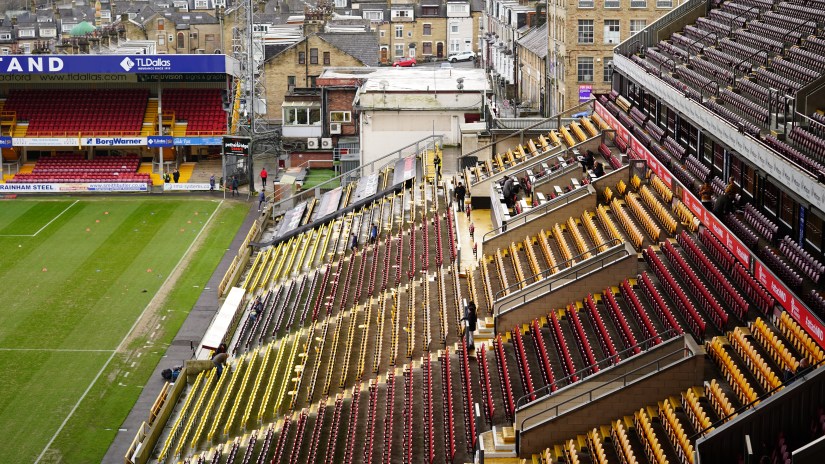
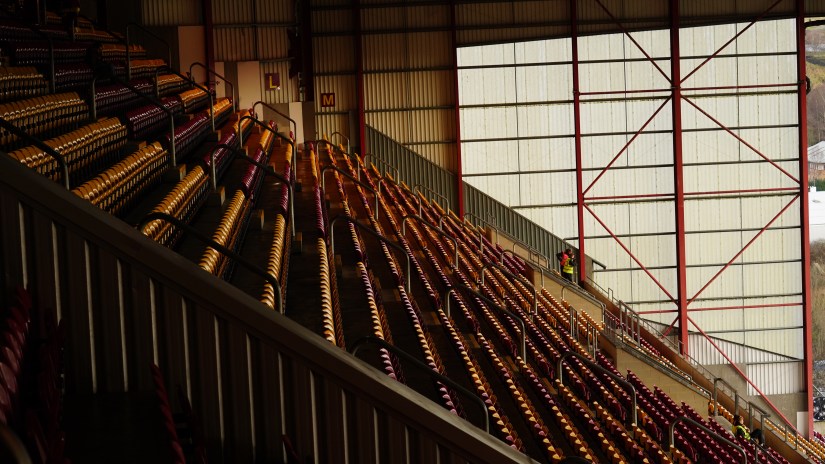
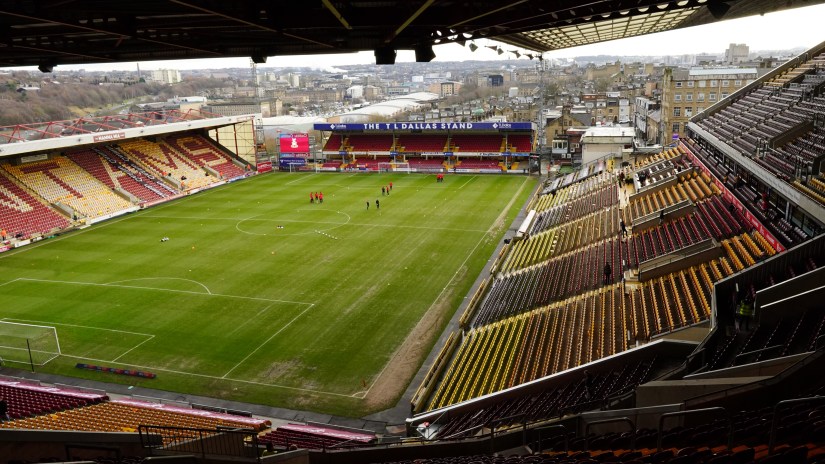
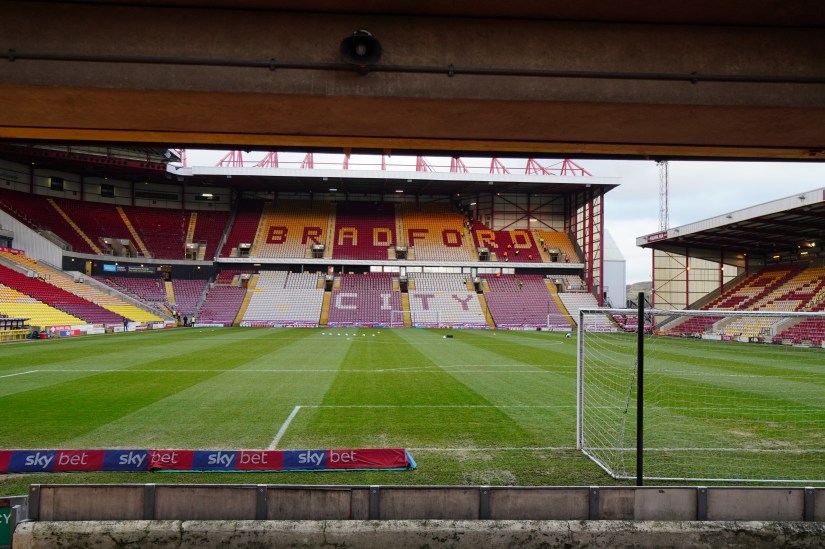
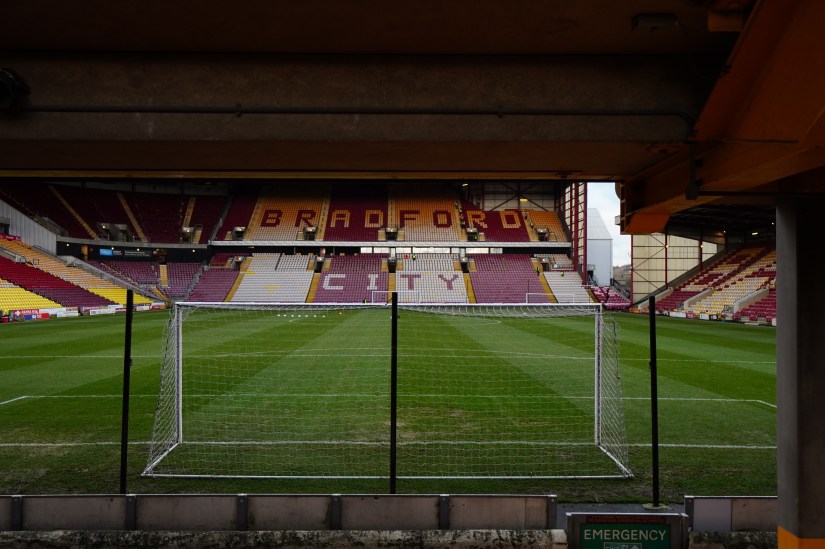
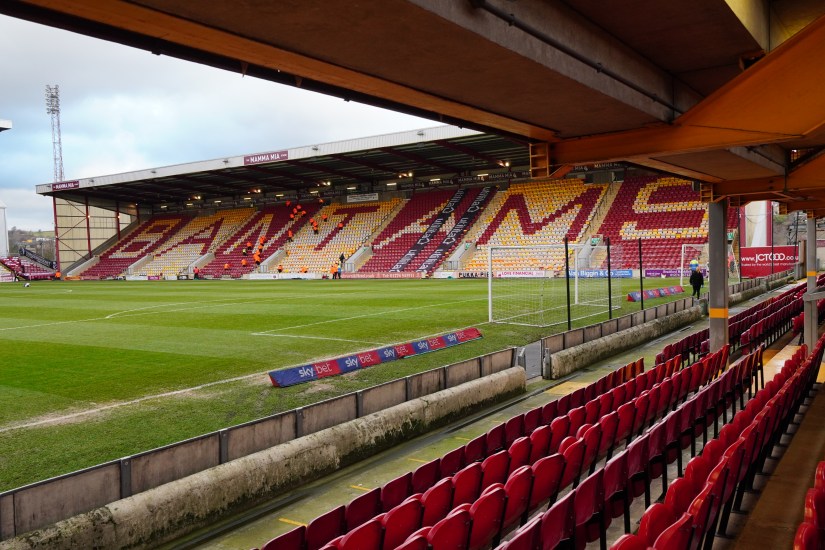
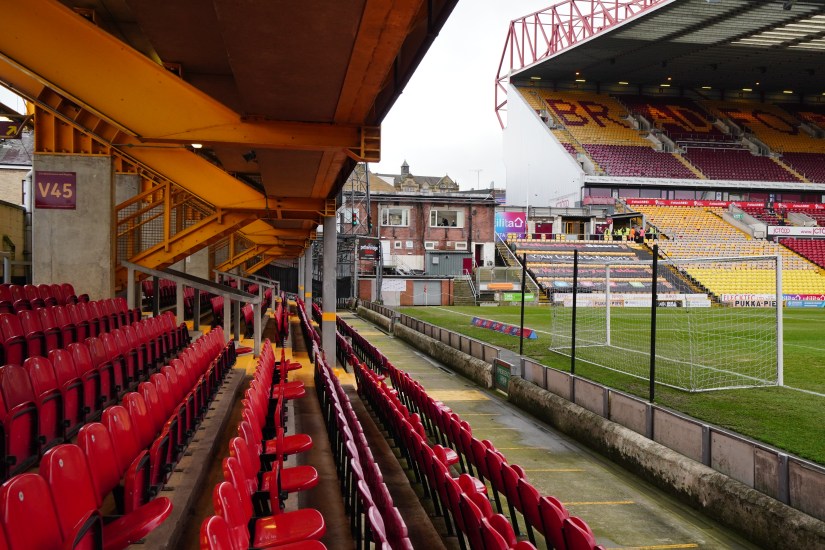
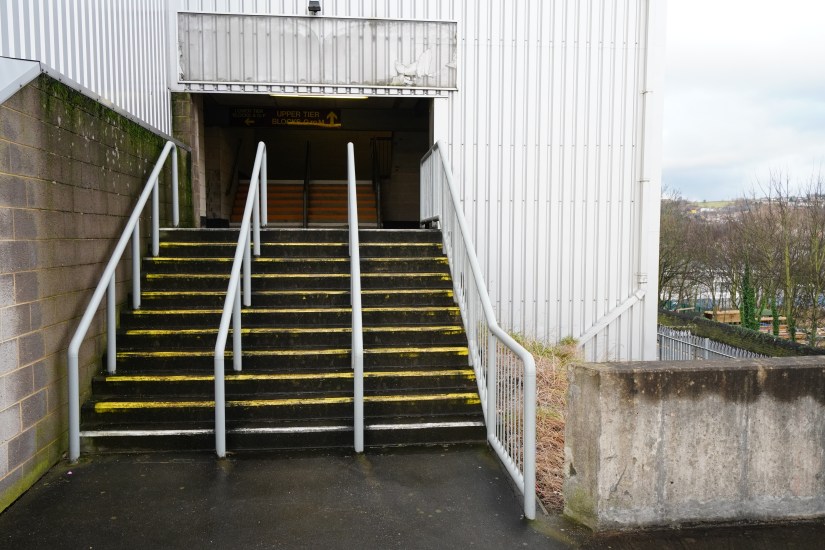
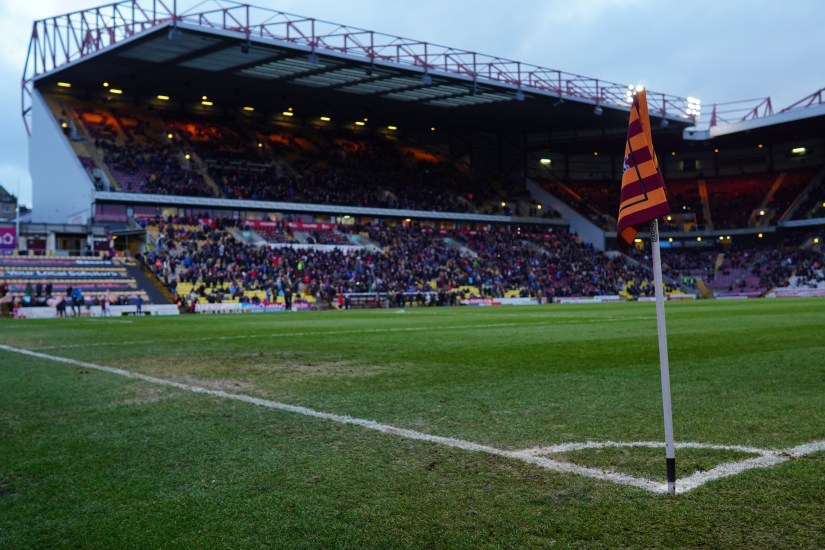
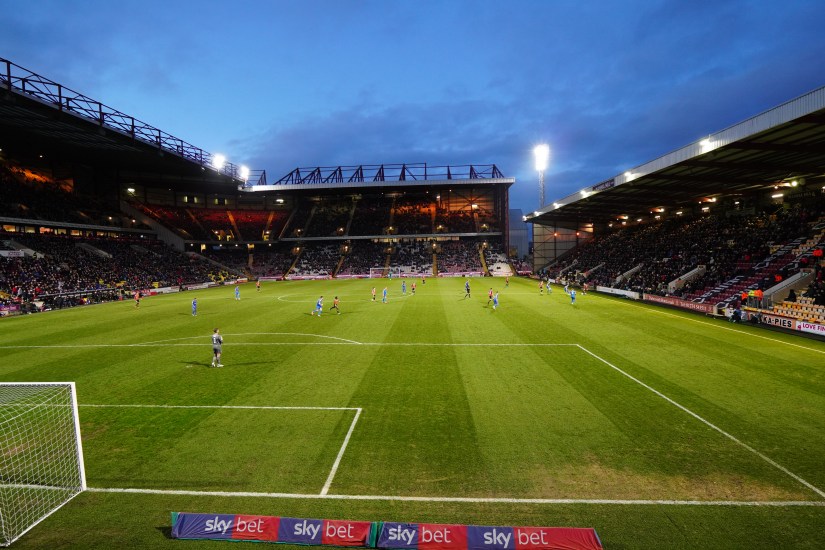
Photograph taken by myself at the game with Salford City that finished 1-1 (copyright BCAFC). [Link to photos of Valley Parade taken the same day]

JD303073.JPG

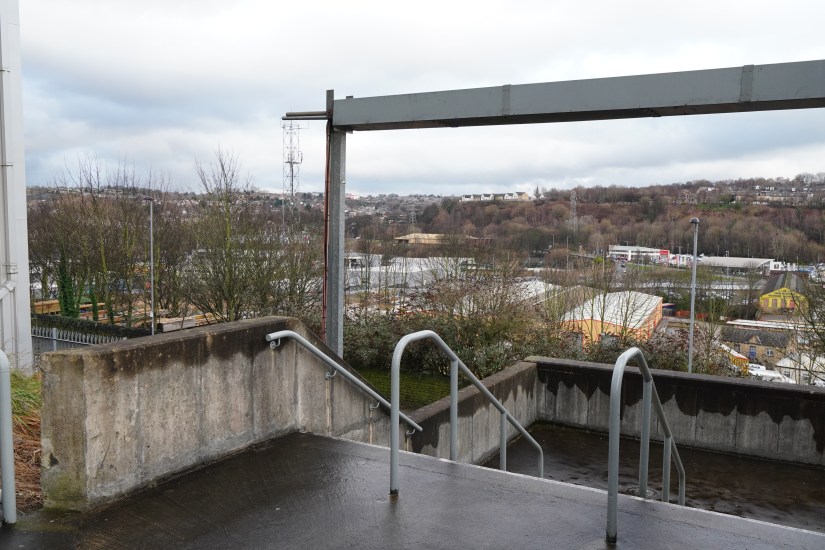
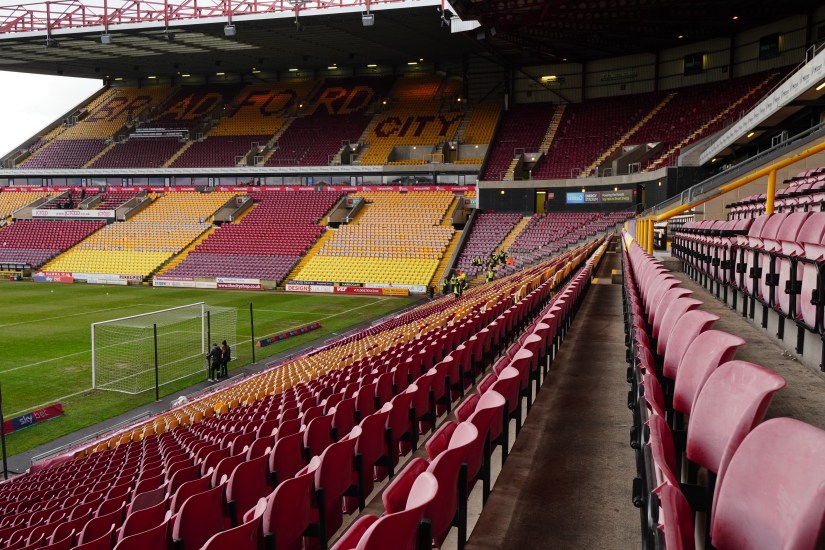
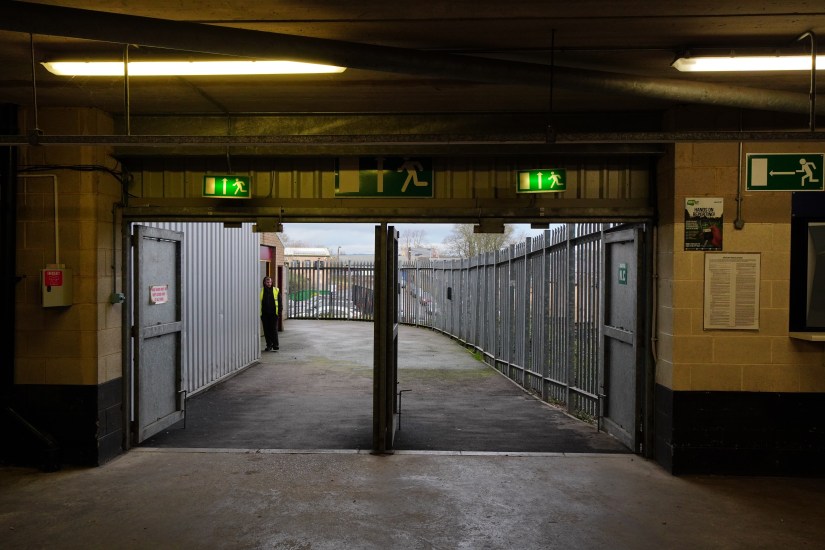
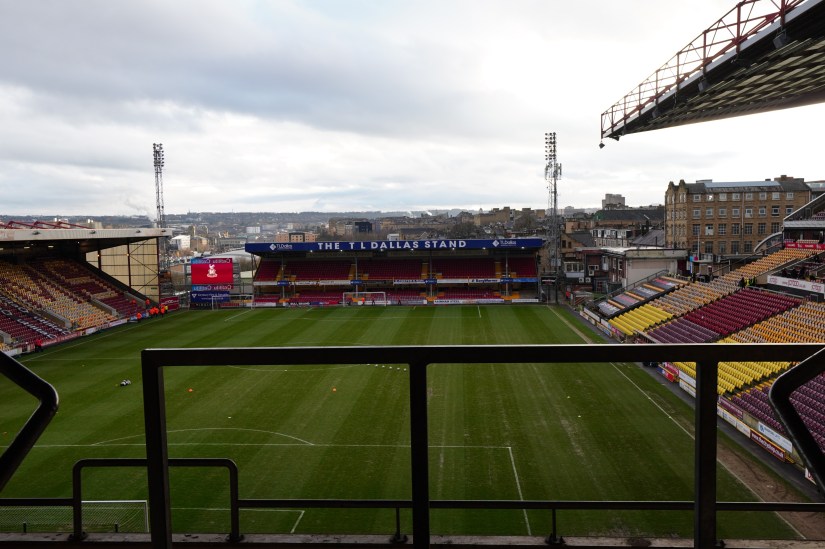
Valley Parade in the viewfinder (December, 2019)

The following were taken by myself at the fixture vs Salford City on 21st December, 2019.

You can find other photos of Valley Parade, past and present as well as a history of the ground from this link.

@jpdewhirst

JD302687

JD302692

JD302695

JD302696 X

JD302699 X

JD302719

JD302722

JD302729

JD302730

JD302733

JD302735

JD302737

JD302758

JD302762

JD302764

JD302767

JD302769

JD302770

JD302773

JD302789

JD302792

JD302802

JD302820

JD302837


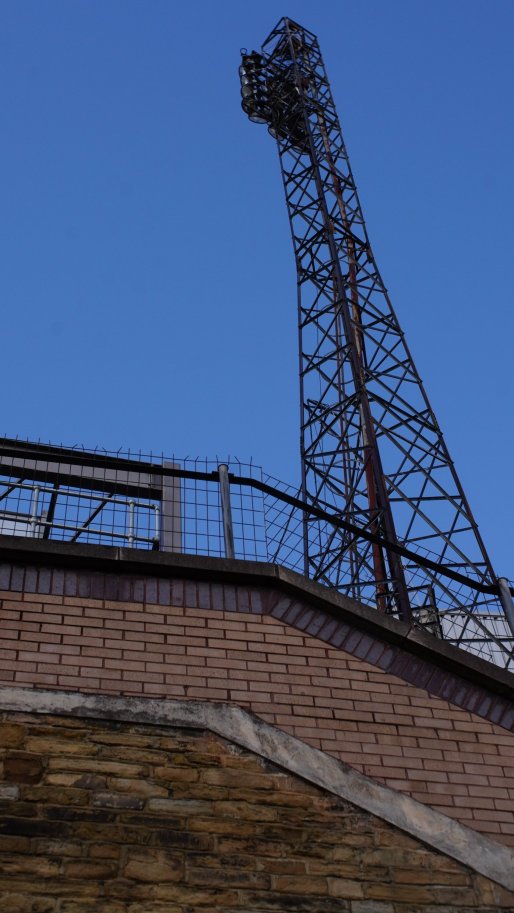
Finally, taken in Feb-20 this is the floodlight at the corner of the Bradford End and Midland Road. Valley Parade now has only three pylons and relies on lamps mounted in the roof of the stand to cover the NW corner.

wp-15830523389011854646959936654252.jpg


Newport County, 7th December 2019

PROGRAMMES OF OLD

Published in the Bradford City AFC match day programme for the above fixture

Of all the fixtures this season I confess that the most eagerly anticipated on my part were those with Newport County. Today will be memorable for the opportunity to welcome back the Newport manager, Michael Flyn to Valley Parade but it is also about the renewal of an old rivalry.

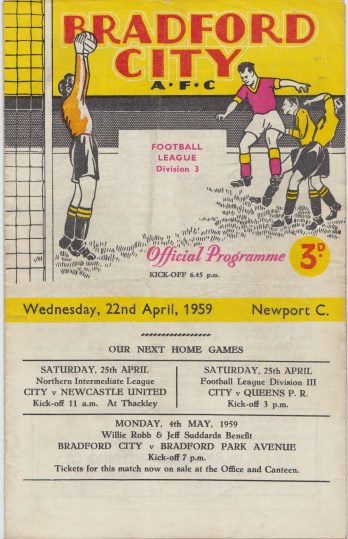
There have been 40 games between our sides. City boast 19 wins and Newport, 15 with just 6 games having been drawn. Only once has there been a goalless draw. Most of the scorelines have actually been fairly close, the one exception being our 6-2 victory at Valley Parade in January, 1960.

Scan_20190702

Not since our tragic but triumphant Championship season of 1984/85 have we competed in the same division. Our last game was at Somerton Park on 16th April, 1985 which had been rearranged after postponement in February. Our 1-0 victory put the Bantams on track for promotion to the second division but much has changed since that last meeting. Less than four weeks later there was the fire disaster and the Valley Parade of today will be totally unrecognisable to the visitors from Newport.

Scan_20190702 (18)

Somerton Park was equally decrepit and it surely ranked alongside The Shay, Halifax and the Victoria Ground, Hartlepool as among the worst in the League. For so long Newport County had been perennial strugglers on the verge of financial oblivion to which they eventually succumbed in 1989. In May, 1976 I recall the half-time fund raising at Valley Parade to raise money for County, a gesture that incurred the wrath of former Avenue supporters who claimed that the City faithful had never extended such goodwill to their club.

newport may 76 no colour

For so long City and Newport were rivals at the foot of the basement division and of the twenty seasons that we have been in the same division, all but six have been in the fourth tier. Our first meetings however were in Division Three in 1958/59 and we competed at that level for three seasons until City’s relegation in 1961. In 1979/80 we found ourselves in the unusual situation as promotion rivals and despite achieving a double against the Welshmen, County gained promotion at our expense on the last day of that season after City lost at Peterborough.

We eventually caught up with Newport in 1982/83 until we parted company in 1985. It tends to be forgotten that until 1987 at least, Newport County was the leading professional side in Wales.

Nowadays Newport County play at Rodney Park, a ground more famous as the home of Newport rugby and a venue at which Manningham FC – forerunners of Bradford City AFC – last played in December, 1893. During the course of my research into the origins of football in Bradford I was given access to the Newport sports archive that was uncovered at Rodney Parade. Like Bradford, Newport was something of an industrial frontier town in the nineteenth century and has a proud sporting heritage despite a lack of soccer glories. Welcome back to Bradford, Newport County!
 

An account of our visit to Rodney Parade in February, 2020 from this link.

You can find other features about the history of Bradford City AFC on this blog as well as links to other content that I have published previously. The menu provides links to archive images featuring historic photographs of Valley Parade as well as old programmes.

Details of my books.

Tweets: @jpdewhirst

Bradford City AFC programmes, 1945-66

During the 2019/20 season my column in THE PARADER, the BCAFC matchday programme features issues of old and those relating to historic fixtures with the opposition of the day. Additionally I am uploading features to this blog that record changes in the design of the publication in earlier decades.
Featured below are Bradford City AFC programme covers from the period 1945-66. My book A HISTORY OF BCAFC IN OBJECTS (BANTAMSPAST, 2014) includes other examples not to mention a full range of historic City memorabilia and relics…

You will find other Bradford City archive images by following the links in the drop down menu above. Also published on this blog are my features in the BCAFC programme from previous seasons, book reviews and sundry content about the history of Bradford sport.

On this blog you can also find features about the origins of the club identity, crests and nickname.

The drop down menu provides links to other content I have written published elsewhere including on VINCIT, the online journal of Bradford sport history

Updates to this site are tweeted: @jpdewhirst

dewhirst a history of bradford city in objects7582000201589702380..jpg

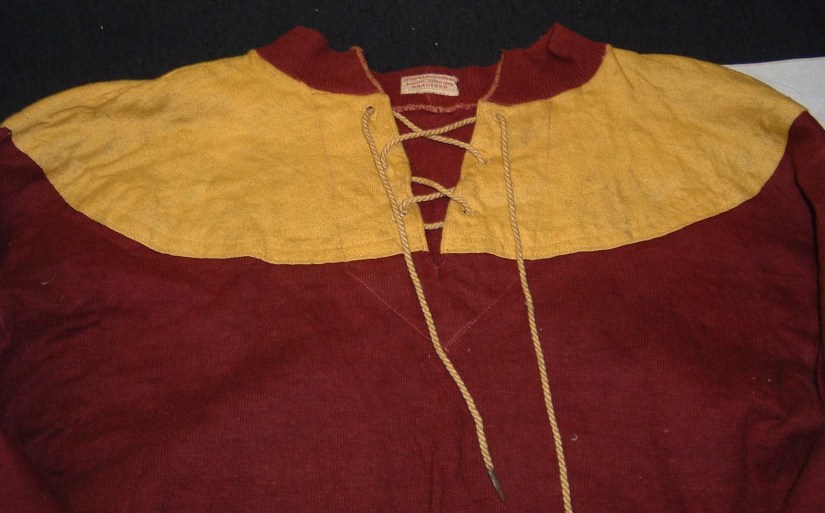
The claret & amber yoke shirt

The unique colours of Bradford City and Motherwell

The origins of Bradford City’s claret and amber colours date to 1884 when they were adopted by Manningham FC to replace their existing black shirts. As narrated previously on this blog [1] and on VINCIT [2], the choice of colours is most likely explained by local military heritage and patriotism.

Manningham FC opted to wear hooped shirts with the width of the claret hoop said to have been twice that of the amber. In 1903 the new Bradford City club retained claret and amber but opted for striped shirts by virtue of the fact that hoops were more commonly associated with rugby.

In 1908, at a time when the Bradford City side was struggling at the bottom the first division, the club adopted its bantam nickname [3]. By that stage the team was wearing an all-claret shirt with amber trip.

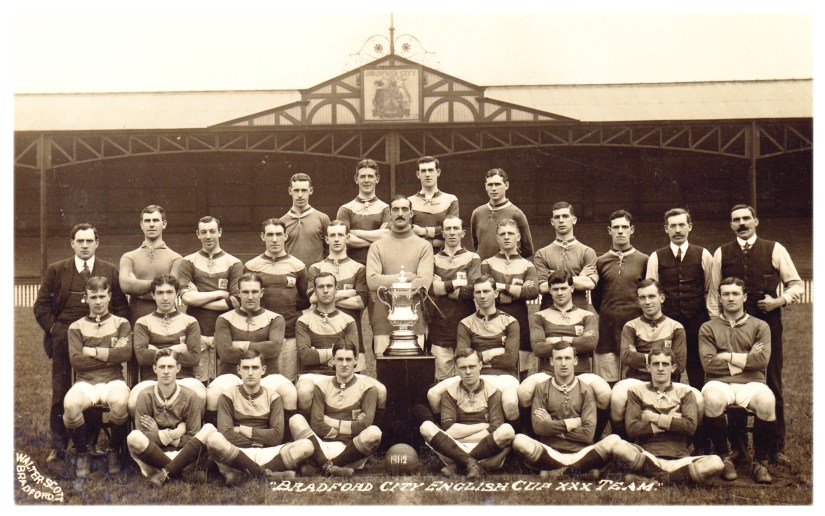
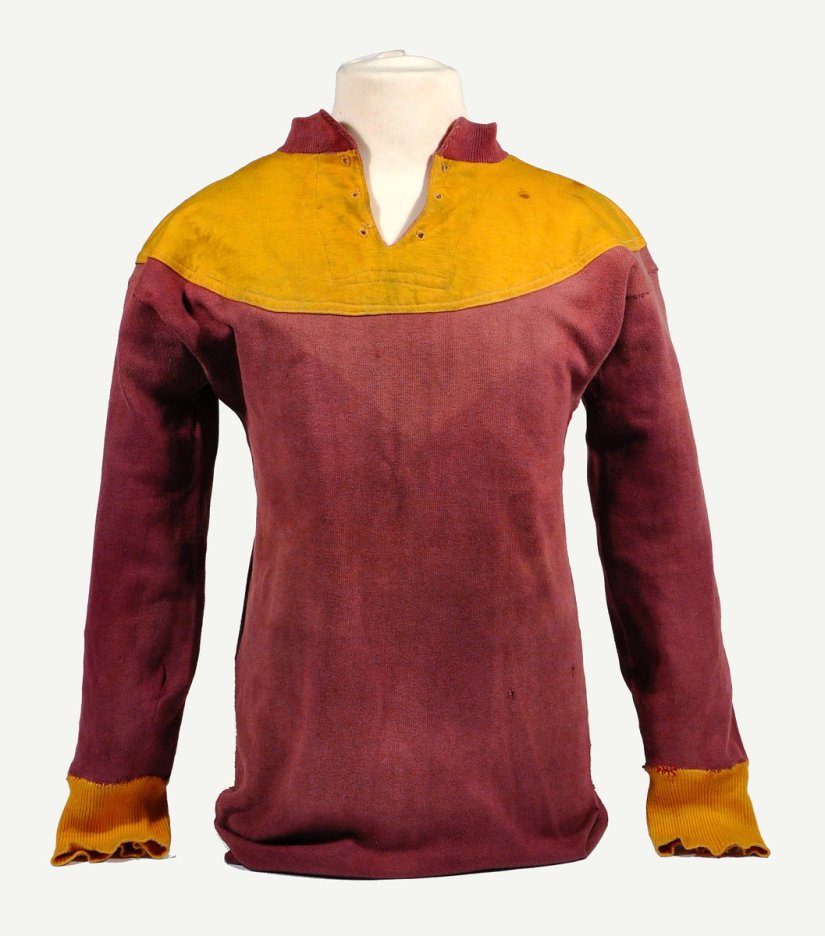
In 1909 the club adopted a new shirt design, nowadays referred to as its ‘yoke design’ which coincidentally had a resemblance to the plumage of a bantam as the graphic from the same year shown below demonstrates.


The yoke shirt was worn in the 1911 FA Cup final and apart from a solitary season was retained until 1928 when it was replaced by stripes. (Nevertheless, such was the affection for the shirt design that had been associated with the club’s greatest achievement that it was revived between 1948 and 1953.) [4]

1911

Torrance shirt 2

Shirt worn by Robert Torrance, BCAFC 1908-18 (NB Bob Torrance was Killed in Action during World War One)

Until 1912, Bradford City was the only senior club in Great Britain to wear claret and amber but in that year both Dumfries FC (a forerunner of Queen of the South) and Montrose FC adopted a yoke shirt in exactly the same colours and design. The following year, in 1913 Motherwell FC adopted the very same yoke shirt as introduced by Bradford City. Motherwell FC had originally played in blue and the reason for a change in colours to assumed to have arisen from the fact that there were frequent colour clashes with other sides and that the club sought a distinctive look. [6]

Motherwell’s first game in claret and amber was for a Scottish League fixture with Celtic (1-1, at Fir Park) on August 23, 1913. The Motherwell Times of 29th August reported that ‘Punctual to time the teams took the field, Motherwell wearing their new colours. The general opinion regarding the new colours is that while they may be distinctive they are by no means pretty.’

Motherwell shirt

The connection with Bradford extended to more than just the same colours because the new Motherwell shirts were manufactured by the Bradford firm, Sports & Pastimes Ltd Athletic and School Clothing Manufacturers, owned by the Fattorini family. Whilst the core Fattorini business was that of jewellery, the diversification into producing sports medals, trophies and badges had proved particularly lucrative. Tony Fattorini for example had derived leverage from his own sporting interests and Fattorinis were known as the designers of the FA Cup as well as Northern Union trophies. It was an incredible coincidence that the first winners of the new FA Cup trophy in 1911 was none other than Bradford City with whom Tony Fattorini was involved. The launch of the Sports & Pastimes business to sell sporting apparel and equipment was thus a logical extension of existing activity.
1924-08-23 YS Sports & Pastimes advert

Whilst Sports & Pastimes advertised its range of sports equipment extensively throughout Great Britain, there is a good chance that the Motherwell directors decided upon the supplier following a recommendation. (The image above is from August, 1924.) It is quite possible that they were impressed by the shirts worn by Dumfries and Montrose although it is unknown whether Sports & Pastimes supplied these.

The understanding among Motherwell supporters is that their club secured the shirts from Bradford City and this gives credence to the suggestion that they did not source them directly from Sports & Pastimes – in other words confirming that an intermediary was involved.
My belief is that an introduction was provided by someone whose contribution to the golden era of Bradford City should not be under-estimated. That individual was Thomas Paton, a man who was said to have been publicity shy – a factor that might explain (although does not excuse) why he has been overlooked in earlier histories about Bradford City AFC. [7]

Of course the Motherwell directors could well have written to Bradford City to request detail of the club’s kit supplier. However it is entirely consistent with Paton’s reputation that he had an involvement in Motherwell’s new colours and endorsing the Sports & Pastimes business.

Paton was probably one of the best networked individuals in Scottish football and with Lanarkshire having been a hotbed of football enthusiasm, he would have had his ear close to developments at clubs such as Motherwell. By maintaining links with Scottish sides at both junior and senior level, Paton had been consistently successful at introducing talented players into the Bradford City side and arranging player transfers. Furthermore, as a shareholder at Park Avenue it seems possible that his influence had extended to securing the appointment of Tom Maley as manager of the Bradford club in February, 1911.

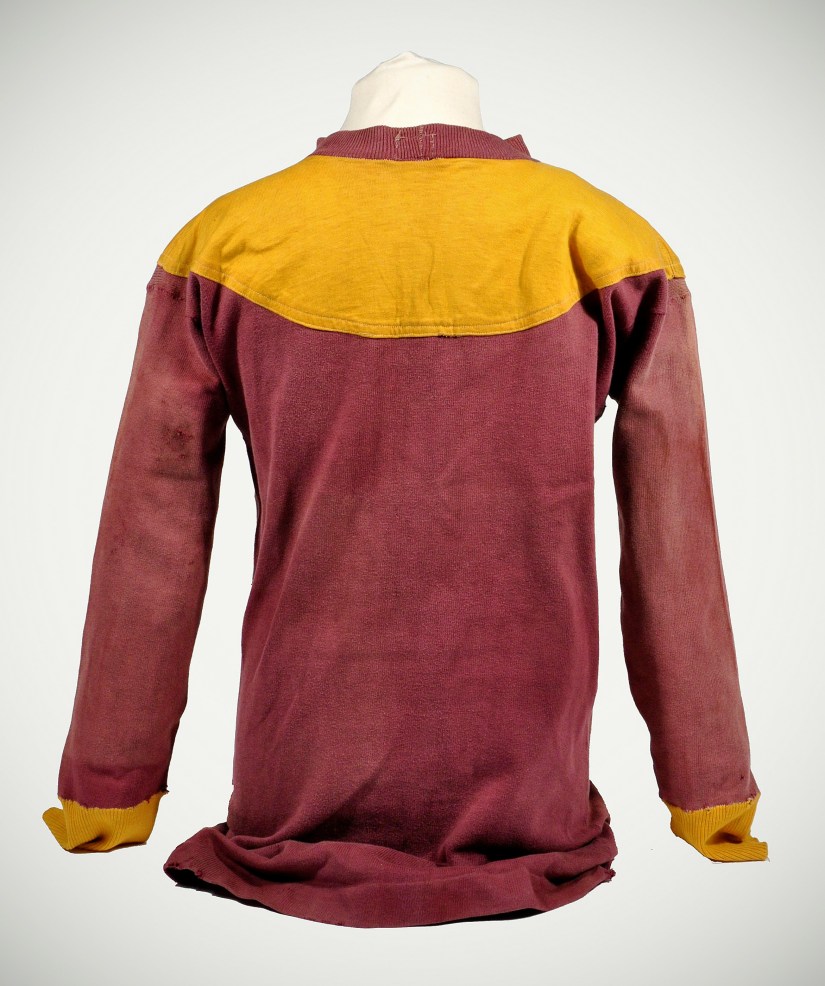
Motherwell shirt rear

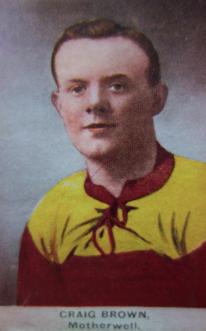
The above shirt is currently on display in the Summerlee Museum in Coatbridge – the very same as that of Bob Torrance. It was in the possession of Craig Brown who played for Motherwell between 1919-24 and now owned by his grandson, Keith Brown. A centre-half, Brown was transferred from… Bradford City who he had joined as a 21 year old in 1914. He had previously spent the 1916/17 season on loan at Motherwell. Hailing from Ayrshire he probably welcomed the opportunity to return closer to his roots and despite changing clubs he would continue to wear the same style jersey! (NB It is unknown whether he actually wore this shirt in a game.)

BrownCraigMotherwell1923.jpg

Motherwell retained the yoke shirt until 1924 when the club opted for claret and amber stripes. Whether the striped shirts were sourced in Bradford is unknown but surely Bradford City can be credited with having provided the inspiration. However in 1928 Motherwell introduced a new shirt design which has been the one more commonly associated with the club, that is an amber shirt with a broad claret band.

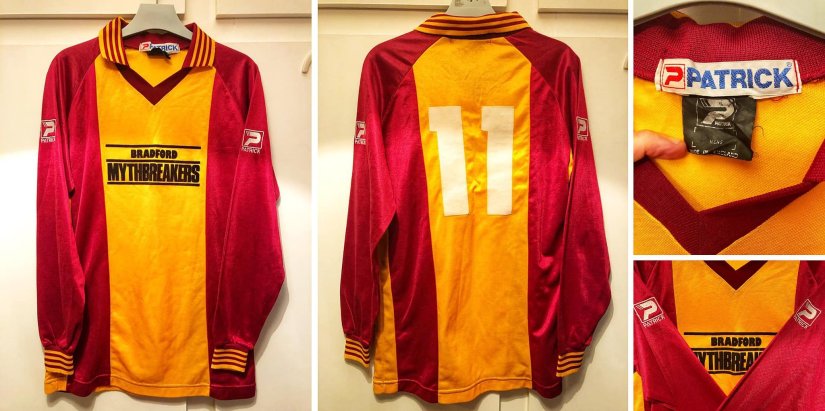
In 1983 it was the turn of Motherwell to give Bradford City a new home shirt design. First worn in Scotland in 1982/83, the same Patrick kit was adopted by the Bantams the following season.

The Motherwell side has worn some decent shirts in the last few decades. Those responsible for the design of a future Bradford City strip could do worse than deriving some inspiration from north of the border!

Thanks for visiting my blog. The drop down menu above provides links to features on the history of Bradford sport, content published in the BCAFC programme and book reviews. Tweets: @jpdewhirst

My thanks to William Kay for his assistance with information about Motherwell FC and its history.

The following provides further detail about Bradford City’s nickname, colours and kit as well as Thomas Paton…

[1] Military heritage and the adoption of claret and amber by Bradford City AFC

[2] Bradford’s military heritage and the sporting links

[3] The origins of the Bantams nickname

[4] Traditional BCAFC claret and amber shirt designs

[5] More about Bradford City crests and nicknames

[6] Montrose FC wore a claret and amber yoke shirt between 1912-15 and Dumfries FC, 1912-19. The style was also popular at the time with amateur football teams in the Bradford district which may suggest a Sports & Pastimes connection. Similarly a surviving photograph confirms that the Bramley (Northern Rugby Union) team wore a yoke shirt in 1916.

[7] Brief biography of Tom Paton by Ian Hemmens, taken from LIFE AT THE TOP (pub Bantamspast 2016):

Thomas Paton was born in Midlothian in 1868 and was initially involved as fixture secretary for St. Bernards FC of Edinburgh, Scottish Cup Winners in 1894 and at that time credible rivals to Hearts and Hibernian. After qualifying as an accountant he came south to Bradford in 1901, appointed as secretary of Yorkshire Woolcombers Association Ltd but in 1904, after the company’s liquidation in the High Court, he established an accountancy practice, Messrs Paton, Boyce & Welch at Piccadilly, Bradford.

Whilst in Bradford he became involved with Bradford City AFC, probably introduced through his business contacts in the city. Working alongside secretary-manager Peter O’Rourke, he used his network north of the border to entice players to Valley Parade. The likes of Jimmy and Peter Logan, Jimmy MacDonald and Harry Graham all arrived from St Bernards FC. Additionally, he captured future legends of the club including Frank O’Rourke, Jimmy Speirs, Robert Torrance, Dave Taylor, Jock Ewart and Tommy Cairns from Scotland as well as the England internationals Evelyn Lintott and Dickie Bond. All of these men contributed to the club’s so-called golden age before World War One that included FA Cup victory in 1911.

He joined the board of directors just after the incorporation of the club in 1908 before resigning in 1912. In 1928 he was instrumental in helping achieve a restructure of the Bradford City board which helped avert financial disaster. In 1907 he had favoured the merger of Bradford City at Park Avenue and had invested as a shareholder in Bradford Park Avenue in 1909.

In 1925 Paton retired to Girvan, Scotland although kept his house in the Chellow Dene district of Bradford. Nevertheless, he remained involved with football and helped facilitate the transfer of Scottish International Alex James from Preston North End to Arsenal in 1929. This particular arrangement came about from his friendship with Jock Ewart (who had moved to Preston in 1928) and that with Arsenal manager Herbert Chapman who knew Paton from his time in West Yorkshire as manager of Leeds City and then Huddersfield Town. Paton died in 1946, aged 78.

[8] A bantam…

Remembrance Day reflections

Poppyremembrance

We remember

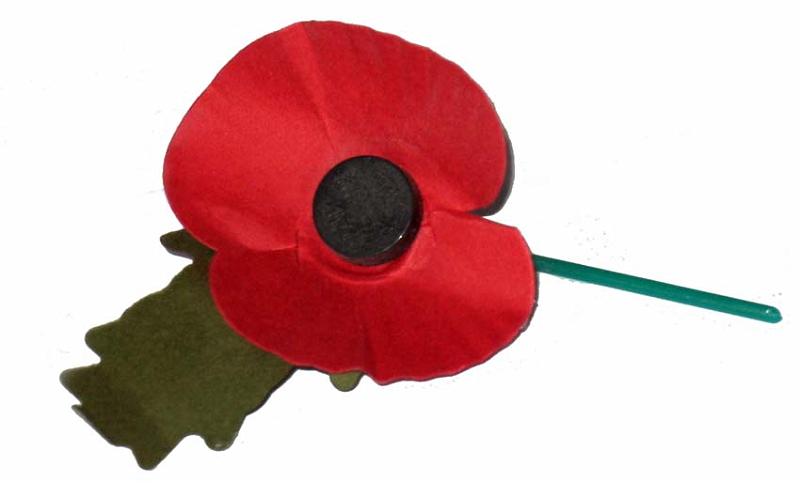
Monday, 11th November marks the 101th anniversary of the end of World War One. It was a conflict that has a particular poignancy for Bradford City supporters with four serving and six former players of the club having lost their lives. The fatalities included Jimmy Speirs, team captain and scorer of the winning goal in the 1911 FA Cup Final replay as well as Bob Torrance, acclaimed as man of the match in the replay.

Whilst it is important to remember the sacrifice of the club’s players we should also recognise that the so-called Great War of 1914-18 impacted greatly on the football club. Indeed, what tends to be overlooked is that numerous supporters of the club were also among the war dead and injured. In turn the war touched upon the families of Bradfordians. In the aftermath of the war nothing was quite the same for either the city of Bradford or Bradford City. Aside from the personal tragedies, the city had lost its German community and the finances of Bradford City AFC were depleted to the extent that the club lost its first division status in 1922.

Historic links between sport and the military in Bradford

The war also redefined the links between the football club and the local military. When I undertook my research on the origins of football in Bradford, it became apparent that the historic ties between sport and the military in the district had long since been forgotten. This is ironic given the constant reminder provided by the traditional club colours of City and Avenue / Northern having been derived from military connections. My belief is that after the carnage of the Great War the military heritage tended to be overlooked, not necessarily for ideological reasons but because it was probably seen as outdated, if not irrelevant as people looked to the future.

The early history of Manningham FC – established in 1880 and the predecessor of Bradford City AFC in 1903 – had strong links with the citizen soldiers of Bradford. The generation of men involved with establishing ‘football’ clubs in Bradford during the second half of the 1870’s was typically connected with the Volunteer – or territorial – army units in the town and ‘athleticism’ in the widest sense was considered to be a form of military training by virtue of its health benefits.

The Volunteers had been established in 1859 to provide a home defence force to protect the UK from invasion and in Bradford the principal units were the 3rd Yorkshire (West Riding) Rifle Volunteer Corps and the 2nd Yorkshire (West Riding) Artillery Volunteers Corps.

One reason for the popularity of the Volunteers was that they provided recreational opportunities and in particular access to new sporting activities such as gymnastics and ‘football’ (which in Bradford meant rugby). There was even a dedicated side, Bradford Rifles FC established in 1875 which comprised of a high proportion of Bradford Caledonian FC players (one of the oldest clubs, established in 1873 and also the biggest), a number of whom subsequently became associated with Manningham FC in leadership roles.

This connection encouraged a natural sympathy towards the military but so too did the proximity of Valley Parade to Belle Vue barracks where the 3rd YWRRVC was based. Closer still were the artillery barracks adjacent to Cottingley Terrace just off Valley Parade. Both were used on various occasions for meetings as well as changing and training facilities by Manningham FC and the infant Bradford City club. (The story of the Bradford Rifles is told here on VINCIT)

The dominant political culture at Valley Parade and Park Avenue prior to World War One was unquestionably Conservatism and it was second nature for the two clubs and their membership to espouse patriotism. A good example of this was the decision to adopt claret and amber in 1884. This came at a time of patriotic fervour associated with the Sudan crisis and the excitement that Bradford men might actually go to war. Arguably it was the same enthusiasm thirty years later with spectators at Valley Parade being actively encouraged to enlist to fight on the western front.

The traditional sporting colours of Bradford were red, amber and black whose origin can be traced to the original Bradford Volunteers of the Napoleonic era. The colours of the local West Yorkshire regiment with whom the 3rd YWRRVC was affiliated were claret and amber.

The Valley Parade War Memorial

FullSizeRender

In addition to the 1911 FA Cup heroes Jimmy Speirs and Bob Torrance, the war dead included England internationals Evelyn Lintott and Jimmy Conlin, James Comrie, George Draycott, Ernest Goodwin, Gerald Kirk and Harry Potter. Unfortunately the status of Ernest Kenworthy who played two games for the club in 1906/07 was not established until after the erection of the memorial in the Valley Parade reception in 2015. (NB George Draycott, Ernest Goodwin, Harry Potter and Bob Torrance were serving players of BCAFC at the time of being killed in action.)

Subsequent to the war, Jimmy Speirs and others with a Valley Parade connection were remembered first and foremost as fallen soldiers among comrades in arms. So many men had been killed that there was a reluctance to differentiate former professional football players as deserving of unique attention and the players would have concurred with this treatment. Nowadays the fallen players are afforded particular prominence whereas prior generations tended to remember them among countless others who never returned. The distinct commemoration of footballers killed in action has thus been a more modern phenomenon.

A memorial to the war dead of Bradford City was not erected at Valley Parade until 2015 and this hangs in the Valley Parade reception. (The person who made this possible was supporter John Barker of Farsley who arranged its production.) The memorial was funded by a badge sale that I helped organise through Bantamspast and the proceeds also helped fund a stone memorial to the Bradford Pals at Serre near the Somme battlefield in France.

bantamspast Bfd Pals badges

Further detail of Bradford’s military history is told my book ROOM AT THE TOP, available from Waterstones and Salts Mill or direct from BANTAMSPAST HISTORY REVISITED BOOKS.

John Dewhirst

I have written widely about the history of sport in Bradford: Links to my features on the history of Bradford sport

Read about Jimmy Speirs and Bob Torrance (published in BCAFC programme 2017/18).

Read about Bradford City’s tour of Germany in 1914

—————————————————————————————————–

The drop down menu above provides links to features published in the BCAFC programme, book reviews and sundry articles about the history of Bradford and its sport.

If you are interested in local sporting history, visit the dedicated online journal VINCIT where you will find further background about the military heritage at Valley Parade.

Exeter City, 2nd November 2019

PROGRAMMES OF OLD

Published in the Bradford City AFC match day programme for the above fixture

We have been rivals in the same division as Exeter City over 20 seasons of which 13 have been at this level in the fourth tier (with the remainder in the third tier). Not surprisingly old programmes for this fixture have been relatively modest. Those featured in today’s issue from between 1962 and 1983 are all from an era when the Bradford City match day publication was basic to say the least.

Thus far we have won 15, drawn 11 and lost 14 in the Football League. The one cup game between the sides was in the League Cup in 1964/65 which resulted in an Exeter victory

The first League fixtures took place during the 1961/62 season when City achieved a double. The inaugural game at Exeter in November, 1961 was won 2-1 and this was followed by a 5-1 victory at Valley Parade in April, 1962 (featured).

Our biggest victory however remains the 6-0 result at Valley Parade in August, 1993 in the third tier. In fact the games between the two sides have been relatively free scoring and only 5 of the 40 League games have ended goalless including that in February, 1976 (featured). In aggregate the League games have yielded 111 goals with City having the advantage, 59 against 52.

There was a time when Exeter were something of a bogey side for City and between September, 1974 and October, 1983 there was a series of 11 games that ended in six defeats and five draws. The pendulum then swung in favour of the Bantams and of the next ten games between February, 1984 and September, 2008 we enjoyed six victories, three draws and only one defeat.

The 2-0 vitory at Exeter in February, 1984 is remembered as a record-breaking ninth in succession that allowed the club to escape from the relegation places in the third tier, a springboard to championship success the following season.

The last three fixtures however – which have all been in the basement division – have resulted in defeats for the Bantams, the most recent of which in March, 2013 when it seemed that a 1-4 reverse at St James Park had ended our play-off ambitions.

You can find other features about the history of Bradford City AFC on this blog as well as links to other content that I have published previously. The menu provides links to archive images featuring historic photographs of Valley Parade as well as old programmes.

Details of my books.

Tweets: @jpdewhirst