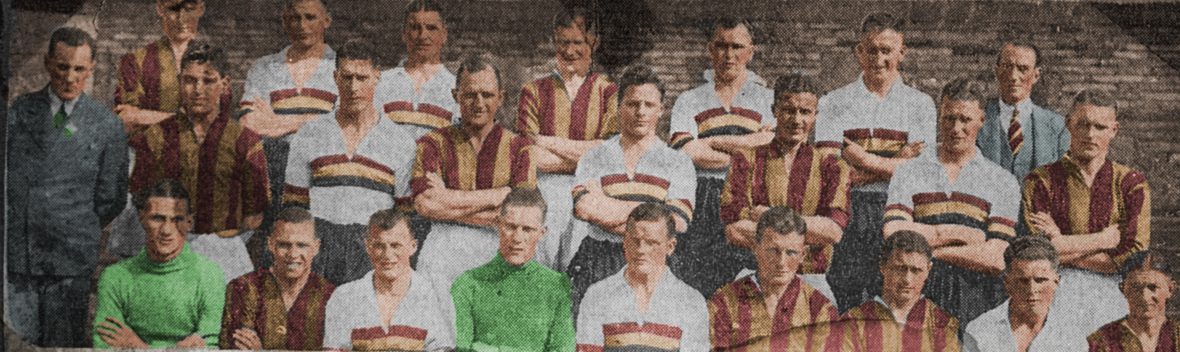

The fortieth anniversary of the Valley Parade fire is a time for reflection, no less the recognition of how much has changed in English football since 1985. Whilst on a motorcycle trip up the Solway coast I visited Borough Park, home of Workington AFC and it prompted memories of the lower division grounds I visited when I began to follow BCAFC and a reminder of the state of English football stadia of that era.
Historically, finance was always the critical issue dictating spectator safety. However it was not simply a shortage of funds to maintain stands and terracing as distinct from a mindset that afforded ground maintenance a lower priority to actually spend money for that purpose. Prior to the fire disaster in 1985 for example, the ‘modernisation’ of grounds tended to be confined to the erection of segregation fencing.
Whilst you could point a finger at lower division grounds being in the worst condition and in the greatest need of renovation, they were not necessarily the least safe. The restructuring of the lower divisions and replacement of the regionalised third divisions with the national third and fourth divisions in 1958 had failed to stem the collapse in attendances and ironically this latter factor probably explains why disasters were so few. Aside from the general impoverishment of lower division clubs that constrained spending, low crowds made it easier for them to justify economies on maintenance and repair. Visiting larger stadia in the early 1980s I always felt more at risk at First Division grounds than attending bread and butter Fourth Division matches involving Bradford City.
By the late 1970s Valley Parade was already decrepit and crucially, despite Bradford City developing new funding streams from lotteries the money was directed at team strengthening instead of ground redevelopment. Those supporters with concerns about ground facilities tended to stay away with the hardcore more inclined to put up with poor conditions and voicing a preference for resources to be focused on winning games.
Valley Parade was in a category of larger grounds staging lower division football that could boast a pedigree of having been a first division ground at some stage in their history. In this regard it was not alone and in 1980 for example you could point to Bloomfield Road (Blackpool), Leeds Road (Huddersfield), Fratton Park (Portsmouth) or even Boothferry Park (Hull) (NB the latter was of higher division standard although never staged football at first division level) as stadia with their best years long behind them. The difference was that in the case of Valley Parade, its best years were even further back and Bradford City had been forced to cope with lower division finances since 1937.
There was also a category of grounds that had never tasted success other than a handful of cup dramas. These were the grounds of the perennial strugglers who lived hand-to-mouth and in general were represented by a handful of northern clubs who had been admitted to the Football League when it was expanded in 1921 with the new Division Three (North). The likes of Crewe, Darlington, Halifax, Hartlepool and Rochdale had been archetypal survivors and were also known for their basic and outdated ground facilities. (Others such as Accrington, Ashington, Durham or Nelson or Stalybridge and more recently Barrow in 1972 had long since fallen by the wayside and lost their League membership.) At the end of the 1970s you would additionally nominate the grounds of Chester (Sealand Road), Doncaster Rovers (Belle Vue) and Newport County (Somerton Park) for their poor state.
Even the two clubs joining the Football League in the second half of the 1970s – Wimbledon (1977) and Wigan Athletic (1978) – could hardly boast impressive grounds and it is questionable whether Springfield Park (Wigan) was an improvement on Southport’s Haig Avenue (which ironically boasted one of the most modern stands in English football, constructed to replace the original wooden stand that had burned down in 1966). With regards Wimbledon’s original Plough Lane home, from what I recall it was no better than such as Gresty Road (Crewe) or Spotland (Rochdale).
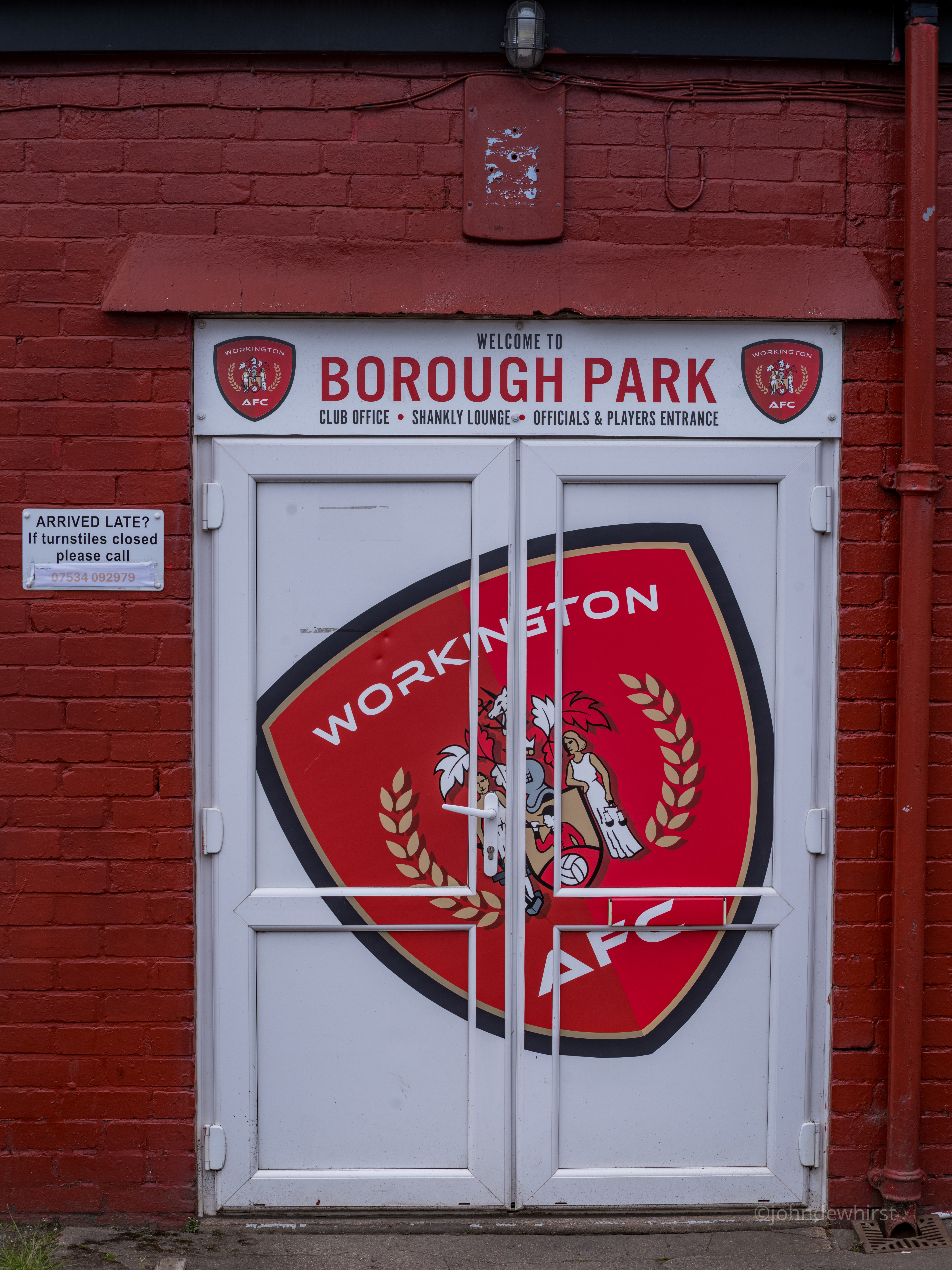
Which then brings us to Workington, the club which lost its Football League membership to Wimbledon in 1977 having originally been elected in 1951 in place of New Brighton. The club now competes in the Northern Premier League Premier Division, the seventh tier of English football. Whilst members of the League, Workington’s Borough Park ground is remembered for its basic amenities although it boasted a good reputation for the standard of its pitch.
In much the same way that Workington’s membership of the Football League was uneventful, the club has enjoyed limited success in non-league football during the last 48 years and has continued to be disadvantaged by its remote geographical location. At least as a League club it could entice new recruits to play for the Reds. Outside of the Football League it has been handicapped by the lack of a major benefactor and my suspicion is that this curtailed the ambitions of the club, forcing an emphasis instead on survival which has at least been achieved without any incidence of formal insolvency.

The club was inevitably impacted by the de-industrialisation of the town and its economic decline in the 1970s and 1980s in particular. Needless to say, whereas each of the other League grounds highlighted above have either been significantly redeveloped or replaced, that has not been the case with Borough Park although plans are afoot for its imminent replacement with a new ‘sports village’ (a similar concept to that at Fylde and Scarborough). A successful football club might have been the antidote that the town needed to cope with economic and social change. Belatedly, the development is intended to make sport central to local community initiatives.
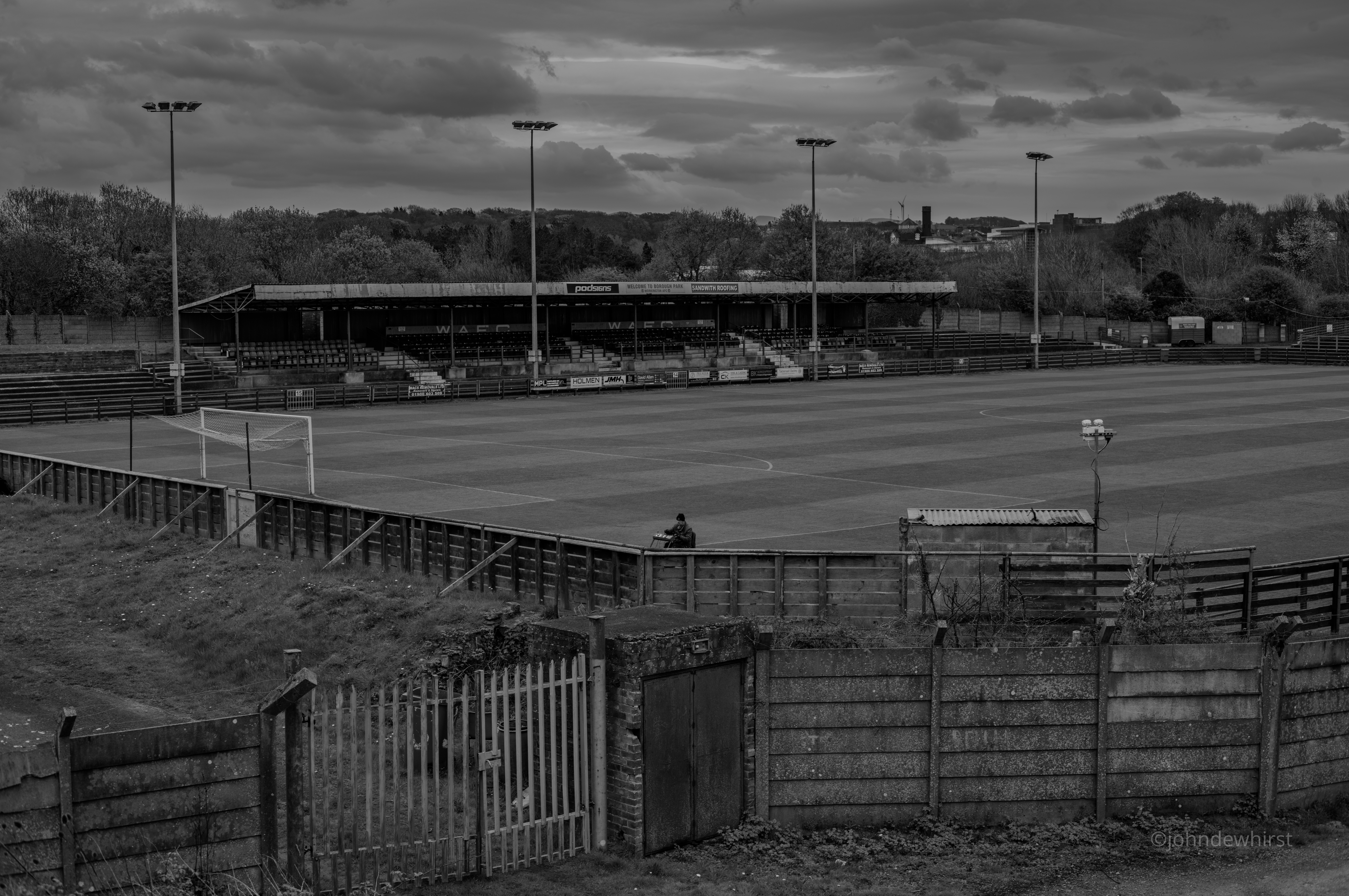
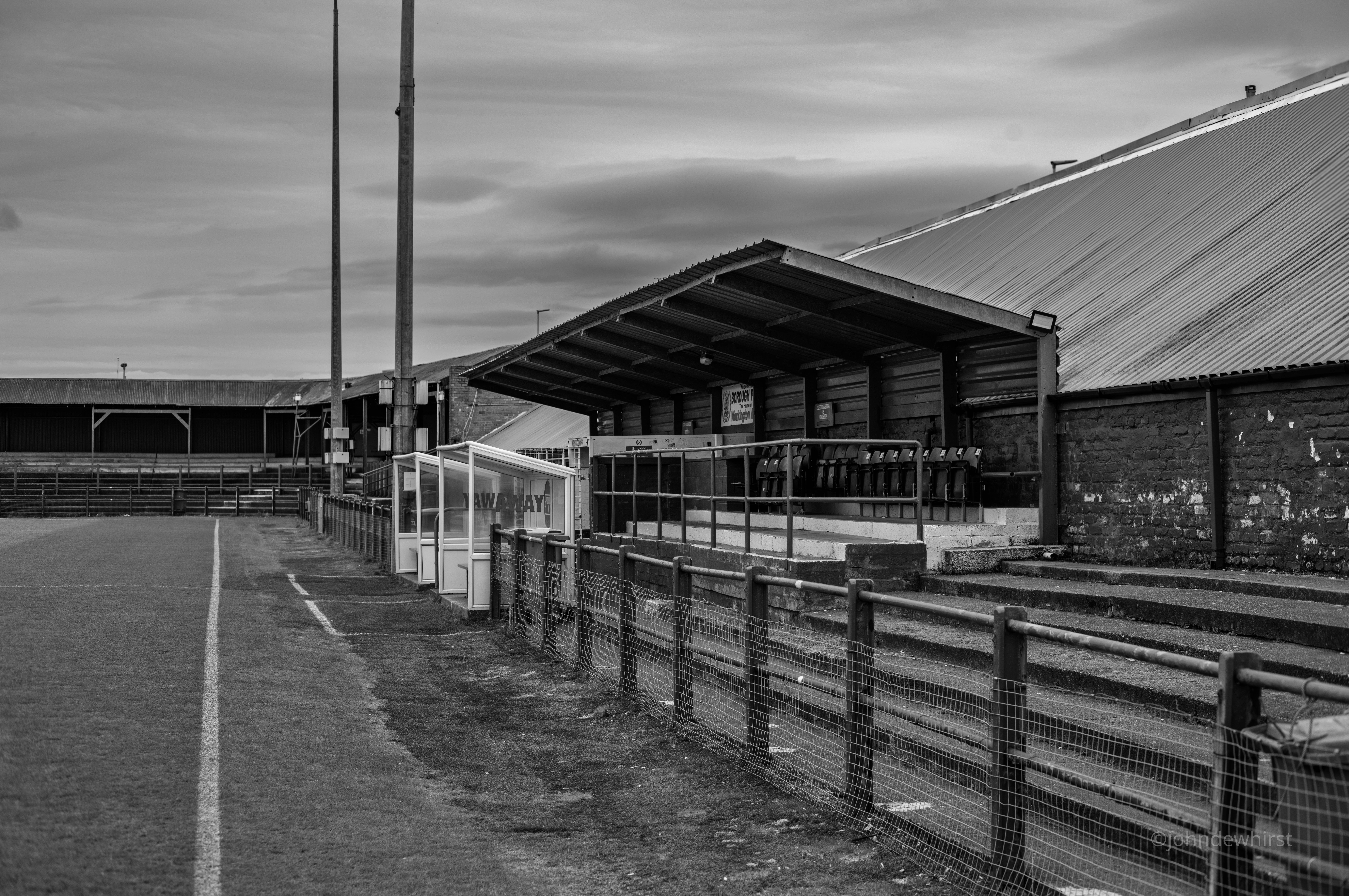
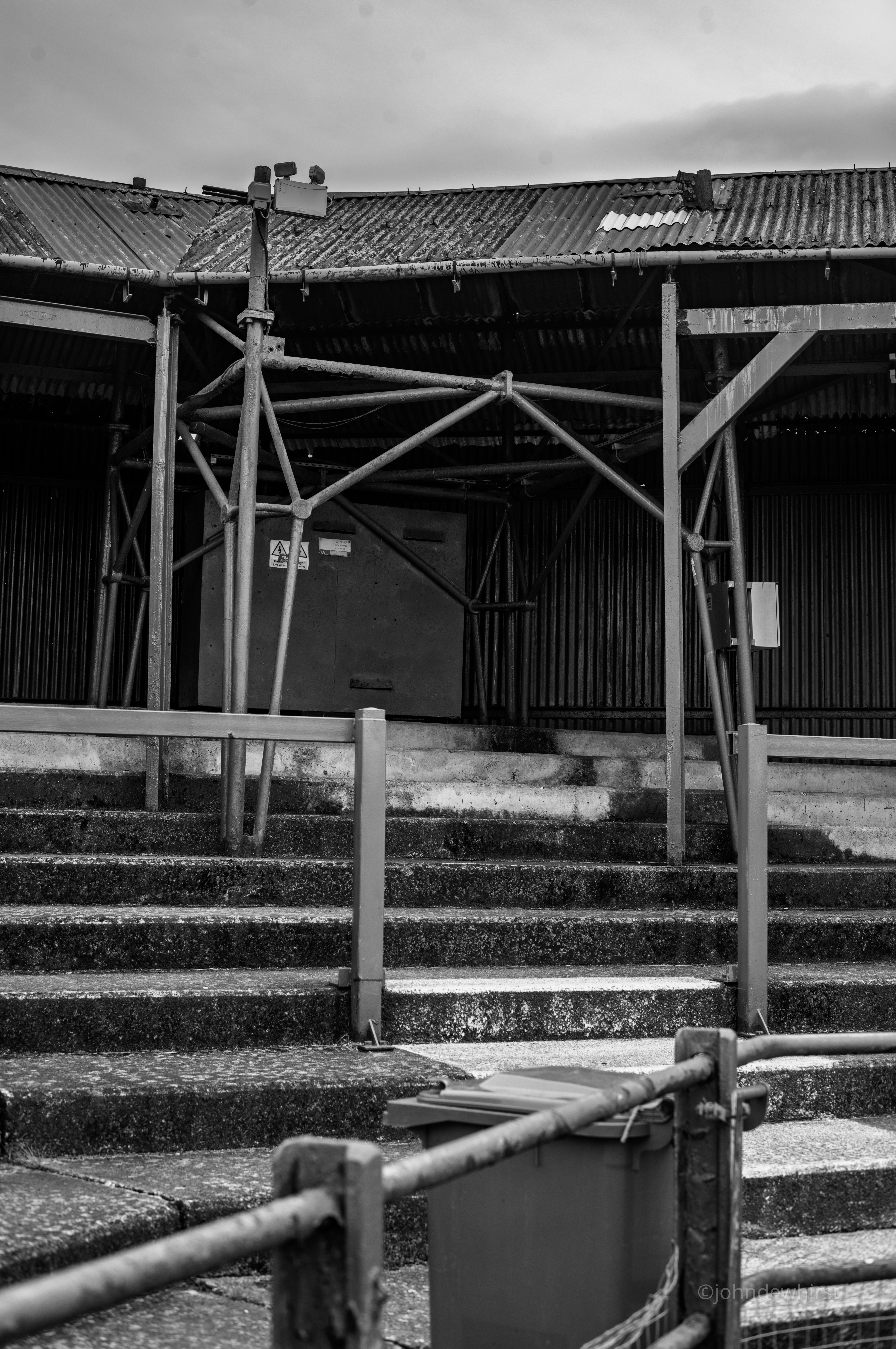
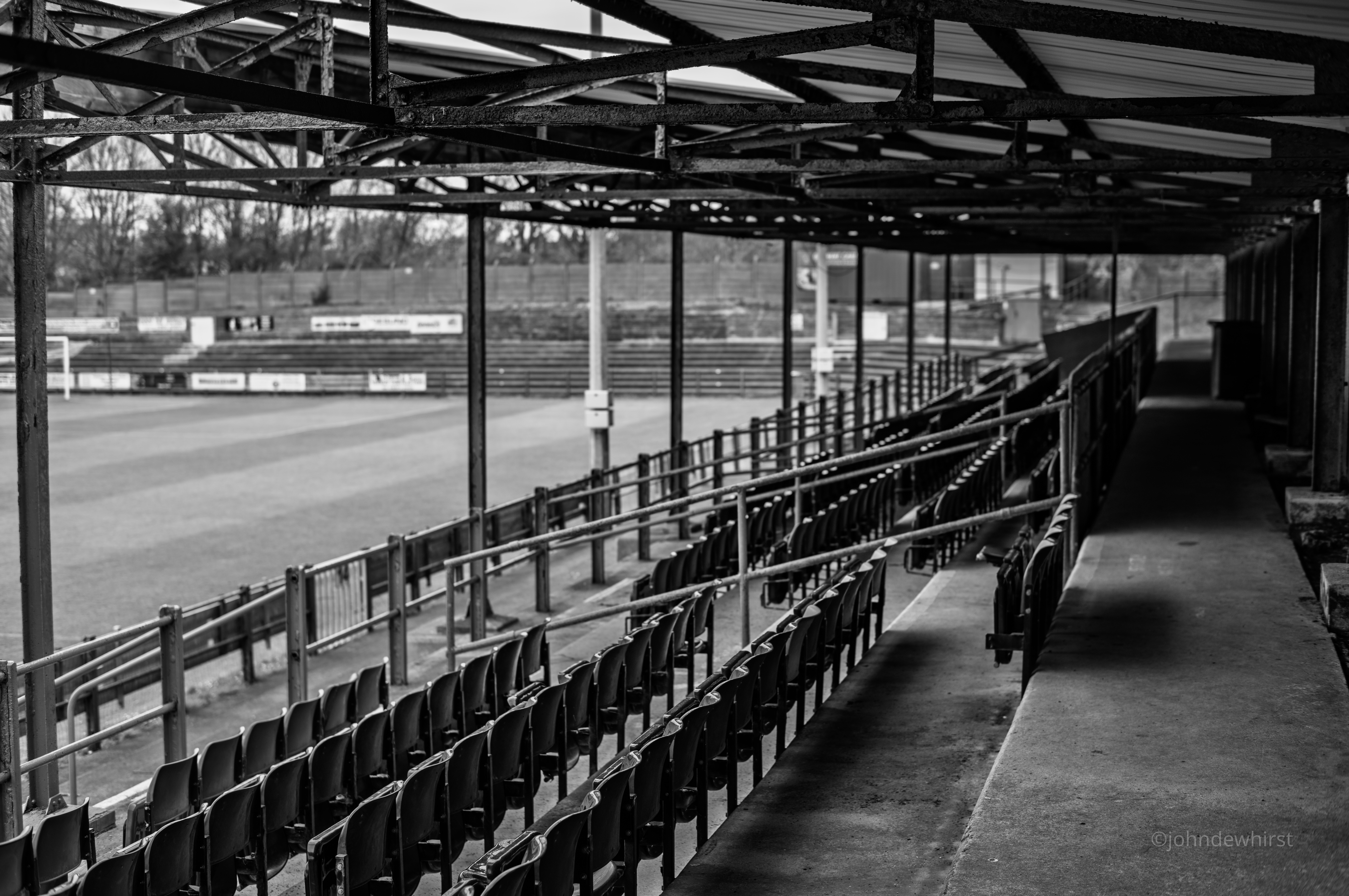
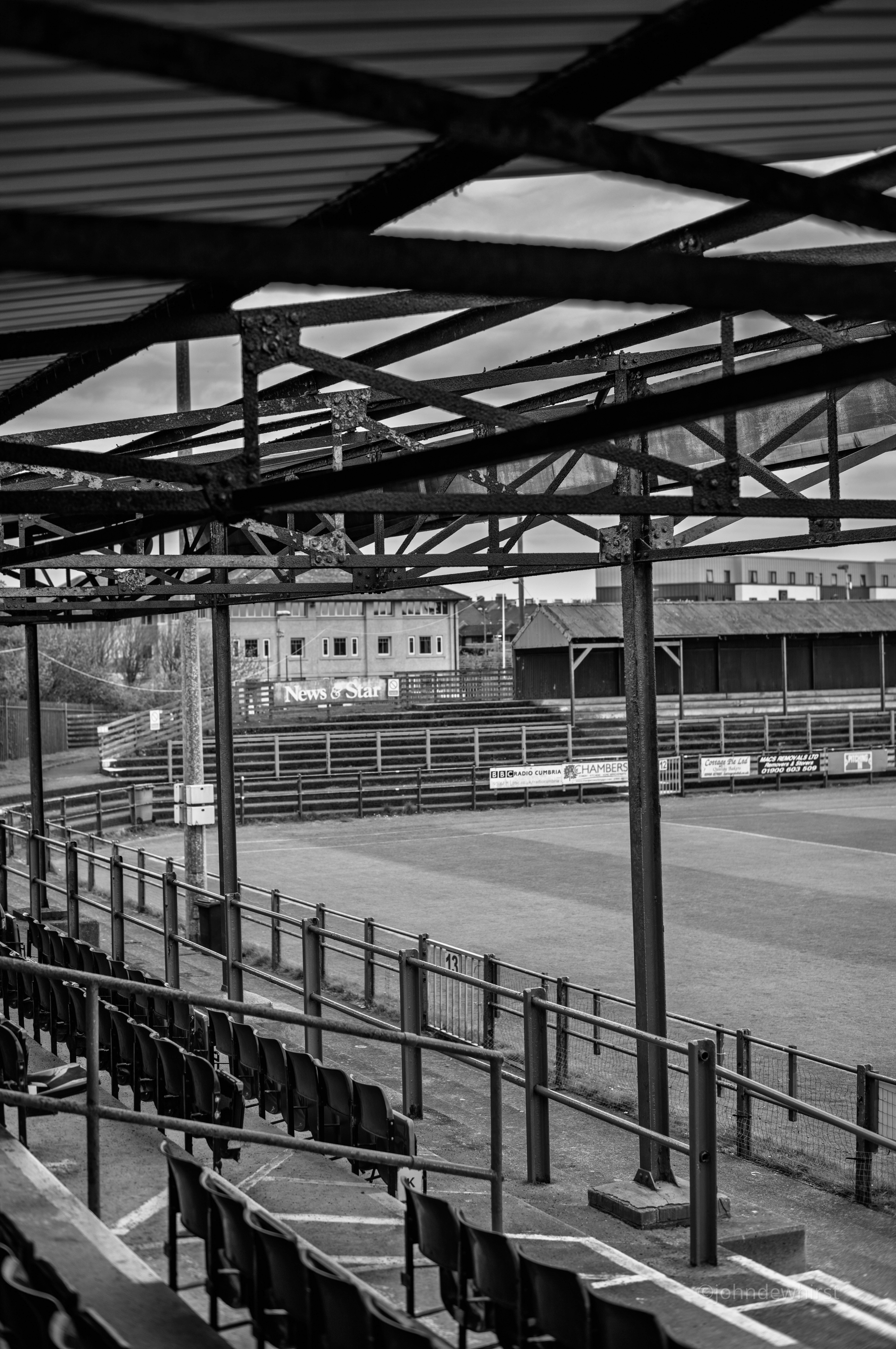
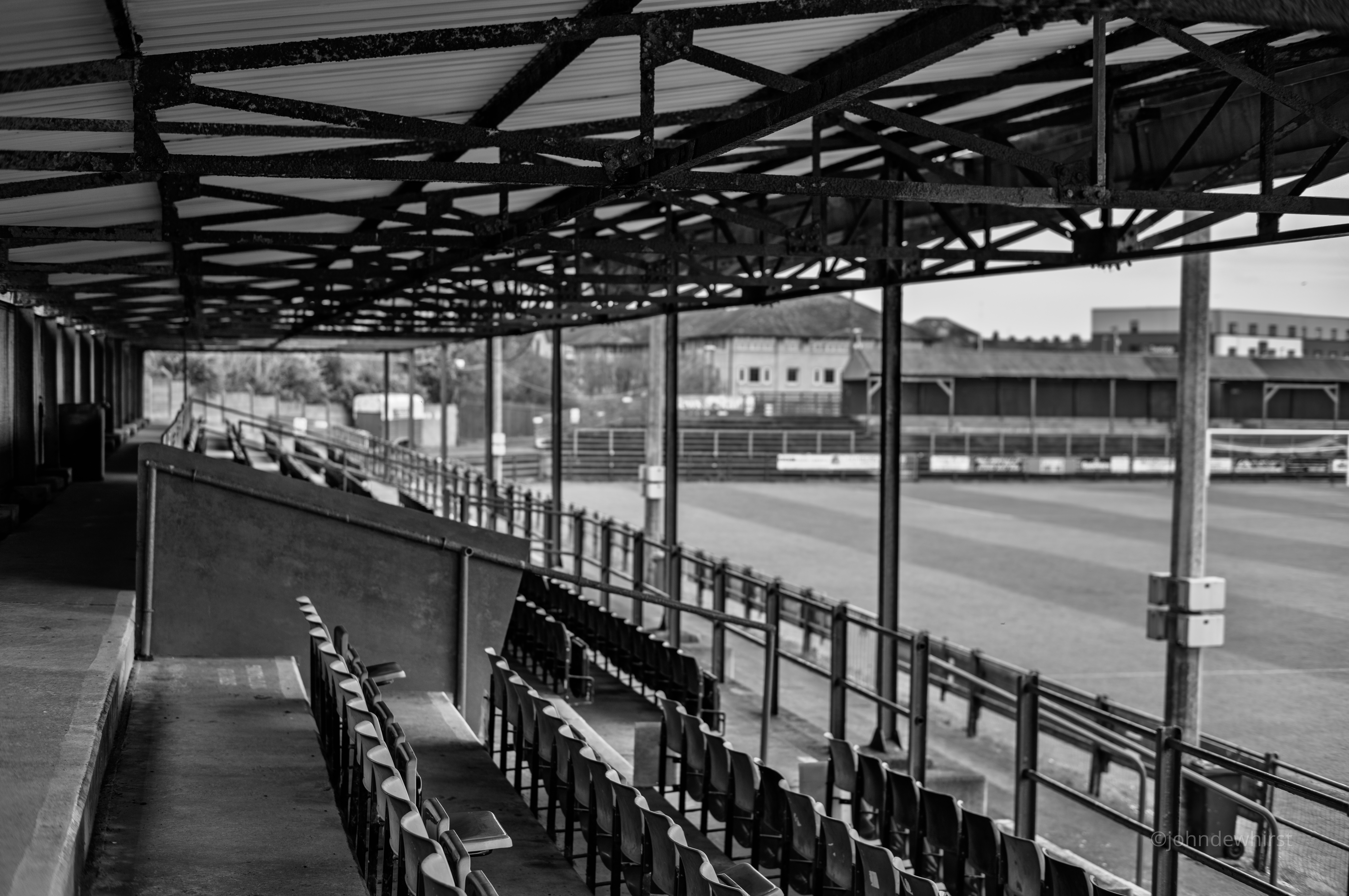
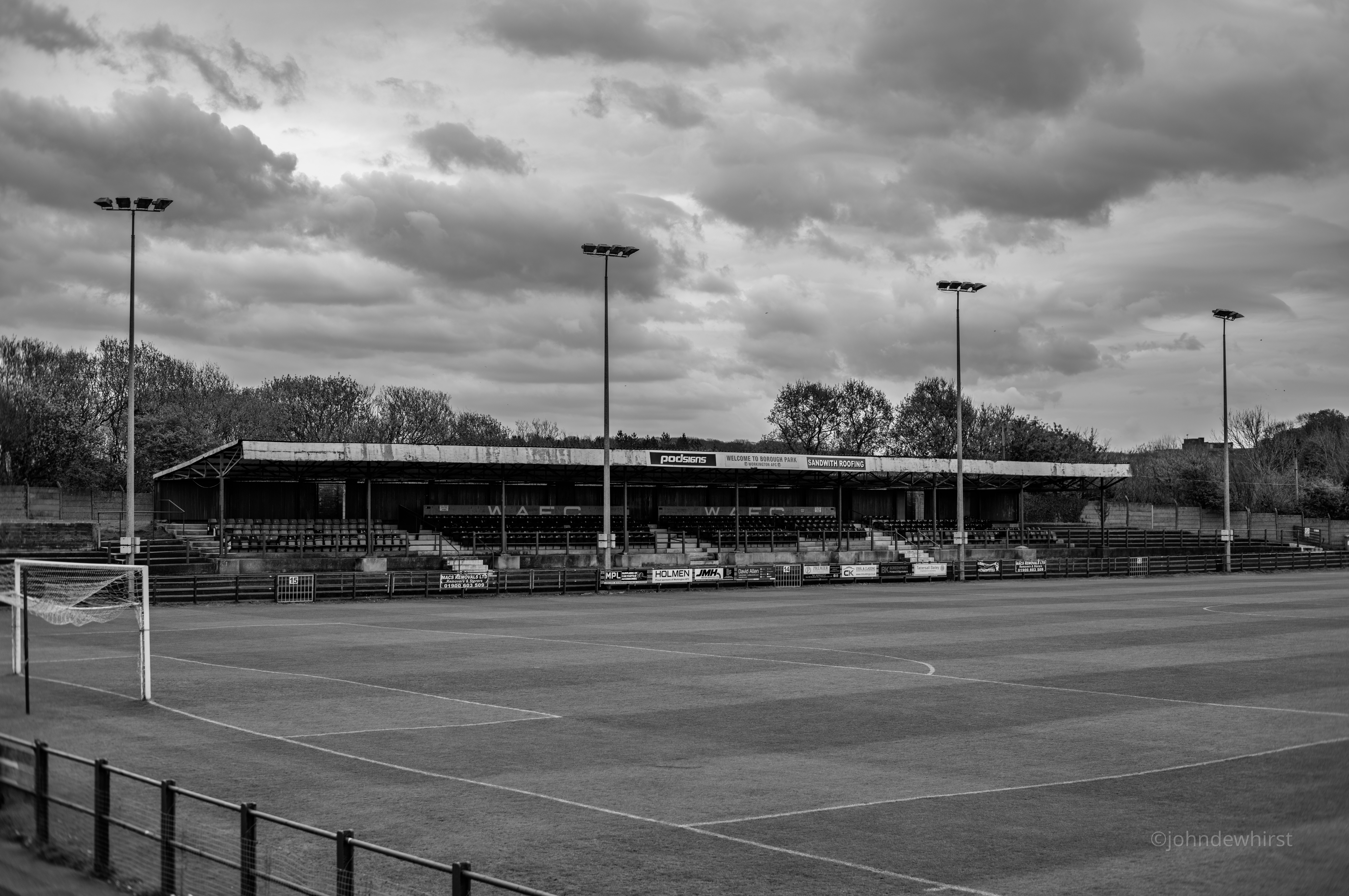
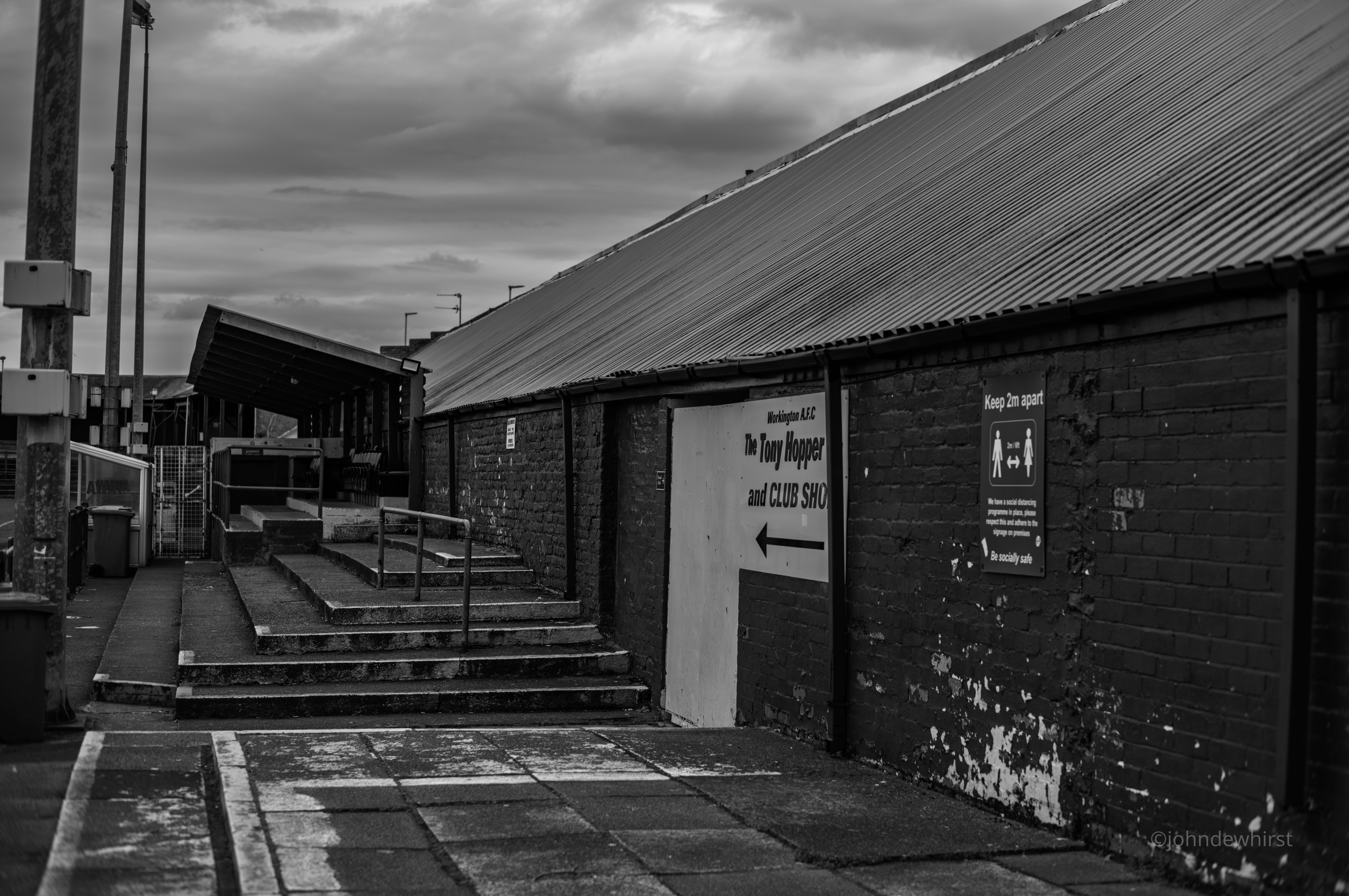
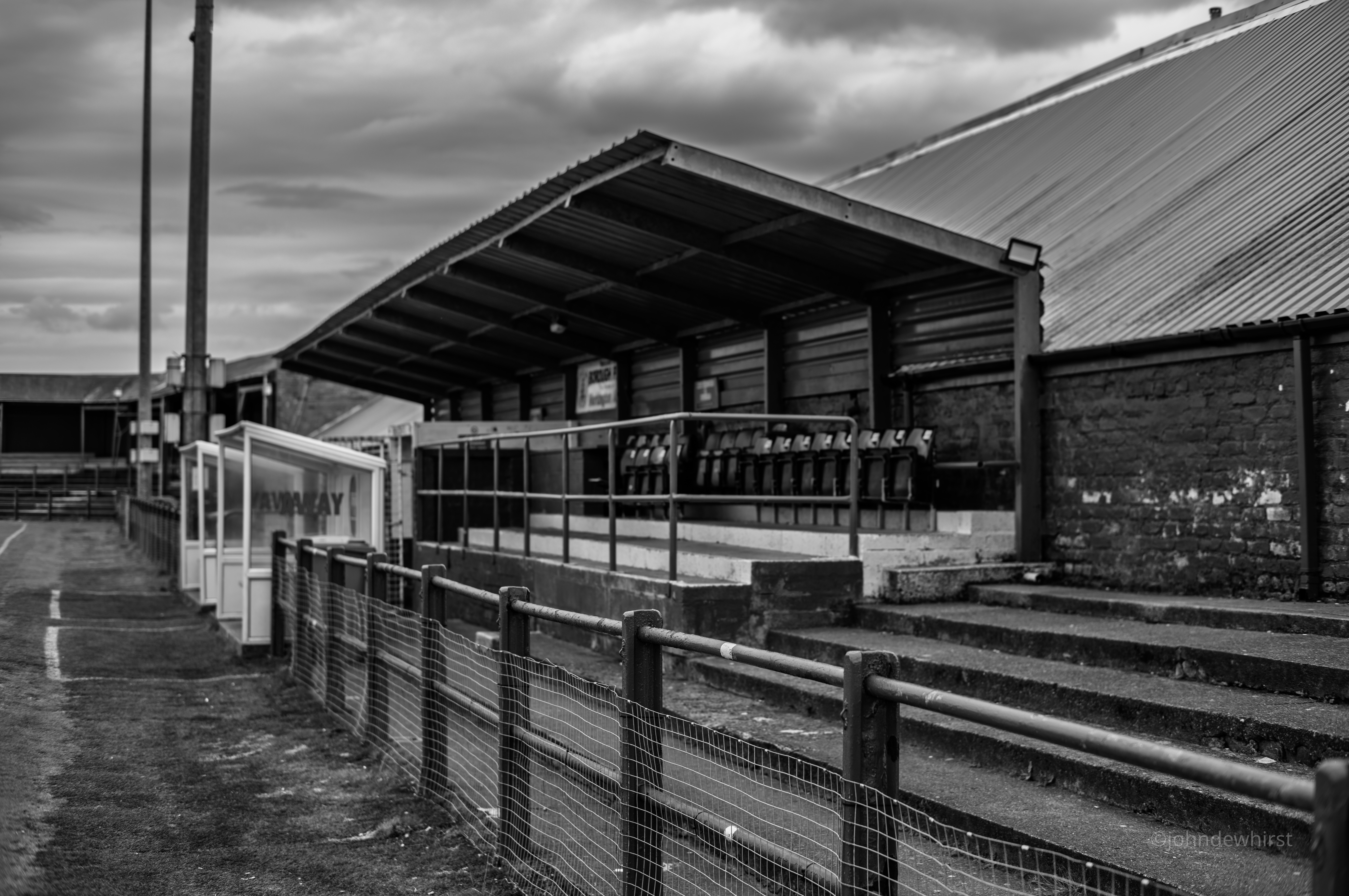
It is pretty difficult not to feel sorry for Workington AFC and I am not ashamed to say that I’ve always had a softspot for the Reds. Borough Park dates from 1937 and retains much the same footprint as when it staged League football. Originally comprising traditional ash / clinker embankments with railway sleeper terraces this had been gradually replaced by concreted surfaces and covered stands were later constructed in the 1950s. The distinctive stand that covered the southwest terrace remains but the headline change to the ground has been the partial demolition of the main stand in 1988 in the wake of the Bradford fire. Although of brick construction with a steel sheet roof and steel frames, the seating and floor of the stand was wooden and considered a fire risk. The directors – cognisant of potential criminal liability from a fire hazard – may have panicked but the decision also removed the cost of future maintenance which the club would likely have struggled to afford.
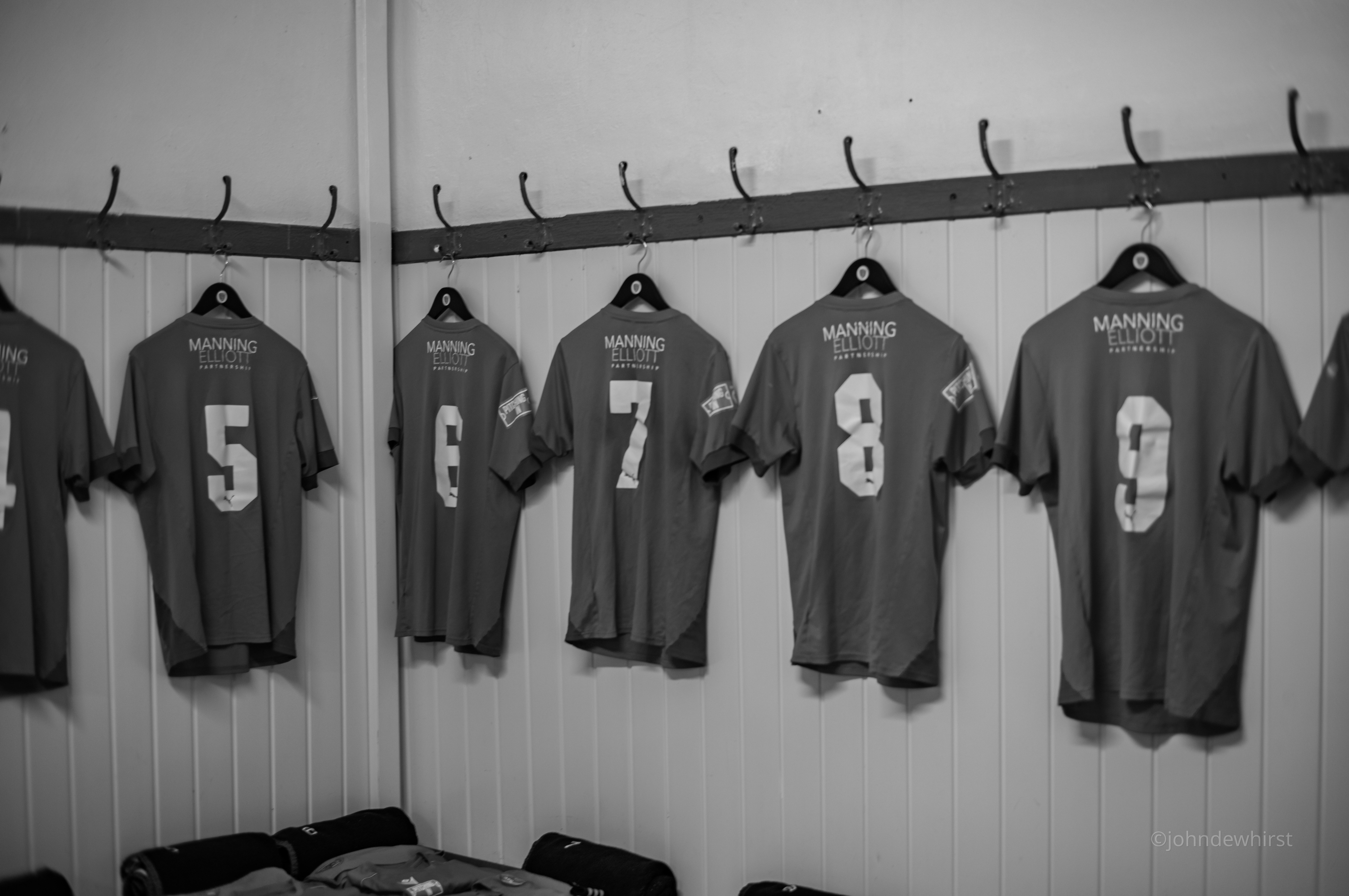
The club offices and dressing rooms which were in the bottom of the old main stand continue to be used, covered by steel roofing. There is also a modest but homely banqueting suite in honour of the late Bill Shankly who was club manager between January, 1954 and November, 1955. The ‘Popular Side’ on the east side of the ground was covered in 1958 and seating installed after the loss of the main stand but the former covered stand in the northwest corner has been demolished. The current capacity is stated as 3,101 with 500 seats which has been more than sufficient for recent attendances.

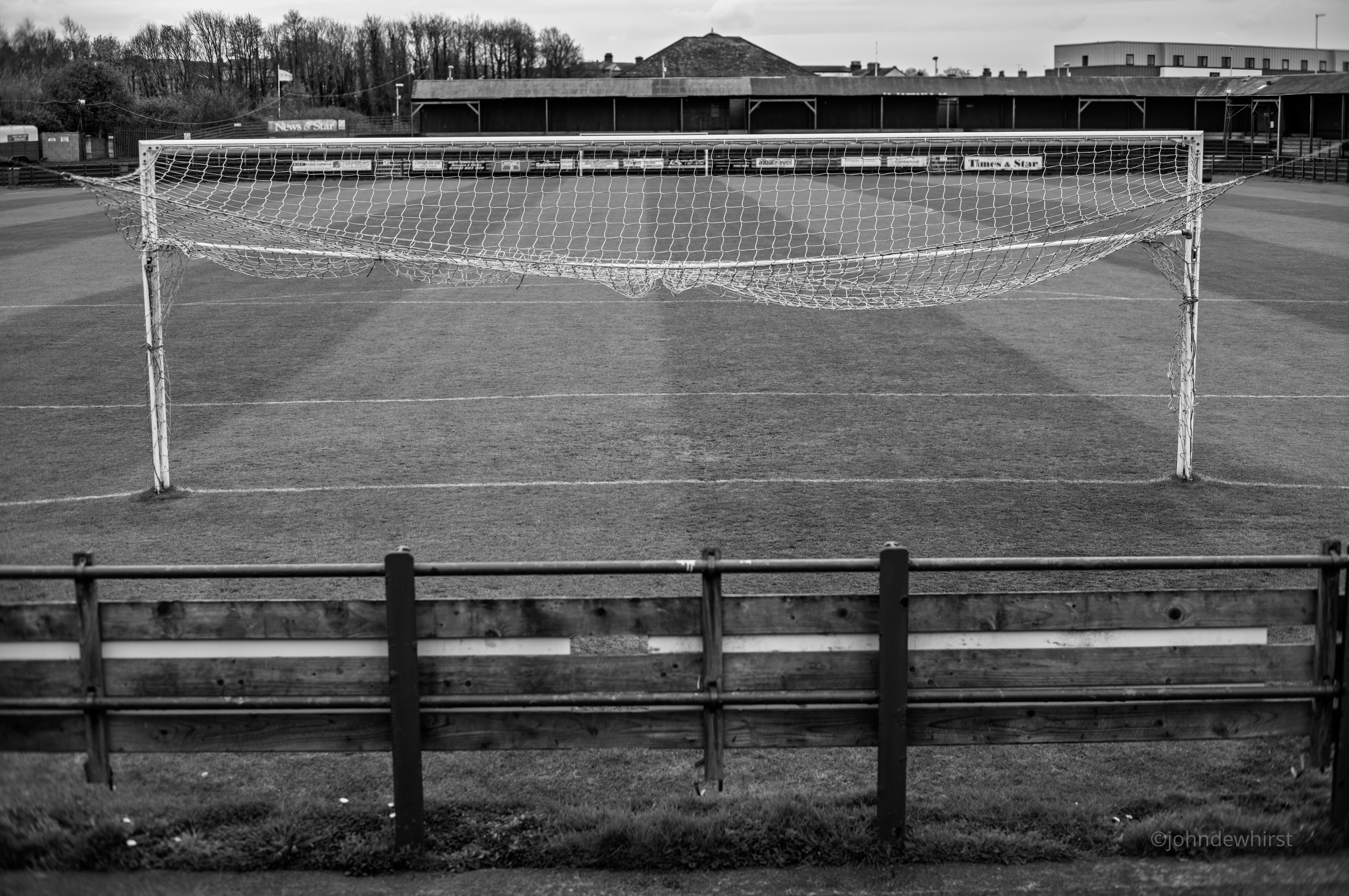
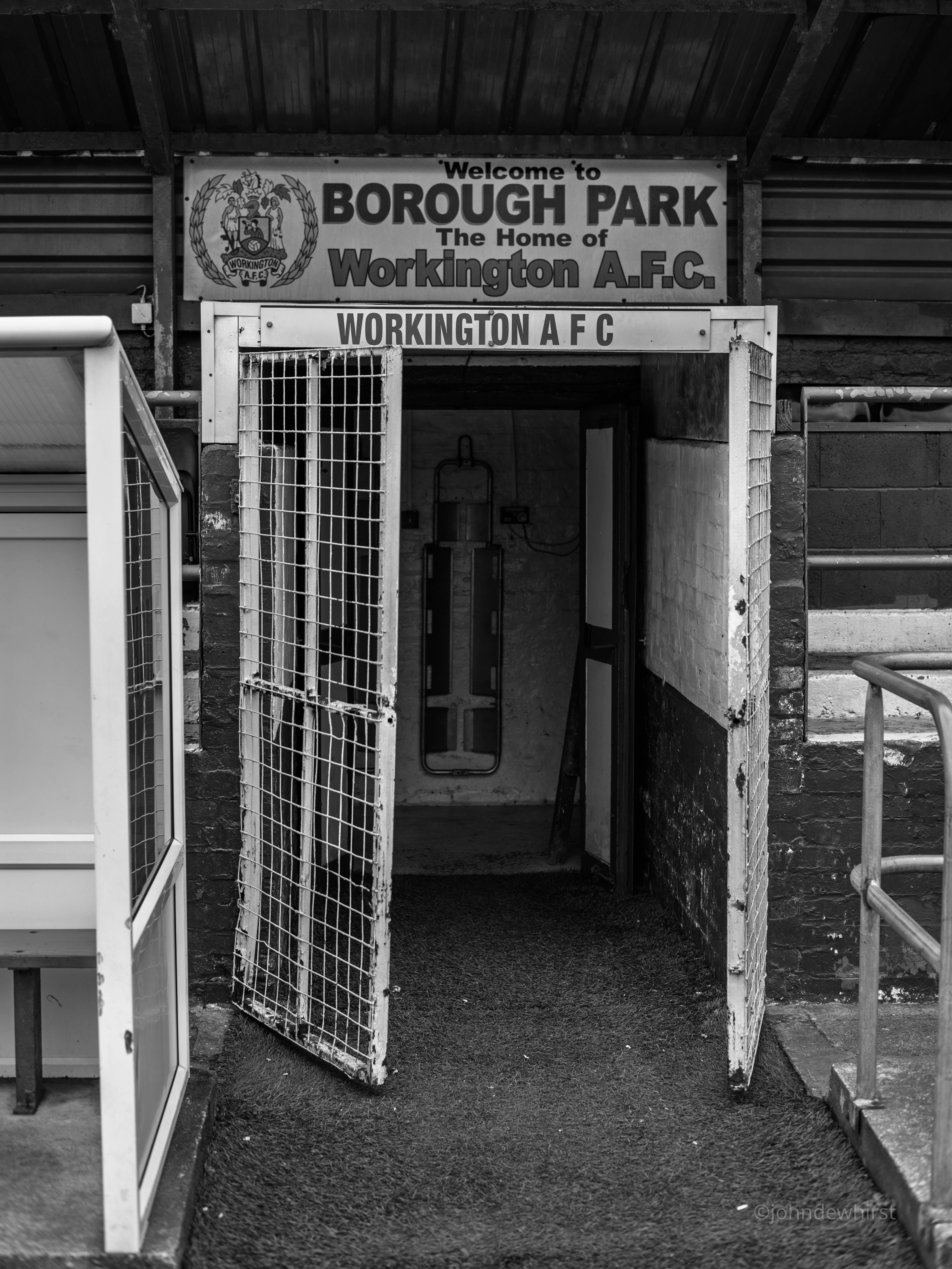
With a net loss of facilities, Borough Park remains basic and feels run down. Nevertheless, even in its current state the ground is functional and remains carefully maintained and tidy. Even more remarkable perhaps is the excellent condition of its concrete terraces. Impoverished it may be but the ground has been secured by the effort and commitment of volunteers which is a tribute in itself. On a good day – and you can hardly blame the weather and wind of the Solway Firth on the club – Borough Park is a fine venue to watch football with excellent terrace vantages. It is also like a trip back in time to a classic old fashioned fourth division ground that has not been overwhelmed by progress. Borough Park is literally the last of its kind.
I visited the ground in April, 2025 and was given access by John Blackwell – former chairman, groundsman, volunteer but above all committed supporter – to take these photographs. The last time I had been to Borough Park was to watch Bradford Park Avenue more than twenty years ago and the main change since then had been the lopping of the former floodlight pylons and replacement with the current configuration. (In fact I think the ground looks in a better state now than was the case previously when my overriding impression had been that of neglect.) Earlier in the winter, roofing panels had been blown off the Popular Side in a gale and pending demolition of the ground, these have not been replaced.
There has been talk of a Cumberland Sports Village for the best part of a decade and there have been ongoing delays caused by local politics and financing arrangements. Until recently, there was the suggestion of the ground being demolished as early as May but it now seems that Workington AFC will remain at Borough Park for at least another season. In anticipation of the development this summer, the club had not invested in fertiliser for the grass during the last close season – the plan being to install a 3G artificial grass pitch – but it still didn’t look too bad as a playing surface.
Under the new scheme, the Reds will groundshare with Workington Town RLFC (who wear blue shirts) and the adjacent Lonsdale Park – a former greyhound stadium and earlier home of Workington AFC – is being developed as a community pitch. The coming together of the Reds and Town revives the ground sharing arrangement at Borough Park immediately after the war following the formation of the rugby club in 1944 and before the opening of nearby Derwent Park in 1956 (which has also staged speedway).
It could be claimed that Borough Park has seen more success as a rugby league ground rather than as a football venue and the early success of Workington Town (ie RL champions in 1951) likely raised the profile of the town which helped secure the election of the Reds to the Football League. Equally, the emergence of Workington Town may have encouraged the Football League leadership to seek geographical representation in the area. After an inauspicious start (ie finishing bottom, second from bottom and then fifth from bottom of Division Three (North) in its first three seasons) the club established itself as a competitive – even if unsuccessful – side in lower division football with promotion to Division Three in 1963/64 (at the expense of promotion rivals, Bradford City). In the FA Cup, a third round tie against Manchester United in January, 1958 (a month before the Munich air disaster) that attracted a record twenty-one thousand crowd to Borough Park has been the highlight in the club’s history.
It was only in its last four seasons that Workington to all intents became anchored to the bottom of the basement division – 91st in 1973/74 and 1974/75 and then 92nd in 1975/76 and 1976/77 – with the same impression of hopelessness that had characterised Bradford Park Avenue in its own last four seasons in the Football League between 1966/67 and 1969/70. By coincidence, around this time Workington Town RLFC also became a much diminished force in the Rugby League. Collectively, it served to erode the sporting self-respect of the town that was already subject to a difficult economic environment.
The general consensus is that in 1977 Workington AFC fell victim to the lobbying of ambitious non-League clubs (ie Wimbledon basking in the prestige of its FA Cup run in 1974/75) and the lack of enthusiasm from others to make the long trek beyond the hills to fulfil fixtures with an unglamorous side. It didn’t help that attendances were amongst the lowest in Division Four albeit not that much lower than Rochdale who would maintain their Football League status until relegation in 2023. Whether Workington AFC could have enjoyed a revival had the club been re-elected in 1977 is questionable and my guess is that it would have continued to struggle, particularly in the absence of financial support. Likewise, during the last fifty years Workington Town RLFC has lost the pedigree it had previously enjoyed and is now a shadow of its former self.
From a Bradford perspective, Workington’s record against City and Avenue as a Football League club was remarkably different. Of 26 seasons in the Football League, Workington played against Bradford City in 17 (seven in Division Three (North) and ten in Division Four) and between 1964-67 it was a division above Bradford City. Of the 34 League games, they won ten (including four away at Valley Parade) and lost twelve and achieved the double against City in both 1956/57 and 1963/64. In the FA Cup the sides met on three occasions with City winning each time.
The two clubs played each other during Workington’s final five seasons in the Football League of which the Reds won only once (at Borough Park in November, 1973) and lost six games. The last competitive fixture between Workington and Bradford City at Borough Park was on 29th October, 1976 which was City’s promotion season when they secured the double over the Reds. Although younger supporters like to think of Bradford City as a ‘big club’, it’s worth remembering that fifty years ago in 1974/75 the average League gates at Borough Park were 1,481 and those at Valley Parade only 3,647.

Workington played Bradford Park Avenue during 14 seasons in the Football League (of which seven in Division Three (North) between 1951/52 and 1957/58 and seven in Division Four between 1958/59 and 1969/70. However in those games Workington defeated Avenue on just five occasions and won only once at Park Avenue (in December, 1956) whilst suffering 17 defeats. In the FA Cup the clubs met on three occasions, all of which resulted in Bradford winning.
Workington AFC currently get average crowds of around 800 which is respectable when compared to the 1,300 or so average in their last five seasons in the Football League. Whether gates will improve with new facilities is anyone’s guess. To a large extent Workington remains a rugby league town and there is probably more enthusiasm for the customary folk football competition in Workington, namely the traditional Easter ‘Uppies vs Downies’ event. (Notable have been objections in the local press about development of the Cumberland Sports Village potentially impacting on the course of the ‘Uppies vs Downies’ game.)
Having just about secured its status in the Northern Premier League Premier Division for another season I genuinely hope that the new Cumberland Sports Village will herald a successful new era for Workington Reds. Pending the beginning of construction work I would definitely encourage a visit Borough Park with the prospect of a final season of football in 2025/26.
John Dewhirst
Thanks for visiting my blog. You will find content about the history of Bradford City from the top down menu. I tweet from @jpdewhirst









** If you are interested in football photography then have a look for issue #2 of BRADFORDIANA which features Valley Parade. BRADFORDIANA is a photozine with 12 issues being published during 2025 in celebration of Bradford.
 Wool City Rivals