BCAFC programme feature: vs Newport County 24th October, 2020

Programmes of old by John Dewhirst

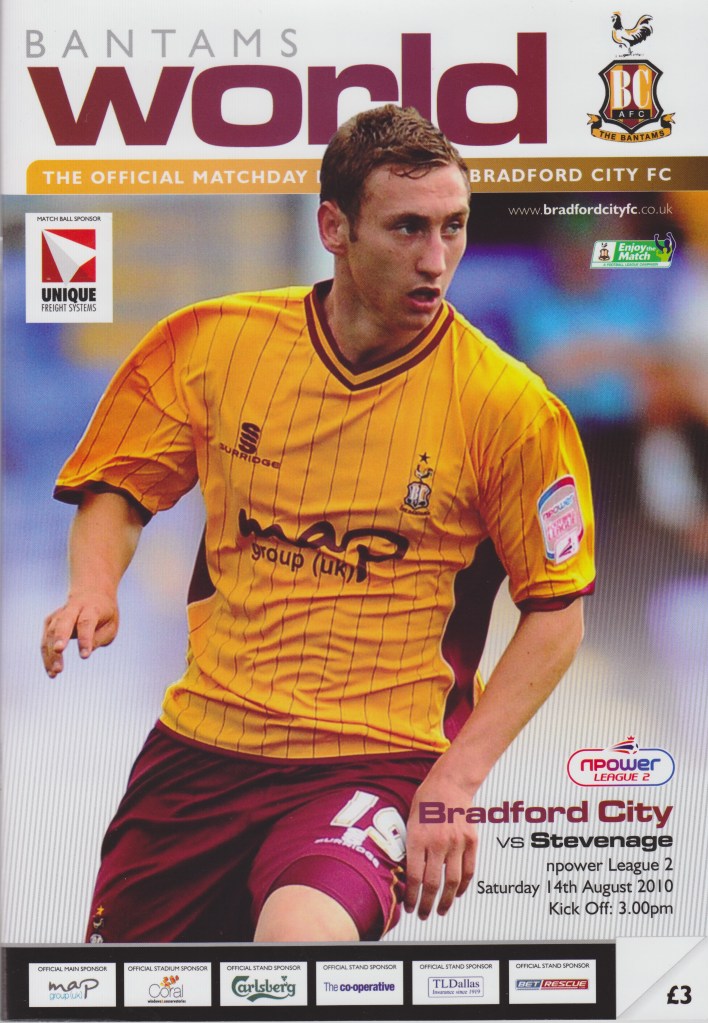
This season the match day magazine celebrates the rich heritage of old programmes from earlier years and today’s issue is based on the design from 1978/1979 when Newport and City were both members of Division Four.

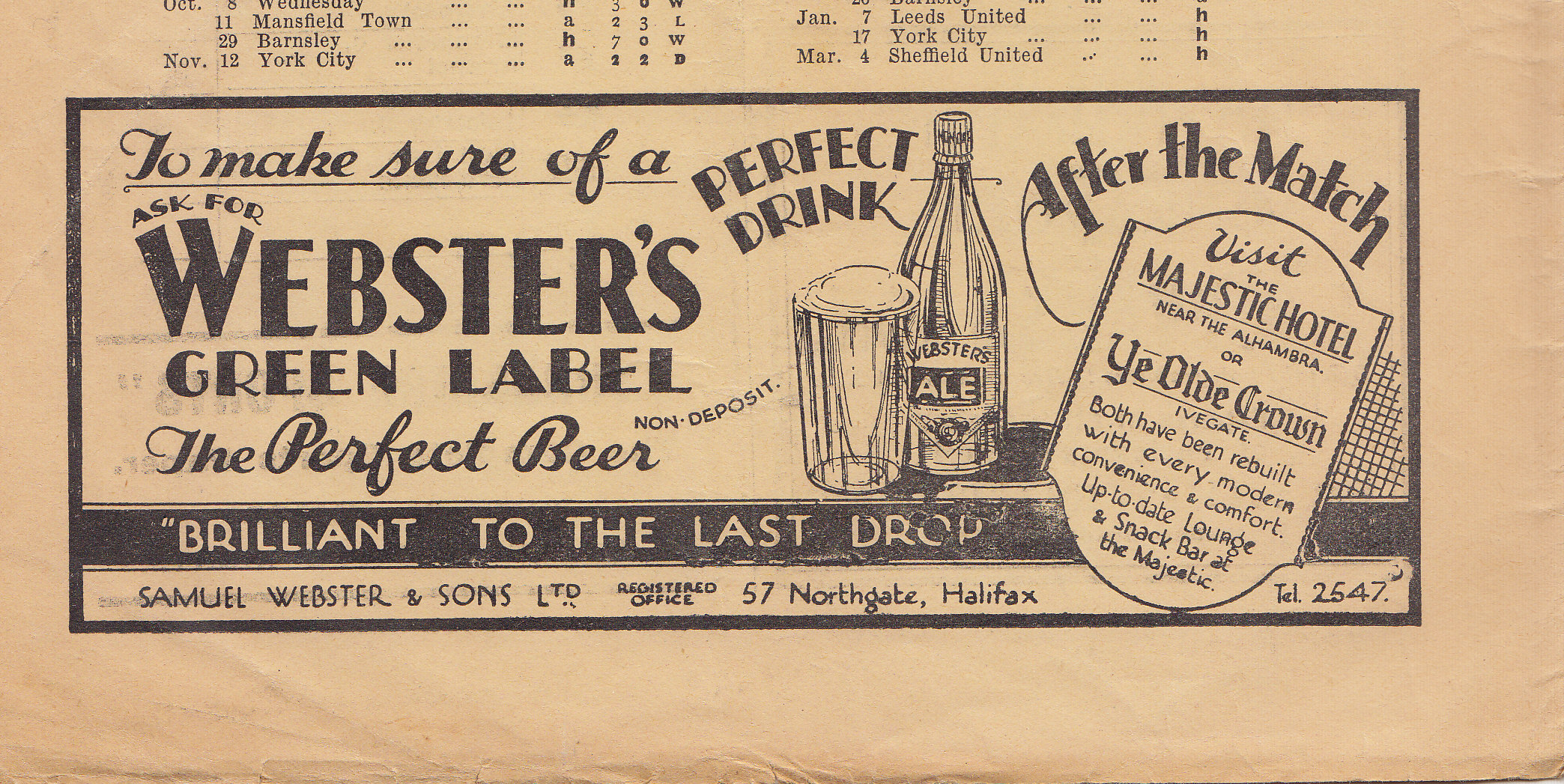
Old adverts

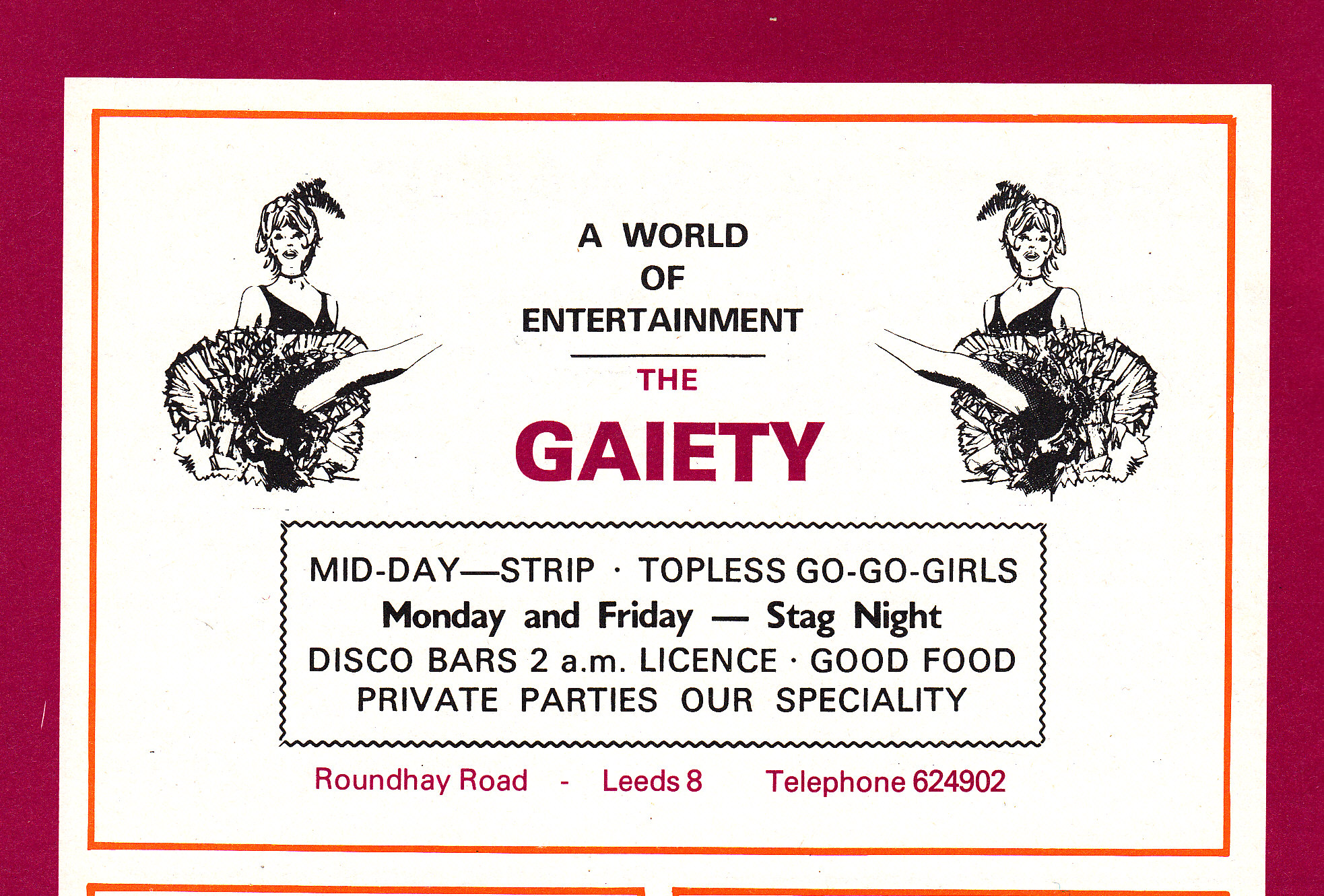
The programme for the 1978/79 season featured colour photographs of the Bradford City team and John Napier, manager on its cover. This is itself was ground-breaking and a radical departure from earlier designs. The club had recognised the value of an eye-catching cover to attract readers but sadly the editorial content was limited. It was poor value for money and flattered to deceive. What was more notable was the extent of advertising content which also reflected changes in society. A somewhat controversial inclusion at the time were adverts for a strip club with ‘Topless Go-Go Girls’ and a sex shop, the likes of which had never previously been featured in the club programme.

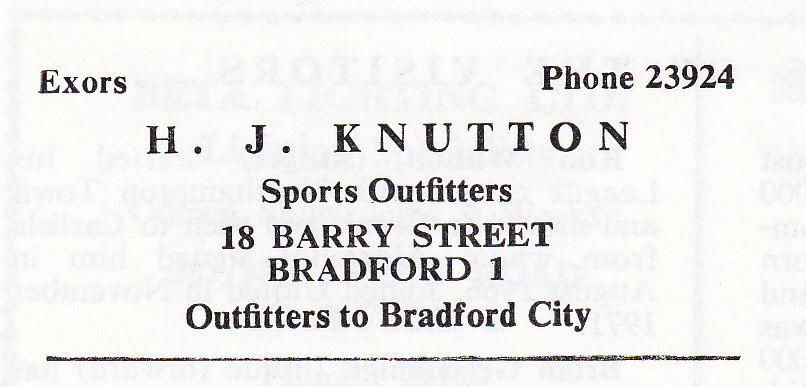
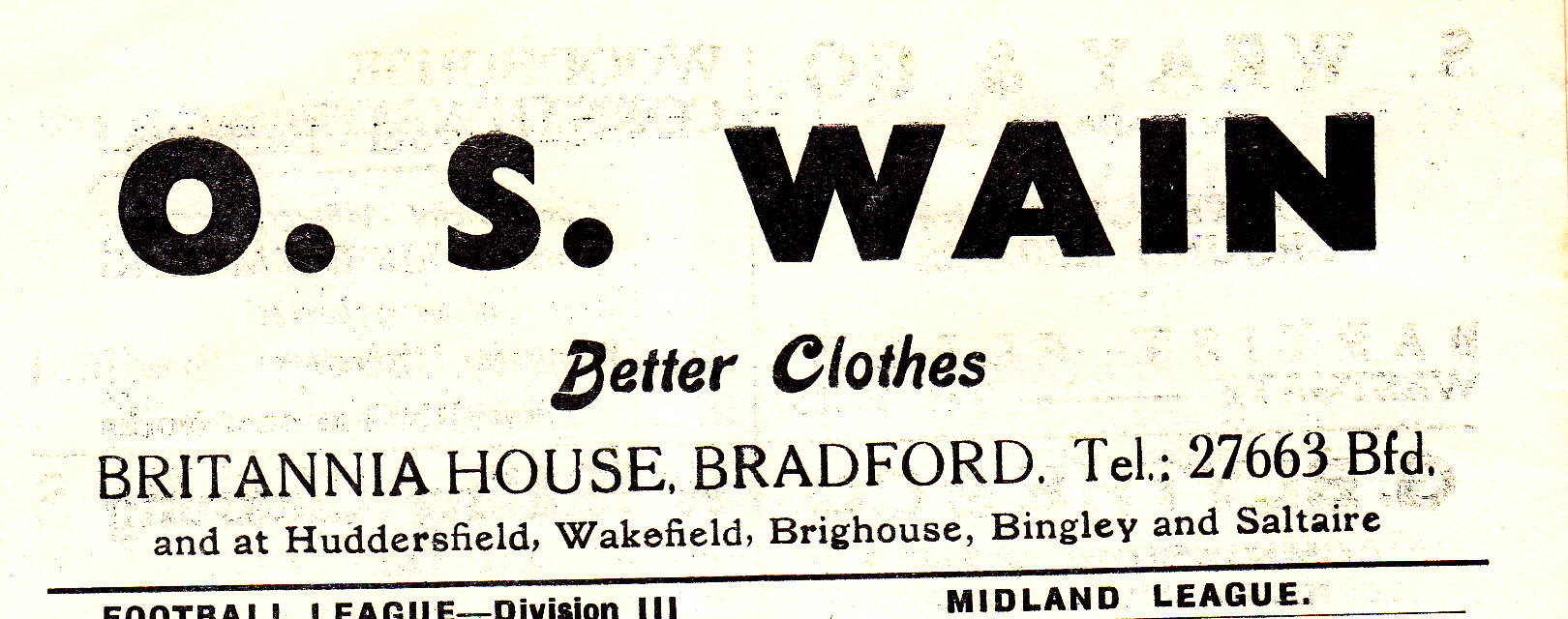
Old adverts provide an historical record and reminders of long-forgotten independent businesses that were based in Bradford: Hammond’s Sauce; HJ Knuttons; National & Provincial Building Society; OS Wain; Hammonds Ales and the Alfresco Garage to name but a few.

The adverts also provide an illustration of changing mass consumption patterns, for example bicycles advertised before World War One, transistor radios in the 1930s, rupture supports and surgical aids promoted through to 1922 and motor vehicles more frequently advertised from the 1950s. Raincoats were also regularly advertised through to the 1950s. The 1947/48 programme carried a rear page advert for newly released ‘Subbuteo Table Football’, a game that was a personal favourite during my own childhood in the early 1970s.

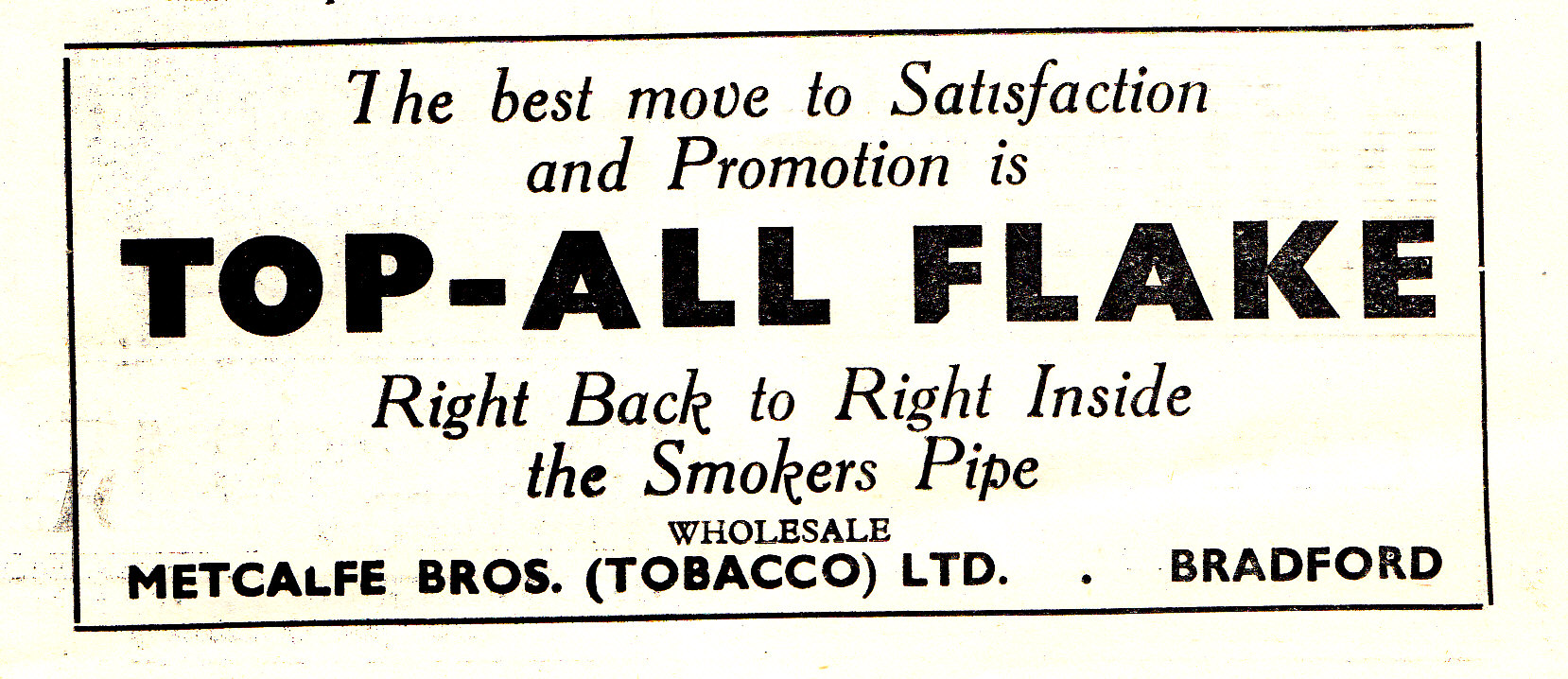
An increasing proportion of adverts for financial services is discernible in the last twenty years or so although adverts for credit existed a hundred years ago. Beer adverts have been a regular feature since 1910/11. Local tobacconists were also regular advertisers until the 1970s; by contrast adverts for national tobacco companies were less common. In the last twenty years there has been a higher proportion of business-to-business adverts as opposed to those aimed solely at consumers. In the latter category the disappearance of adverts for independent retailers has mirrored changes on the high street.

The menus above provide links to features written by myself in the BCAFC programme during previous seasons.

Link here to galleries of historic BCAFC programmes on this blog

Link to feature about the historic development of the BCAFC programme since 1909 published on VINCIT.

Pioneering black players in Bradford

Bradford has a proud record where black footballers have established themselves as pioneers in English professional football.

Ces Podd (pictured below), who made 494 league appearances for Bradford City between 1970-84 is the best known and in fact Ces holds the club record for the most appearances made by any player. Born in Saint Kitts in 1952, he was a student at Bradford College of Art when he made his debut and having established himself as a regular in the side was virtually ever-present at full-back during the ten seasons from 1972/73 and in 1981 became the first black player to be awarded a testimonial in English football. His testimonial saw Bradford City take on a Black XI and it raised a total of £5,147, a then club record.

During the 1970s, Joe Cooke (pictured below) was another pioneering black player at Valley Parade who made 245 league appearances in two separate spells between 1971-79 and 1981-84. Born in Dominica, Cooke’s family had emigrated to Bradford in the 1960s and he had been a member of the Bradford Boys side before signing professional at Valley Parade. During his first spell he played as centre forward and his 39 league goals between 1975-77 was a record for a black player, exceeding the 35 scored by Jack Leslie for Plymouth between 1927-29. In 1975/76 he scored a total of 24 in league and cup games and then 18 in 1976/77. During his second spell at Valley Parade he played as centre-half.

Joe and Ces were both members of the Division Four promotion winning teams in 1976/77 and 1981/82 and at the time it was relatively unprecedented for there to be so many black players on the same pitch, let alone the same side yet on 10th May, 1972 there were three black players in the Bradford City team that played Bolton Wanderers. Wingrove Manners was the third player but it proved to be his only appearance for the club.

Previously, Eddie Parris (above – image colourised by George Chilvers) made a total of 142 league and cup appearances for Bradford Park Avenue between 1929-34 (the most memorable of which was his debut on 12th January, 1929 when he scored in the FA Cup Third Round tie at Hull, aged just under 18 years). In 1931 Parris was selected for Wales against Northern Ireland.

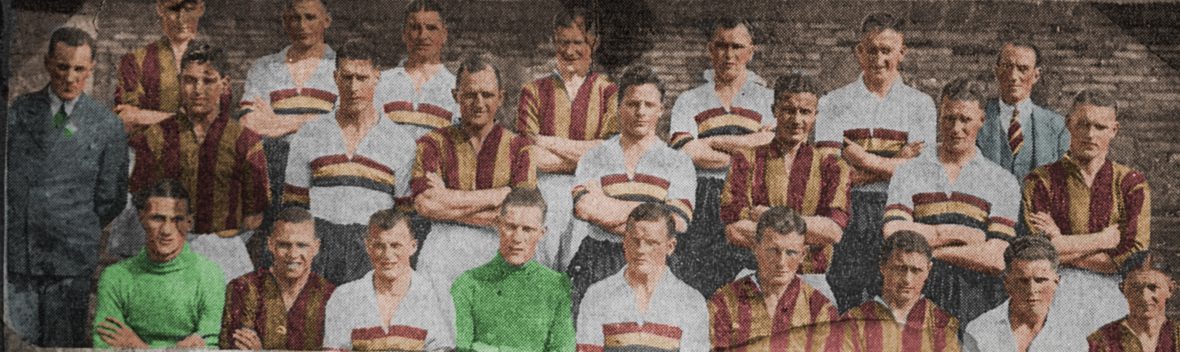
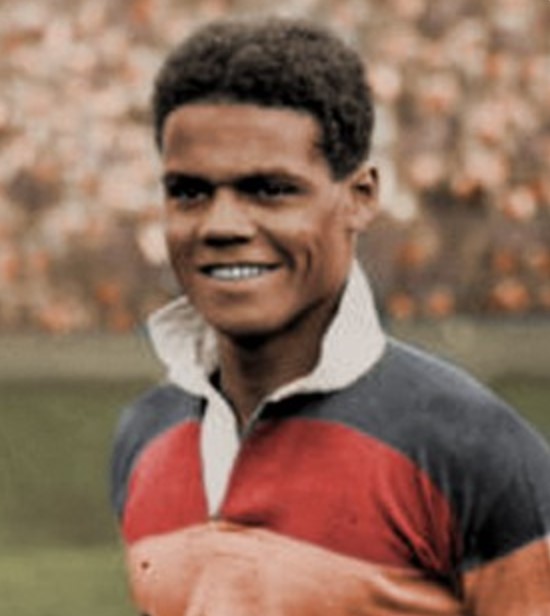
Nevertheless it was William Clarke (below – image colourised by George Chilvers) who was the first black professional footballer in Bradford, playing 92 league games for Bradford City between 1905-08 and Clarke was the scorer of the club’s first goal in Division One in September, 1908.

BCAFC programme feature: vs Walsall 20th October, 2020

Football programmes have traditionally been a staple of the match day experience, historically a collectable for many supporters. At Valley Parade, programmes have been produced for first-team fixtures since 1909 and the sale of single sheet team cards dates back even further. This season the match day magazine celebrates the rich heritage of old programmes from earlier years and today’s issue is based on the design from 1979/1980 when we were rivals with Walsall for promotion from Division Four. It was Walsall who secured promotion by finishing runners-up whilst we finished fifth after losing the last game of the season at Peterborough United.

For much of the 1970s the Bradford City programme was a very basic affair and relatively old-fashioned, not just in comparison to higher division clubs but also when compared to others in the fourth division. In 1977 there had been an attempt to modernise the programme with the inclusion of photographs for the first time and layout changed from a columnar newspaper style to something more recognisable as a magazine. Even so, the content was minimal. The following year there was further radical change with a colour photograph of the team featured on the front cover which was the first time that the club programme had had colour print.

The changes in 1978/79 proved unsuccessful and sales were disappointing. The following season the colour cover disappeared and the pages were cut from 20 to 16 although the price remained 20p. It was poor value for money and there is the sense that the club made the least effort possible to produce an obligatory match programme. All that can be said is that the cover was very eye-catching and it remains one of the more distinctive designs of old programmes.

The big change in programmes at Valley Parade after 1977 had been the increase in advertising content and in 1979/80 there was even the inclusion of an advert for a Bournemouth hotel, presumably to attract bookings for our away game at Dean Court in March, 1980. Another advert worthy of mention was that for Hammonds Chop sauce, a popular brown sauce then manufactured on Dockfield Road, Shipley. The brand still exists but production was moved from Shipley in 1985 to Harrogate Road in Bradford and then in 2002 it relocated to Littleborough. Hammonds had a close connection with Bradford City AFC and the former Hammonds Sauce Works Band regularly played at Valley Parade in the 1950s and 1960s.

Despite the innovations, the programme of 1979/80 had more in common with those of the 1950s and 1960s than the publications that we are familiar with nowadays. It has only been since 1997 that Bradford City has had what could be described as match day magazines and this has been driven by advances in desktop computers and digital technology. Ironically, the same developments threaten the future of match day publications and the shift to online media.

The menus above provide links to features written by myself in the BCAFC programme during previous seasons.

Link here to galleries of historic BCAFC programmes on this blog

Link to feature about the historic development of the BCAFC programme since 1909 published on VINCIT.
BCAFC programme feature: vs Harrogate Town 12th October, 2020

Programmes of old by John Dewhirst

Football programmes have traditionally been a staple of the match day experience, historically a collectable for many supporters. At Valley Parade, programmes have been produced for first-team fixtures since 1909 and the sale of single sheet team cards dates back even further. This season the match day magazine celebrates the rich heritage of old programmes from earlier years and today’s issue is based on the design from 1999/2000 – our first season in the Premier League.

First encounters

The promotion of Harrogate Town to the EFL is an incredible achievement and I confess that never in my wildest dreams did I believe that one day the two clubs would be competing at the same level in the senior competition of English football. It is sobering to consider that twenty years ago our clubs were six levels apart. The launch of the football pyramid and introduction of automatic promotion to the EFL in 1986/87 has brought with it considerable turnover in the membership of the lower divisions of the EFL and there has been considerable variety with the emergence of new sides.

Since our relegation to the lower divisions in 2004 we have had a fair number of new fixtures. A good proportion of those clubs have been southern based and so another Yorkshire side is most welcome. Harrogate Town become the 15th club from the three Ridings of the county to have competed in the League. Listed in order of when they first joined the League are those Yorkshire clubs: Sheffield United, 1892; Sheffield Wednesday, 1892; Barnsley, 1898; Middlesbrough, 1899; Doncaster Rovers, 1901; Bradford City, 1903; Hull City, 1905; Leeds City / United, 1905; Bradford (Park Avenue), 1908; Huddersfield Town, 1910; Halifax Town, 1921; Rotherham United, 1925; York City, 1929; Scarborough, 1987 & Harrogate Town, 2000.

The old Football League gradually expanded by adding a third division through incorporating former members of the Southern League in 1920, creating a northern section to the third tier in 1921 and then expanding membership to the regionalised third tier in 1950. Clubs finishing at the bottom of the league were required to apply for re-election although an ‘old pals’ act’ operated through much of the 1950s and 1960s to protect traditional league clubs from demotion. It was only in the 1970s that we began to see changes with the unsuccessful re-election of Bradford (Park Avenue) (1970), Barrow (1972), Workington (1977) and Southport (1978) – sides who have been recent opponents of Harrogate Town.  

Today’s programme is notable – and for some, collectable – as the first to feature a competitive fixture between our clubs, notwithstanding that there have been countless friendlies played at Wetherby Road. Featured on this page are other encounters with sides now firmly established as seniors from their first season outside of non-League football.

The menus above provide links to features written by myself in the BCAFC programme during previous seasons.

Link here to galleries of historic BCAFC programmes on this blog

Link to feature about the historic development of the BCAFC programme since 1909 published on VINCIT.

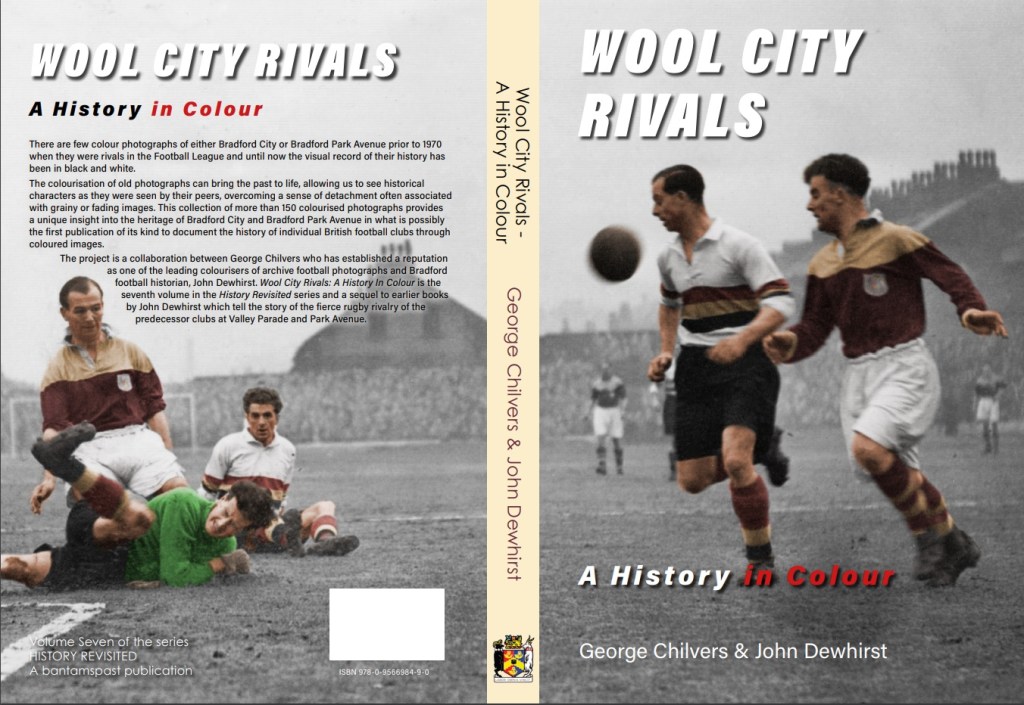
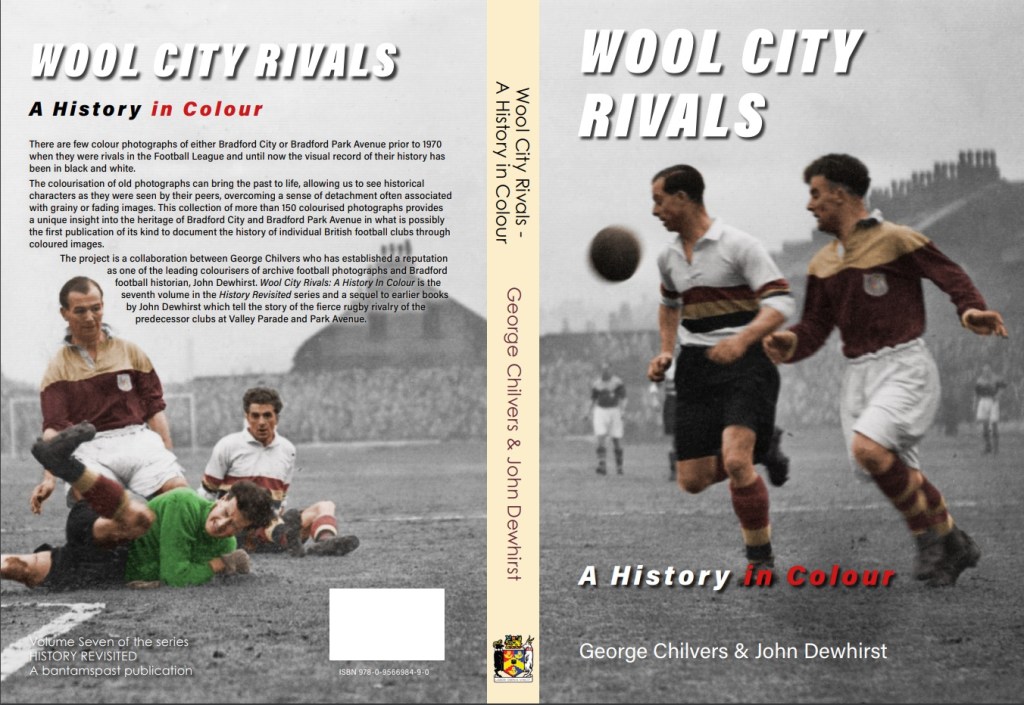
Wool City Rivals: A History of Bradford City and Bradford Park Avenue in Colour

The latest publication – and seventh volume – in the bantamspast History Revisited series is now in production and will go on sale in late November. Further details below:

Featured in the Bradford Telegraph & Argus, 5th October 2020

Review in the Yorkshire Post, 23rd December 2020

Review on the My Football Books website, 29th November 2020 (extracts below):

There are a handful of football books that sit in the category “it has to be seen to be believed.” This unique book sits very proudly in that group.

It’s a wonderful combination of beautiful pictures and a thoroughly detailed history of football in Bradford. A past which will leave many readers, if not done so already, looking to acquire the other titles in the bantamspast History Revisited series.

Football fans and history enthusiasts will adore this book. For those who appreciate both – this is an essential, and colourful, addition to your library. Enjoy!

The book is available to order from this link.

The History Revisited series provides a collection of books to offer a fresh perspective about the history of football in Bradford.

Wool City Rivals: A History in Colour by George Chilvers and myself follows my previous titles about the rivalry, Room at the Top and Life at the Top which were the third and fourth volumes in the series. Those earlier publications narrated the origins of sport in Bradford and the nineteenth century rivalry of the Park Avenue and Valley Parade clubs. I have two further books planned that will tell the story of the two Bradford rivals in the periods 1908-39 and 1939-74 respectively.

The books about the Wool City Rivals came about to explain how and why things occurred as they did rather than simply state what happened. My frustration has been that such questions tend to be overlooked in football histories and in consequence, left unanswered. Equally fundamental, I have discovered through my own research into the history of Bradford football that there have been superficial explanations as well as inaccuracies in earlier narratives that are misleading and need to be revisited. Bradford football is the prisoner of its history but sadly that history has been distorted by myths and erroneous claims.

I recall that as a teenager there was nothing to read about the history of either Bradford club and a motivation for this project has been to ensure that future generations who wish to discover that history will have a wide-ranging source of reference about Bradford football. Succeeding generations inherit football clubs and it is their prerogative to determine their identity and future traditions. All institutions including football clubs derive strength from continuity and a shared identity and that is why I believe awareness of their history is important and needs to be documented.

News about future books in the bantamspast History Revisited series will be provided on the BANTAMSPAST website [www.bantamspast.net] and through Twitter: @jpdewhirst. Updates will also be provided by email and if you wish to be added to our mailing please make sure that we have your details [em: books at bantamspast dot net].

BCAFC programme feature: vs Stevenage 26th September, 2020

Programmes of old by John Dewhirst

Football programmes have traditionally been a staple of the match day experience, historically a collectable for many supporters. At Valley Parade, programmes have been produced for first-team fixtures since 1909 and the sale of single sheet team cards dates back even further. This season the match day magazine celebrates the rich heritage of old programmes from earlier years and today’s issue is based on the design from 1921/22 – the season that the club was relegated from Division One.

Social History

Old football programmes provide a unique insight into social and economic trends. For instance, club statements about the need to curb ‘youthful exuberance’ and anti-social behaviour were not exclusive to the 1970s as the following extracts show.

The programme for the game with Doncaster on 3rd October, 1962 included the comment: ‘Whatever one may think of a decision by a referee or action by a player, the answer is not to throw objects one may lay his or her hand on, and so bring the game into disrepute. Having seen someone throw an object, others are apt to follow suit and the damage is done.’ The following month, the programme for the Rochdale game on 17th November sought an end to pitch invasions and the ‘Supporters Notes’ by columnist ‘Ubique’ conveyed his irritation at the throwing of toilet rolls which had occurred at the Oldham away fixture a fortnight previously. By November, 1963 the programme notes were imploring youngsters not to let off fireworks in the ground.

The programme from the Everton fixture on 6th November, 1920 referred to Foul Language: ‘Several complaints have been made with regard to objectionable language at Valley Parade, and the directors of the club desire to warn offenders that they are liable to expulsion from the ground. There are more ladies at football matches nowadays, especially on the grandstands, than ever there has been in the past, and we are all delighted to see them, but it is not pleasant for them to have to listen to foul language. This cannot be tolerated and the directors would be glad to receive reports as to the identity of offenders in order that steps may be taken to impress upon them the need for keeping to Parliamentary language when letting off steam.’

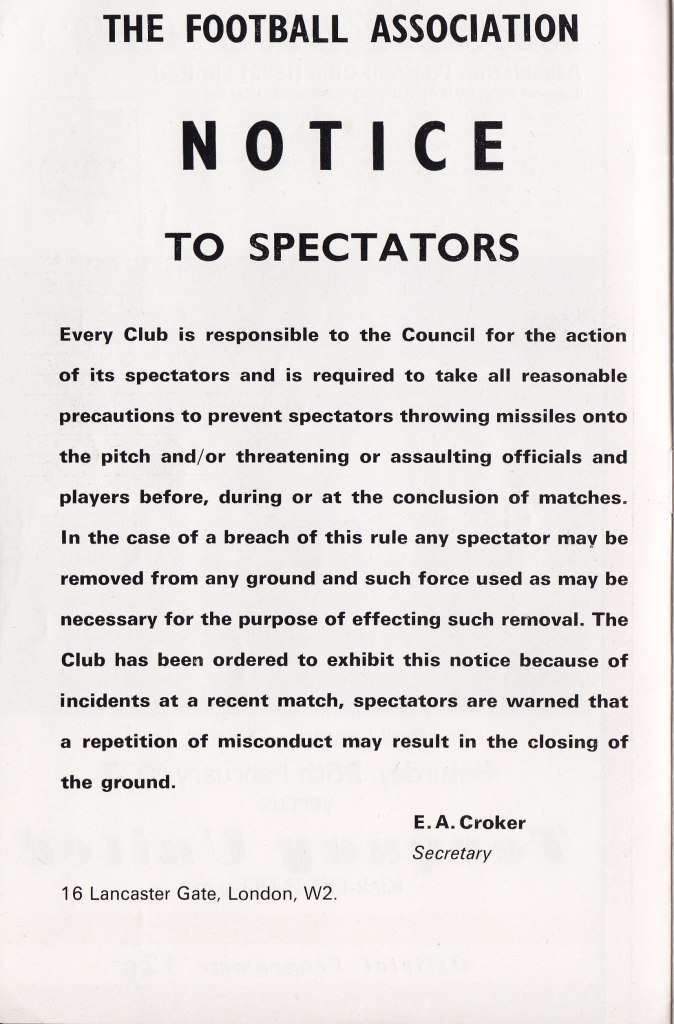
On 26th February, 1977 the programme for the game with Torquay United included a full page notice from The Football Association advising supporters about the risk of ground closure as a consequence of misconduct. Similar warning notices were displayed around Valley Parade for the next month and followed an attack by a spectator on a Colchester player during the game between the promotion rivals in December, 1976. There were further incidents in the 1978/79 season when a spectator and a player were injured by stone throwing with a repeat of the FA notices in August, 1979. (It should be explained to younger readers that stones were readily available on the Spion Kop due to the decayed concrete terracing. Hence if you were so inclined you were not obliged to bring such ammunition into the ground.)

The menus above provide links to features written by myself in the BCAFC programme during previous seasons.

Link here to galleries of historic BCAFC programmes on this blog

Link to feature about the historic development of the BCAFC programme since 1909 published on VINCIT.

BCAFC programme feature: vs Colchester Utd, 12th September 2020

Programmes of old by John Dewhirst

Football programmes have traditionally been a staple of the match day experience, historically a collectable for many supporters. At Valley Parade, programmes have been produced for first-team fixtures since 1909 and the sale of single sheet team cards dates back even further. This season the match day magazine is being designed to celebrate the rich heritage of old programmes from earlier years and in this column I shall be examining the history of official publications at Valley Parade and their content.

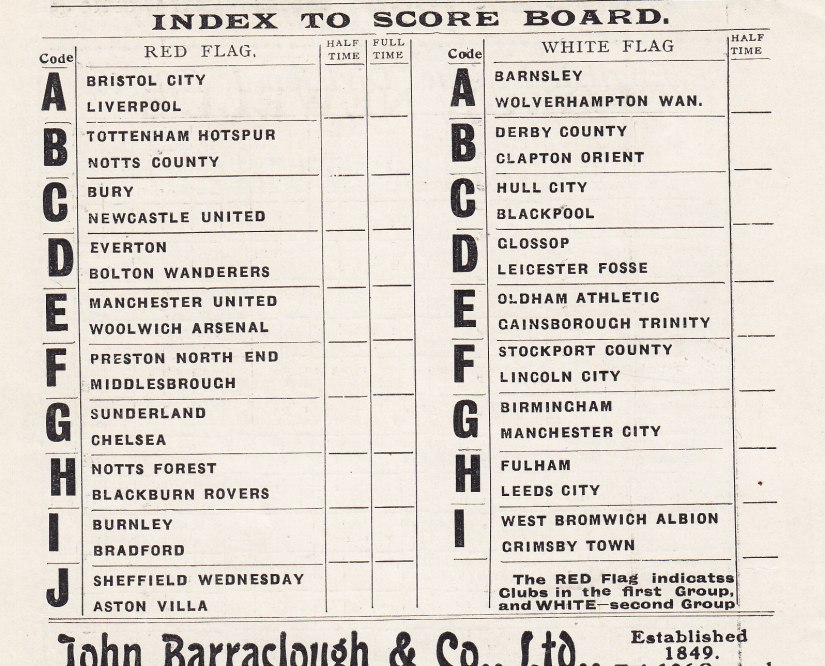
HALF-TIME SCORES

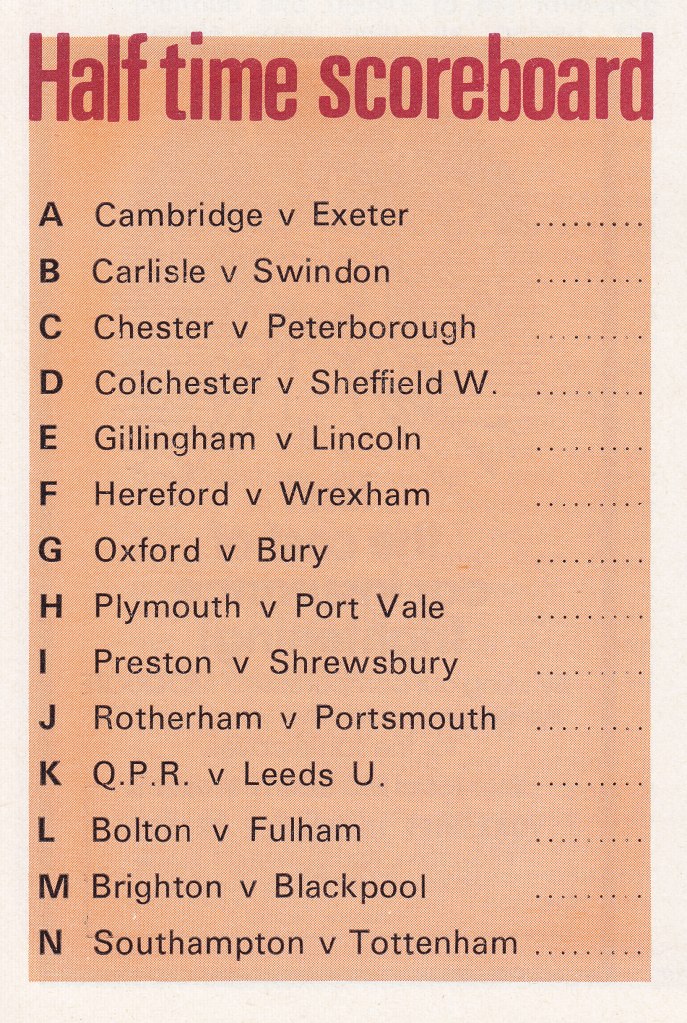
Even with the emergence of match day magazines at football grounds and the higher page count, the basic content of programmes still revolves around the same themes – statements of club health by club officials; detail of fixtures and results; some background to the opposition club; team line-ups; and adverts to offset the cost of production and generate a profit. One feature that no longer exists, but which was previously a prime reason for a spectator to buy a programme, was the half-time scores section.

Nowadays people have internet access to keep track of results around the country (even if bandwidth gets more challenging at 3:45pm) but the programme used to be relied upon to discover half-time scores, a feature that was included in the programme until the 1977/78 season. By that stage transistor radios were readily available and people could also rely upon the tannoy to find out what was happening at other grounds. From 1988 a new electronic scoreboard on the top of the Bradford End stand kept spectators up to date.

Historically however the programme was the means by which a supporter could comprehend the code to discover half-time progress elsewhere. The scores were displayed on a scoreboard at the top of the Kop with two showings, ‘red flag’ and ‘white flag’ respectively. In 1968 a tea bar was built into the scoreboard which was expanded for a single showing only and used for that purpose until 1978.

The menus above provide links to features written by myself in the BCAFC programme during previous seasons.

Link here to galleries of historic BCAFC programmes on this blog

Link to feature about the historic development of the BCAFC programme since 1909 published on VINCIT.
My next book…

WOOL CITY RIVALS: A HISTORY IN COLOUR

by George Chilvers & John Dewhirst (pub Bantamspast, 2020)

There are few colour photographs of either Bradford City or Bradford Avenue prior to 1970 when they were rivals in the Football League and until now the visual record of their history has been in black and white.

The colourisation of old photographs can bring the past to life, allowing us to see historical characters as they were seen by their peers, overcoming a sense of detachment often associated with grainy or fading images. This collection of more than 150 colourised photographs provides a unique insight into the heritage of Bradford City and Bradford Park Avenue in what is possibly the first publication of its kind to document the history of individual British football clubs through coloured images.

The project is a collaboration between George Chilvers who has established a reputation as one of the leading colourisers of archive football photographs and Bradford football historian, John Dewhirst.

WOOL CITY RIVALS: A HISTORY IN COLOUR is the seventh volume in the HISTORY REVISITED series and a sequel to earlier books by John Dewhirst which tell the story of the fierce rugby rivalry of the predecessor clubs at Valley Parade and Park Avenue.

Hardback subscriber edition available.

Publication at end of October, 2020 – only available to purchase online from the following link:

https://bantamspast.net/buy-our-books-direct-from-us/

To join the mailing list for the new book send a DM via Twitter to @jpdewhirst

==========================================================

email: [ books at bantamspast dot net ]

Post: BANTAMSPAST, PO Box 307, SHIPLEY BD18 9BT

==========================================================

Follow tweets from @jpdewhirst @bantamspast

==========================================================

WOOL CITY RIVALS: A HISTORY IN COLOUR will be the seventh volume in the Bantamspast History Revisited series. Between them, the different books provide a definitive record of the origins of sport and professional football in Bradford, its development and historical context through to the modern day.

By revisiting the evidence the series debunks the myths and superficial narratives that have been told previously.

The seven titles each address distinct themes and are all original in their coverage. They provide a unique collection that is indispensable reading for City supporters wanting to better understand the heritage of their club.