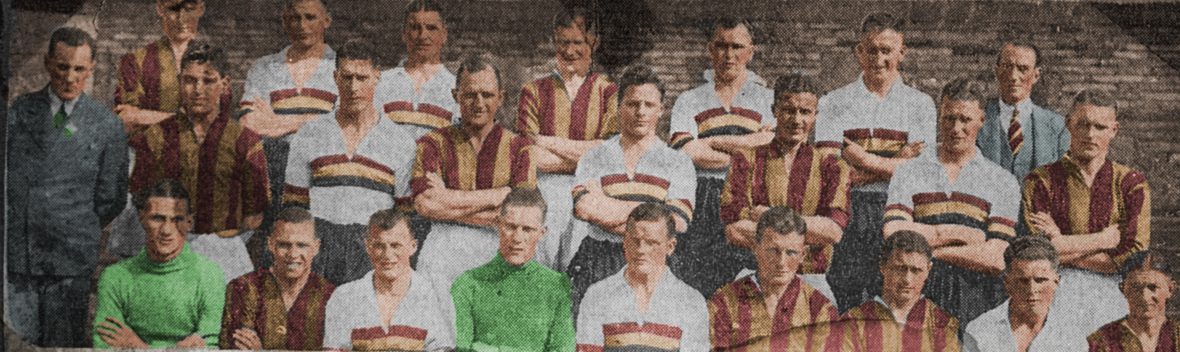

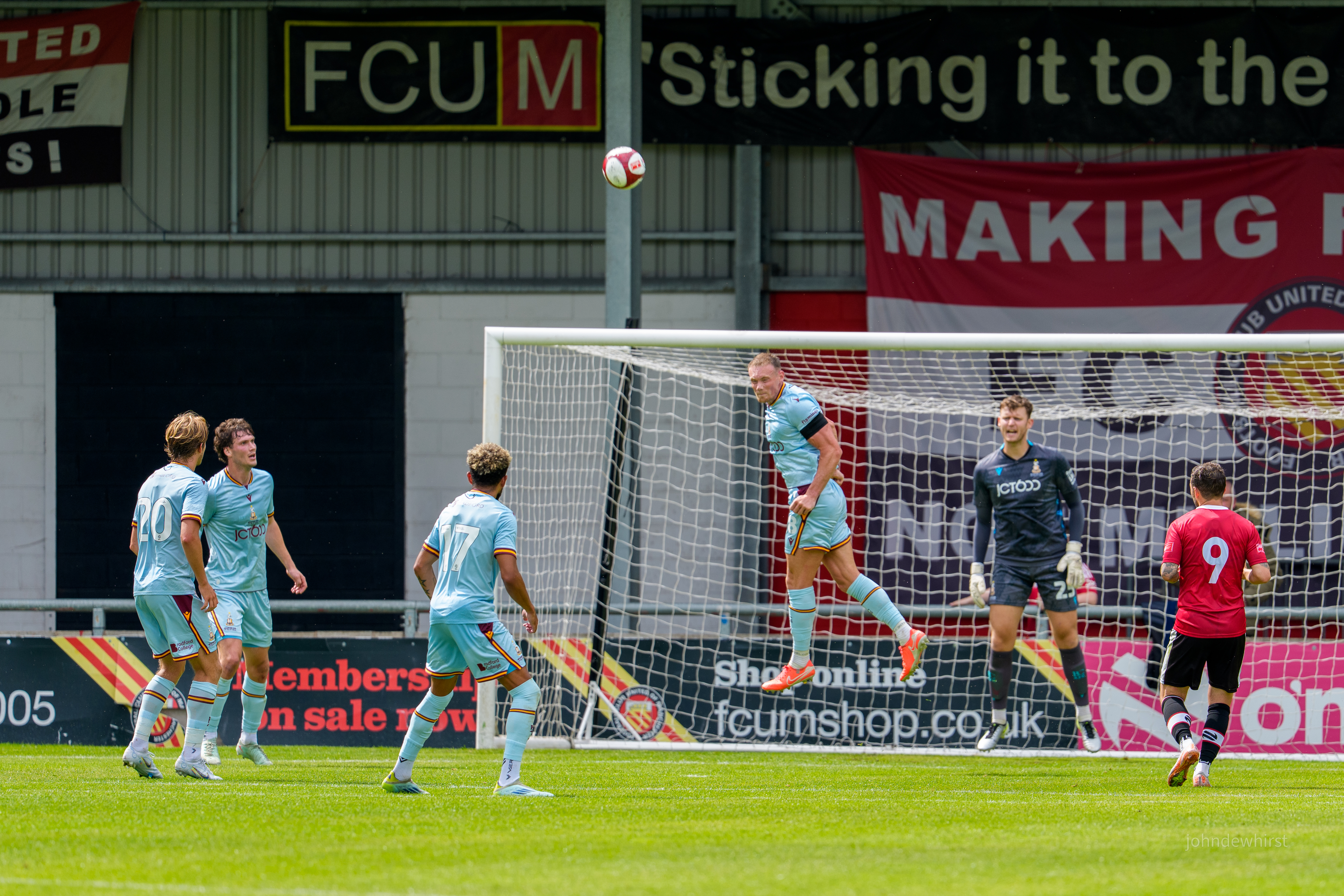
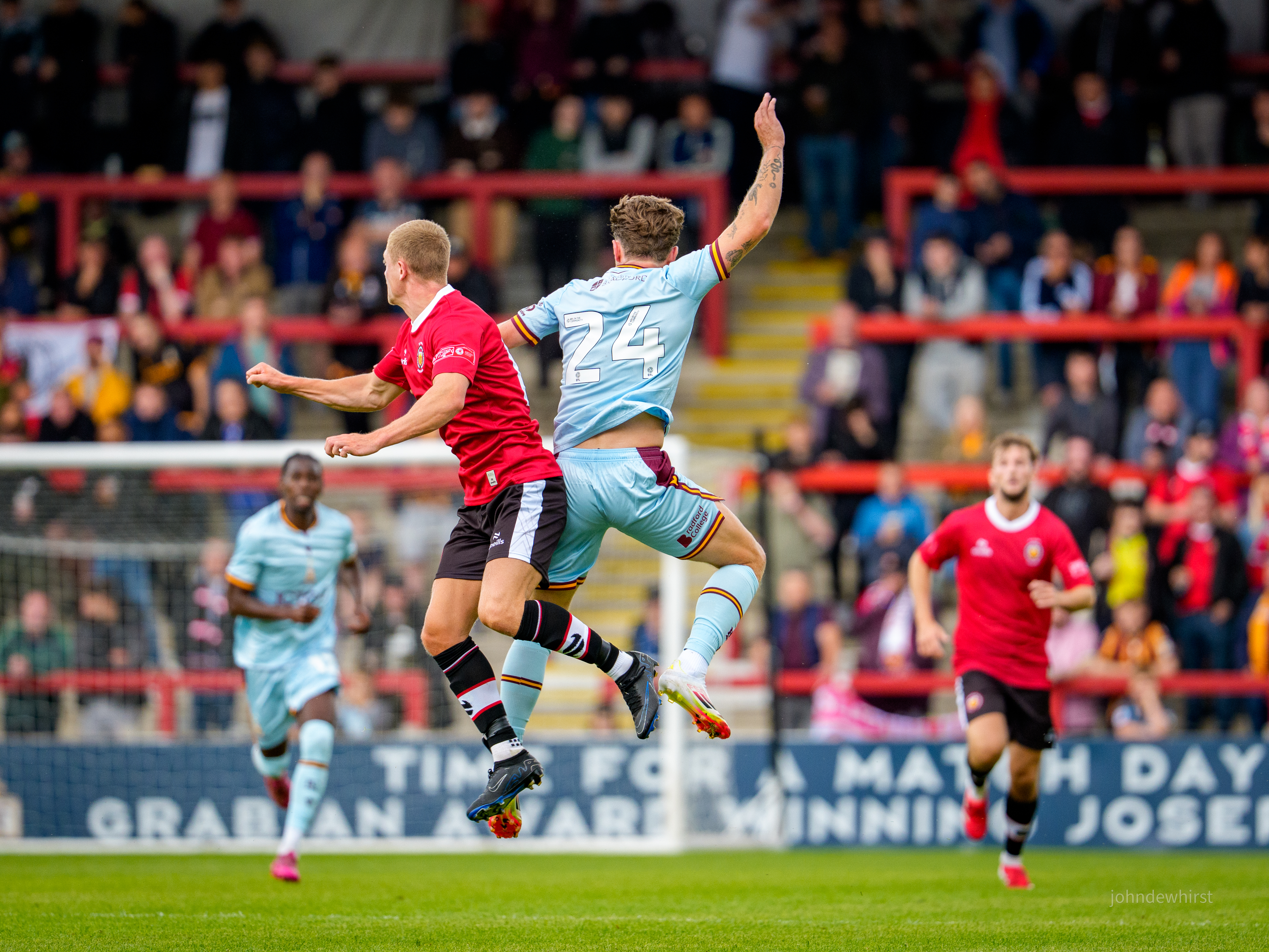
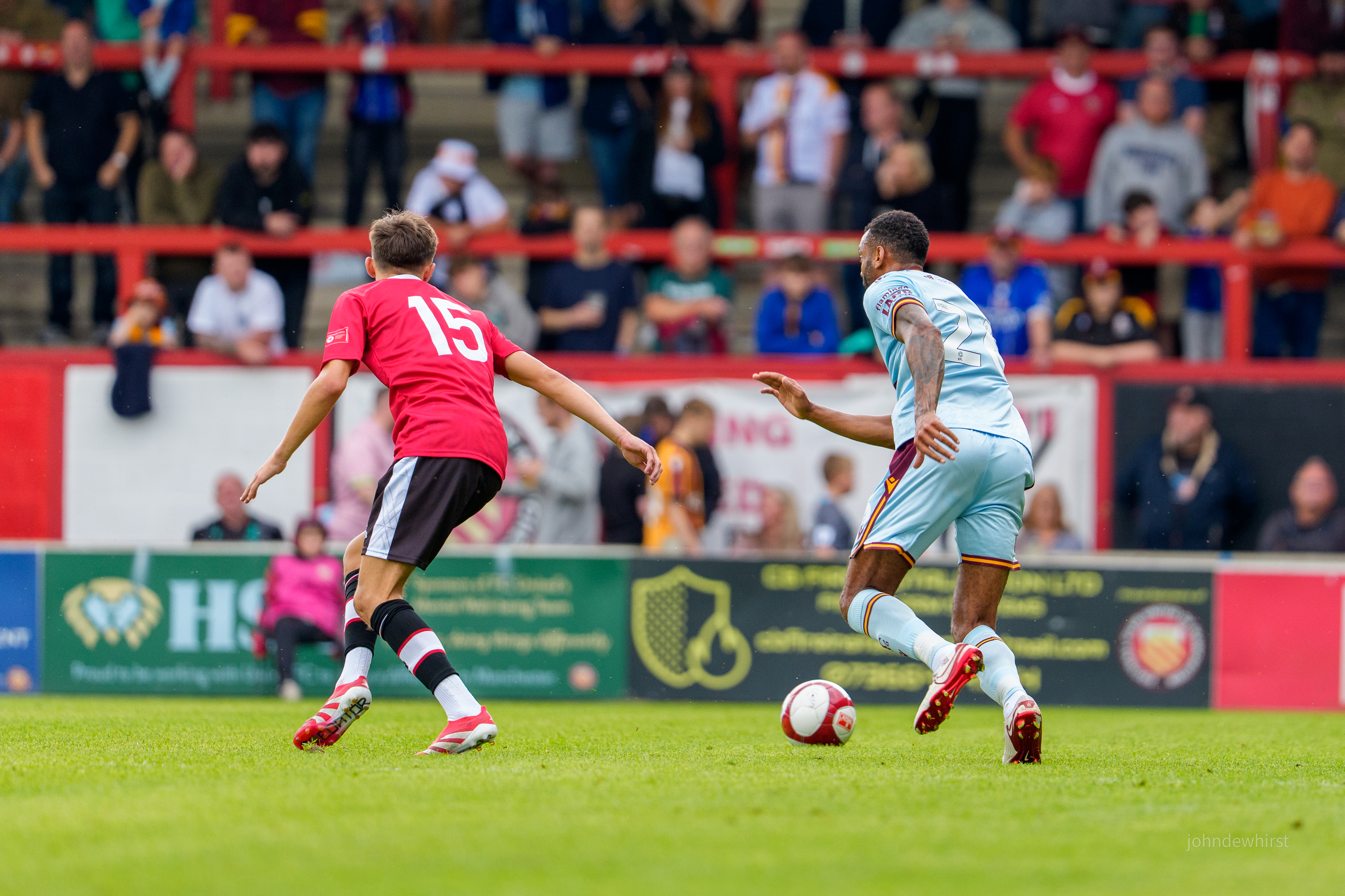
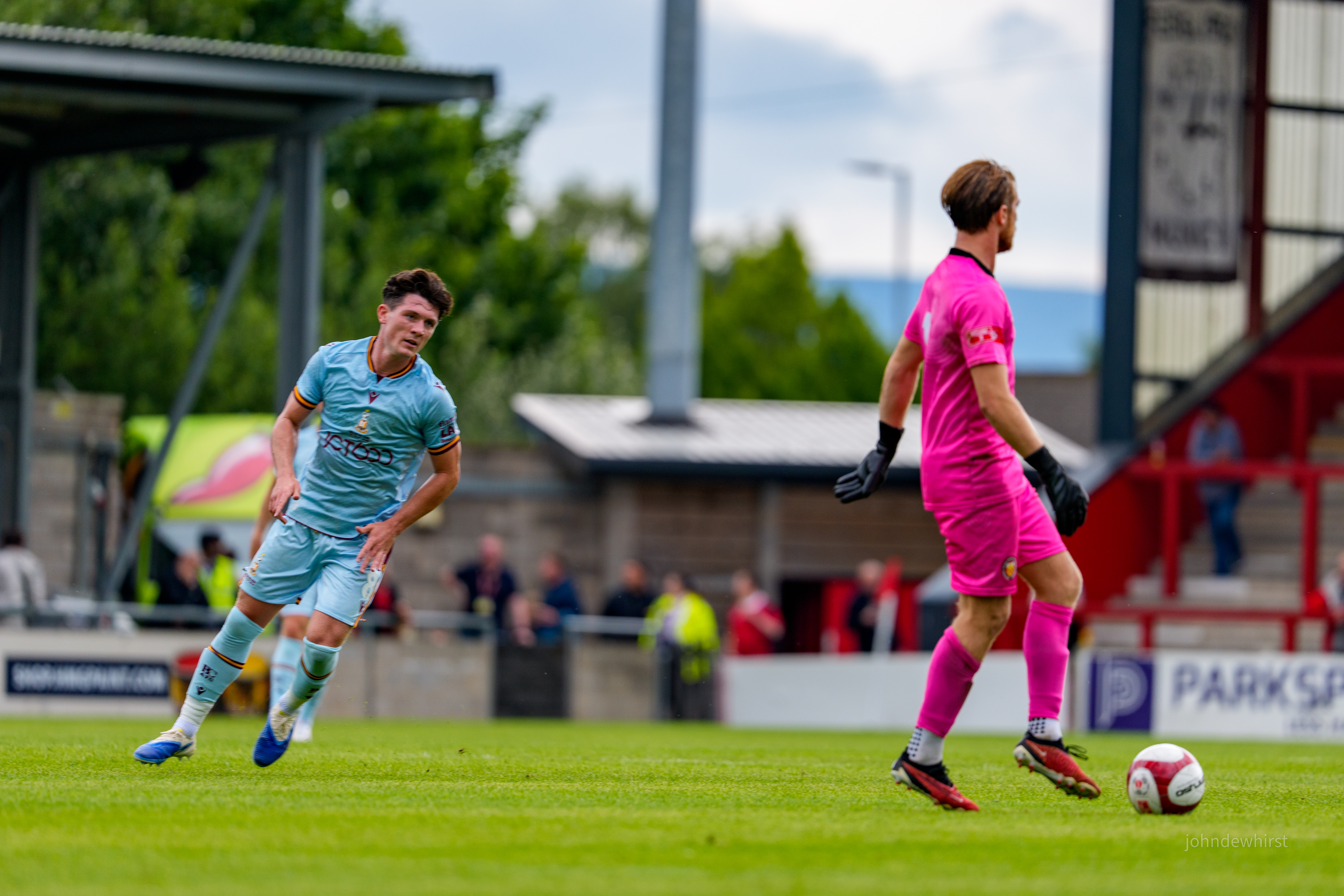
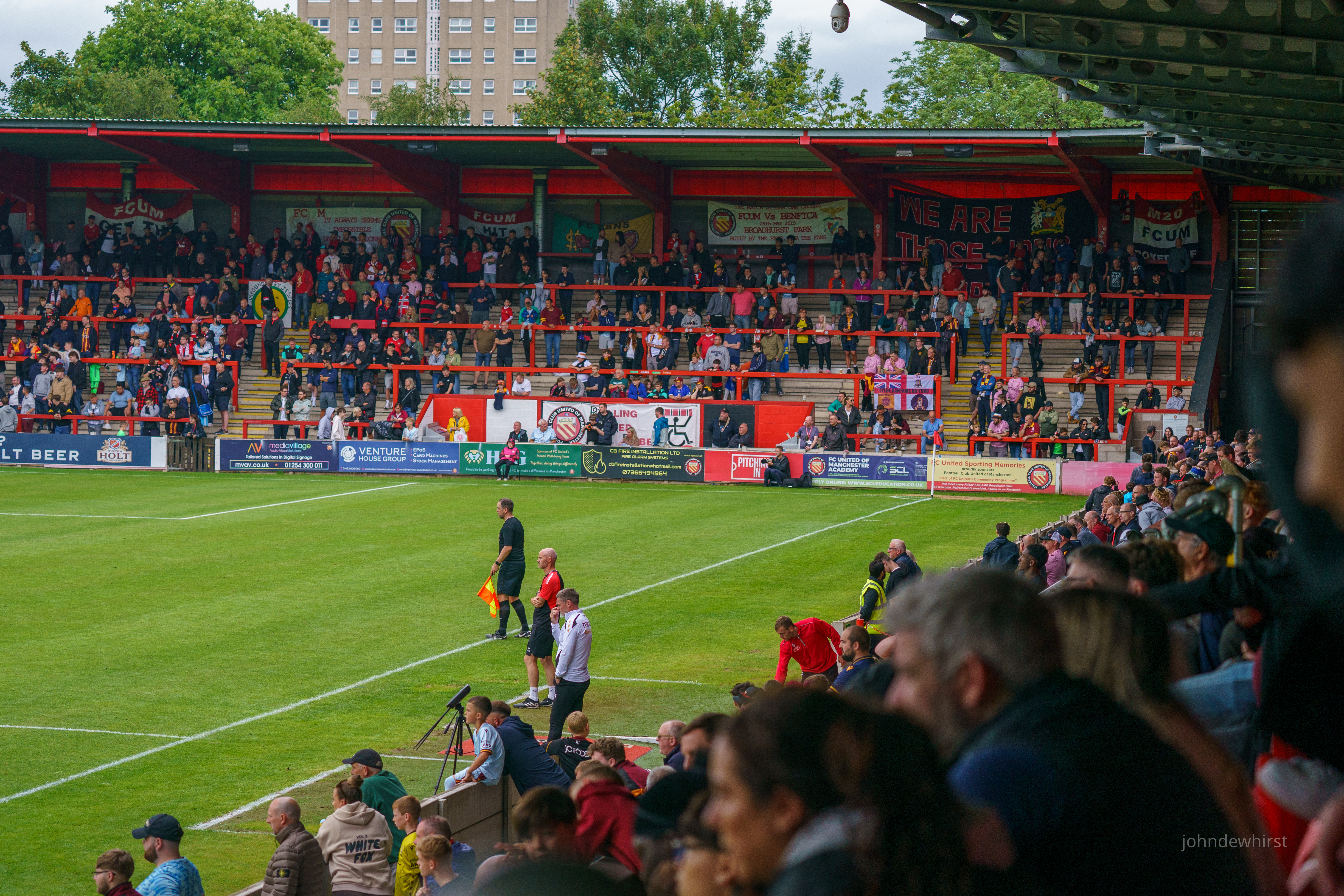
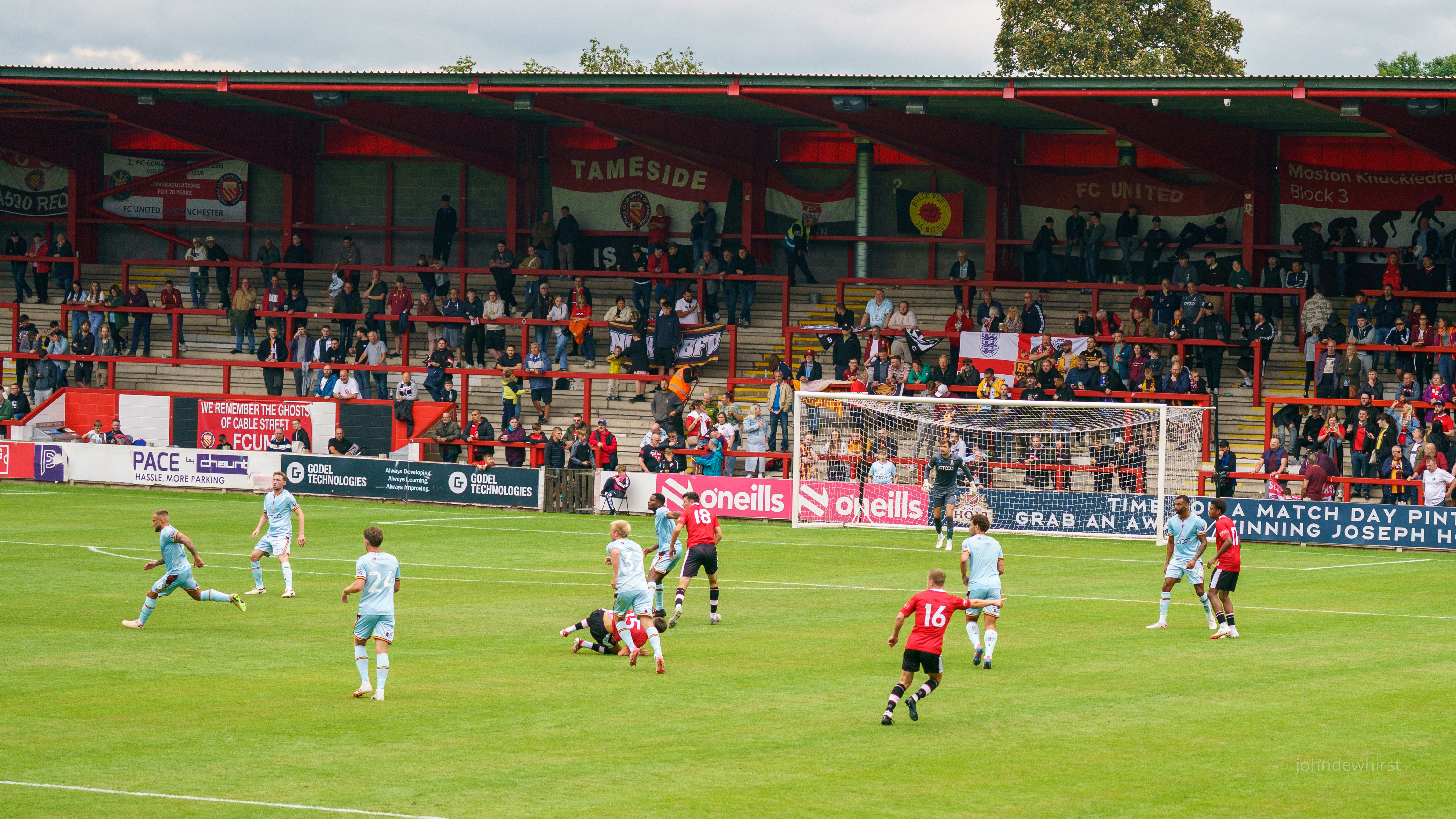
The pre-season friendly with FC United of Manchester at Broadhurst Park in Moston, Manchester was an excellent opportunity to visit a new ground and one that had been on my bucket list.
Next month marks the tenth anniversary of the club’s first league game at the stadium when Stockport County were the visitors for a National League North (sixth tier) fixture. Whereas County now compete in the third tier, FC United are in the seventh tier and the club has been a member of the Northern Premier League, Premier Division since 2019/20.


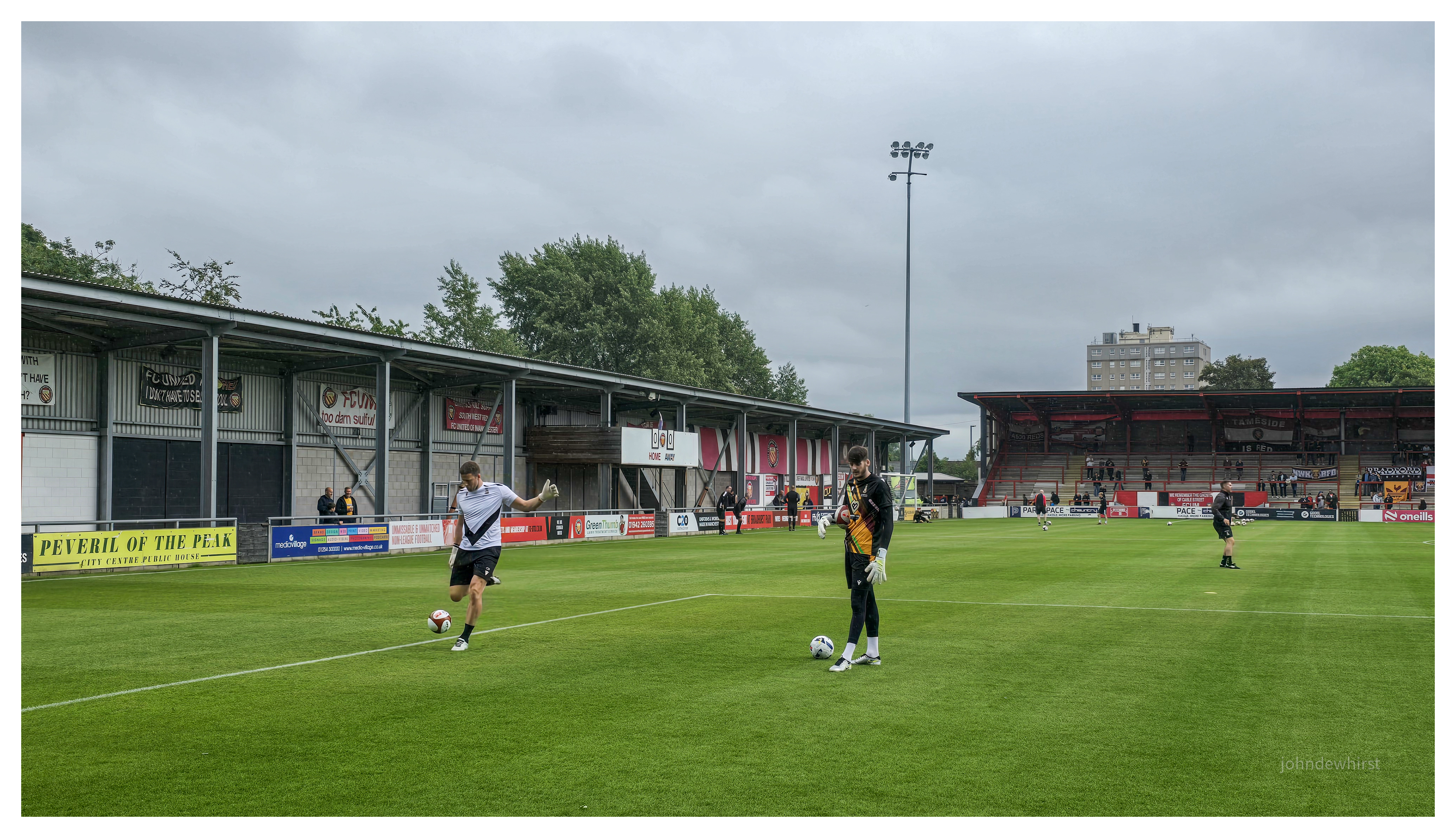
FC United was formed in 2005 by supporters of Manchester United in response to the Glazer takeover of their club and originally played at Gigg Lane, Bury before the opening of Broadhurst Park. The club established a strong momentum with three successive promotions in its first three seasons and it seemed that FC United might emulate the rise of AFC Wimbledon, another supporter owned club formed in 2002. However it would take another seven years to reach the National League North in 2015 where the club remained for only four seasons before relegation back to the National Premier League, Premier Division.
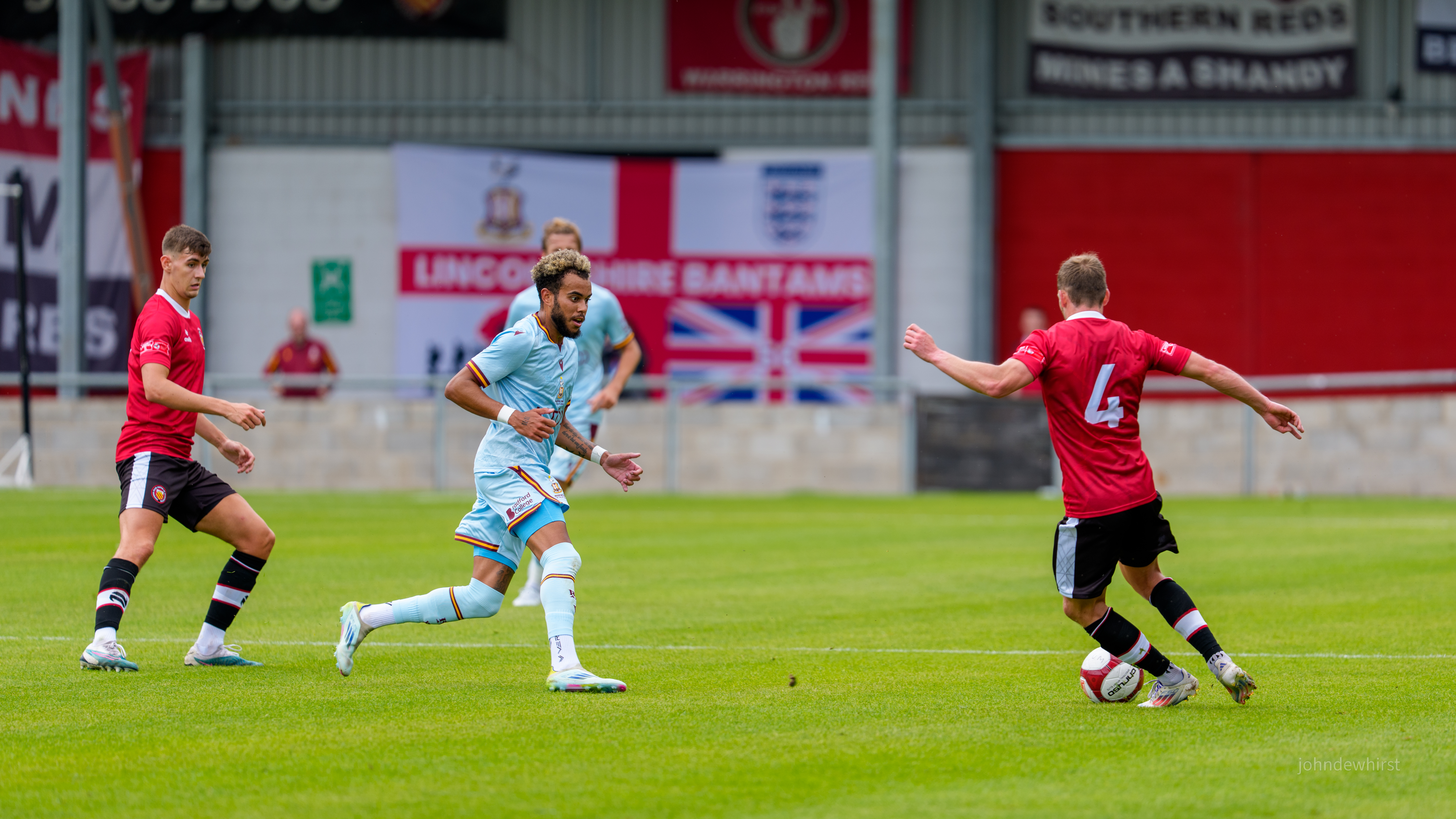
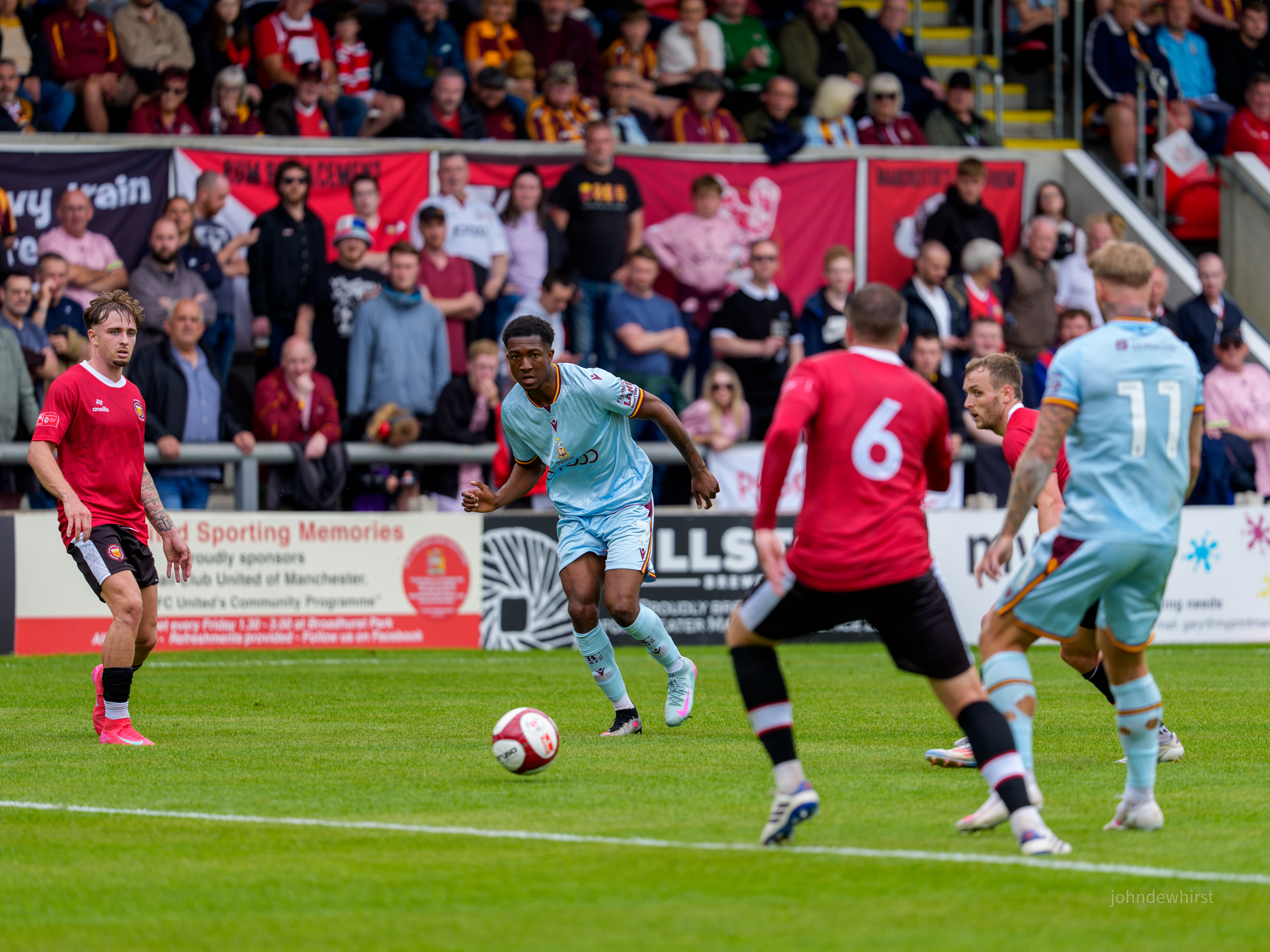
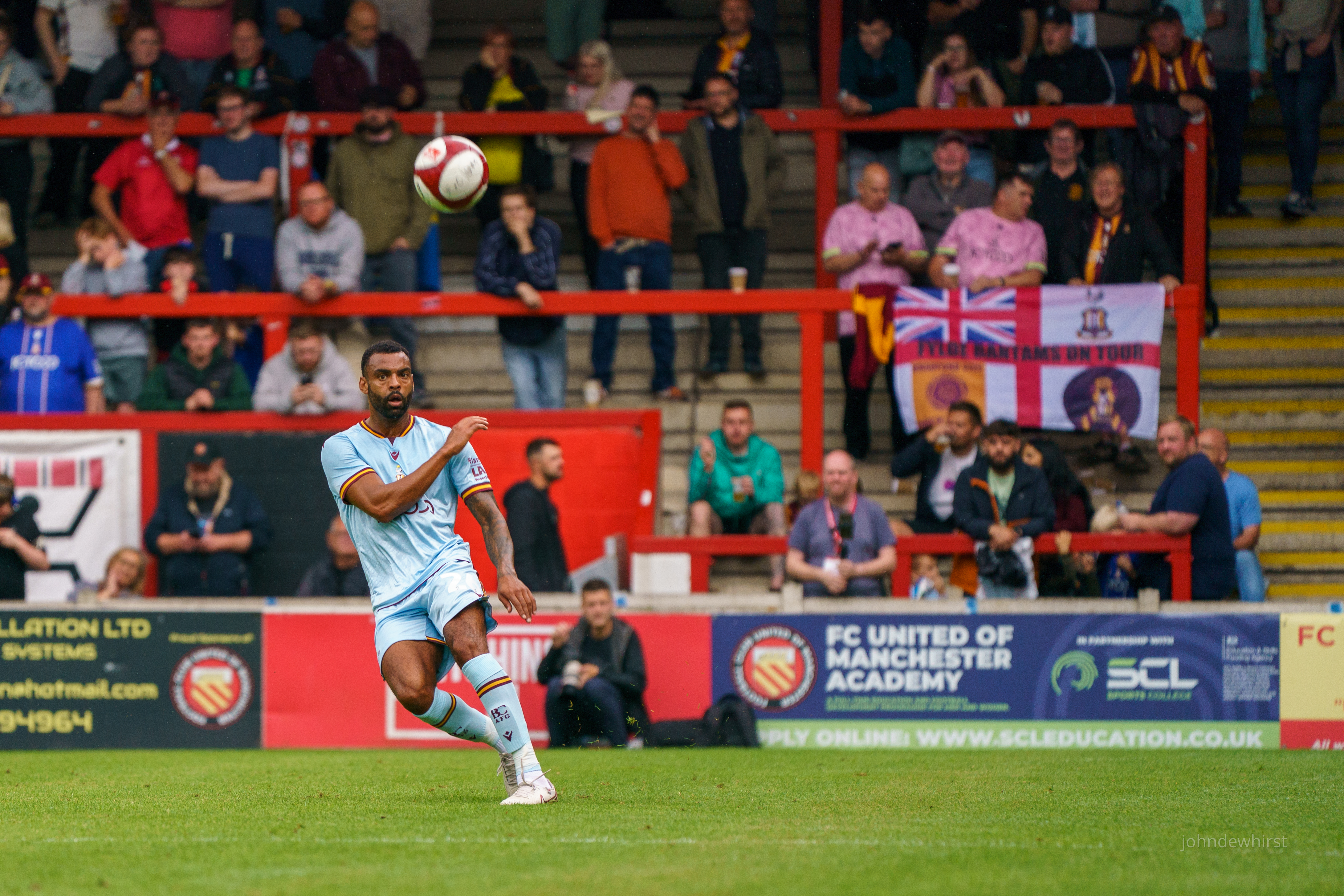
Average attendances at Broadhurst Park have halved since the opening in 2015/16 when it was 3,395 to 1,667 last season and the gate for the friendly with Bradford City on 5th July – 1,688 – was therefore pretty representative of current league crowds. However if the atmosphere for our game was anything to go by, you’d be forgiven thinking that there were more in attendance and it compared very favourably with our recent visits to the likes of Salford and Bromley. (NB The record crowd for an FC United game is 6,731 at Bury in the FA Cup during 2010/11.) The ground is all-covered and has a capacity of 4,200 with room for expansion although it is questionable whether that is likely in the near-term.

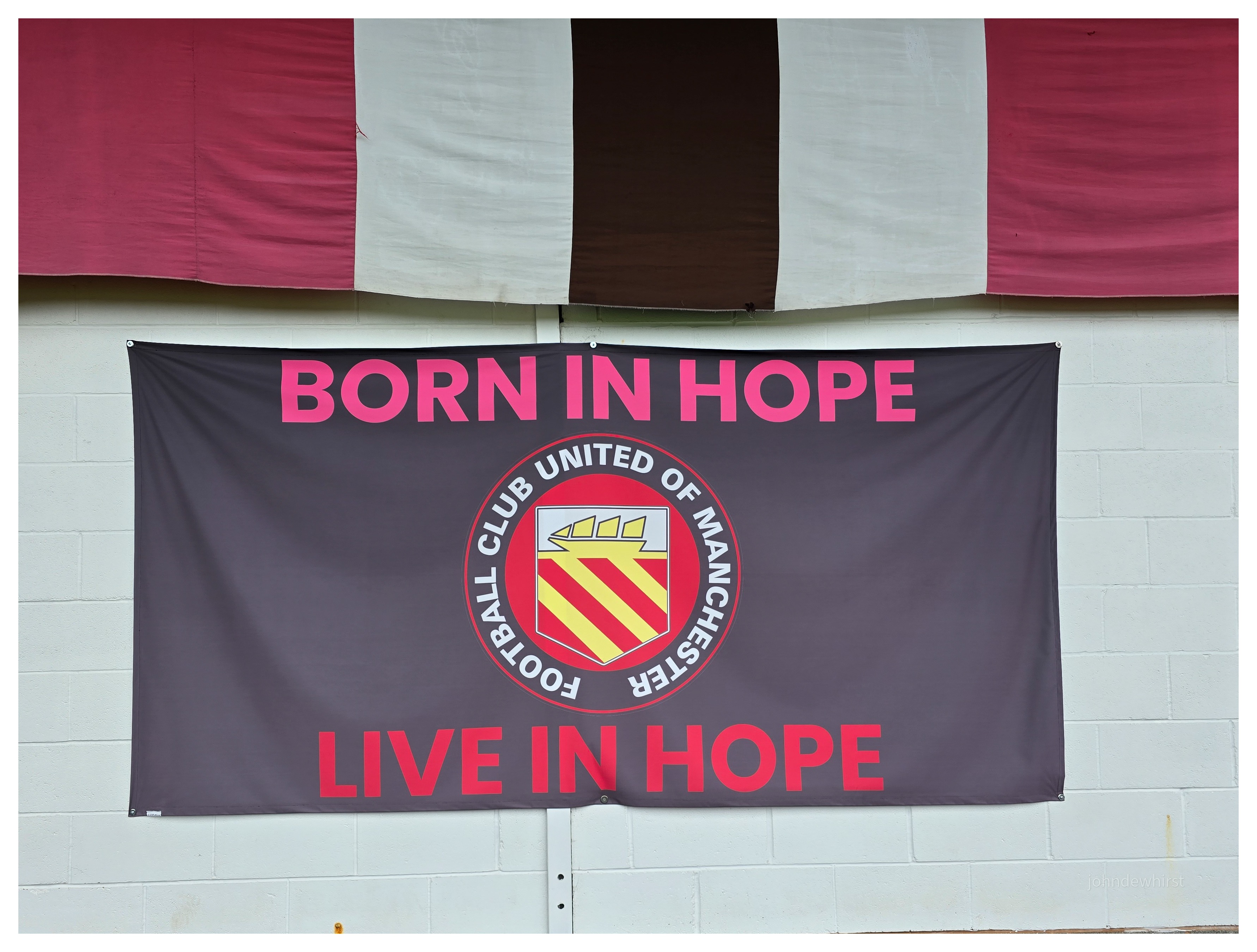
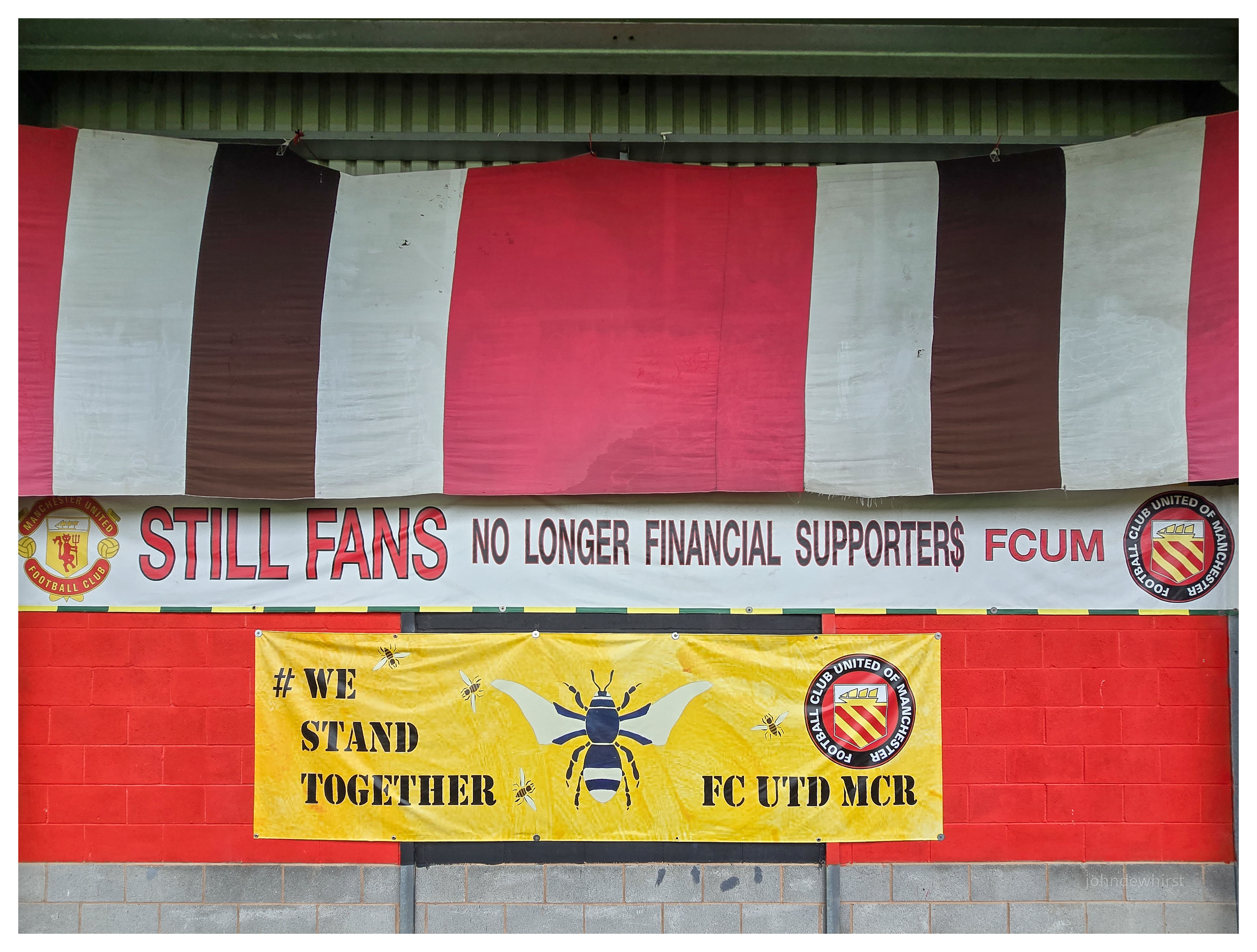
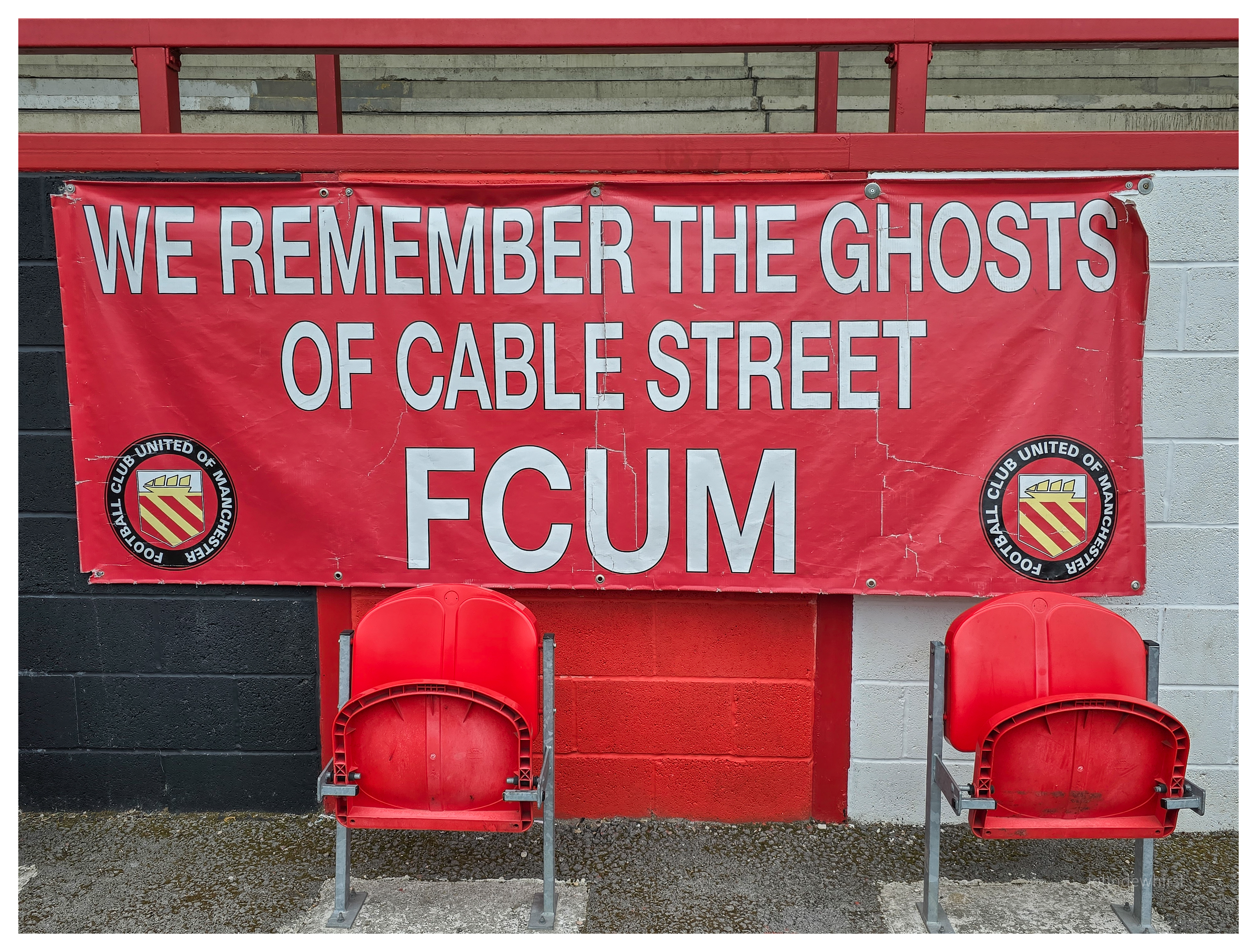


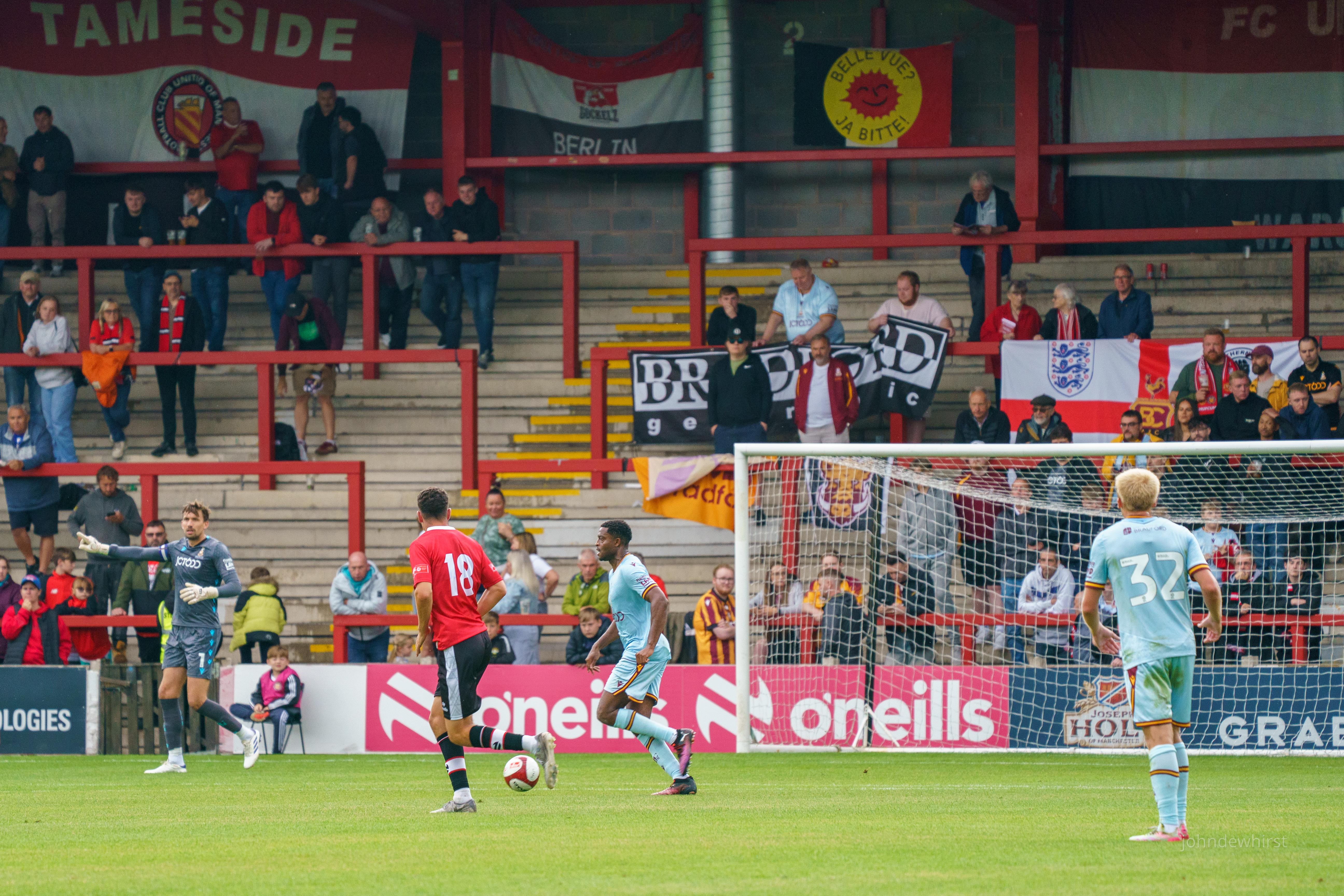
Optimising the match day experience is a key objective for the club from a number of perspectives, for example through accessible pricing and decent refreshments and the encouragement of singing which benefits from a covered goal-end standing terrace (St. Mary’s Road End) the capacity of which is probably half that of the entire ground. There are numerous banners hung around the stands which makes the ground seem fuller although it also gives the feel of a teenager’s bedroom.
Mention needs to be made about the pre-match music which I thought was excellent, featuring in particular Manchester bands (Magazine, Joy Division, Buzzcocks, Stone Roses and The Smiths albeit Oasis notable by their absence in the playlist I heard) and new wave generally. Above all the fans are extremely friendly and welcoming of visitors.
The club is resolutely committed to supporter democracy as a mutual organisation and promotes itself as the largest fan-owned club in the UK. A similar (mutual) organisational structure existed at Valley Parade prior to incorporation in 1908. The historic record is that it handicapped decision-making, and that this became heavily politicised between different factions of the membership. It also impaired financial management and fundraising. How the modern incarnation at FC United works would be fascinating to know.
There is much to commend FC United and similarly its community initiatives are understood to have been impactful. Yet the obvious question is what of the future? The club has a principled rejection of corporate football although policies such as an aversion to shirt advertising have probably hindered its progress and financial budgeting. Not least the investment of £6.5m in the development of Broadhurst Park represents a commitment with financial obligations that still have to be paid. The dilemma facing the club in its third decade is whether to embrace commercialism or face stagnation. Limited progress in the last ten years highlights that despite all the attempts to escape football capitalism, the club remains trapped by the basic imperative of paying its way and the perennial struggle to compete with its rivals. Despite being one of the better supported non-league clubs – and the best supported in its division – this has not translated into sustained success.







The Premier League exacerbated football inequalities but those existed before 1992 and indeed Manchester United FC and its supporters had long been a beneficiary of football capitalism. The gulf in resources between Bradford City and Manchester United was there to be seen when the clubs played each other in 1982 and 1960 or well before that. The renaming of the original Newton Heath club to Manchester United in 1902 and relocation to Old Trafford in 1910 was nothing less than commercial opportunism such that Manchester United had been the product of football capitalism in the first place.
Malcolm Glazer’s takeover of Manchester United twenty years ago has proved to be disastrous for the club so you can hardly fault the founders of FC United for their opposition but at the time I couldn’t help a degree of cynicism about their venture. Why had it taken them so long to recognise the stench of football capitalism or see that there were losers out there? And why didn’t they give their support to any number of struggling sides in the north-west who had long suffered from football supporters opting for the bright lights of Old Trafford in preference to their local club?
For all the protests and virtue signalling of FC United, football capitalism has advanced unchecked in Manchester and in particular three miles down the road from Moston at the Etihad Stadium. The downward trend in gates at Broadhurst Park in the last ten years highlights that whilst the club has the support of a hardcore of followers it has ultimately failed to maintain its momentum and capture the affection of new generations of fans. For sure FC United offer a great match-day experience but in the final event you need more than a good juke box to get people coming back each year.

The case study of FC United points to the difficulty of launching a new club and winning new loyalties. The example of Bradford Park Avenue, reformed in 1988 and currently in the eighth tier comes to mind. The latter was launched on the back of a wave of nostalgia that followed the publication of Tim Clapham’s book about the history of the club the year before. However, coming 14 years after the liquidation of the original club it was effectively starting from scratch and it has reached no higher than the sixth tier. The disadvantage for Bradford Park Avenue has remained the ageing of its support base and the failure to persuade younger fans to follow a different Bradford club. By contrast the comparative success of AFC Wimbledon probably had more to do with that club becoming established so soon after the insolvency / relocation of the original as well as the media attention that it enjoyed. I also sense greater pragmatism on the part of the AFC Wimbledon leadership as to its commercial operation and suspect that the club had the benefit of suitably qualified and experienced individuals committing to its cause.
Comparisons can also be made with other former Football League clubs that suffered financial collapse. For example the respective phoenix sides of the likes of Bury FC (who lost FL membership in 2019), Chester City (2009) and Darlington FC (2010) currently operate in the eighth, sixth and sixth tiers of English football, far removed from the prospect of a rapid return to the Football League. Had there been a new club to succeed Bradford City AFC when liquidation was a real prospect in 2004, how long would it have taken to rejoin the ’92’?
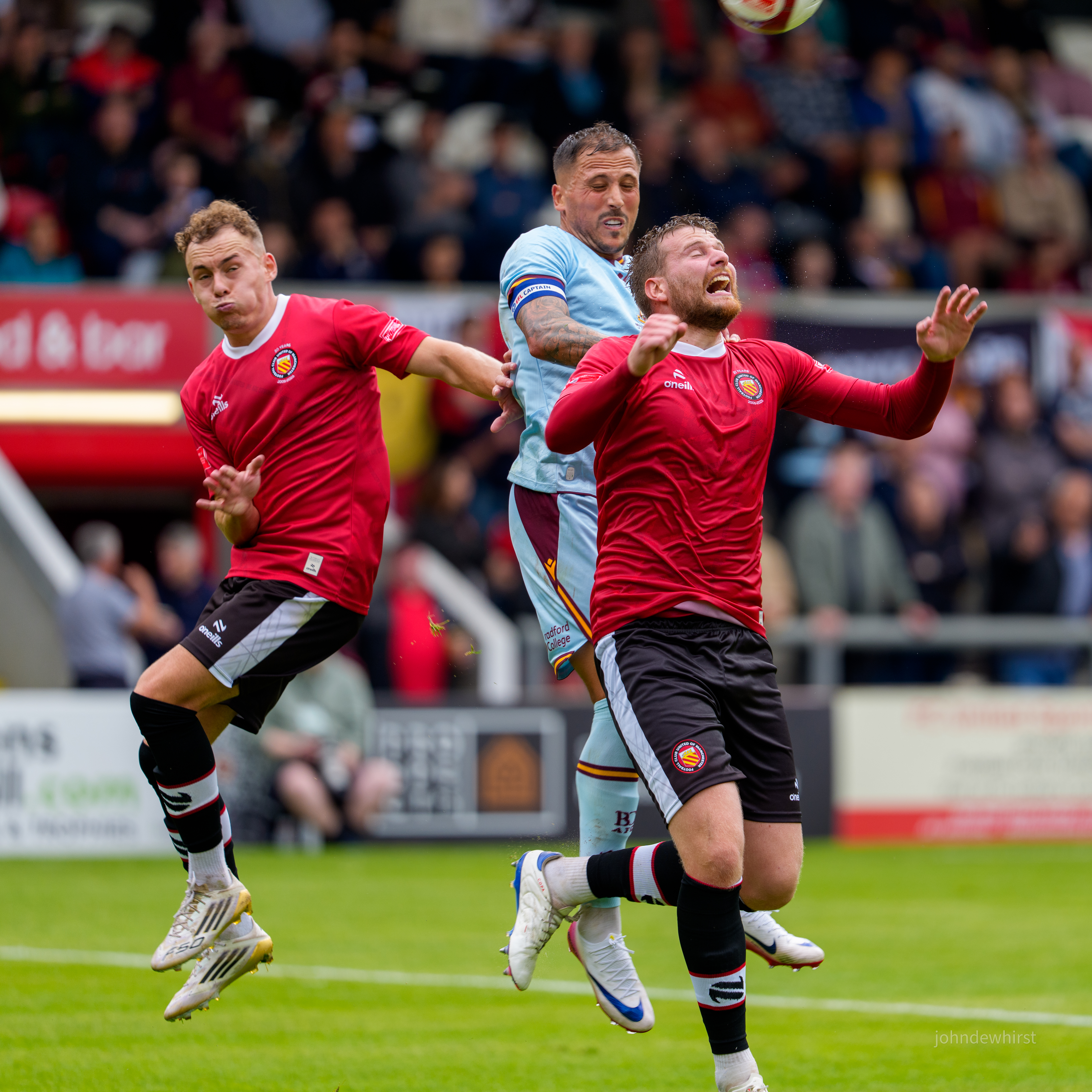
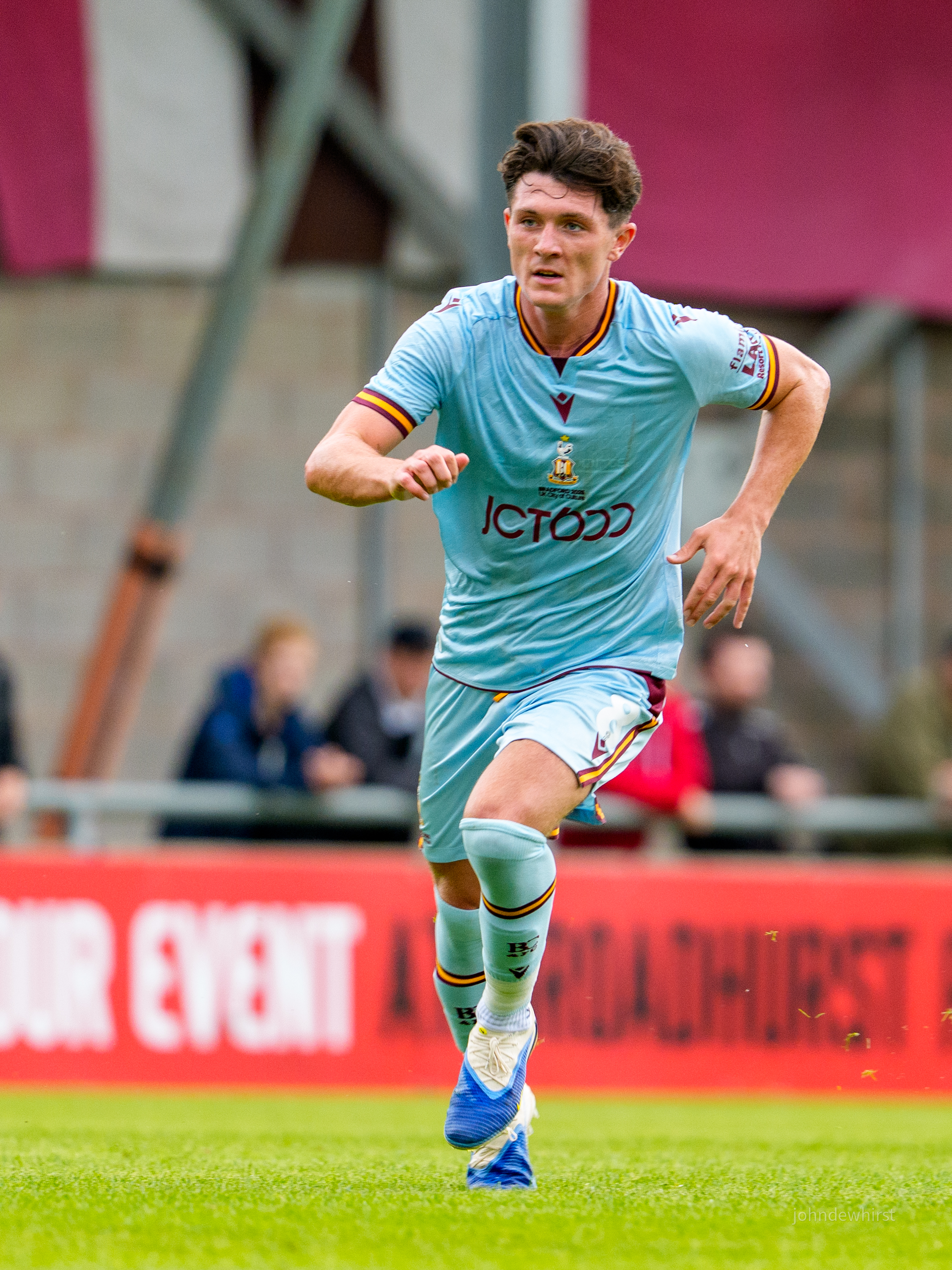
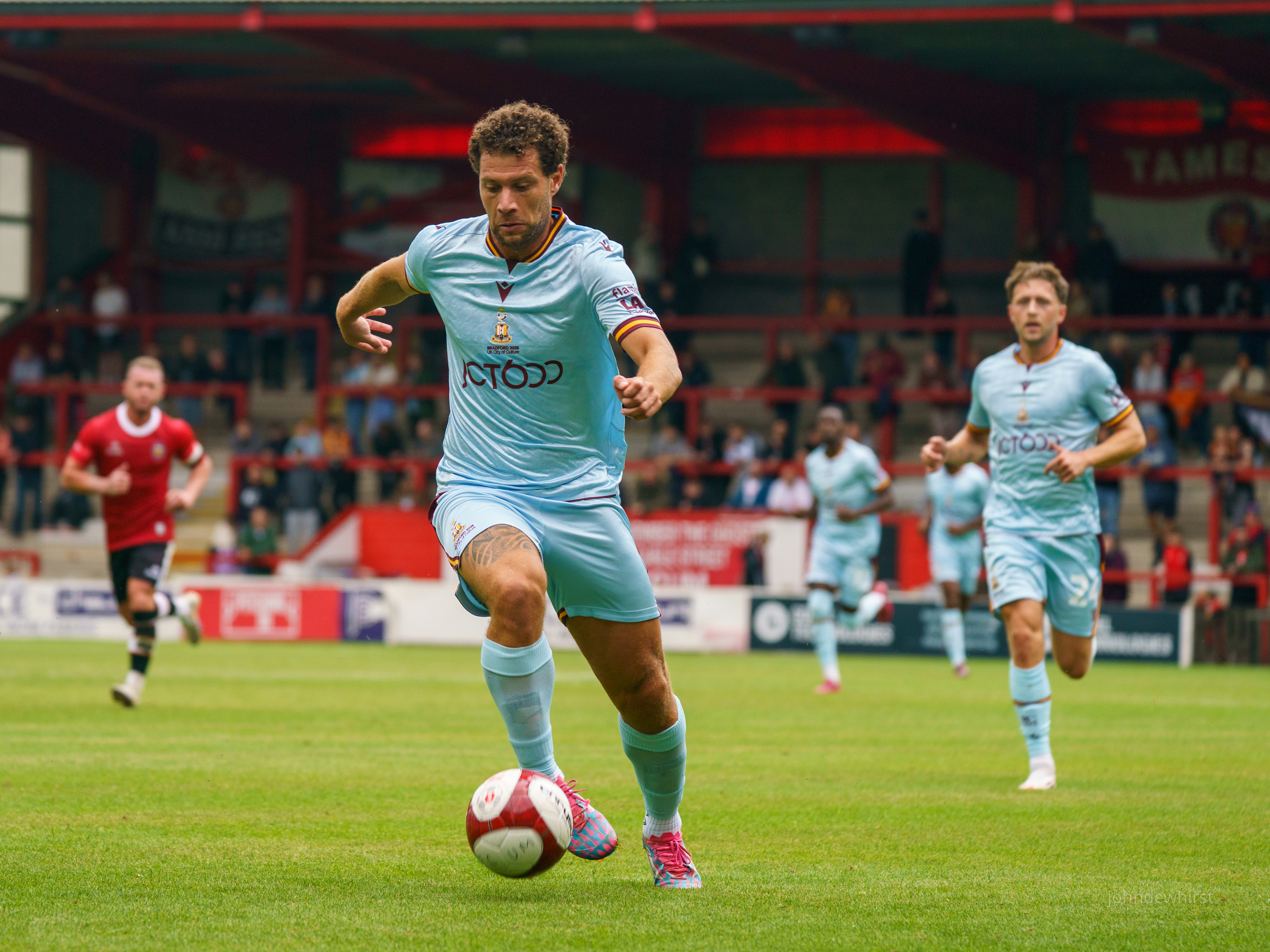
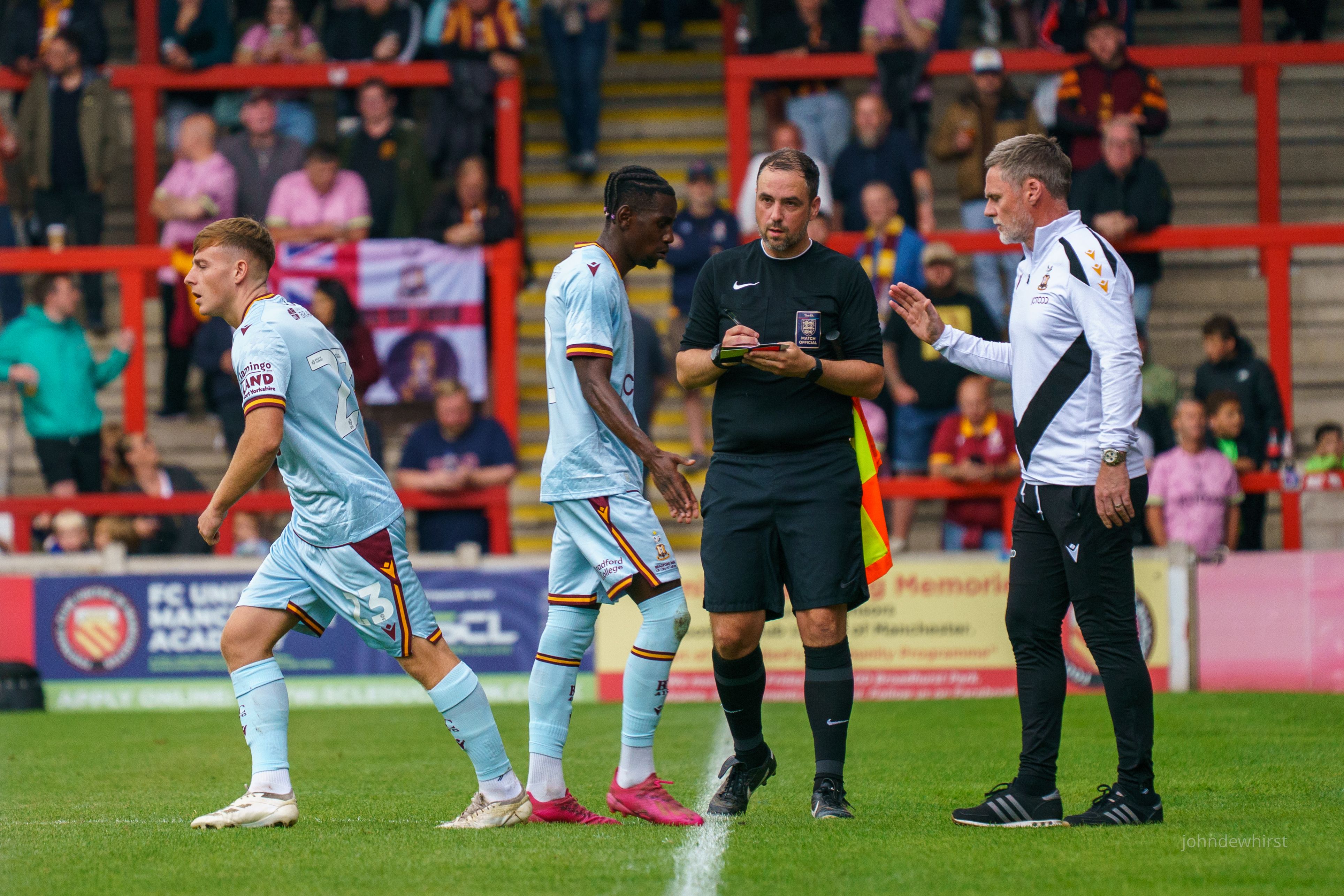
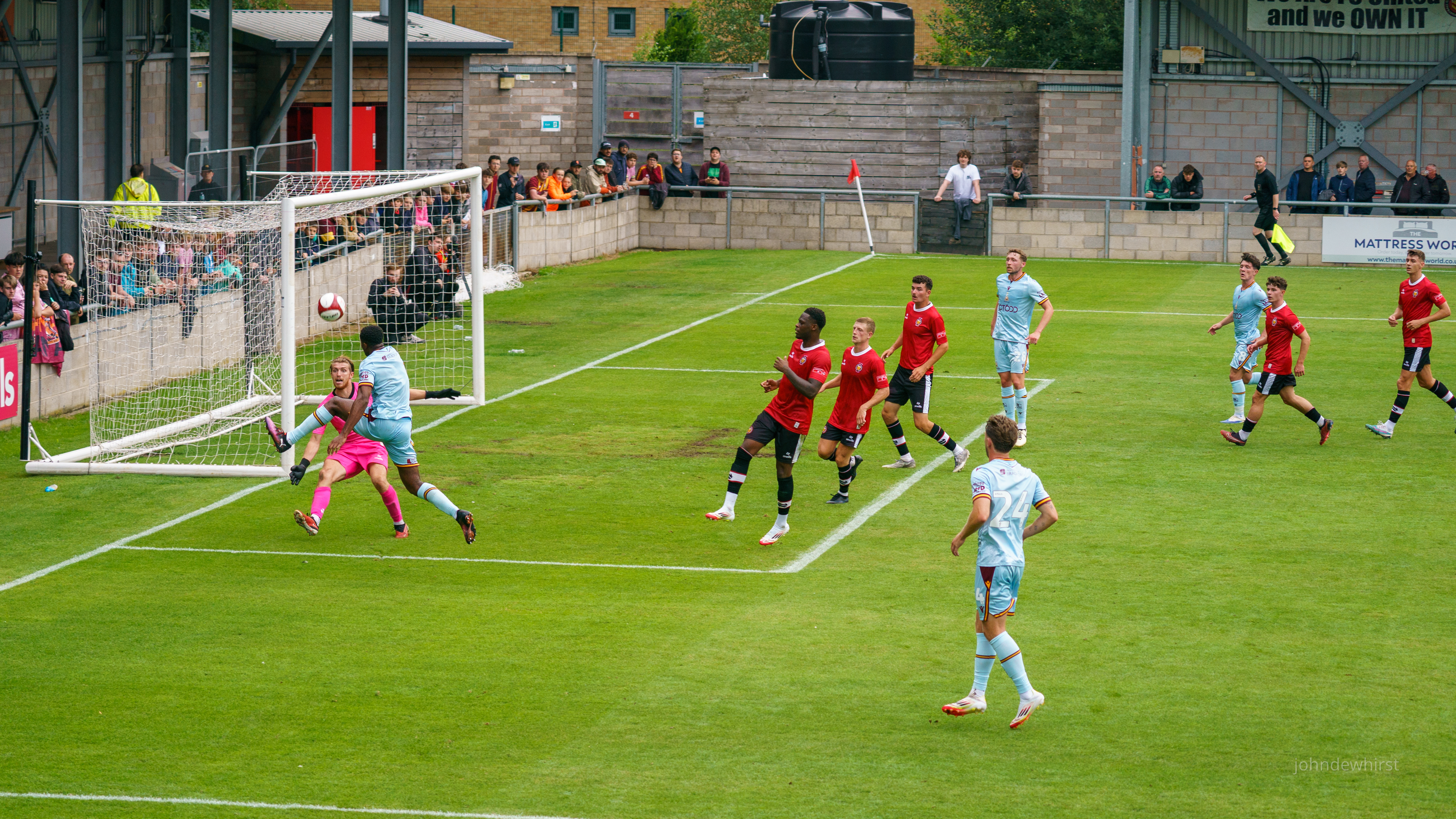
The visit to Broadhurst Park was very enjoyable (with BCAFC winning 1-0) and I genuinely wish FC United all the best in the forthcoming season in their division alongside the likes of Guiseley, Whitby Town and Workington AFC. It will certainly be interesting to see how the club progresses in the next ten years.




John Dewhirst
** If you are interested in football photography then have a look for issue #2 of BRADFORDIANA which features Valley Parade. BRADFORDIANA is a photozine with 12 issues being published during 2025 in celebration of Bradford.

 Wool City Rivals